

Wood-Based Activated Carbon Manufacturer: Your Guide to High-Performance Sustainable Solutions
2026-07-27
When it comes to sustainable filtration and purification, few materials match the versatility of wood-based activated carbon. But not all carbon is created equal—sourcing from the right manufacturer can make or break your project’s performance and eco-credentials. Enter Tundrr, a pioneer in high-performance activated carbon solutions that refuses to compromise on quality or sustainability. In this guide, we’ll explore why wood-based carbon is gaining traction, what sets Tundrr apart, and how you can leverage their expertise for your next breakthrough.
Why Wood-Based Carbon Outperforms Other Filtration Media
Wood-based activated carbon stands apart thanks to its unique pore structure. The raw material—typically hardwood—creates a carbon with a higher proportion of mesopores and macropores compared to coal or coconut shell carbons. This means it can efficiently trap larger contaminant molecules that would quickly clog finer-pored media, making it especially effective for treating water with natural organic matter, industrial dyes, or colorants. The inherent porosity also allows for faster adsorption kinetics, so systems can operate at higher flow rates without sacrificing performance.
Another key advantage lies in its renewable origin and lower environmental footprint. Unlike finite mineral-based carbons, wood-based variants come from sustainably managed forests or lumber by-products, transforming waste into a high-value purification tool. The production process itself tends to be cleaner, often requiring less harsh chemical activation and yielding a carbon that leaches fewer unwanted elements back into the water. This adds a layer of safety for sensitive applications like potable water treatment and food-grade processing.
Wood-based carbon also demonstrates exceptional performance over a wide pH range and in applications where both mechanical strength and chemical resilience are needed. Its surface chemistry is naturally more oxygen-rich, providing a subtle polarity that pulls in certain dissolved ions and organic acids that purely physical adsorption might miss. This hybrid action—part physical trapping, part chemical attraction—puts it a step ahead when dealing with complex mixtures. Maintenance intervals stretch longer, and the carbon holds up better to repeated backwashing, offering a practical, cost-effective edge for treatment plants that simply can’t afford frequent media changeouts.
Inside the Production Journey: From Raw Timber to Pure Carbon
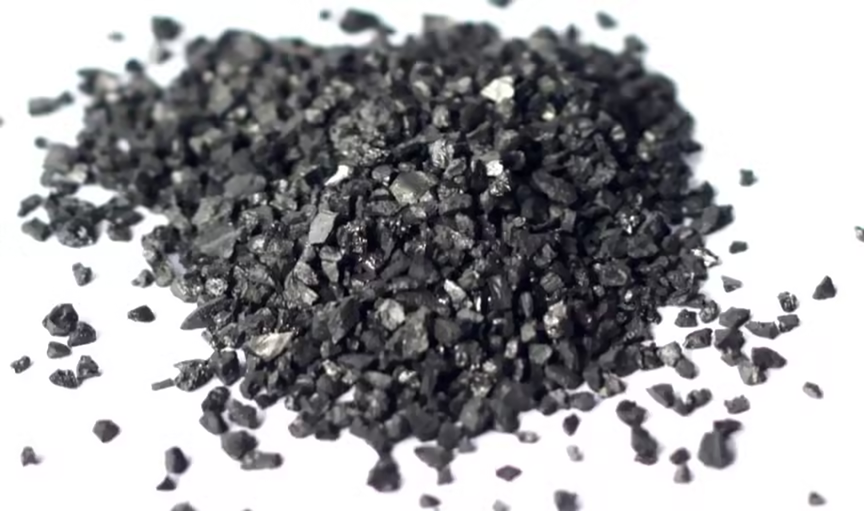
The transformation begins deep within sustainably managed forests, where select hardwoods are harvested at the peak of their density. Each log is meticulously inspected for grain consistency and moisture content—flaws that might seem trivial now will haunt the final carbon structure. The logs are then debarked and cut into uniform billets, ready to shed their former lives as trees.
Once inside the kiln, the real alchemy unfolds. Under a tightly controlled, oxygen-starved atmosphere, temperatures climb past 1000°C. Volatile compounds, water, and tars are driven off, leaving behind a skeletal lattice of pure carbon. This isn’t a simple burn; it’s a slow-motion collapse of cellulose and lignin into an atomic framework that’s 90% void yet remarkably rigid. Hour by hour, the wood’s color deepens from tan to obsidian black, and its weight plummets, losing over 70% of its original mass.
The final product emerges as a brittle but scorch-resistant material with an internal surface area that rivals some synthetic adsorbents. Cracks and fissures, formed naturally during the carbonization, are not imperfections—they become the pathways that make the carbon so effective at filtration and purification. Each piece tells the story of its own grain, now frozen in a permanent, mineral-like state, ready for use in water treatment, air purification, or even as an artist’s charcoal.
Tailored Pore Structures for Precision Contaminant Removal
Materials engineered with pore architectures tuned to specific molecular dimensions can discriminate between contaminants that differ by less than an angstrom. This approach harnesses steric exclusion, much like a lock-and-key mechanism, to trap target species while letting harmless compounds pass through. By adjusting synthesis parameters such as precursor ratios, reaction time, or template removal conditions, pore throats and cavity shapes can be refined to favor the uptake of particular organic molecules, heavy metal ions, or even biological entities without relying on broad-spectrum media.
Functionalizing pore walls with chelating ligands, charged groups, or reactive moieties adds another layer of selectivity. For example, grafting thiol groups inside mesoporous silica yields a matrix that captures mercury from mixed-metal wastewater while ignoring calcium and magnesium at orders-of-magnitude higher concentrations. Likewise, incorporating amine-lined cages into polymer networks enables carbon dioxide to be pulled from humid flue gas streams that foul conventional sorbents. The spatial arrangement of these active sites can be engineered so that only pollutants with the right coordination geometry or binding affinity are immobilized, reducing the need for energy-intensive regeneration steps.
Dynamic pore systems that respond to external stimuli—such as pH shifts, temperature changes, or light—offer a route to on-demand contaminant release and material reuse. In one configuration, a hydrogel with pH-sensitive cross-links swells in acidic mine drainage to absorb dissolved metals, then contracts upon mild alkaline treatment to expel the concentrated brine for recovery. This cyclic operation maintains performance over hundreds of cycles because the pore network remains structurally intact. By designing porosity at multiple length scales, from molecular sieving cavities to interconnected macropores that facilitate rapid mass transport, these tailored structures achieve both high throughput and pinpoint accuracy in removing pollutants from complex fluid streams.
Meeting Eco-Conscious Demands Without Compromising Quality
Balancing sustainability with high standards is often seen as a challenge, but it doesn’t have to mean sacrificing what makes your product special. By rethinking material sourcing and production workflows, you can reduce environmental impact while maintaining—or even enhancing—the look and durability your customers expect. It’s about making smart choices that align with your values without cutting corners.
Innovations in eco-friendly materials now offer textures and finishes that rival traditional options, giving you the freedom to create without limits. Whether it’s recycled metals or low-impact fabrics, the key is to integrate them thoughtfully, ensuring every piece still meets rigorous performance tests. This approach not only keeps your brand’s reputation intact but also strengthens it in the eyes of increasingly conscious buyers.
Ultimately, meeting these demands is a chance to refine your process. Small adjustments—like optimizing energy use or reducing waste in packaging—can lead to significant results over time. The goal isn’t perfection from day one but a steady commitment to doing better, proving that quality and responsibility can go hand in hand.
Real-World Applications That Rely on Peak Carbon Performance
In modern aerospace engineering, carbon fiber composites have become indispensable for structures that must endure extreme stress while minimizing weight. Aircraft wings and fuselage sections increasingly rely on precisely layered carbon laminates to achieve the stiffness and fatigue resistance that traditional metals cannot match over thousands of flight cycles. Beyond commercial aviation, unmanned aerial vehicles push the boundaries further—frame components and propeller blades are now routinely made from high-modulus carbon weaves that allow longer loiter times without sacrificing maneuverability in turbulent conditions.
Motorsports provide a relentless testing ground for carbon’s peak performance limits. Formula One survival cells and suspension wishbones are crafted from multi-axial carbon preforms cured under immense pressure, where even microscopic voids would spell disaster at triple-digit speeds. This pursuit of perfection trickles into premium sports car manufacturing, but the less visible applications can be just as demanding—industrial robot arms used in semiconductor fabrication rely on carbon fiber’s vibration-damping properties to handle delicate wafers with sub-micron precision, a task where any deflection or resonant chatter ruins entire batches.
Medical devices have quietly introduced carbon structures where the body itself rejects metals. Orthopedic implants such as intramedullary nails and spinal fusion cages now use radiolucent carbon-reinforced PEEK polymers that let surgeons monitor bone healing without artifact interference on MRIs and CT scans. Prosthetic running blades also exploit carbon’s ability to store and release kinetic energy with each stride, enabling amputee athletes to achieve competitive sprinting times that were unthinkable a generation ago. Even in battlefield medicine, carbon composite splints stabilize fractures while being light enough for medics to carry multiple sets across rough terrain.
Partnering With a Manufacturer That Understands Your Process
A manufacturer that genuinely understands your process doesn’t just follow a spec sheet—they internalize why each step matters, from material selection to final inspection. This depth of insight allows them to spot potential bottlenecks before they become problems, suggest refinements that align with your operational goals, and adapt swiftly when variables change. Instead of a rigid supplier relationship, you gain a collaborative force that sees your challenges through your eyes.
When your partner knows your process inside out, the everyday friction of misinterpreted instructions or misaligned priorities disappears. Their team can anticipate your needs, tailor their approach to match your production rhythm, and even flag opportunities you might have overlooked. It’s the difference between working with a vendor that makes parts and a partner that helps refine how you make things—quietly elevating quality and consistency over the long haul.
FAQ
Wood-based activated carbon is produced by carbonizing and activating hardwood, typically using steam or chemical methods. The resulting material has a highly porous structure, making it excellent for adsorbing a wide range of molecules. Compared to coal-based carbon, it often has a lower density and a more open pore structure, which can be advantageous for decolorization and removal of larger organic compounds. Coconut shell carbon is known for its high microporosity, ideal for gas-phase applications, while wood-based carbon offers a balance of meso- and micropores, suited for liquid-phase purification like in water treatment or food processing.
It's widely used in water purification to remove chlorine, taste, and odor compounds, as well as emerging contaminants. In the food and beverage sector, it decolorizes sugars, purifies edible oils, and treats beverages like wine and juice. Pharmaceutical companies rely on it for active pharmaceutical ingredient purification. There's also significant use in automotive cabins for air filtration, and in industrial gas streams to capture volatile organic compounds. Its versatility stems from the ability to tailor the pore size distribution.
We source wood from certified sustainably managed forests, ensuring that for every tree harvested, new ones are planted, maintaining biodiversity. Our activation process uses energy-efficient kilns, and we capture and reuse waste heat to pre-dry incoming wood, reducing overall fuel consumption. Spent activation gas is treated before release to prevent air pollution. We also have a water recycling loop that treats and reuses process water, minimizing freshwater intake. Additionally, we're exploring methods to repurpose spent carbon into soil amendments, closing the loop.
Choosing the right grade depends on the contaminants you're targeting and the operating conditions. Key parameters are iodine number (a measure of microporosity), molasses number (mesoporosity), and particle size for contact systems. For liquid applications with large molecules, a high molasses number indicates good decolorizing capacity. For small molecules or gases, a high iodine number is more critical. We typically work with clients to understand their flow rates, concentration levels, and required removal efficiency, then suggest a grade or even produce a customized one. We can also conduct lab trials with your specific feed stream.
Yes, wood-based activated carbon can often be thermally regenerated, restoring its adsorptive capacity. We offer a take-back program where we collect spent carbon from clients, regenerate it in our high-temperature kilns, and return it, which reduces waste and raw material usage. For applications where regeneration isn't feasible, we can supply carbon in bulk with lower environmental impact packaging, or help coordinate with disposal services that prioritize beneficial reuse, like using it as a fuel source in cement kilns where the carbon content is utilized and the adsorbed organics are destroyed.
Our products meet stringent international standards. For water treatment, we comply with NSF/ANSI 61 for drinking water additives. Food grade carbon adheres to the Food Chemicals Codex (FCC) and meets the requirements of the U.S. Pharmacopeia (USP) for pharmaceutical uses. We also follow ISO 9001 for quality management and ISO 14001 for environmental management. Each batch comes with a certificate of analysis showing key properties like iodine number, ash content, pH, and moisture, ensuring consistency that you can rely on for your process.
We see our relationship as an ongoing partnership. After purchase, our technical team is available to help optimize system performance, from designing contactor equipment to troubleshooting breakthrough issues. We can assist with sample analysis to monitor carbon condition and advise on replacement timing. For new applications, we offer feasibility studies and pilot plant support. Our goal is to maximize the efficiency of your adsorption process, reduce operational costs, and ensure you achieve the desired purity levels consistently.
Conclusion
Wood-based activated carbon has steadily gained recognition as a superior filtration medium, largely due to its renewable origins and exceptional contaminant-binding efficiency. Unlike coal or coconut shell alternatives, timber-derived carbon offers a more consistent pore distribution that can be precisely tuned during activation. The journey from raw hardwood to high-purity carbon is itself a testament to careful engineering—sawdust or lumber scraps are first carbonized, then subjected to steam or chemical activation under controlled conditions. This process yields a material with a vast internal surface area, where micropores and mesopores work in concert to trap everything from dissolved organics to trace heavy metals. Because wood starts with a naturally open cellular structure, the resulting activated carbon often exhibits faster kinetics and higher adsorption capacity per gram, making it ideal for demanding purification tasks in water treatment, air filtration, and industrial process streams.
What sets a dedicated wood-based carbon manufacturer apart is the ability to adapt pore structures to specific contaminant profiles, ensuring that no performance is sacrificed for sustainability. Modern operations reclaim spent carbon through thermal reactivation, aligning with circular economy goals while maintaining product quality. This is particularly critical in applications like pharmaceutical purification, food and beverage decolorization, and catalytic support media, where even minor inconsistencies can disrupt production. A manufacturer that truly understands your process will collaborate on pilot trials, adjust activation parameters, and offer ongoing technical support—transforming a simple raw material into a high-performance solution that evolves with your needs. By choosing a partner rooted in wood-based technology, you gain access not just to a product, but to decades of application expertise that can refine your entire filtration strategy.
Contact Us
Contact Person: Ellen Zhang
Email: [email protected]
Tel/WhatsApp: +86(21) 2287 6756
Website: https://www.tundrr.com/en/