

Tris(2-ethylhexyl) Phosphate Dealer: Reliable Sourcing and Quality Insights
2026-10-17
Sourcing tris(2-ethylhexyl) phosphate isn't just about price per kilogram—it's about securing a compound that won't compromise your downstream performance. Whether you're formulating flame retardants or plasticizers, the dealer you choose often determines the consistency you can count on. Fortune has spent years refining what reliable sourcing actually means, and the insights shared here cut through the noise to show you what to look for before placing your next order.
How to Spot a Tris(2-ethylhexyl) Phosphate Supplier That Actually Delivers
Start by asking for the kind of data that only a supplier with real production or deep sourcing control can provide. A recent certificate of analysis for Tris(2-ethylhexyl) phosphate should include more than just the assay. Look for acid value, water content, color (APHA), residual 2-ethylhexanol, and trace metal levels. If the supplier hesitates or sends a two-year-old document, that is a red flag. The best suppliers will also share batch-to-batch consistency data, because TEHP used in PVC plastisols or flame-retardant hydraulic fluids behaves differently when impurity profiles drift.
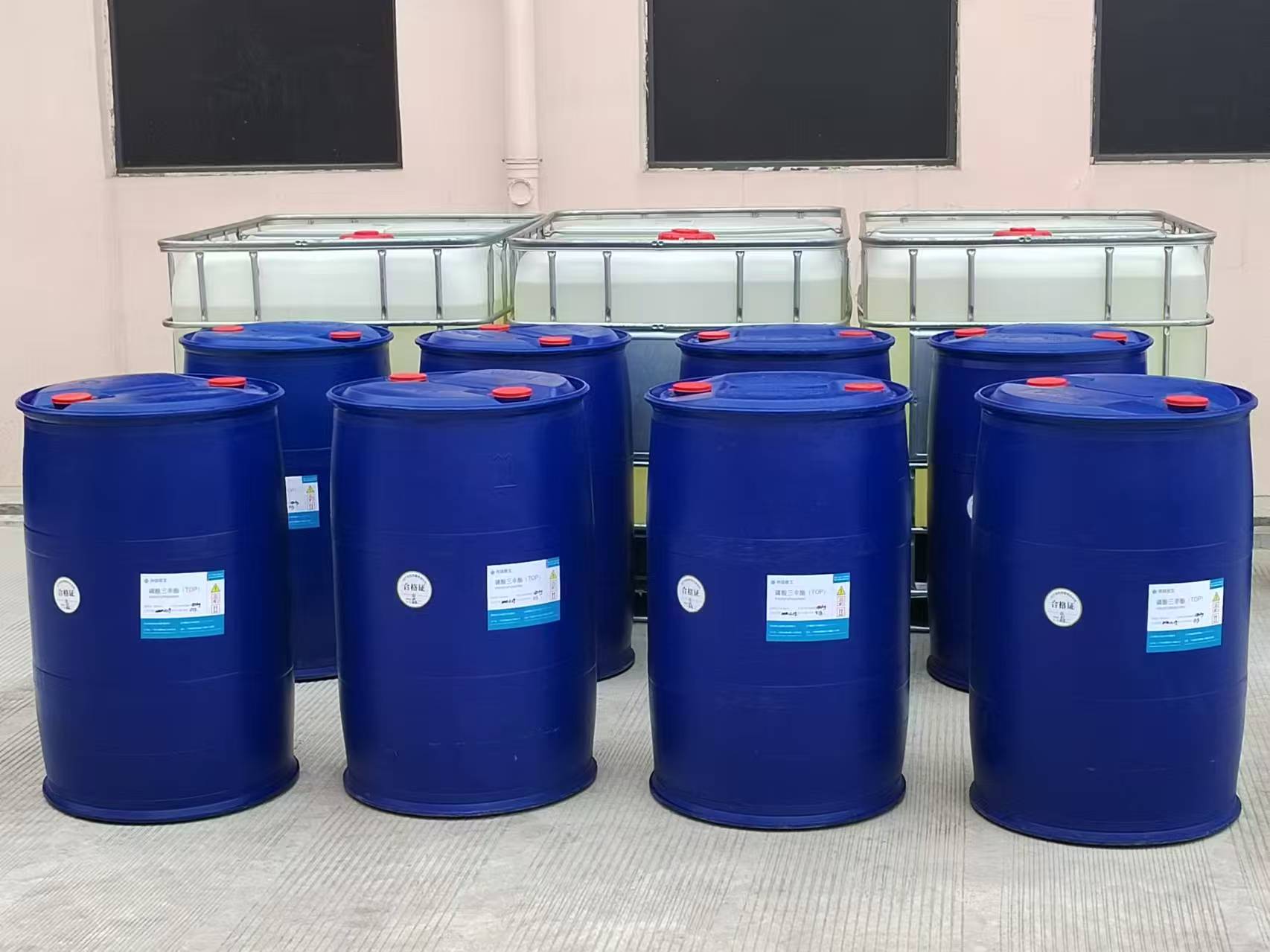
Next, grill them on logistics before you commit. A supplier that actually delivers will tell you exactly where the product is warehoused, whether it ships in drums, IBCs, or ISO tanks, and what the current lead time is for your region. Ask for a sample first. If they can get a 1-liter or 5-liter sample to your door within a week, that is a good sign. If they keep saying "2 to 4 weeks" without checking inventory, you are probably dealing with a middleman who has no control over the supply chain.
Finally, test their after-sales support with a small trial order. Pay attention to how they handle documentation, labeling, and any customs or quality issues. A dependable TEHP supplier will connect you with a technical person who can answer questions about storage stability, compatibility with other plasticizers like DOP or DOTP, and safe handling of peroxides that may form over time. If the only contact you ever talk to is a sales rep reading from a script, keep looking.
Purity Claims vs. Reality: Testing Methods That Reveal True Quality
A label that says "99% pure" can mean very little if no one checks what's actually in the jar. Independent labs use methods like high-performance liquid chromatography (HPLC) and gas chromatography-mass spectrometry (GC-MS) to separate and quantify the active compounds, flagging anything that shouldn't be there. These tools pick up synthetic additives, leftover solvents, and even closely related but cheaper fillers that pass a quick visual inspection.
Heavy metal contamination is another gap between marketing and reality. Atomic absorption spectroscopy or inductively coupled plasma mass spectrometry (ICP-MS) can detect lead, arsenic, cadmium, and mercury down to parts per billion. A trustworthy brand will share batch-specific certificates of analysis from third-party labs, not just a one-time purity claim on the front of the package.
Microbial limits and moisture content also matter. Aerobic plate counts, yeast and mold tests, and water activity measurements reveal whether the product will stay stable or become a breeding ground for bacteria. Real quality shows up in consistent, repeatable results across multiple batches, not in a single polished image or a vague word like "premium."
The Real Cost of Inconsistent Batches in Flame Retardant Applications
When flame retardant batches drift from spec, the damage rarely shows up in a single test result. It hides in the margins: a cable sheath that chars too early under load, a foam cushion that degrades into fuel instead of self-extinguishing, an electronics housing that passes lab trials but fails on the production line. Each off-spec batch forces rework, scrap, or worst of all, a quiet compromise in safety performance that no one notices until it's too late.
Procurement teams often chase cheaper suppliers without factoring in the true cost of inconsistency. Imagine a molding run where the first 500 parts meet UL 94 V-0, but the next 300 only reach V-2. Now you're not just paying for wasted resin and machine time; you're paying for line shutdowns, customer audits, and the slow erosion of trust with OEMs who specify flame retardant grades for a reason.
The fix isn't simply tighter incoming inspection. It starts with suppliers who control raw material sources, masterbatch dispersion, and thermal history batch after batch. When every pellet delivers the same char formation, the same limiting oxygen index, the same smoke density, the real cost disappears—not because you spent more on testing, but because you stopped paying for surprises.
Impurity Profiles You Shouldn't Ignore When Sourcing TEHP
When vetting TEHP suppliers, many buyers fixate on the headline purity number—often 99% or higher—and call it a day. But that single figure hides a messier reality. The impurities that actually matter, like 2-ethylhexanol leftovers, mono-ester byproducts, or trace heavy metals, can vary wildly from batch to batch. If you skip the detailed impurity profile, you might end up with material that passes the spec sheet but wreaks havoc in downstream processing, from off-odors in finished goods to unexpected color shifts or even catalyst poisoning in sensitive reactions.
A sharper approach is to demand a full breakdown of organic impurities, residual alcohols, and inorganic contaminants before you commit. Ask for gas chromatography data that separates the main ester from its close cousins, not just a single area-percent number. Pay particular attention to low-level aldehydes and peroxides, which can form during synthesis or storage and don't always show up in standard assays. These sneaky components often drive long-term stability problems, especially if your TEHP is destined for high-temperature applications or long-shelf-life formulations.
Finally, don't assume all suppliers interpret "impurity profile" the same way. One vendor's trace level might be another's red flag. Push for lot-specific certificates and, if possible, run your own spot checks on the first few shipments. The goal isn't to chase a perfect zero-impurity material—that's unrealistic—but to map the impurity fingerprint that your process can tolerate. Once you know which contaminants actually bite, you can source with confidence instead of gambling on a single purity claim.
Negotiating Supply Terms: Clauses That Protect Your Production Line
When drafting supply agreements, the continuity clause often gets overlooked until a line stoppage reveals its absence. Instead of a generic “best efforts” promise, push for a defined safety stock level the supplier must maintain—typically two to four weeks of your projected demand—and a penalty structure tied to downtime costs if that stock falls short. Pair this with an obligation to notify you within 24 hours of any raw material shortage that could affect deliveries, giving you time to activate a backup plan.
Quality-related clauses should do more than set a rejection threshold. Include the right to conduct unannounced audits of the supplier’s production batch records and retain ownership of rejected lots until replacement inventory is physically in your warehouse. A well-drafted material deviation clause, which forces the supplier to absorb the cost of line changeovers caused by minor specification shifts, can be the difference between a negotiated fix and a quietly absorbed production loss.
Finally, build in a tiered exit mechanism rather than a single termination right. Allow for short-term suspension of orders without losing favorable pricing if your demand drops below a set percentage, and negotiate a mandatory supply transition period of at least 90 days if the agreement ends. This buys your operations team real time to qualify an alternate source without running the line dry.
Storage and Handling Practices That Extend Tris(2-ethylhexyl) Phosphate Shelf Life
Storage conditions matter more than most labs realize. TEHP is hygroscopic enough to pick up moisture if left in open containers, and that water uptake accelerates hydrolysis, especially when the material sits in partial light. Keeping the drum or carboy tightly sealed after each transfer, ideally under a dry nitrogen blanket, slows this down considerably. Temperature also plays a quiet role: cold storage can cause phase separation or viscosity shifts, while sustained heat above 40°C promotes oxidative degradation. A steady 15–25°C in a dark, well-ventilated cabinet is usually the safest compromise.
Handling habits are just as critical. Use clean, dry stainless steel or glass transfer lines and avoid introducing metal fines or dust from worn pump seals. Even trace iron or copper can catalyze decomposition of the phosphate ester, shortening shelf life without any obvious visual cue. Dedicate a small container for daily use rather than repeatedly opening the main stock. This limits exposure to ambient humidity and oxygen. If you must sample from the bulk vessel, purge the headspace with nitrogen afterwards and reseal immediately.
Finally, keep TEHP away from strong oxidizers, acids, and open flames. While it is not particularly volatile, it can degrade into acidic byproducts when stressed, and those byproducts further attack the ester bond. Rotate inventory on a first-in, first-out basis and mark the opening date on each container. A simple log of appearance, odor, and viscosity at each use helps catch early signs of trouble before the material drifts out of spec.
FAQ
The main difference usually comes down to batch consistency and how transparent they are with documentation. A reliable source will provide full certificates of analysis, share impurity profiles on request, and flag any production variations before shipping rather than after you have already received the material.
Start with the certificate of analysis, but do not stop there. Ask about ester content, acid value, moisture level, and trace metal residues, because these can affect downstream performance. Request a small sample for your own lab work and compare it against your process requirements, not just the supplier's generic spec sheet.
Uses such as flame-retardant plasticizers, specialty lubricants, and certain polymer processing aids often demand stricter control of color, acidity, and low-boiling impurities. If TEHP is being used in a high-temperature process, even minor volatile content can cause odor or fuming issues.
TEHP is not something most plants replace every week, so a bad batch can sit in inventory or contaminate a production line for a long time. With a reliable dealer, you are less likely to deal with hidden re-branded material, off-spec leftovers, or supply gaps that force a rushed qualification of an unknown source.
Confirm the batch number matches the certificate of analysis, check that the packaging is intact and the container material is appropriate for phosphate esters, and look for any signs of haze or sediment that were not present in the approved sample. Record the receiving temperature if you live in a cold climate, since high-viscosity esters can be slow to settle after cold storage.
Location itself does not change the chemistry, but it can affect logistics and storage conditions. Long transit times, extreme temperatures, or repackaging in non-dedicated containers can introduce moisture or contamination. A dealer with climate-controlled warehousing and direct, unopened drum shipments from the manufacturer is usually a safer bet.
Ask who the original manufacturer is, whether the material is repackaged or shipped in original sealed drums, how long it has been in stock, and what their policy is if a batch fails your incoming inspection. Also ask for a recent stability or shelf-life data sheet, because some phosphate esters can slowly pick up moisture if stored in partially used containers.
Conclusion
Finding a Tris(2-ethylhexyl) Phosphate supplier who actually delivers means looking past polished sales pitches and glossy websites. Ask for batch-specific certificates of analysis, not generic spec sheets, and verify those numbers through independent testing before you commit to volume. A quick NMR or GC-MS run can separate a dealer whose "99% purity" holds up under scrutiny from one whose product drifts when it matters most. In flame retardant applications, inconsistent batches are more than an inconvenience—they force reformulation, disrupt production schedules, and quietly erode margins every time a line adjustment is needed. The real cost shows up in wasted raw materials, longer downtime, and customer complaints that trace back to a single off-spec delivery.
Pay attention to impurity profiles that standard data sheets often omit: residual alcohols, acidic byproducts, and trace metals all influence long-term stability and performance in ways that only become obvious after weeks of storage or at elevated processing temperatures. When negotiating supply terms, push for clauses that tie acceptance to your own lab results and include recall or replacement obligations if the material fails agreed specifications—this shifts the risk back to the dealer and keeps your production line protected. Don't overlook storage, either. TEHP kept in sealed, moisture-free containers at moderate temperatures avoids hydrolysis and oxidation, extending shelf life and keeping viscosity and color within expected limits. A dealer who understands these details and documents their handling practices is worth far more than one competing on price alone.
Contact Us
Contact Person: WANG SIHAI
Email: [email protected]
Tel/WhatsApp: +86-13815295628
Website: https://www.fortunechemtech.com/index_en.html