

Top Silicon Carbide Ceramic Components for Extreme Industrial Applications
2026-10-09
When temperatures climb past 1,600°C, corrosive chemicals gnaw at metal parts, and abrasive slurries wear down even hardened alloys, conventional materials simply surrender. Silicon carbide ceramic components flip that script—offering hardness near diamond, thermal shock resistance, and chemical inertness that keep critical processes running where failure isn't an option. At HUAYI TECH, we engineer these components for the harshest industrial environments, from semiconductor fabrication to molten metal handling. Here’s a look at the top performers reshaping extreme applications.
Silicon Carbide vs. Alumina: The Real Difference in Extreme Environments
When engineers pick materials for punishing environments, the choice between silicon carbide and alumina often comes down to how each handles thermal shock, corrosion, and abrasive wear. Alumina, or aluminum oxide, boasts excellent electrical insulation and a lower cost, but its toughness drops sharply under rapid temperature swings. A sudden quench from 800°C can crack a standard alumina component, whereas silicon carbide shrugs off the same stress thanks to its higher thermal conductivity and lower expansion coefficient. That difference alone shifts the balance in furnaces, rocket nozzles, and molten-metal handling.
Corrosion resistance tells a similar story. In acidic or caustic slurries, alumina holds up reasonably well, but it degrades noticeably in hydrofluoric acid and strong alkalis. Silicon carbide, especially the sintered or reaction-bonded grades, survives hot acids, boiling sulfuric acid, and even oxidizing environments that would etch alumina over time. In semiconductor wafer processing, for instance, SiC fixtures and susceptors outlast alumina by a wide margin, reducing downtime and particulate contamination.
Hardness and wear behavior also diverge sharply. Alumina rates around 9 on the Mohs scale—hard, but brittle under impact. Silicon carbide sits closer to 9.5 and, more importantly, retains its edge at elevated temperatures where alumina softens. In sand-blasting nozzles, mechanical seals, and pump bearings handling abrasive slurries, SiC often delivers three to five times the service life of alumina. The real difference isn't a single spec; it's how the material behaves after weeks of thermal cycling, chemical attack, and particle impingement. That's where silicon carbide earns its premium.
Mechanical Seals That Keep Pumps Running When Everything Else Fails
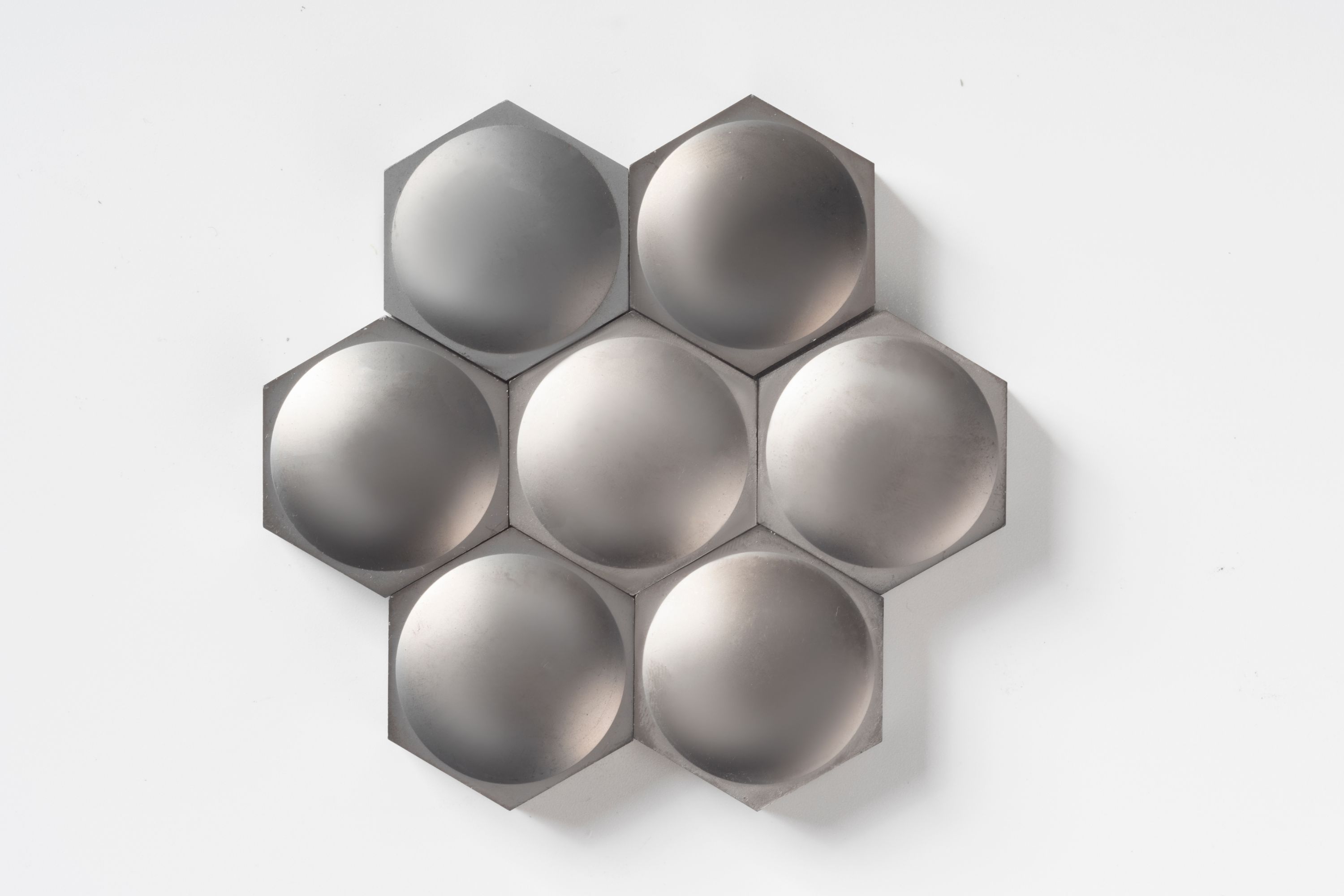
A pump is only as dependable as the seal at its shaft. In refineries, chemical plants, and remote lift stations, the real test comes when abrasive slurries, temperature swings, or dry-running episodes chew through conventional packing. That's where heavy-duty mechanical seals earn their keep. Unlike basic gland packing that needs constant adjustment and leaks by design, a robust seal uses lapped faces—often silicon carbide against carbon—to hold a fluid film so thin it barely registers, yet thick enough to prevent face contact. The result is a pump that keeps moving product even when suction pressure drops, solids settle, or the operator is miles away.
What separates seals that survive from those that shatter is often the support system. A dual cartridge seal fed by a clean barrier fluid maintains face lubrication when the process fluid turns to vapor or sludge. In ethanol plants, for instance, pumps running hot, low-viscosity feeds can lose film strength in seconds. A properly piped Plan 53B system keeps the inner faces wet and cool, while the outer seal acts as a backup. Even if the barrier pressure dips, the pump doesn't dump product to atmosphere. That redundancy means a seal failure becomes a slow, detectable leak rather than a sudden shutdown.
Burner Nozzles and Thermocouple Sheaths: Surviving Furnace Temperatures
Burner nozzles and thermocouple sheaths rarely get much attention until one fails in the middle of a production run. Inside a high-temperature furnace, these components face a brutal combination of radiant heat, thermal cycling, and chemical attack from combustion gases. Alloy selection makes the difference between a four-month replacement cycle and a two-year run. For nozzles, cast or wrought alloys such as 230, 602 CA, or Kanthal APM are often chosen because they retain strength and resist oxide spalling above 1000°C. Thermocouple sheaths, on the other hand, tend to lean on dense alumina, mullite, or Inconel 600 depending on whether the furnace atmosphere is oxidizing, reducing, or loaded with sulfur.
Beyond raw material, geometry and mounting details determine whether these parts survive repeated start-stop cycles. A nozzle with abrupt changes in wall thickness will crack at the transition long before the flame side wears thin. Tapered bores and radiused fillets help spread thermal stress instead of concentrating it at a sharp corner. Thermocouple sheaths need a small amount of radial clearance in their flanges so axial expansion does not buckle the tip into a flame or a hot gas stream. In many retrofit jobs, simply drilling an undersized guide hole and reaming it for a slip fit eliminates the bowing that shortens sheath life.
Field inspection stories often show the same failure signatures: intergranular cracking at the nozzle tip, oxide wedges lifting scale from the sheath surface, or a weld joint that relaxed under creep and let the tip droop into a burner tile. One common upgrade is a diffusion aluminide coating on nozzle internals, which forms a thin alumina barrier without changing the base metal's shape. Another is switching to a two-piece sheath with a ceramic outer tube and an inner metal protection tube, so the thermocouple junction survives even if the outer layer checks or cracks. The goal is not to make these parts invincible, but to make their failure predictable and scheduled rather than an emergency shutdown.
How Reaction-Bonded SiC Compares to Sintered for Heavy Wear Parts
In heavy wear environments, the real difference between reaction-bonded SiC and sintered SiC often comes down to what holds the grains together. Reaction-bonded material contains a network of silicon carbide particles embedded in free silicon—typically 10 to 15 percent by volume. That silicon matrix is softer than the SiC grains and becomes a limiting factor when parts face continuous sliding, high-velocity particle impact, or corrosive slurries. Sintered SiC, on the other hand, is densified without leaving a continuous metallic silicon phase, producing a nearly single-phase ceramic with higher hardness and a more uniform wear surface. For components like pump shafts, seal faces, and liners that see constant abrasion, sintered grades tend to hold their dimensions longer.
Reaction-bonded SiC still has practical value for certain heavy-wear components. It can be cast into complex or large near-net shapes without the high cost of post-sintering machining, and the free silicon gives it slightly better resistance to crack propagation under mechanical shock. If the wear mechanism is moderate and the part geometry is complicated, reaction-bonded SiC may offer a sensible cost-performance balance. But when hard particles, high temperatures, or aggressive chemicals are present, that free silicon becomes a weak point—it wears away faster and can corrode, leaving SiC grains exposed and accelerating further material loss. In severe wear conditions, sintered SiC is usually the stronger choice.
The Unseen Workhorses: SiC Liners and Tubes in Chemical Processing
Walk through any chemical plant and the towering reactors, distillation columns, and piping networks dominate the view. But tucked inside these giants are components that rarely get noticed yet quietly determine whether a process runs smoothly or grinds to a halt. Silicon carbide liners and tubes fall squarely into that category. They line the inner walls of vessels, channel corrosive slurries, and shield critical zones from thermal shock—all while operating in conditions that would eat through standard alloys in weeks. Their job is unglamorous, but without them, many of the industry's most aggressive reactions would simply be impossible to sustain.
What makes SiC so valuable in chemical processing isn't a single property but a combination that few materials can match. It shrugs off hydrochloric acid, sulfuric acid, and alkaline solutions with near indifference. It holds its strength at temperatures where stainless steel softens and becomes vulnerable. And because silicon carbide has excellent thermal conductivity paired with low thermal expansion, liners resist cracking even when a cold feed suddenly hits a hot surface. That resilience translates into fewer shutdowns, less contamination, and longer intervals between maintenance turnarounds—exactly the kind of quiet efficiency plant managers dream about.
In practice, these tubes and liners show up in heat exchangers, quench systems, and fluidized bed reactors. They serve as protective sleeves for thermowells, carrier tubes for catalyst beads, and liners in cyclones handling abrasive particulates. Each installation is tailored to the specific geometry and stress profile, often produced by slip casting or isostatic pressing to achieve uniform density. The result is a component that doesn't call attention to itself, but reliably does the dirty work day after day. And that's the point: the best workhorses are the ones you never have to think about until the next scheduled inspection rolls around.
Why Custom Silicon Carbide Shapes Beat Off-the-Shelf in Harsh Service
Standard silicon carbide plates and tubes force engineers into workarounds. A burner nozzle might need a tapered bore that simply doesn't exist in a catalog, so the team ends up stacking washers or grinding a rectangular block by hand. Each extra seam becomes a leak path, each field modification eats time and weakens the part. Custom shapes go in as a single piece with the profile already formed, so the assembly has fewer joints and the material isn't stressed by post-machining.
Harsh service rarely applies load uniformly. A custom radius here, a thickened wall there, and a slotted feature for thermal expansion can put silicon carbide where the stress actually is, instead of leaving excess material where it does nothing. Off-the-shelf parts are designed for general cases, which usually means they are overbuilt in some spots and borderline in others. When molten metal splash, abrasive slurry, or rapid temperature swings are the daily reality, that mismatch shows up as cracking or premature wear.
There's also the matter of fit. Pumps, kiln furniture, and chemical reactor internals rarely match the dimensional grid of stock items. A near-miss standard shape often requires shims, cements, or heavy grinding to install, and those fixes compromise the ceramic. A custom-formed component drops into place and maintains the designed clearance, so thermal expansion and mechanical loads behave the way the original design intended. Over time, that translates into fewer shutdowns and less guessing about when a part will fail.
FAQ
Its combination of high thermal conductivity, low thermal expansion, and exceptional hardness allows it to survive rapid temperature swings and abrasive conditions that would crack or wear down most other ceramics.
Mechanical seal faces, pump shafts, burner nozzles, kiln furniture, and wafer handling components appear frequently because they endure continuous friction, corrosive chemicals, or temperatures above 1000°C.
It retains strength and dimensional stability much better at elevated temperatures, especially above 1200°C, whereas alumina softens and zirconia may undergo phase changes that weaken it.
Yes, sintered or reaction-bonded grades resist attack from most acids, bases, and solvents, making them reliable for pump linings, valves, and agitators in aggressive chemical streams.
Consider porosity, grain size, and bonding type: reaction-bonded SiC is easier to machine into complex shapes, while direct sintered SiC offers higher density and better wear resistance for precision seals.
It is brittle and can fail suddenly under tensile or impact loads, so components need compressive or well-supported designs; also, machining after firing is expensive due to its extreme hardness.
It withstands fluorine-based plasma etching, resists particle generation, and maintains high purity at processing temperatures, which prevents contamination of wafers during critical steps.
Its hardness and low friction against carbon-graphite counterfaces reduce wear, while high thermal conductivity dissipates frictional heat, extending seal life even with poor lubrication or dry running.
Conclusion
In extreme industrial settings, material selection often decides whether a process runs or fails. Silicon carbide ceramics stand apart from alumina in these conditions, not just for higher hardness but for a resilience that holds up under thermal shock, corrosive attack, and abrasive wear that would quickly degrade oxide-based counterparts. Mechanical seals made from SiC keep pumps turning long after conventional materials give out, thanks to self-mated faces that resist galling and maintain flatness under pressure. In furnace zones, burner nozzles and thermocouple sheaths of silicon carbide survive temperatures that would warp metals or crack less stable ceramics, preserving combustion efficiency and sensor accuracy. These components rarely get attention until they fail—then the cost of downtime makes their value obvious.
The choice among SiC grades matters too. Reaction-bonded silicon carbide offers excellent wear resistance at lower cost and can be cast into complex near-net shapes, making it ideal for heavy wear parts like liners and pump components. Sintered SiC, however, delivers higher density and better performance in chemically aggressive environments, often preferred for seals and precision parts. In chemical processing, SiC liners and tubes act as unseen workhorses, containing aggressive acids and slurries without contamination or degradation. For truly demanding service, custom silicon carbide shapes beat generic off-the-shelf options by eliminating weak points, optimizing cross-sections, and matching the exact thermal and mechanical demands of the application. Off-the-shelf parts force compromises; custom SiC parts let engineers design for the real environment, not an approximation of it.
Contact Us
Contact Person: Junting Leo
Email: [email protected]
Tel/WhatsApp: +86 18615009766
Website: https://www.huayimaterial-china.com/