

Top GMP Cleanroom Construction: Best Practices for a Compliant Facility
2026-08-03
Building a GMP-compliant cleanroom isn’t just about meeting regulations—it’s the foundation of safe, effective pharmaceutical manufacturing. At GENO Pharmatech, we’ve seen how smart design and meticulous execution can turn a complex challenge into a competitive advantage. In this post, we strip away the jargon and walk you through the top best practices that separate a truly compliant facility from a costly compromise. Ready to rethink what’s possible in cleanroom construction?
Blueprinting Compliance: Early Design Decisions for Cleanroom Integrity
Achieving regulatory compliance in cleanroom construction begins long before the first wall panel is installed. Early design decisions set the stage for every system that follows, from airflow patterns to material compatibility. Architects and engineers must consider not just current standards like ISO 14644, but also how those requirements will shape daily operations, maintenance access, and even future reclassification. A well-integrated blueprint aligns the facility's layout with process flow, minimizes cross-contamination risks by design, and accounts for the inevitable need to retrofit or upgrade without compromising the controlled environment.
Material selection during the design phase directly influences long-term integrity. Surfaces, sealants, and structural components must resist chemical attack, shed minimal particles, and support easy cleaning. Designers must also balance durability with constructability—some high-performance materials can be challenging to install without introducing defects. Early collaboration with cleanroom envelope specialists helps identify suitable options that meet both ISO classification targets and the practical realities of construction sequencing. This includes detailing transitions between dissimilar materials to avoid cracks or gaps that become contamination traps.
Mechanical system layout is another critical decision point. Placing air handlers, ductwork, and filtration units in ways that optimize laminar flow while minimizing energy consumption requires careful modeling. Early-stage computational fluid dynamics studies can reveal dead zones or turbulence before they become hard-to-fix problems on site. Similarly, planning for pressure cascades, gowning room locations, and equipment pass-throughs determines how well the cleanroom will function under dynamic working conditions. Rushing these decisions often leads to costly redesigns or operational compromises once the facility is live.
Material Choices That Define Contamination Resistance
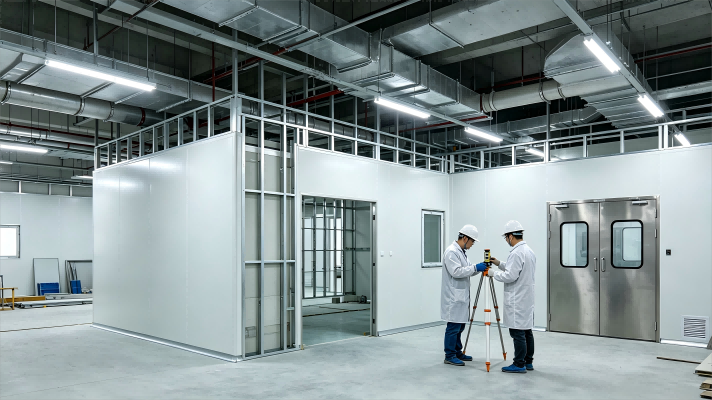
The reason some surfaces stay cleaner longer isn't always about the cleaning routine—it often boils down to what they're made of. Materials with a dense, non-porous structure offer fewer footholds for microbes. When the matrix doesn't readily absorb moisture or react with common sterilants, it naturally curbs the buildup that leads to contamination. This isn't just about being smooth; it's about molecular resistance to the tiny pit and crevice formation that can happen over time.
Take a closer look at 316L stainless steel. Its low carbon content and the addition of molybdenum give it exceptional resistance to pitting from chloride exposure, which is a huge advantage in environments that rely on aggressive cleaning chemicals. Then there are high-performance polymers like PTFE and PEEK, which don't just resist chemical attack—they outright refuse to corrode or leach substances back into the process. Even medical-grade silicone, carefully formulated without extractable plasticizers, plays a critical role where flexibility and long-term sterility must coexist. The pattern is consistent: choose a material that's inherently stable, and you slash the risks that coatings and surface treatments can only partially address.
These decisions matter most in places where failure isn't an option. Pharmaceutical suites, food processing lines, and implantable device manufacturing all depend on this kind of upfront material integrity. It's not simply about meeting standards—it's about building a process on a foundation that won't quietly degrade. When you walk into a facility where every flange, gasket, and conveyor belt is chosen with contamination resistance in mind, you notice the difference: less unplanned downtime, fewer rejected batches, and a visible absence of the corrosion or discoloration that signals a losing battle against the environment.
Harnessing Airflow: Engineering a Controlled Environment
Mastering airflow isn’t just about moving air from point A to point B—it’s an intricate dance of pressure, temperature, and velocity that shapes everything from sterile cleanrooms to high-stakes data centers. When you engineer a controlled environment, every cubic foot matters; a slight pressure imbalance can invite contaminants, disrupt sensitive processes, or waste energy. The real art lies in designing invisible pathways that guide air precisely where it’s needed, scrubbing away particulates and maintaining a bubble of stability against the chaos outside.
Forget one-size-fits-all solutions. A lab handling volatile chemicals demands fume hoods that pull air away from researchers, while a semiconductor fab relies on laminar flow to keep microscopic defects at bay. The trick is to model air patterns as if they were liquid currents, using computational fluid dynamics to predict how a stray heat source or a half-open door might throw the whole system off balance. Then you tune the hardware—variable-speed fans, HEPA filters, and smart dampers—to react in real time, turning a static setup into a living, breathing shield.
The payoff goes beyond mere compliance with ISO standards. When you get the airflow right, equipment runs cooler and lasts longer, workers stay more alert, and the entire operation hums with an almost organic efficiency. It’s the difference between a room that’s merely air-conditioned and one that actively protects what happens inside it. That’s the quiet triumph of a well-engineered environment: nobody notices the air until it fails, and with careful design, they never have to.
Building Clean: On-Site Tactics to Eliminate Contaminants
Contamination on a job site doesn't just slow things down—it can lead to rework, health risks, and compliance headaches. The first line of defense is a strict entry protocol. Before stepping onto the construction floor, workers should use sticky mats and boot wash stations to trap and remove dirt and chemical residue from footwear. Tool belts and personal equipment need a quick wipe-down at the same checkpoint, ideally with a designated cleaning agent that won't corrode metal parts. It sounds tedious, but when everyone follows the same pre-work routine, the overall load of outside pollutants drops noticeably within a week.
During active construction, airborne particles from cutting, grinding, and mixing can settle on freshly installed surfaces and inside open ductwork. A practical countermeasure is to section off the work area with zip-wall barriers and run HEPA-filtered air scrubbers continuously. The placement of these scrubbers matters more than their raw power—position them near dust-generating tasks and orient the exhaust toward the intake of a secondary unit to create a circular clean-air loop. For moisture and mold prevention, keep a handheld moisture meter on site and spot-check wood, drywall, and insulation before sealing up walls. Catching a damp spot early saves the crew from having to tear out finished work later.
End-of-shift routines are just as crucial. Instead of relying on a generic sweeper, designate two crew members to detail-clean each zone using vacuums with brush attachments and microfiber cloths for horizontal surfaces. Pay extra attention to stair treads, sills, and any crevices where debris likes to hide. Toss all construction waste into covered bins rather than open piles, and make sure the regular trash hauler knows not to leave skids overnight where wind can carry dust back indoors. These small, consistent habits turn a reactive cleanup process into a proactive shield, letting interior finishes go in cleaner and stay that way through final walkthrough.
Validation Protocols That Prove Performance Under Pressure
In high-stakes environments, validation isn't just a checklist—it's a stress test that separates resilient systems from fragile ones. Protocols that prove performance under pressure go beyond simulated conditions, replicating the chaos of real-world load spikes, resource exhaustion, and cascading failures. They demand that components hold up not only when everything goes right, but when everything goes wrong. This means injecting latency, cutting power mid-transaction, and forcing unexpected fault-to-failover transitions while measuring whether core functions degrade gracefully or collapse outright.
True validation under duress requires long-duration soak testing married with adversaries that actively work against stability. It’s not enough to verify that a system survives a single peak; it must demonstrate consistent behavior during sustained assault—whether from traffic surges, data corruption, or dependency outages. Custom harnesses are often built to pump entropy into the stack, and operators watch for drift in latency distributions, memory leaks, and recovery times. The goal isn't to avoid all failures, but to ensure that when parts inevitably break, the cascading impact stays within defined boundaries and automatic remediation kicks in before human intervention is needed.
Rather than treating these protocols as final gates, teams embed them into continuous delivery pipelines, so every change is subjected to the same harsh scrutiny. This shifts the conversation from "does it work?" to "does it survive?"—turning reliability into a measurable engineering goal instead of a vague aspiration. The result is a living proof that performance isn’t just a static benchmark, but an adaptive characteristic that hardens each time it’s challenged.
The Human Element: Cultivating a Culture of Contamination Control
Contamination control isn't just about protocols and equipment—it's fundamentally about people. The most meticulously designed cleanroom fails if those working inside it don't internalize the ‘why’ behind every procedure. Cultivating a culture means moving beyond compliance and into genuine ownership, where each team member sees themselves as a guardian of product integrity. This shift starts with storytelling: sharing real-world examples of how a single lapse impacted a patient or a batch, making the stakes personal and immediate.
Effective training is continuous and adaptive, not a one-time PowerPoint session. It thrives on mentorship, where seasoned operators model behaviors like mindful gowning and deliberate movement—subtle habits that manuals can't fully capture. Regular, blameless incident reviews turn mistakes into learning opportunities, reinforcing that the goal is improvement, not punishment. When employees feel safe to report near-misses, the organization gains visibility into risks before they become crises.
Leadership plays a quiet but pivotal role. When supervisors are visible on the floor, asking questions about challenges rather than just checking boxes, it signals that quality is a shared value. Recognition programs that celebrate individuals who exemplify contamination prevention—not just those who meet output targets—reinforce that culture daily. In the end, a robust contamination control culture feels less like enforced discipline and more like collective pride in doing work that truly matters.
FAQ
Airflow patterns, pressure cascades, and surface finishes form the backbone of compliant design. Getting the HVAC system right ensures proper air changes and filtration, while smooth, non-porous materials prevent particle shedding. Equally important is a layout that supports logical material and personnel flows to minimize cross-contamination.
Materials dictate how easily a room can be cleaned and how many particles it generates. Walls and floors need to withstand frequent chemical disinfection without degrading. Stainless steel, epoxy coatings, and seamless vinyl are common choices because they resist microbial growth and don't flake off over time.
HVAC is the heart of contamination control. It regulates temperature, humidity, and pressure differentials between zones while continuously cycling air through HEPA or ULPA filters. Even small fluctuations can disrupt unidirectional airflow and compromise product integrity.
Rushed sealing of joints and penetrations often leads to leaks that allow unfiltered air in. Inadequate floor leveling can create gaps at coving joints. Skipping early-stage pressure decay tests only reveals these problems after the facility is built, resulting in costly retrofits.
Modular walls and ceiling systems arrive pre-cut with integrated utility chases, drastically reducing on-site cutting and dust generation. This approach also allows parallel off-site fabrication while groundworks proceed, cutting timelines by 30-40% without sacrificing compliance.
A thorough commissioning process includes airflow velocity mapping, particle count testing, and filter integrity checks. Pressure differentials must be verified under both static and dynamic conditions. Only after a successful performance qualification run can the room be released for production.
Early collaboration prevents fundamental layout issues that later compromise compliance. Experts anticipate regulatory expectations and integrate cleanability into structural decisions—things architects unfamiliar with GMP often overlook, leading to expensive redesigns down the line.
Conclusion
Achieving a truly compliant GMP cleanroom begins long before the first wall panel is installed. Early design decisions set the foundation for integrity—every layout choice, from airlock placement to gowning flow, must align with the intended process and contamination risk profile. This blueprinting phase isn't just about meeting regulatory checkboxes; it's about anticipating how people, materials, and waste will move without compromising the clean envelope. Material selection then follows suit, with surfaces chosen not only for chemical resistance and cleanability but also for their ability to resist microbial growth and particle shedding. Flooring, wall coatings, and even sealants demand scrutiny because any compromise here becomes a chronic source of contamination. Airflow engineering ties these static elements together: the HVAC system must be tuned to deliver precise pressure cascades, temperature, and humidity while ensuring unidirectional flow in critical zones. Computational fluid dynamics modeling often reveals dead spots or turbulence that conventional layouts miss, allowing teams to refine diffuser placement and return air paths before construction solidifies the design.
On-site execution transforms plans into reality, and here the rigor of clean build protocols makes the difference. Strict material staging, limited access, and continuous particulate monitoring during construction prevent the embedding of contaminants. Validation is not a final stamp but a stress test: ISO classification, airflow visualization, and recovery rate studies must prove performance under dynamic conditions, not just static readings. Even the best facility will fail without a workforce that internalizes contamination control. Training must move beyond SOP recitation to situational awareness—operators need to recognize how their own movements, clothing, and habits influence the environment. When culture and construction align, the cleanroom becomes a living system that maintains compliance not because it is audited, but because every element, from the floor tile to the air change rate, works in concert.
Contact Us
Contact Person: Amy Yang
Email: [email protected]
Tel/WhatsApp: 008619330882686
Website: https://www.genopharmatech.com/