
Top Electric Forklift Models Revolutionizing Material Handling
2026-06-27
The shift toward electric forklifts is reshaping how warehouses and distribution centers operate, driving unprecedented gains in efficiency and sustainability. As businesses race to meet tighter emissions standards and reduce operational costs, the latest electric models are proving that zero-emission doesn’t mean zero power. Among the industry leaders pushing this transformation is HANGCHA, whose innovative designs are redefining what modern material handling equipment can achieve. In this post, we’ll explore the top electric forklift models that are setting new benchmarks—and why they’re becoming indispensable for forward-thinking operations.
Silent Operators: Electric Forklifts Transforming Warehouse Soundscapes
Walk into a warehouse running on electric forklifts and the first thing you’ll notice is what’s missing: the constant rumble of diesel engines. Instead, the air carries a low, steady hum that blends into the background, letting other sounds come through—footsteps, conversation, the clink of pallets settling into racks. For workers who’ve spent years shouting over gas-powered machines, the shift feels like entering a library after a rock concert.
This quieter environment does more than just ease the ears. Without the need to raise voices, teams communicate more clearly, cutting down on missteps and delays. The lack of engine vibration also means operators finish shifts with less fatigue, more alert. In those hushed aisles, the real sound you’ll catch is one that’s often overlooked: the simple rhythm of a job being done well.
Clean and Capable: The Push for Emission-Free Heavy Lifting
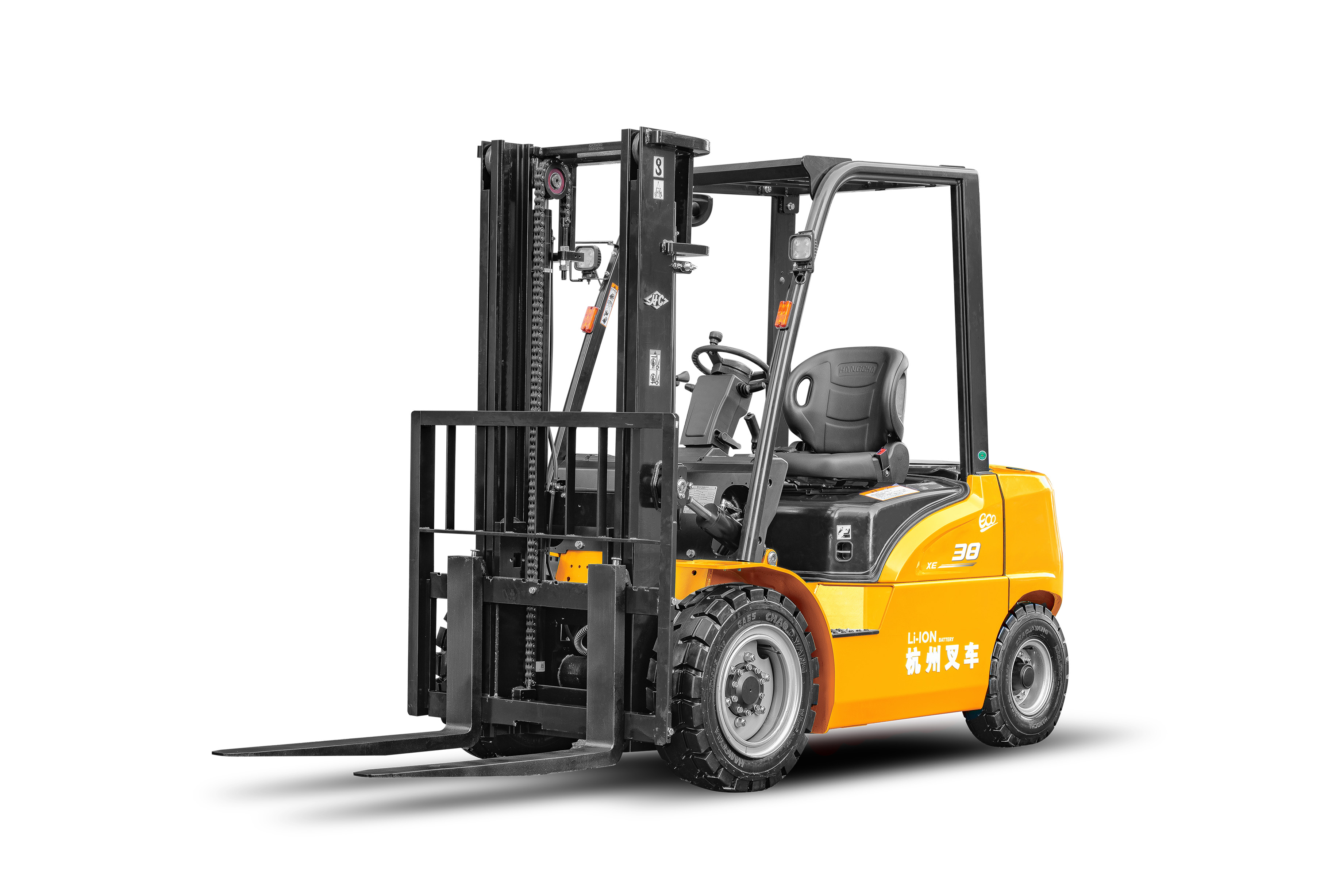
The shift toward emission-free heavy lifting isn't just about swapping diesel for batteries—it's a fundamental redesign of how we power the machines that build our world. From electric excavators silently carving foundations to hydrogen-powered cranes hoisting steel against city skylines, the industry is discovering that clean doesn't mean weak. Torque-rich electric motors can outpull their combustion counterparts, and advances in energy storage are finally making all-day operation a reality on job sites that used to echo with engine roar.
But capability extends beyond raw power. These new machines are redefining what heavy equipment can do. Without exhaust fumes, they can work indoors or in sensitive environments that were previously off-limits. Lower vibration and precise digital control let operators perform delicate lifts that would have been jerky with hydraulic systems. And with fewer moving parts, maintenance shifts from constant oil changes to occasional software updates. The quiet is just a bonus.
Of course, the road to zero emissions is still littered with hurdles. Charging infrastructure on remote sites remains sparse, and the upfront cost can sting even with long-term fuel savings. Yet the momentum is unmistakable. Manufacturers are racing to extend runtimes, governments are tightening emissions standards, and contractors are realizing that silence and strength can coexist. The push isn't just about meeting regulations—it's about building better machines that happen to leave no trace behind.
Torque Redefined: Brushless Motors Driving Instant Response
The moment you press the throttle, the difference is unmistakable. Unlike traditional brushed motors that rely on physical contacts, brushless motors use electronic commutation to eliminate lag. This translates into torque that arrives almost telepathically, with no hesitation or stutter. The result is a driving experience where every command is met with an immediate, fluid surge of power.
What makes this instant response possible is the way brushless motors manage magnetic fields. By energizing coils in precise sequences, they generate rotational force from a standstill without the friction and sparking of brushes. This not only reduces wear but allows the motor to react within milliseconds, turning what used to be a gradual buildup into a crisp, linear pull.
For drivers, this means more than just quick acceleration—it’s about a direct connection to the machine. Merging onto highways or navigating tight corners feels effortless, as the motor seamlessly adapts its output to your demands. Brushless technology redefines torque not as a mere specification, but as an instinctive extension of your intent.
Space Savers: Nimble Designs Optimizing Narrow Aisles
When warehouse real estate comes at a premium, every inch counts. The secret to thriving in tight spaces lies in equipment engineered to pivot, slide, and glide through slot-like aisles with precision. Think compact reach trucks and articulated forklifts that tuck their masts away, allowing operators to stack higher without demanding extra turning room. These machines often feature offset cabs and panoramic glass, giving operators clear sightlines to the load while maintaining a footprint barely wider than a standard pallet.
Beyond the vehicle itself, smart integration with racking systems pays dividends. Adjustable forks, side-shifting carriages, and integrated camera systems turn previously unworkable gaps into productive storage lanes. Some designs dump traditional counterweights in favor of lithium-ion batteries positioned low in the chassis, improving both maneuverability and stability on uneven floors. By rethinking geometry and weight distribution, these nimble designs let warehouses reclaim up to twenty percent more storage capacity without knocking down walls.
The real magic happens when operators' habits align with equipment capabilities. Targeted training on pivot points and aisle mapping transforms hesitant crawling into smooth, confident motion. Wireless fleet management tools also track close calls near racking, flagging zones where the aisle width can be trimmed further. In the end, it's this combination of hardware ingenuity and operational finesse that truly defines a space-saving philosophy—where narrow aisles become assets, not obstacles.
Power That Lasts: Lithium-Ion Battery Milestones on the Floor
The shift toward lithium-ion on the cleaning floor didn't come with a loud announcement. For ages, heavy lead-acid blocks were the standard in scrubbers and sweepers, tolerated for their low upfront cost but resented for their weight and maintenance. Early adopters began swapping them out in smaller walk-behind machines, noticing right away that a lithium pack could shed pounds while delivering the same—or better—runtime. It was a practical win that quietly reset expectations.
A genuine leap came when cells started holding more energy without growing in size. Suddenly, a ride-on floor scrubber could clock eight hours in a warehouse and still have reserve. Hot on the heels of that came fast-charging breakthroughs, turning what was once an overnight ritual into a coffee-break top-up. For facilities running multiple shifts, this wasn't just convenient; it meant fewer batteries to manage and a smoother workflow.
The most recent chapter is about intelligence embedded right into the pack. Onboard management systems now monitor each cell's health, balancing charge rates to dodge degradation and issuing subtle warnings before performance dips. Some setups even learn a building's usage patterns, fine-tuning themselves so that a battery bought today might still be going strong a decade from now. It's a kind of staying power that keeps floors clean without constant oversight.
Smarter Fleet Coordination: Integrated Telematics and Real-Time Data
Modern fleet management has moved far beyond basic GPS tracking. By weaving together telematics data from vehicles, driver behavior inputs, and live traffic feeds, operations can shift from reactive to predictive. This integration means that when a delivery truck hits unexpected congestion, the system doesn’t just log a delay—it instantly recalculates routes for nearby vehicles, adjusts ETAs for customers, and flags the driver’s hours-of-service limits to prevent compliance issues. It’s a dynamic ecosystem where every sensor ping and data point contributes to a constantly evolving operational picture.
The real magic happens when edge computing meets centralized platforms. Telematics devices on vehicles process critical alerts locally—like collision warnings or lane departures—without relying on cloud connectivity, ensuring split-second reactions. Meanwhile, the aggregated data flows into a central hub where machine learning models identify patterns: perhaps a certain intersection consistently slows down afternoon deliveries, or a specific driver’s braking habits correlate with higher fuel use. Connecting these insights to dispatch software allows for automated, smarter decisions that balance cost, safety, and customer expectations in real time.
Ultimately, it’s about breaking down silos between departments. Maintenance teams no longer work from static schedules; they’re prompted by actual engine diagnostics and usage trends. Customer service reps see live vehicle locations and can proactively update clients. And fleet managers gain a single pane of glass that blends routing, fuel management, and compliance into one actionable stream. The result isn’t just efficiency on paper—it’s a noticeable reduction in empty miles, faster response to disruptions, and a deeper alignment between logistics and business goals.
FAQ
Electric forklifts eliminate exhaust emissions, reduce noise, and offer precise maneuverability, making them perfect for indoor operations. Their advanced battery technology now supports multi-shift workloads without downtime, challenging traditional IC models.
The Toyota Traigo 80-volt series stands out with its regenerative braking and smart power management, delivering up to 20% longer run times than previous generations while handling loads up to 8,000 lbs effortlessly.
Lithium-ion batteries enable opportunity charging during breaks, eliminate acid maintenance, and maintain consistent voltage throughout discharge. Models like the Hyster J30-40XNT leverage this to provide 24/7 operation with zero battery swaps.
The Crown RM 6000 reach truck features mono-strut mast design for exceptional visibility and a tight turning radius, allowing it to stack pallets at heights over 30 feet in aisles as narrow as 8 feet, boosting storage density dramatically.
Automated models like the Linde R-MATIC integrate lidar and vision systems for autonomous pallet handling, adapting to dynamic environments without infrastructure changes. They reduce labor costs and improve safety by taking over repetitive tasks.
Modern units prioritize operator comfort with features such as hydraulic cushioning, adjustable armrests with integrated controls, and low-step entry. The Yale ERC050-060VG series, for instance, reduces operator fatigue by 15% through its ergonomic cabin layout.
The Mitsubishi FB16-20PNT series is purpose-built for freezer applications, with stainless steel components, heated cabins, and sealed connectors that prevent icing, maintaining full performance at temperatures as low as -40°F.
Conclusion
The quiet revolution in material handling is being driven by the latest electric forklift models, which are transforming warehouses in ways that go far beyond simply swapping fuel. These machines have effectively muted the traditional din of combustion engines, creating soundscapes where operators communicate more easily and fatigue from noise exposure drops significantly. At the same time, the push for emission-free heavy lifting has given facilities the ability to operate indoors without costly ventilation retrofits, while still delivering the raw power needed for demanding loads. The secret often lies in brushless motor technology, which redefines torque delivery—instant response at the drive wheel means no lag when precision matters most, whether inching into a tight rack or climbing a ramp with a full pallet. That immediacy feels almost intuitive, making the forklift an extension of the operator rather than a machine to wrestle with.
Compact, nimble designs are equally pivotal, allowing these trucks to slip through narrow aisles and make tight turns that maximize every square foot of storage. Paired with lithium-ion battery breakthroughs, they keep running through multiple shifts without the ritual of swapping heavy lead-acid units; fast opportunity charging during breaks keeps them on the floor longer, and the consistent voltage avoids the sluggish performance that used to creep in as batteries drained. But the real game-changer might be how these forklifts talk to each other and the warehouse at large. Integrated telematics and real-time data streams turn a fleet into a coordinated system, highlighting everything from impact detection to energy usage patterns, so managers can adjust workflows before bottlenecks form. Together, these innovations aren't just incremental upgrades—they represent a fundamental rethinking of how material moves, blending quiet efficiency, clean endurance, and smart orchestration into models that feel purpose-built for the modern supply chain.
Contact Us
Contact Person: Liuxue
Email: [email protected]
Tel/WhatsApp: +86-19084200370
Website: https://www.hf-ec.com/