
Top Cleanroom Turnkey Services: Achieving Precision in Controlled Environments
2026-08-09
In industries where even a speck of dust can derail entire processes, precision isn’t just a goal—it’s the foundation. Whether you’re in pharmaceuticals, biotech, or electronics, the need for flawless cleanroom environments has never been more critical. Yet, building and maintaining such spaces comes with a maze of challenges, from design complexities to regulatory compliance. That’s where GENO Pharmatech steps in. As a leader in turnkey cleanroom solutions, we transform these hurdles into seamless, high-performance controlled environments. This blog peels back the curtain on what makes a top-tier cleanroom service truly stand out—and how the right partnership can make all the difference.
Precision-Driven Cleanroom Design for Ultra-Controlled Spaces
Achieving the extreme environmental stability demanded by ultra-controlled spaces begins well before the first wall is erected. It requires a design philosophy rooted in predictive modeling and layered containment, where every airflow pattern, pressure cascade, and surface material is selected not just for compliance, but for how it interacts with the specific processes inside. Rather than relying on generic templates, these designs are shaped by real-time process simulation data, ensuring that particle counts, temperature gradients, and humidity fluctuations are suppressed at their source—often to tolerances that push the limits of conventional measurement.
The shift toward precision-driven cleanroom design also reimagines the physical architecture itself. Traditional rigid layouts are giving way to adaptive zones with modular filtration and dynamic pressure balancing, allowing the space to evolve alongside the processes it protects. Materials are no longer chosen solely for durability, but for their outgassing characteristics, electrostatic behavior, and cleanability at a microscopic level. From the subfloor up, each component is viewed as part of a unified control strategy—one where the cleanroom becomes a tuned instrument rather than a passive shell, capable of maintaining ISO Class 3 or better without the constant energy drain of overcompensation.
Engineering Flawless Airflow and Filtration Systems
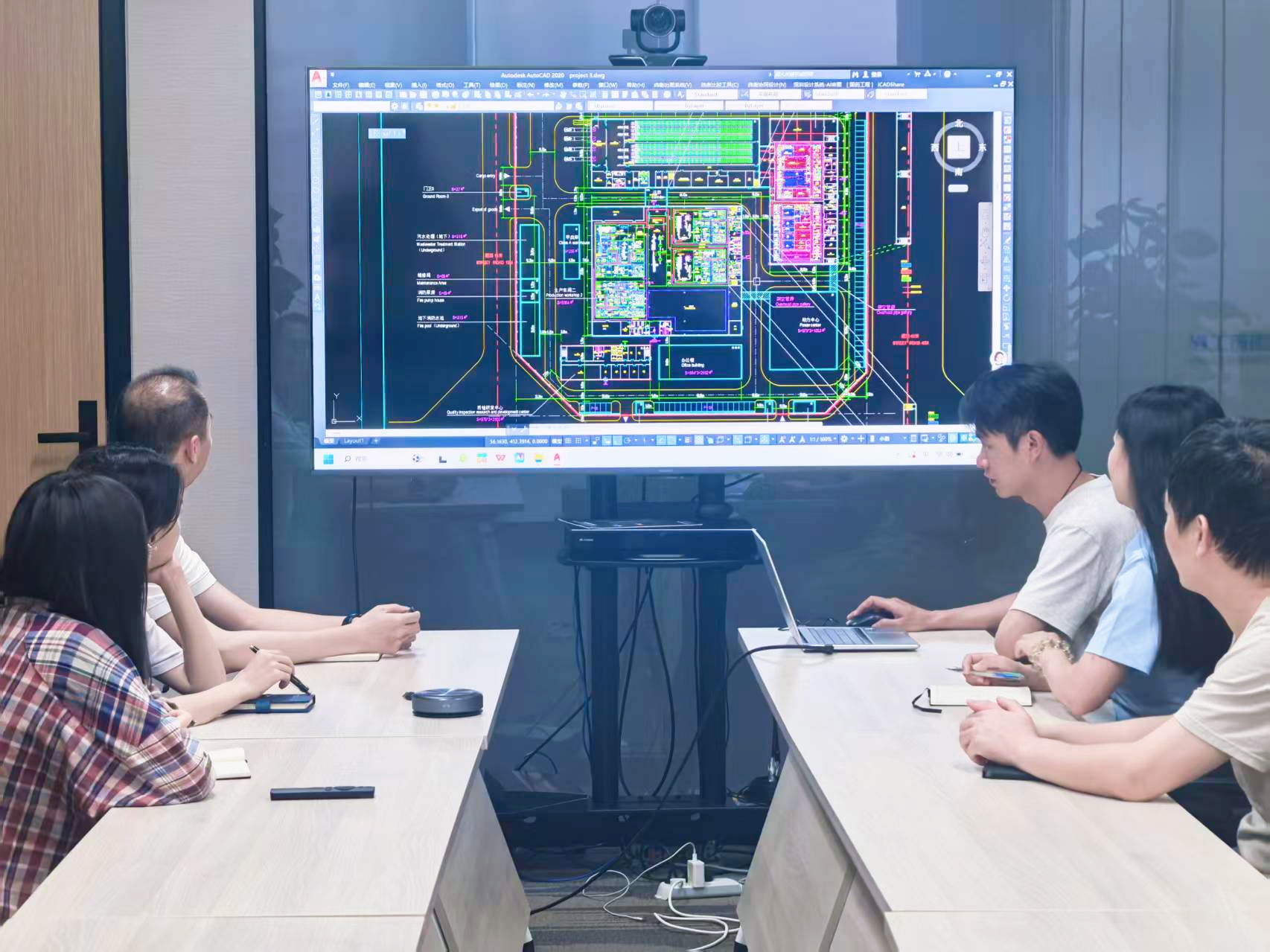
Precision in airflow design isn’t just about moving air—it’s about orchestrating every cubic foot to behave exactly as needed. Small miscalculations in duct geometry, fan placement, or filter resistance can cascade into uneven distribution, stagnant zones, or premature filter loading. The pursuit of flawlessness starts with computational fluid dynamics simulations that reveal how air actually moves through complex geometries, allowing engineers to reshape pathways and eliminate turbulence before a single component is manufactured.
Filtration performance hinges on more than media efficiency ratings. A filter that tests perfectly in a laboratory can underperform dramatically when installed in a system with non-uniform airflow. Achieving consistently clean air demands that the entire housing, seal design, and mounting framework are treated as integral parts of the filtration system. By integrating gasket compression analysis and aerosol challenge testing under real-world conditions, design teams can catch bypass leaks and structural weak points that standard specifications often overlook.
True system resilience emerges when airflow and filtration are developed together rather than bolted on sequentially. This unified approach accounts for thermal expansion, varying contaminant loads, and maintenance cycles from day one. Prototyping iterations incorporate rapid manufacturing techniques to validate long-term durability under cyclic stress, ensuring that what works on the test bench continues to perform year after year. The result is not just a component, but a breathing architecture that adapts to operational realities without compromising air quality.
Material Selection for Zero-Contamination Standards
Achieving zero contamination begins long before a cleanroom door swings open—it starts with the materials themselves. Every surface, sealant, and structural component must be scrutinized not just for its initial purity but for how it behaves over time under harsh cleaning protocols. A polymer that sheds particles after repeated autoclaving or a metal alloy that corrodes microscopically with peroxide exposure can sabotage the entire environment. The focus shifts from broad-stroke material categories to granular properties: outgassing rates at elevated temperatures, chemical resistance to the specific disinfectants used in your process, and the absence of additives that might leach out. There’s no room for the generic “cleanroom compatible” label; you need data sheets that map out extractables under your exact operating conditions.
The conversation around material compatibility often misses a critical layer: interaction effects. It’s not enough to test a gasket in isolation. That same gasket compressed between two different materials can create a micro-environment where residual moisture, friction, and chemical vapors conspire to generate unexpected byproducts. Consider a common scenario: a fluoropolymer seal chosen for its inertness, yet when torqued against a stainless steel flange, the cyclic stress and trace chlorides from cleaning lead to stress corrosion cracking of the metal—releasing metal ions into the controlled space. True zero-contamination thinking demands a system-level view where joining methods, thermal expansion mismatches, and galvanic potentials are weighed alongside bulk material properties.
The supply chain itself becomes a contamination vector if not managed ruthlessly. A grade of PTFE might be perfectly pure on the certificate of analysis, but if it’s machined in a shop that also processes carbon-filled composites, the risk of cross-contact is real. The same applies to metal alloys: a heat number that meets your spec for elemental composition might still carry subsurface inclusions from the mill’s prior run. Procurement for zero-contamination systems goes beyond calling out UNS designations or ASTM grades; it requires auditing the manufacturing process, insisting on dedicated tooling, and sometimes witnessing the cleaning and packaging steps firsthand. In this domain, the bill of materials is less a shopping list and more a chain of custody document, where every link must be validated to keep the final environment truly uncompromised.
Seamless Integration of Environmental Monitoring Technologies
Bringing together disparate environmental sensors and data platforms has long been a challenge marred by proprietary protocols and siloed systems. Seamless integration closes these gaps, allowing air quality monitors, water sensors, soil probes, and climate stations to communicate effortlessly. Through open standards like MQTT, OPC-UA, and modern APIs, raw data flows in real time from the field to unified dashboards—no manual wrangling or brittle middleware required. This connectivity turns a patchwork of devices into a cohesive, responsive monitoring fabric.
Designing for interoperability means thinking beyond plug-and-play hardware. It’s about embedding intelligence at the edge, where lightweight gateways normalize data formats, filter noise, and cache readings during network outages. Meanwhile, cloud-side components auto-discover new sensors and dynamically adjust sampling rates based on event thresholds or battery levels. The result is a system that stays adaptive and low-touch, scaling from a handful of nodes to thousands without a spike in management overhead.
True fusion also bridges the digital with the physical. Integrated monitoring feeds are glued to mapping layers, work order systems, and predictive models, giving environmental managers a single source of truth. Whether tracking urban heat islands or riverine pollution plumes, seamless data sharing shatters the old trade-off between granularity and operational simplicity. In the end, it’s this invisible orchestration that empowers teams to act on subtle environmental shifts before they become crises.
Validation Protocols That Exceed Industry Compliance
We don't just tick boxes when it comes to validation—we push beyond standard requirements to build protocols that are genuinely robust. Our approach combines rigorous stress testing with real-world scenario simulations, ensuring every system performs reliably under conditions far more demanding than typical compliance checklists demand. This means looking at edge cases, digging into subsystem interactions, and identifying potential failure points that most audits would overlook.
By integrating cross-disciplinary review and continuous monitoring into our validation framework, we've created a living process that evolves with emerging risks. Instead of treating compliance as a finish line, we treat it as a baseline—then layer on additional verification steps that reflect the unique operational context of each project. The result is a level of assurance that doesn't just satisfy regulators but gives our teams and stakeholders genuine confidence in system integrity.
End-to-End Project Management for Time-Sensitive Deployments
Managing a project from inception to delivery becomes especially demanding when deadlines are non-negotiable. In time-sensitive deployments, every decision must account for the tight timeline without sacrificing quality or scope. Effective end-to-end management means maintaining visibility across all phases—requirements gathering, development, testing, and launch—so that potential roadblocks surface early. The goal is to compress schedules thoughtfully, not by cutting corners, but by streamlining communication and aligning teams around critical milestones.
Success hinges on proactive risk assessment and relentless prioritization. Instead of reacting to delays, the project lead constantly evaluates which tasks truly drive progress and which can be safely deferred. Cross-functional collaboration is essential; developers, QA, and operations need to work in tandem rather than in silos. Frequent, concise stand-ups and transparent tracking tools replace lengthy status reports, ensuring everyone operates from the same up-to-date picture. When the finish line is fixed, the project’s tempo is set by disciplined iteration and a shared sense of urgency, not by last-minute heroics.
FAQ
A turnkey service covers everything from initial design consultation to final validation. You get a fully operational cleanroom without having to manage multiple contractors. It typically includes architectural planning, HVAC systems, filtration units, flooring, lighting, control panels, and monitoring equipment. The provider handles procurement, installation, testing, and even staff training if needed.
Precision is achieved through rigorous design standards like ISO classifications, tightly controlled air changes per hour, and HEPA or ULPA filtration. Every element—from wall panels to air diffusers—is selected to minimize particle generation and retention. Computational fluid dynamics modeling is often used to simulate airflow and eliminate dead zones before construction begins.
Absolutely. Whether it's semiconductor fabrication, pharmaceutical compounding, or aerospace assembly, the cleanroom parameters are tailored to your specific contamination control needs. This includes adjusting cleanliness class, temperature, humidity, pressure cascades, and even integrating specialized equipment like pass-through chambers or robotics.
You avoid the headache of coordinating architects, engineers, contractors, and certifiers. The turnkey provider takes single-point responsibility, which often reduces delays and cost overruns. They also bring proven supply chains and installation crews who know cleanroom protocols, so the risk of construction-related contamination is much lower.
Timelines vary based on size and complexity, but a small to mid-sized cleanroom can be designed, built, and commissioned in four to six months. Larger, multi-room facilities may take eight to twelve months. The key is thorough front-end planning, which can prevent rework and keep the project on track.
Many providers offer post-completion packages that cover preventive maintenance, filter replacements, and periodic re-certification. This ensures the cleanroom continues to meet its specified class over time. Some also provide remote monitoring systems that alert you to pressure drops or particle count anomalies before they compromise operations.
Yes, retrofitting is a common request. The service provider assesses your current layout and mechanical systems, then proposes upgrades like enhanced filtration, improved sealing, or airflow modifications. They manage the entire retrofit process while often keeping adjacent areas operational through phased construction.
Conclusion
Achieving true precision in controlled environments demands more than conventional cleanroom solutions. It starts with a design philosophy tailored to the exact needs of ultra-controlled spaces, where every dimension, surface, and material is specified to eliminate contamination risks. Our turnkey approach combines advanced computational modeling with decades of cleanroom expertise to deliver airflow systems that maintain laminar or turbulent regimes with unmatched stability. From the selection of non-shedding wall panels to chemical-resistant flooring, every material is reviewed against zero-contamination standards, ensuring that the built environment actively protects the processes inside rather than simply containing them. The focus remains on creating a harmonized system where design and engineering work together from day one, not patched together during construction.
Beyond construction, our services integrate real-time environmental monitoring seamlessly into the facility’s operations, linking particle counters, pressure differentials, and humidity sensors to a centralized platform that provides instant alerts and long-term trend analysis. Validation goes beyond ticking boxes; we execute IQ/OQ/PQ protocols that are customized to your specific product and process risks, consistently exceeding ISO and GMP requirements. Managing such projects requires a relentless focus on timelines and budget, which is why our end-to-end project management covers everything from permitting to final handover, ensuring that time-sensitive deployments meet their operational deadlines without compromising on quality. The result is a cleanroom that performs as promised, backed by thorough documentation and support.
Contact Us
Contact Person: Amy Yang
Email: [email protected]
Tel/WhatsApp: 008619330882686
Website: https://www.genopharmatech.com/