

Top Blank Print Label Manufacturer Guide to Custom Label Solutions
2026-08-19
Looking for a top blank print label manufacturer to handle your custom label needs? The right partner can make all the difference in quality, turnaround, and cost. In this guide, we explore what sets Xinsen apart and how to choose the perfect custom label solution for your business.
Blank Label Materials That Actually Hold Up in Harsh Environments
Most off-the-shelf blank labels fail quietly: the adhesive lets go after a few thermal cycles, or the face stock turns brittle under UV. For harsh environments, polyester and polyimide are the two workhorses, but they're not interchangeable. Polyester handles abrasion and most chemicals well, while polyimide shrugs off short-term exposure to 500°F and is the go-to for circuit board tracking. If your label has to survive repeated washdowns with caustic cleaners, look for a polyester face with a marine-grade acrylic adhesive rather than a standard rubber-based one.
The weak point is rarely the material itself—it's the marriage between face stock, adhesive, and topcoat. A polyester label with a cheap thermal transfer ribbon will smear after one solvent wipe. Ask for a matched system: a chemically resistant topcoat paired with a resin ribbon, and an adhesive specified for low-surface-energy substrates like powder-coated metal or polypropylene. In freezer rooms that swing to -40°F, standard adhesives crystallize and peel, so you need a freezer-grade adhesive that remains tacky below zero.
Don't assume thicker is better. A thin polyimide label often outperforms a bulky vinyl label because it conforms to curved pipes and doesn't create an edge that catches cleaning brushes. Test before committing: run samples through your actual process—autoclave, jet wash, solvent dip—not just a lab spec sheet. Labels that survive one harsh condition may fail when conditions stack, like UV plus salt spray plus mechanical scuffing.
Why Your Printer Choice Changes Everything About Label Design
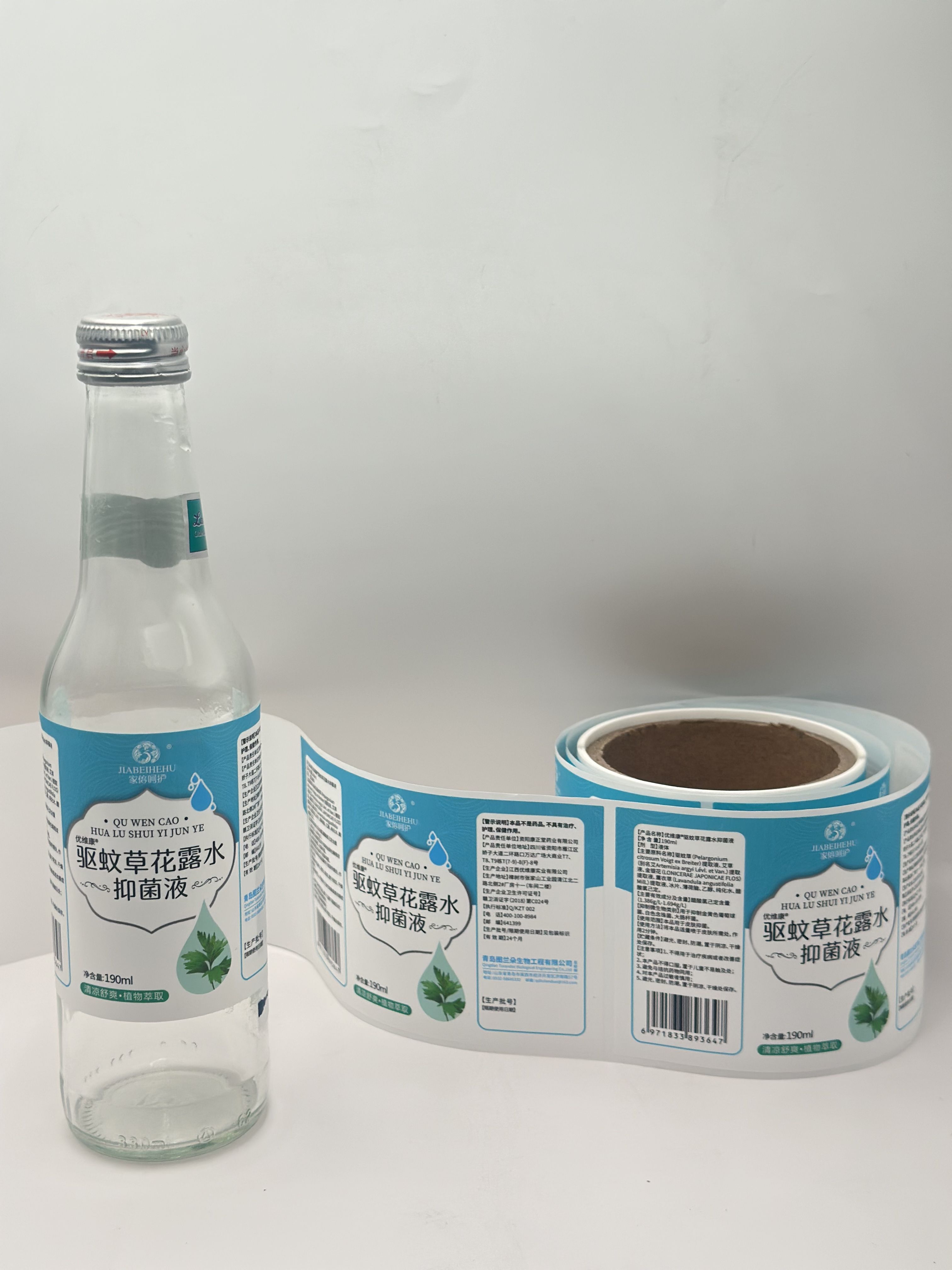
Most people treat the printer as the last step, but that's exactly why so many label designs fail on the first run. Thermal transfer printers, for example, can't handle subtle gradients or fine hairlines if the printhead resolution is low, so details that looked crisp on screen simply vanish.
Color is another trap. An inkjet might render a rich navy background beautifully on glossy paper, but that same file sent to a monochrome thermal printer turns into a solid black block, making the white text unreadable. Even between two inkjets, dye-based and pigment-based inks shift the final hue enough to break a brand color.
Once you know the exact printer model, you start designing around its limits instead of fighting them later. You choose bolder fonts for low DPI output, stick to solid spot colors for thermal media, and test the actual substrate before approving anything. That shift in workflow saves reprints and keeps the label doing its job in the real world.
Custom Die-Cut Labels Without the Tooling Nightmares
Most label companies still treat custom shapes as a special request that requires a custom metal die, a setup fee, and a wait. That's the old way. With digital cutting, the shape is just a file—so you can get contours that follow your logo, product curve, or packaging edge without paying for a physical die or waiting for one to be made.
That means small runs become practical. You don't have to order 10,000 labels to justify the tooling cost. A few hundred labels with a one-of-a-kind outline can be produced in days, not weeks. If the shape needs a tweak—maybe the radius is off by a millimeter—the file is updated and the next batch is cut correctly, no new tooling required.
The result is packaging that looks intentional rather than generic. A label that traces the outline of a bottle or wraps around a corner doesn't have to cost more or slow you down. You get the precision of a die-cut look without the metal die, the minimums, or the maintenance.
Adhesive Selection: The Overlooked Step That Prevents Label Failures
When a label peels off a container or curls at the edges, most people blame the label stock or the printer. Yet the real culprit often hides in plain sight: the adhesive. Choosing the right adhesive feels like an afterthought, a quick checkbox before sending the job to press, but that single decision determines whether a label survives a cold warehouse, a humid bathroom, or a rough ride on a delivery truck. A well-matched adhesive grips the surface you actually have, not the one you imagined.
Surfaces play tricks. A recycled cardboard box, a powder-coated metal tin, or a squeezable plastic tube each demand something different from the adhesive. An aggressive permanent adhesive on a low-energy plastic can cause tunneling or wrinkling, while a removable adhesive on a shipping carton might let the label vanish before the package reaches the customer. Testing matters more than spec sheets, because a lab value for peel adhesion rarely matches what happens after the container flexes or the contents sweat.
The overlooked step, then, is not simply choosing an adhesive but matching it to the entire life of the label. Ask what temperature swings the package will face, what chemicals or oils might touch the label edge, and how long the label must stay put. A quick test with the actual container and a few samples costs less than a full reprint or a lost account. Labels fail silently, but they don't have to when adhesive selection gets the attention it deserves.
Navigating Compliance Labeling Without the Headache
Most labeling headaches start with scattered data. One team stores material origins in a spreadsheet, another tracks allergen statements in a shared drive, and a third manually types the finished label text. When a regulation shifts or a supplier updates a warning, someone has to chase down every affected SKU. That’s where errors slip in and shipments get held.
A better approach treats label content as controlled data rather than a formatting afterthought. Centralize the approved phrases, symbols, and barcode rules once, then let labels pull from that source. Regional variants—EU MDR, FDA UDI, or retailer-specific barcodes—become templates that inherit the same validated text. You stop re-reading every label from scratch because the core data has already been approved.
The payoff isn’t just fewer delays; it’s confidence during audits. Version histories show exactly what changed and when, so you can answer an inspector’s question without digging through email threads. Compliance stops being a frantic scramble before each release and becomes a routine part of packaging—one that doesn’t demand overtime.
Bulk Ordering Blank Labels: How to Avoid Wasted Inventory and Cash
Chasing a lower per-unit price often leads warehouses to stack boxes of blank labels that end up collecting dust. The discount looks tempting on paper, but every extra carton ties up cash and eats into shelf space that could hold faster-moving items. Before placing a large order, pull your last three months of actual label usage instead of guessing. That simple number gives you a realistic baseline for how much stock you genuinely burn through, and it usually reveals that the “amazing deal” would leave you sitting on six months of surplus.
One practical move is to negotiate split shipments with your supplier. You can lock in the bulk rate now but have the vendor deliver a portion of the order each quarter, so you only receive what you can reasonably consume before labels start to yellow or lose adhesive strength. Pair this with choosing a truly universal size—like a 4x6 thermal label—that works across multiple departments or product lines. That way, a single stock of blanks serves several purposes instead of forcing you to maintain separate, specialized inventories that each risk becoming dead stock.
Set a hard cap on reorder quantities based on your rolling 90-day consumption, not on the vendor's minimum order requirements. If a supplier insists on a minimum that exceeds that cap, it's often cheaper in the long run to accept a slightly higher unit cost from another source than to finance a mountain of labels you won't touch for a year. Keep a simple inventory log and review it monthly; a quick glance at current stock versus average weekly use will tell you whether the next bulk purchase makes sense or whether you should hold off and let your existing supply shrink first.
FAQ
A blank print label manufacturer produces label stock without pre-printed graphics. You get the base material—paper, film, foil—cut to size, ready for your own printing. They often help with adhesive selection, liner type, and roll dimensions so the blanks run smoothly through your existing printer.
Blank labels give you control. You can print variable data like barcodes, dates, or batch numbers on demand, so you don’t need to order separate pre-printed runs for every small change. It also cuts inventory waste, because the same blank can work across multiple products if your template changes.
For warehouse use, synthetic films like polypropylene or polyester hold up better against moisture, scuffs, and temperature swings. Direct thermal paper is fine for short-term shipping labels but fades faster. Ask for samples and test on your actual boxes or bins before committing.
Think about what happens after the label has done its job. If it needs to stay put for years on rough surfaces, permanent adhesive is safer. If you expect customers or staff to peel it off cleanly—like on glassware or reusable totes—removable is the better call. Many manufacturers offer both for the same face stock.
Look beyond size and shape. A good supplier will let you tweak core size, unwind direction, perforations, and back-slit patterns. These small details matter when you’re running thousands of labels through a dispenser or automated line. If they hesitate to discuss those specs, keep looking.
It varies widely. Some manufacturers will run as few as a couple of rolls if you pay a setup fee, while others want pallet-level volume. Don’t assume high minimums mean better quality—many smaller shops run digital finishing equipment and can produce short runs without extra tooling charges.
Standard lead times run one to three weeks after you approve material and die specifications. Rush options may trim that to a few days, but expect to pay a premium. If you need ongoing supply, ask about blanket orders or scheduled releases to avoid repeated wait times.
Conclusion
Getting the right blank label setup often starts with the substrate itself. A polyester or polypropylene stock will shrug off moisture, solvents, and temperature swings that would destroy standard paper labels in weeks. But even the toughest face stock won't save you if your printer can't handle the material's thickness or surface coating—thermal transfer, direct thermal, and inkjet each demand different topcoats, and ignoring that mismatch leads to smeared text or faded barcodes. Once you've matched media to machine, custom die-cutting shouldn't mean waiting on expensive metal tooling. Modern laser cutting and digital finishing let you order odd shapes and small runs without tooling fees or long lead times. And don't leave adhesive as an afterthought: a permanent acrylic adhesive works for glass and metal, while a removable rubber-based option protects painted walls or reusable containers. Testing the bond on your actual surface—not just a sample swatch—prevents peeling, edge lift, and field failures.
Compliance labeling doesn't have to be a regulatory maze if you build requirements into the label spec from day one. Whether it's UL, RoHS, or GHS chemical marking, choose blank materials and inks that stay legible after exposure to the required conditions, and keep a digital record of your supplier's certifications rather than chasing paper trails later. For businesses ordering in bulk, the real cost savings come from demand planning, not just price per label. Blank labels have a shelf life; adhesives degrade, facestocks yellow, and liners absorb humidity if stored poorly. Buy only what you can use within six to nine months, store rolls in sealed bags off concrete floors, and rotate stock by lot number. A good manufacturer partner will help you forecast reorder points, offer mix-and-match case quantities, and even hold inventory for you—so you're never stuck with thousands of labels for a product line you've discontinued.
Contact Us
Contact Person: Yara
Email: [email protected]
Tel/WhatsApp: +86 13505426090
Website: https://www.qdxspack.com/