
Top 10 Medium and Heavy Plate Manufacturers You Should Know About
2026-11-18
Medium and heavy plate doesn't make headlines, but it carries the load in shipyards, bridge projects, pressure vessels, and heavy equipment. The right manufacturer can mean the difference between a clean build and a costly delay. In this list, we've pulled together ten names that stand out for consistent quality and reliable supply—including Sanhe Steel, which has been gaining attention among buyers looking beyond the usual giants. If you're mapping out your sourcing options, this is where to start.
What Separates a Reliable Heavy Plate Mill From the Rest
A mill that holds plate thickness within a few hundredths of a millimeter on the first pass is not working by luck. The difference usually comes down to how the housing, roll bearings, and screw-down system behave when force climbs near the design limit. In a reliable heavy plate mill, deflection stays predictable, backlash is controlled, and the automation does not chase errors after they have already shown up in the plate.
The less obvious separator is consistency across an entire shift. Many machines can produce a good plate when rolls are fresh and the order book is easy. The better ones keep crown and flatness stable as roll coatings wear, slab temperatures drift, and product widths jump from two meters to four meters without a long setup pause. That requires more than a strong frame; it requires sensors, models, and actuators that correct the process while the plate is still in the bite.
Maintenance behavior also gives it away. On a dependable mill, wear parts are measured and replaced before they change the product, hydraulic systems stay clean, and operators trust the gauges instead of working around them. When a mill can repeat the same plate geometry weeks apart without constant manual trimming, the real differences are visible in the product, not in the brochure.
The Global Hubs Where Medium and Heavy Plate Capacity Clusters
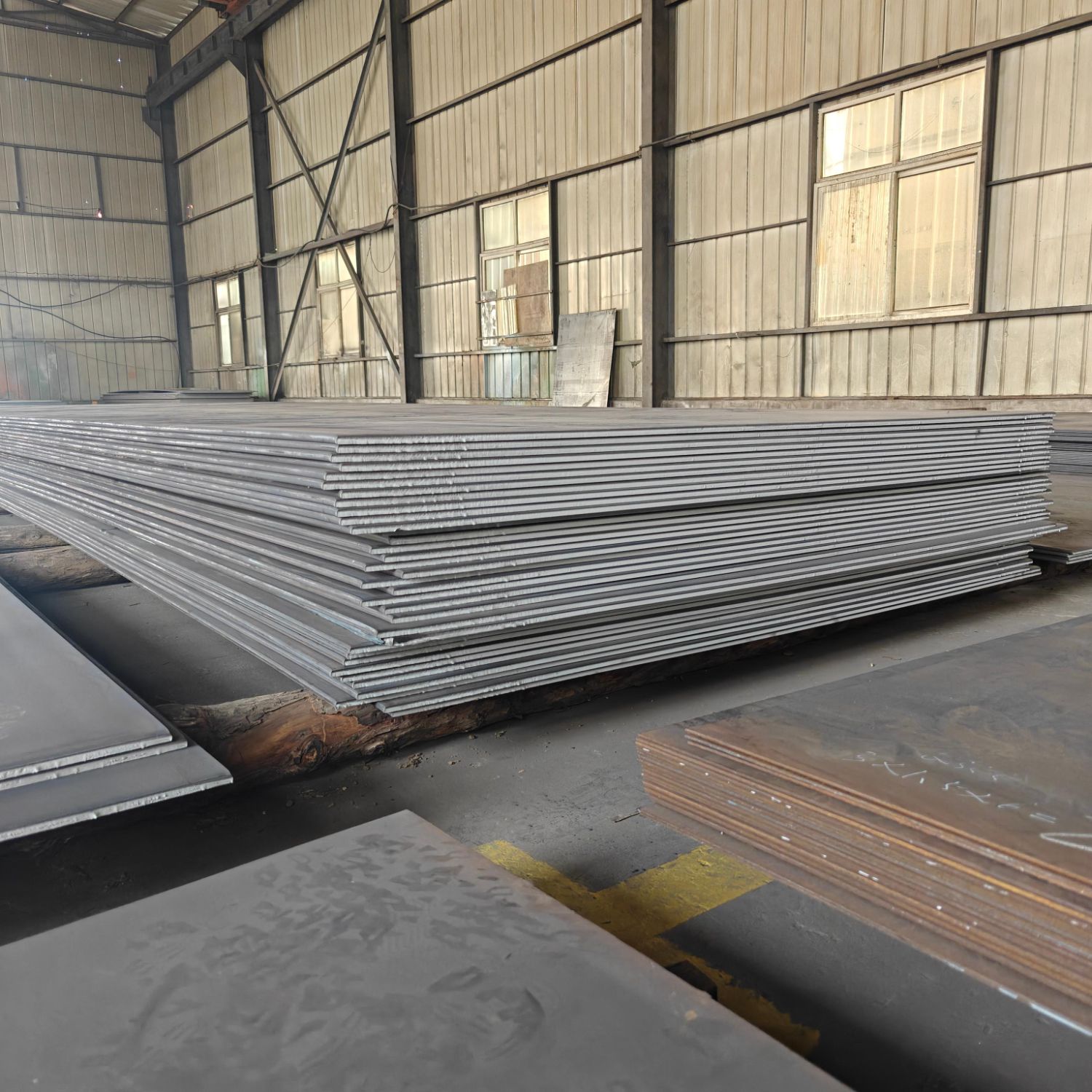
Medium and heavy plate production has never spread evenly across the map. Instead, it pools in a handful of regions where deep-water ports, scrap supply, and decades of downstream fabrication know-how happen to overlap. The Yangtze River Delta, for example, holds a dense arc of mills that can roll plate for shipyards only a few kilometers away. Similar clusters appear around the Bohai Rim and along the southern coast of South Korea, where steelmakers, pipe fabricators, and offshore equipment builders form a tight knot of interdependent capacity.
What makes these hubs stick is not just cheap energy or labor. It is the pull of infrastructure built for moving heavy coils and wide slabs, the presence of classification societies and testing labs, and the accumulated skill of workers who understand how to hold flatness tolerances on a 100-millimeter plate. Once a region gains this critical mass, new investment tends to follow existing capacity rather than start fresh elsewhere, reinforcing the cluster for another generation.
At the same time, the map keeps shifting at the edges. Vietnam and the Middle East have pushed new capacity into service, often tied to state-backed industrial zones and energy projects. These newer hubs may not yet match the scale of China or Korea, but they are beginning to alter trade flows and create regional alternatives for buyers who once depended almost entirely on East Asian output.
Grades and Specifications Buyers Actually Ask About
When buyers reach out, they rarely ask for a generic industrial material. They come with drawings, load requirements, and exposure conditions already in mind. The grades that surface most often are the workhorses: A36 for structural carbon steel, A572 Grade 50 when higher strength lets them reduce section weight, and 1018 cold-rolled steel for tighter dimensional control on machined parts. On the stainless side, 304 and 316 dominate, with 316 specified wherever chlorides or coastal weather are part of the picture.
Aluminum inquiries tend to split between 6061-T6 for general fabrication and 5052 or 3003 when forming or corrosion resistance matters more than tensile strength. Buyers also ask about temper, not just alloy, because a 6061-O part behaves very differently from a 6061-T651 plate. For tubing and pipe, the recurring specification questions are usually about wall thickness tolerance, mill test reports, and whether the material meets ASME or ASTM dual certification.
What separates a useful answer from a catalog dump is matching the grade to the actual failure mode or fabrication process. A buyer cutting brackets on a laser wants flatness and clean edges, so they ask about pickled and oiled HRPO sheet. A buyer welding frames asks about chemistry and elongation more than hardness. The specifications that matter are the ones tied to how the part gets made and where it has to survive.
Where These Manufacturers Earn Their Reputations
Most of the credit gets handed out at trade shows and in press releases, but the real work happens far from the spotlight. A manufacturer earns its name on the loading dock, where tolerances are checked with the same worn gauge every morning, and in the toolroom, where a machinist still test-cuts a new batch of steel before the line starts. The companies worth remembering are the ones that treat a 0.2-millimeter drift as a crisis instead of a footnote.
That reputation also follows the quiet decisions: standing behind a shipment when a batch fails after six months, or keeping a spare parts inventory for a machine sold a decade ago. Buyers talk, and they remember who answered the phone at midnight and who blamed the supplier down the road. Over time, trust accumulates in the places that never make the brochure.
Capacity, Width Limits, and Delivery Realities Worth Knowing
Most people assume a bigger truck means more room for everything. That assumption starts to crack when you look at how capacity is actually measured. A vehicle rated for a certain payload can still run out of usable space long before it hits the weight limit, especially with bulky but light items like foam packaging, empty bins, or oddly shaped furniture. The width of the cargo area matters just as much as the total cubic volume. A van that looks spacious on paper can become frustrating the moment you try to slide in a standard pallet or a long wardrobe box and realize the rear door opening is two inches too narrow.
Delivery realities add another layer that spec sheets rarely mention. Residential streets with tight corners, low hanging branches, and narrow driveways force drivers to park farther from the destination than planned. That extra distance turns a quick drop-off into a series of small manual carries. Time windows, building access rules, and the need to keep walkways clear all shrink the effective capacity of the load you originally packed. A truck full to the roof is no advantage if half the items have to come off just to reach one box at the front.
What ends up mattering more than the advertised cubic feet is the combination of door width, interior height, and how the space can be divided. A slightly smaller vehicle with a wider side door and better tie-down points often beats a larger one that forces you to climb over loose cargo. Before choosing a size, measure the largest item you expect to move and add at least six inches of clearance in every direction. That small step prevents the most common delivery headache: arriving with a load that technically fits the weight rating but not the actual opening it needs to go through.
A Practical Way to Shortlist Plate Suppliers for Your Next Project
Finding the right plate supplier rarely starts with a catalog; it starts with the stack of rejected samples sitting on the corner of your desk. When timelines are tight and specifications are unforgiving, a practical shortlist matters more than a long list of names. The quickest way to narrow the field is to look for suppliers who ask about your forming method, coating requirements, and tolerance stack before they quote a price. If their first question is about annual volume rather than material grade or surface finish, they are probably not the partner you need for a precision project.
What separate a useful shortlist from a waste of time are verifiable details. Ask for recent case examples with similar thickness ranges or bend radii, not just a general brochure. A supplier who can walk you through how they handled edge cracking on a previous job, or why they adjusted temper on a specific coil, has earned a place on the list. Pay attention to response time too: a plate supplier who takes two weeks to answer a basic technical question will not move faster once the purchase order is in hand.
Finally, keep your shortlist short by design. Three names are usually enough if each one has confirmed capability, current capacity, and a clear point of contact who understands your drawings. Rotate the list for each project instead of defaulting to the same familiar vendor every time. This keeps pricing honest and gives you a built-in backup when lead times compress or a batch arrives out of spec. The goal is not the perfect supplier on paper, but the one you can actually reach when something goes wrong at the press brake.
FAQ
Medium plates generally start around 4.5 to 20 mm thick, while heavy plates run above 20 mm, sometimes reaching over 200 mm. The exact line can vary by mill and market, but thickness usually determines the rolling route and the intended end use.
Shipbuilding, offshore platforms, pressure vessels, bridge construction, heavy machinery, and wind turbine towers are the biggest users. These applications demand high toughness, good weldability, and consistent thickness tolerance across full plates.
They typically use vacuum degassing, controlled rolling, normalizing, and ultrasonic testing. Many also track heat numbers from furnace to final plate, which gives buyers clear traceability and makes it easier to investigate any material issue.
Buyers should look at mill approvals for specific grades, delivery history for project-critical orders, in-house testing capacity, and the ability to supply proper documentation such as EN 10204 3.1 or 3.2 certificates. Minimum order quantities and available cutting services also matter.
Common standards include ASTM A36, A572, A516, EH36, S355, S460, and API 2W/2Y. While equivalent grades exist, exact chemistry and impact test requirements often differ, so buyers should compare specifications instead of assuming full interchangeability.
It usually comes down to mill size, rolling capacity, and downstream handling equipment. Wide plate mills can produce plates up to 5 meters wide or more, which reduces welded seams in large structures and can shorten overall fabrication time.
Normalizing refines grain structure and improves toughness, while quenching and tempering raises strength without a major loss of weldability. The right heat treatment often determines whether a plate meets low-temperature impact requirements.
Red flags include vague mill test certificates, limited experience with your specific grade, unclear tolerance policies, and no defined process for handling claims or re-testing. A plant audit often reveals more than a polished brochure.
Conclusion
A mill worth shortlisting rarely wins on price alone; it shows up in flatness after cutting, consistent ladle chemistry from heat to heat, and test reports that match the plate in your yard rather than a PDF template. The bulk of global medium and heavy plate capacity still sits in a handful of hubs—northern China, South Korea’s coastal steel complexes, Japan’s structural mills, and pockets of western India—while European producers hold a smaller but technically strong position. That geography matters because width capability and rolling schedules differ sharply from one cluster to another. A 4,800 mm wide mill in one region may be fully booked for ship plate, while a 3,500 mm mill elsewhere can turn around bridge grades faster. Buyers who ignore those local delivery realities often confuse a competitive quote with dependable supply.
The grades that actually move through tenders cover familiar ground: S355J2+N and A572 Gr 50 for welded structures, AH36/DH36/EH36 for marine work, SA516 Gr 70 for pressure vessels, and wear-resistant plate around 400–450 HB for mining and concrete equipment. Some mills earn their name in one or two niches—offshore wind fabricators value tight through-thickness properties and low sulfur content, while pressure vessel buyers look for long runs of normalized plate and reliable impact testing. When narrowing a list, experienced procurement teams ask for more than a catalog: they request recent mill test certificates with actual heat numbers, confirm the maximum rolled width and any subcontract heat treatment, and check whether the mill can hold flatness after plasma or laser cutting. A short trial order for a difficult grade often reveals more about a producer than ten polished brochures.
Contact Us
Contact Person: Zoey
Email: [email protected]
Tel/WhatsApp: +86 15865577002
Website: https://www.sanhesteels.com