

TIJ Inkjet Printer Company: Pioneering High-Speed Industrial Coding Solutions
2026-05-14
In the fast-paced world of industrial manufacturing, every second counts—and every code must be flawless. Enter Danmajet, a TIJ inkjet printer company that’s redefining what high-speed coding can achieve. Whether it’s expiration dates on food packaging or traceability codes on electronics, Danmajet combines cutting-edge thermal inkjet technology with rugged reliability to keep production lines moving without compromise. But what truly sets them apart? It’s a story of relentless innovation and a deep understanding of real-world factory challenges. Let’s dive in.
Redefining Industrial Coding Speed
For years, the industrial coding sector viewed speed through a narrow lens—simply how many products a printer could mark per minute. That metric is collapsing. What emerges now is a broader definition where velocity merges with process intelligence. Lines don’t just run faster; they self-correct in microseconds, eliminating the usual pauses for alignment or error clearing. This shift has turned coding from a standalone task into an adaptive function that accelerates the entire production flow.
The hardware that once limited throughput is being replaced by systems where printhead arrays and real-time monitoring work in tandem. Instead of brute-force acceleration, these systems leverage predictive timing. They anticipate product position shifts, adjust drop placement on the fly, and maintain legibility even when conveyors surge. The result isn’t just a higher parts-per-minute count—it’s a steady, waste-free rhythm that factories once thought impossible.
In sectors like beverage canning or pharmaceutical packaging, where line pauses cost more than the coding equipment itself, this redefined speed is rewriting the economics. A coding station that keeps pace with 100,000 units an hour without ever becoming the bottleneck is no longer aspirational; it’s the baseline expectation. And as material variations and serialization demands grow, the ability to code fast while staying precise is separating market leaders from the rest.
TIJ Technology: A Closer Look
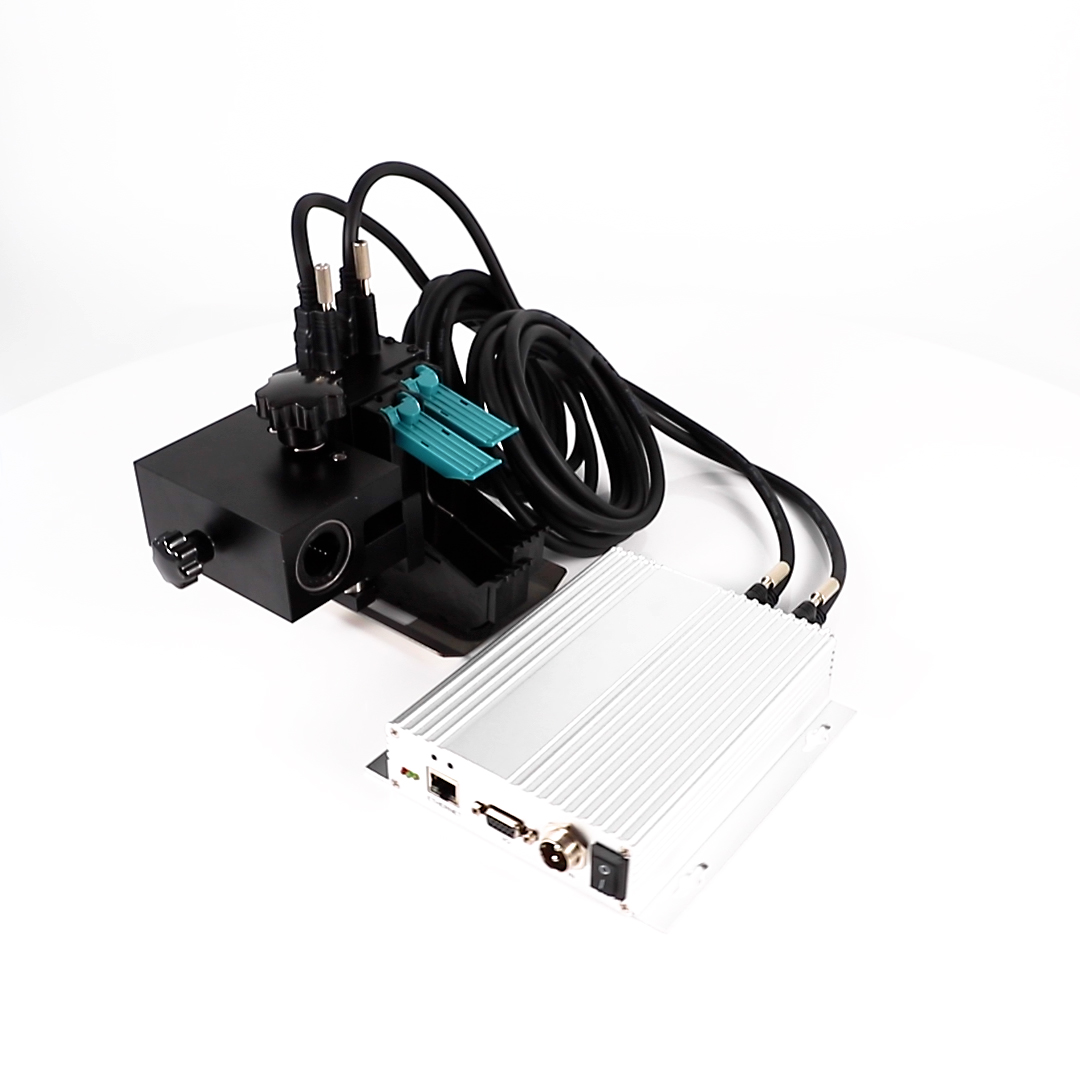
Thermal Inkjet (TIJ) technology operates on a remarkably simple principle: a tiny resistor heats a small volume of ink, creating a vapor bubble that expands and forces a droplet out of the nozzle. This cycle repeats thousands of times per second, with precision control over drop size and velocity. The real ingenuity lies in the disposable printhead design, where each cartridge contains not just ink but the entire firing mechanism – eliminating the risk of clogged nozzles that plagues many other printing methods. When you replace an ink tank, you're essentially getting a brand-new print engine, which explains the consistent output quality from first print to last.
What sets TIJ apart from piezo-based systems isn't just the thermal element, but how it handles fluid dynamics. The aqueous inks used in TIJ must maintain precise viscosity and surface tension to form stable drops, yet still deliver sharp, durable marks on porous and non-porous substrates alike. Modern formulations have pushed the boundaries: some TIJ inks now cure under UV light, others bond chemically to packaging films, and a few even resist industrial solvents – feats once thought impossible for water-based fluids. This evolution has quietly expanded TIJ from desktop printers into production lines coding expiration dates, serializing pharmaceuticals, and personalizing direct mail at speeds once reserved for continuous inkjet systems.
The hidden sophistication of TIJ surfaces when you examine nozzle architecture. While early designs relied on a single row of jets, contemporary printheads pack over 600 nozzles per inch in a staggered matrix, firing in concert to build characters, barcodes, and images with near-lithographic precision. Maintenance becomes almost irrelevant – during idle periods, a quick spritz onto a capping station keeps things ready, unlike the daily purging routines common in industrial alternatives. For manufacturers, this translates to less downtime, fewer wasted materials, and the freedom to switch between jobs without lengthy changeover protocols. It's a technology where the absence of complexity became its most powerful feature.
Tailored Solutions for Diverse Industries
Every industry runs on its own rhythm—healthcare demands airtight compliance and patient privacy, while manufacturing hinges on supply chain visibility and minimal downtime. Off-the-shelf tools simply can’t keep up, which is why we start each engagement by mapping out the real-world workflows, regulatory pressures, and growth bottlenecks that define your sector. That means no assumptions, just a blueprint built around your day-to-day reality.
Our approach pairs you with specialists who’ve lived and breathed your field—whether it’s streamlining claims processing for insurers or optimizing omnichannel logistics for retailers. Together, we adapt core technology to match the nuances of your operational DNA: flexible APIs, modular dashboards, and automated routines that slot into existing systems without forcing a total overhaul. The result feels less like a vendor handoff and more like an in-house tool your team helped shape.
After launch, we stay close. Industries shift—new regulations drop, customer expectations pivot—so we built a lightweight, iterative support model that refines features as you grow. Through quarterly reviews and usage analytics, we’re able to tweak reporting structures for a bank’s risk department or add compliance layers for a pharma firm long before they become pain points. It’s not about delivering a static product; it’s about keeping pace with the industry you’re in.
From Production Lines to Packaging
Once the raw materials are verified, they enter the production floor where automated lines orchestrate a precise sequence of mixing, molding, and assembly. Sensors monitor every parameter—temperature, pressure, speed—ensuring each unit matches the design specs without deviation. It's a choreography of machinery and quality checkpoints that transforms basic components into finished goods ready for the next phase.
As products come off the line, they move directly into packaging stations designed for both protection and presentation. Here, items are wrapped, sealed, and labeled with an eye toward durability during transit and shelf impact. Anti-static materials, custom inserts, and tamper-evident seals are chosen based on the product's fragility and destination, minimizing waste without compromising safety.
The final step merges automation with human oversight: palletizing robots stack boxes for optimal shipping density, while workers conduct spot checks to catch any discrepancies before dispatch. This handshake between conveyor belts and careful inspection ensures that what leaves the facility reflects the same care and precision that went into production.
Why TIJ Outperforms Traditional Methods
TIJ technology brings a level of precision that traditional inkjet methods simply cannot match. By using advanced thermal control, it ensures every droplet lands exactly where it should, resulting in sharper prints and fewer errors. This precision isn't just about looks—it translates to less wasted material and faster production times, which traditional setups often struggle to achieve.
Another key advantage is adaptability. While conventional printers lock you into specific substrates and ink types, TIJ handles a wider range of materials and viscosities without breaking stride. That flexibility means a single TIJ system can take on jobs that would normally require multiple machines, cutting down on both costs and floor space.
Maintenance headaches are dramatically reduced too. Traditional printheads clog or wear down quickly, leading to frequent stoppages and messy cleanouts. TIJ’s cartridge-based design makes replacement straightforward and fast, keeping uptime high and operator frustration low. It’s a practical edge that shows up directly on the bottom line.
Partnering for Unmatched Reliability
We don't just supply components; we become an extension of your team, obsessing over every detail that could make or break your project's uptime. Our approach is rooted in a deep understanding that reliability isn't a specification to tick off—it’s the result of shared commitment, proactive communication, and a genuine stake in your success. When you partner with us, you gain a team that willingly dives into your toughest challenges, offering solutions long before a failure occurs.
This partnership model means we go far beyond industry norms. While others ship products, we deliver confidence through rigorous, customized testing scenarios that mirror your real-world operating environments. Each system is validated not just against a datasheet, but against your actual load profiles, temperature swings, and vibration patterns. It’s the difference between a supplier who hopes their unit will work, and a partner who knows it will because they’ve already seen it thrive under your exact conditions.
What truly sets this apart is the sense of shared responsibility. When issues arise, there are no finger-pointing sessions—only collaborative problem-solving huddles with engineers who treat your downtime as their own. This mindset has turned countless first-time projects into multi-decade relationships, where the trust earned through consistent, silent, flawless operation speaks louder than any warranty ever could. Reliability here is not promised; it’s proven over years of quiet, uninterrupted service.
FAQ
We’ve engineered a drop-on-demand system that sustains precise ink placement at over 300 meters per minute. Proprietary nozzle geometry and real-time waveform tuning eliminate satellite droplets, so codes stay crisp even on fast-moving lines.
We handle everything from absorbent kraft paper to non-porous films, glass, and coated metals. Our ink portfolio includes formulations that bond instantly to challenging surfaces without smearing or fading.
Each printer has sealed printheads and environmental sensors that auto-adjust firing parameters. Combined with our fast-drying inks, this keeps barcodes and text sharp regardless of ambient conditions.
The compact footprint and multiple mounting options let us fit into tight spaces. Standard industrial protocols and simple bracket designs mean most integrations take under an hour.
Nozzle health is monitored continuously, and active solvent recovery prevents clogs. We also offer on-the-fly cartridge swaps so production never stops for ink changes.
Absolutely. Our controller handles dynamic data from ERP systems and scales or positions codes automatically. Variable text, 2D matrix codes, and graphics all update without slowing the line.
We have service hubs in 30 countries, with remote diagnostics that often resolve issues within minutes. For physical visits, our technicians carry common parts to fix most problems in one trip.
Conclusion
In a landscape where every second of downtime translates to lost revenue, TIJ Inkjet Printer Company has reimagined what industrial coding can achieve. Their systems shatter conventional speed barriers by leveraging advanced printhead technology that fires thousands of precise droplets per second, ensuring that even the fastest production lines never wait for a code. This isn’t just about raw pace—it’s about maintaining impeccable clarity on everything from coarse cardboard to glossy films, all while eliminating the messy clean-up cycles that plague older methods. By embedding intelligence directly into the print engine, TIJ printers adjust droplet formation and trajectory in microseconds, guaranteeing that every barcode, date stamp, or batch number remains legible no matter how rapidly products fly by.
Beyond the mechanics, the company’s strength lies in its deep commitment to customization and partnership. Their engineers don’t ship a one-size-fits-all box; they study your unique line layout, substrate quirks, and environmental conditions to deliver a tailored coding station that integrates seamlessly into existing workflows. This extends across industries—food packaging that withstands condensation, pharmaceutical cartons demanding micro-text, or electronics labels exposed to harsh chemicals. Compared to traditional continuous inkjet or thermal transfer, TIJ’s higher reliability, lower consumable waste, and near-instant start-up slashes total cost of ownership. Crucially, their support doesn’t end at installation. Remote diagnostics, predictive maintenance alerts, and a responsive global service network mean that unplanned stoppages become a rarity. It’s this fusion of relentless innovation and customer-centric engineering that turns coding from a potential bottleneck into a competitive advantage, proving that speed and reliability can coexist when technology is purpose-built for the realities of the factory floor.
Contact Us
Contact Person: Jacky
Email: [email protected]
Tel/WhatsApp: 086 15000607053
Website: https://www.danmajet.com