

Thermal Printable Wristbands Revolutionizing Patient Identification in China's Healthcare
2026-06-11
Imagine a crowded hospital where a single misread wristband could lead to a medication error. In China’s rapidly evolving healthcare system, accurate patient identification is not just a convenience—it’s a matter of life and death. Thermal printable wristbands are quietly transforming this landscape, offering a simple yet powerful solution to a persistent challenge. At the heart of this shift is BAOBI, a brand that combines precision printing with durable, skin-friendly materials to ensure every patient’s identity is clear at a glance. As hospitals embrace smart workflows, these wristbands are proving to be the unsung heroes of safety and efficiency. Let’s explore how they’re making a difference.
Enhancing Patient Comfort with Soft, Skin-Friendly Wristbands
Modern patient wristbands have evolved far beyond simple identification tools—they’re now designed with comfort at the forefront. Crafted from ultra-soft, hypoallergenic materials, these bands feel gentle against the skin, even during extended hospital stays. The fabric-like texture minimizes friction, reducing the risk of irritation or pressure marks that can occur with traditional plastic bands.
Skin-friendliness is a priority, especially for patients with sensitive or compromised skin. The breathable, latex-free construction allows air circulation, preventing moisture buildup and the discomfort that often comes with it. Unlike rigid alternatives, these wristbands flex with natural movement, ensuring they remain snug without being restrictive—a small detail that significantly improves daily comfort.
From newborns to elderly patients, the gentle touch of these wristbands makes a noticeable difference in overall well-being. They eliminate the constant awareness of wearing something foreign, allowing patients to focus on recovery. By merging durability with a compassionate design, healthcare facilities can enhance the patient experience in a subtle yet meaningful way.
Minimizing Identification Errors in Busy Hospital Settings
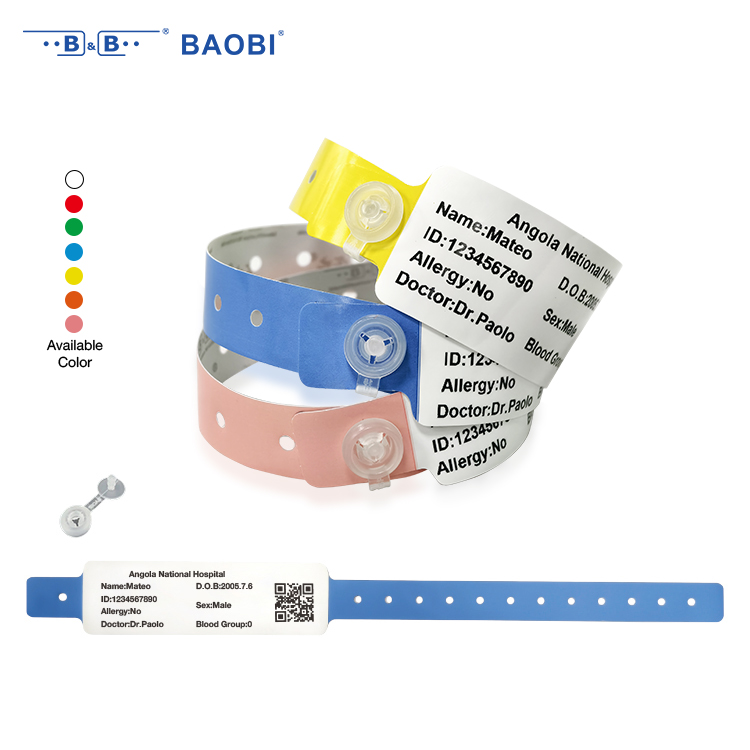
In a hectic ward, the chance of mixing up patients is higher than most realize. Staff often juggle multiple charts and orders simultaneously, and a brief lapse in attention can lead to the wrong person receiving treatment. Streamlining the identification process with clear, consistent protocols helps catch these near-misses before they become actual errors.
Technology plays a practical role here. Barcode scanners linked to electronic health records verify a patient's identity at every step, from medication administration to lab draws. When systems prompt clinicians to rescan rather than type an ID manually, it creates a hard stop that cuts down on slip-ups that happen under time pressure.
Ultimately, reducing errors comes down to building a habit of verification. Encouraging staff to speak up when something feels off, and making it easy for them to do so without slowing down work, shifts the culture. Simple efforts like placing readable wristbands and using photo checks can make a surprising dent in misidentification rates.
Instant Data Transfer and Integration with Hospital Systems
Modern medical environments thrive on real-time information exchange, yet many still battle with fragmented systems that delay critical data. Achieving seamless integration between disparate hospital platforms means patient records, lab results, and imaging reports can flow instantly across departments, reducing manual entry errors and speeding up clinical decisions. Instead of relying on batch uploads or time-consuming manual transfers, a direct link between electronic health records and specialty systems ensures that every update, whether it's a new allergy notation or a revised treatment plan, appears simultaneously across authorized endpoints.
The real advantage isn’t just speed—it’s the removal of friction that often distracts clinicians from patient care. When integration works smoothly, nurses spend less time reconciling data and more time at the bedside. For example, a cardiologist reviewing a patient’s history in the catheterization lab can instantly pull the latest bloodwork without logging into a separate portal, while the pharmacy system automatically adjusts medication orders based on real-time renal function updates. This kind of synchronized ecosystem transforms fragmented workflows into a cohesive, responsive process.
Underneath, robust APIs and standardized messaging protocols like HL7 FHIR handle the heavy lifting, translating legacy data formats into modern, interoperable streams. The setup may require careful mapping of data fields and thorough testing, but once live, the system requires minimal oversight and scales with the hospital’s growing needs. The result is a foundation that not only connects today’s tools but is ready to incorporate future innovations like AI diagnostics or remote monitoring without a complete overhaul.
Durable and Waterproof Design for Continuous Wear
Engineered to withstand the rigors of daily life, this design features a robust build that resists scratches, impacts, and everyday wear. The waterproof sealing ensures moisture stays out, so you can keep it on through sudden rain, sweat-drenched workouts, or even a quick splash without skipping a beat. It's built for those who need reliability without constant removal.
Adapting to China’s High-Volume Outpatient Departments
Walk into any major hospital in China on a weekday morning and the sheer volume of patients can feel overwhelming. Outpatient departments routinely handle thousands of visits a day, putting immense pressure on staff, space, and systems. Clinicians quickly learn that traditional one-on-one consultation models barely scratch the surface. Instead, streamlined triage, well-orchestrated patient routing, and a heavy reliance on digital tools like appointment apps and self-service kiosks become non-negotiable for keeping wait times manageable and care quality intact.
Adapting here means rethinking the entire flow from registration to discharge. Many departments now group patients by symptom severity or required tests before they ever see a doctor, cutting down on redundant steps. Nurses and administrative staff often take on expanded screening roles, freeing up physicians to focus on complex cases. It’s not uncommon to see real-time queue displays and SMS alerts guiding patients to different stations, a practical necessity when corridors can fill up within minutes of opening.
The cultural piece is just as critical. Patients often arrive with family members who expect to be involved in every discussion, which can slow things down if not planned for. Successful teams carve out brief but structured check-ins for families, while gently reinforcing the need for efficiency. Over time, clinicians develop a rhythm that balances empathy with pace—something that never appears in textbooks but proves essential in China’s high-volume landscape.
Eco-Friendly Materials Addressing Sustainability Concerns
The shift toward earth-conscious materials is reshaping modern production, moving beyond token gestures to structural change. Bamboo, reclaimed wood, and hemp are no longer niche—they are becoming standard in industries like construction and textiles, offering renewability without sacrificing durability. These inputs regenerate quickly, lock in carbon during growth, and often require fewer chemical treatments, challenging the assumption that green choices mean lower performance.
Beyond raw plants, advances in bioplastics and mycelium-based composites are quietly rewriting waste streams. Polylactic acid derived from corn starch breaks down in industrial compost facilities, while mushroom-root packaging grows itself into custom shapes, eliminating fossil-fuel foams. Crucially, these innovations tackle end-of-life fate: products designed to return safely to the soil rather than linger for centuries. The creative use of agricultural byproducts—like rice husks in particle board or fruit peels turned into leather alternatives—further closes loops that conventional manufacturing ignores.
What makes these materials genuinely transformative is their potential to decouple economic activity from extraction. Recycled ocean plastics, for instance, find second lives in everything from sunglasses to skateboards, simultaneously cleaning marine environments and reducing demand for virgin polymers. The growing adoption signals a broader cultural shift where designers and consumers alike question not just what things are made of, but what they become after use. This pragmatic idealism, grounded in measurable life-cycle assessments, is slowly turning sustainability from a buzzword into a building block.
FAQ
Thermal printable wristbands use heat-sensitive materials to produce high-resolution text, barcodes, and images without ink or toner. Unlike handwritten or pre-printed bands, they resist smudging, fading, and moisture, ensuring critical information remains legible throughout a patient's stay.
By enabling on-demand printing directly from electronic health records, they eliminate transcription errors. Scannable barcodes link instantly to the correct patient file, reducing mismatches during medication administration, lab draws, and procedures—studies in Chinese hospitals show a marked drop in near-miss events.
Initial hurdles include upgrading legacy IT infrastructure, training staff to use new printers and software, and managing the higher per-unit cost compared to basic handwritten bands. Some rural clinics also face supply chain issues for compatible materials, though regional health authorities are increasingly subsidizing adoption.
They act as a physical extension of the electronic medical record. Printing stations pull data directly from hospital information systems, allowing real-time updates—for example, allergy alerts or fall-risk status can be added instantly. QR codes on the bands also enable patient self-service for appointment check-ins and payment via WeChat mini-programs.
Bands display only a patient ID code and essential demographics—sensitive details are not written in plain text. Barcodes are encrypted, and scanners require authorized access. Hospitals also use tamper-evident designs that destroy the band upon removal, preventing reuse or casual data theft.
Large urban hospitals report shorter patient admission times, fewer identification-related delays in emergency departments, and a 20-30% reduction in manual data-checking steps. This efficiency gain has allowed nurses to spend more time on direct care, contributing to higher patient satisfaction scores across pilot programs.
Conclusion
Thermal printable wristbands are transforming patient identification across China’s healthcare facilities, blending comfort with exacting accuracy. Crafted from soft, hypoallergenic materials, these bands conform gently to the wrist, eliminating the chafing and skin reactions common with older plastic tags—even during extended hospital stays. In crowded emergency rooms and bustling outpatient clinics, the crisp, on-demand thermal printing does away with the illegible handwriting and manual data entry that frequently lead to mix-ups. Hospitals adopting the technology report a visible reduction in identity-related incidents, as every scan confirms the right patient, treatment, and medication path without guesswork.
The innovation goes well beyond the wrist. Once printed, the band becomes a bridge to the hospital’s digital core—patient demographics, allergy alerts, and care plans sync instantly from the admission system, streamlining nurse workflows at every bedside check. Its waterproof, tear-resistant film withstands constant handwashing, showers, and the daily wear of a high-turnover ward, remaining legible for days without replacement. This resilience is critical in China’s high-volume departments, where a single band must perform reliably from triage to discharge. Moreover, the shift toward biodegradable and recyclable substrates supports the country’s push for greener clinical operations, turning a simple identification tool into a thoughtful, sustainable choice that enhances both safety and patient experience.
Contact Us
Contact Person: Bill Xu
Email: [email protected]
Tel/WhatsApp: 8618688898707
Website: https://www.baobitech.com/