

Substantial Preserved Rose: Lasting Beauty for Modern Décor
2026-09-10
Some flowers are meant to fade, but a substantial preserved rose is built to last. With its full, velvety petals and rich color that holds for years, it’s the easiest way to add lasting beauty to modern décor—no water, no wilting, no fuss. Whether you’re styling a bedside table or a gallery wall, these blooms bring nature indoors without the maintenance. At PHLEEYA, we believe floral design should be as enduring as it is elegant. Here’s how to make preserved roses feel fresh, not frozen.
Why a Real Rose Can Outlive Fresh Flowers by Years
A cut rose in a vase is already on borrowed time. Its stem is severed, its water uptake is a desperate last gasp, and within days the petals droop no matter how carefully you trim the ends or change the water. A preserved real rose, though, has been through a process that replaces the natural sap and moisture with a stable, plant-based solution. This halts the decay cycle at its peak bloom, so the rose keeps its softness, shape, and color without needing a single drop of water or sunlight. It isn't fighting to survive anymore—it's simply frozen in its most beautiful moment.
Fresh flowers demand constant attention: cool rooms, daily stem cuts, flower food, and even then they rarely last beyond a week or two. A real rose that has been properly preserved can hold its look for a year or more, often several years, without any upkeep. The secret lies in the cellular level. During preservation, the moisture inside the petals and leaves is slowly drawn out and replaced with a glycerin-based mixture. This keeps the rose flexible and lifelike, whereas a fresh rose's cells eventually collapse from dehydration or rot from bacteria. The preserved rose essentially skips the aging process entirely.
Think about why fresh roses fade: ethylene gas from ripening fruit, warm drafts, bacteria in the water, and the natural breakdown of chlorophyll and pigments. A preserved rose has none of these vulnerabilities because it is no longer a living, respiring organism. It is a real rose in structure, but its biology has been paused. That’s why a single preserved rose can stand on a shelf for anniversaries, birthdays, or just as a daily reminder—looking just as vibrant on day 800 as it did on day one, while a bouquet of fresh roses would have been composted long ago.
Spotting the Difference Between a Quality Preserved Rose and a Cheap Imitation
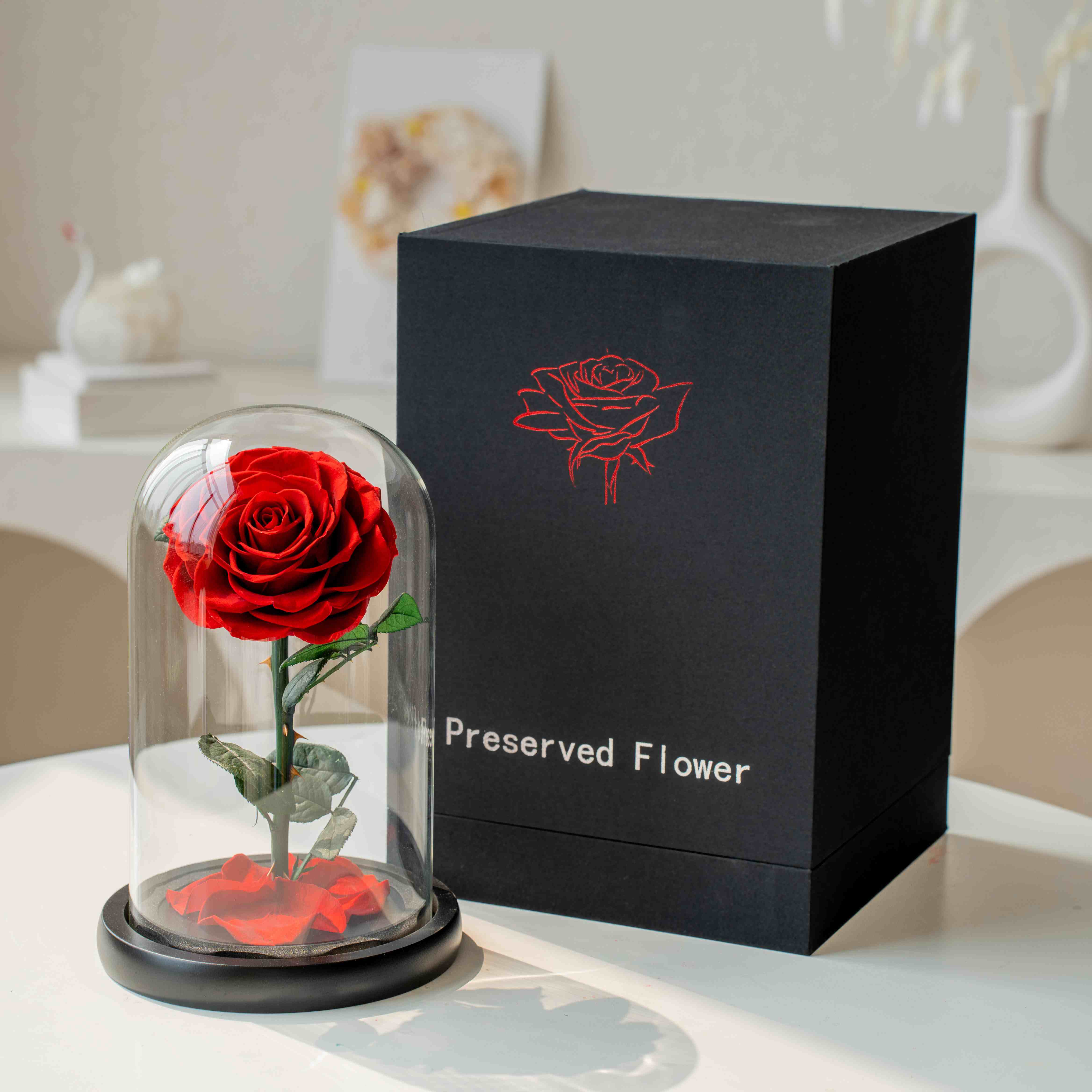
The first thing I notice is how the petals feel. A quality preserved rose has petals that are supple and slightly velvety, almost like they were just cut from the garden. Cheap imitations often feel papery or plastic-like, with a brittle texture that cracks when you gently bend a petal. If the rose feels like it would shatter under light pressure, it's probably not the real deal.
A preserved rose from a reputable grower will have subtle color variations—the outer petals might be a shade deeper or lighter than the inner ones, and there's a softness to the tones. Cheap versions tend to be one flat, uniform color that looks almost spray-painted. Hold it under natural light: if the color seems to sit on the surface rather than come from within, that's a telltale sign of a cheap dye job.
Look at the stem and any attached leaves. Quality preserved roses keep their leaves intact, with a waxy, natural appearance and a stem that feels firm but not woody-dry. Imitations often have leaves that are glued on or painted, and the stem may be wrapped in cheap tape or have a hollow, plastic feel. Also check the base of the bloom—a well-made rose will have a neat, tight calyx, while a cheap one may show glue residue or uneven cuts.
A Low-Effort Focal Point for Desks, Shelves, and Nightstands
A small ceramic vase with a single dried stem can quietly anchor the corner of a desk without demanding attention. It sits there, unassuming, yet somehow the eye keeps drifting back to it between tasks. No watering schedule, no pruning, no guilt if you forget about it for a week.
On a shelf, try placing a smooth river stone next to a short stack of books. The contrast between the rough organic shape and the clean spines does more than you'd expect. It's the kind of arrangement that feels intentional but took about thirty seconds to put together.
For a nightstand, a low-wattage salt lamp or a tiny framed photo leaning against the wall works just as well. The goal isn't to create a display—it's to give your eyes one restful thing to land on when the room gets busy. Keep it small, keep it simple, and let it breathe.
How to Style a Preserved Rose Without Making It Look Frozen in Time
The quickest way to make a preserved rose feel alive is to fight the urge to keep it perfect. Gently work the outer petals with your fingertips until they relax into slightly uneven, natural-looking folds—no two should sit the same way. Let a couple of petals curl outward instead of hugging the center. If the stem is wired, bend it just enough to break the ramrod-straight line, or cut it at an angle and place it slightly off-center in the vessel so the bloom tilts as if it caught the wind.
Pair the rose with materials that carry their own movement and imperfection. A stem of dried fountain grass, a twisted vine, or a few blades of wild oat can soften the static look and make the rose seem part of a living arrangement rather than a specimen under glass. Choose a container with visible texture—unglazed clay, hammered metal, or a cloudy old bottle—and set it near a window where the light shifts through the day and a draft can occasionally stir the petals. Even a small, intentional asymmetry in how the leaves are placed goes a long way toward easing the frozen-in-time stiffness.
The Best Rooms for Preserved Roses When You Want Subtle Color
A north-facing living room or bedroom with muted wall tones—think greige, sage, or chalky blue—gives preserved roses a chance to read as intentional rather than washed out. Pale blush, lavender, and butter-yellow stems hold their color quietly in these spaces without competing with brighter decor.
Reading nooks and guest rooms benefit most from preserved roses in dusty mauve or cream. Because these spaces are smaller and often lack direct sun, the flowers don't have to work against glare. A single arrangement on a side table or dresser adds a low-key wash of color that feels lived-in.
Hallways or powder rooms with frosted or indirect light also do well. Muted apricot, sage-tinted white, or pale peach roses echo the soft light and keep the space from feeling sterile, without shouting for attention.
What Nobody Tells You About Preserved Rose Care and Dust
Obsession with keeping preserved roses pristine often leads to overhandling. A soft brush might seem harmless but repeated strokes can loosen petals. The real trick is to do almost nothing: place them under a glass cloche or in a spot with minimal air movement.
Dust doesn't just sit on top; it works into the folds between petals and leaves. Compressed air can blast petals off, and damp cloths leave moisture that causes spotting. Instead, use a cool hair dryer on the lowest setting from a distance, or a dry, ultra-soft makeup brush with very light pressure.
People assume preserved roses are maintenance-free, but they still react to humidity. High humidity makes them feel tacky and attracts more dust. Keeping a small silica gel packet nearby or running a dehumidifier in the room prevents the sticky surface that turns dust into a stubborn film.
FAQ
Yes, it is a real rose that has been carefully treated to replace its natural sap and water with a plant-based preservation solution. This keeps the petals soft, flexible, and vibrant for months or even years, unlike dried flowers which become brittle.
A fresh rose typically lasts about a week, while a properly kept preserved rose can maintain its appearance for one to three years, sometimes longer. The substantial varieties are especially resilient because their larger petals hold the preservation solution well.
No, it needs none of those. In fact, water, direct sunlight, and high humidity are the main things that can shorten its lifespan. Just keep it in a dry spot away from harsh light and it will remain looking fresh.
It refers to the rose's size and presence. These are not delicate mini roses; they have noticeably larger heads, fuller petal counts, and often thicker stems, so a single stem or a small arrangement can make a strong visual statement in a room.
Absolutely. Because substantial preserved roses come in clean, contemporary colors like muted blush, cream, deep burgundy, or even preserved tinted shades, they pair well with minimalist vases, concrete planters, or glass domes. They bring organic texture without the messy maintenance of fresh flowers.
Keep it indoors, away from direct sunlight, radiators, and areas with high moisture like bathrooms. Dust it gently with a soft brush or a cool hairdryer on the lowest setting. Avoid touching the petals too often, as the oils from your skin can affect the surface.
They make excellent gifts because they last far longer than fresh bouquets and require zero upkeep. Since preserved roses do not release pollen, they are generally a safer choice for people with pollen allergies, though someone with a specific sensitivity to floral scents or dyes should check the product details.
Some very gradual softening of the color is normal after a year or more, especially if the rose is exposed to bright light. Keeping it in a shaded spot and away from direct sun will slow this process dramatically, and many roses retain their rich color for several years.
Conclusion
A substantial preserved rose earns its place in modern décor not because it mimics a fresh bloom, but because it carries the weight of a real flower through a careful stabilization process. The petals keep their velvety texture and deep color while the stem remains firm, letting the rose outlast cut flowers by years without wilting or shedding. Spotting a quality preserved rose means checking for even color saturation, flexible yet intact petals, and a cleanly finished stem end—cheap imitations often feel papery, smell faintly of glue, or show blotchy dye. Because it needs no water, sunlight, or pruning, the rose works as a low-effort focal point on a desk, shelf, or nightstand, where it anchors the space without demanding attention.
Styling a preserved rose without making it look frozen in time comes down to pairing it with organic textures—think rough ceramic, woven linen, or a stack of matte books—so the bloom feels like it belongs in a lived-in room rather than a display case. Bedrooms, entryways, and reading nooks are ideal when you want subtle color, as the rose’s muted tones can soften a neutral palette without overpowering it. The one detail most people miss is dust: preserved roses can’t be wiped with a damp cloth, so a gentle puff of compressed air or a soft makeup brush works best, followed by keeping the bloom away from direct heat and humidity. This quiet upkeep is exactly why the rose feels like a modern heirloom—present, tactile, and quietly enduring.
Contact Us
Contact Person: Mr. Luo
Email: [email protected]
Tel/WhatsApp: 86 18100895505
Website: https://www.feiliyaflowers.com/en/