

Slitter Rewinder Machine Factory Evaluation Tips for Buyers
2026-11-16
When sourcing slitter rewinders, most buyers fixate on cutting width or speed—yet the real risk often hides inside the factory. A machine's performance is only as reliable as the floor it's built on. That's why evaluating a manufacturer's processes, not just its brochure, matters. Take XIAOPAI as a benchmark: their shop-floor discipline and testing protocols reveal what a trustworthy production line should look like.
What the Factory Floor Reveals About Build Quality
A factory floor tells you more about a car's future than any brochure. Look past the robots and you'll notice whether torque wrenches record every bolt, whether fixtures sit on granite bases to stay aligned, and whether the person at station seven can halt the line without waiting for a supervisor. Those signals matter: a plant that invests in measurement and gives workers real authority tends to produce doors that close with a solid thunk and interiors that don't start buzzing after a year.
The quiet routines are just as revealing. Strong factories rarely pile rejected trim or repaint hoods in a corner. Instead, they run gap-checking cameras after every few bodies and have team leads review defect data at shift change. It isn't flashy, but that routine is what keeps panel lines even and weather seals tight over tens of thousands of miles.
Watch the small parts too. If a line worker tosses a wiring harness into a bin, expect rattles later. If suspension bolts are tightened by a tool that logs torque and angle, you'll feel the difference in steering precision and long-term stability. Floors that sweat the unglamorous stuff—seam sealer coverage, cavity wax, clip retention—build the kind of quality that doesn't need a warranty claim to prove itself.
Questions That Uncover Real Engineering Depth
Engineering depth rarely shows up in textbook answers. It appears when someone describes a system they built, then you ask, "What broke first under real traffic?" A shallow answer stops at symptoms; a deep one traces the failure to a mismatched assumption about backpressure or a timestamp collision, then explains the fix as a change in the trade-off, not just a patch. The best questions don't ask what a candidate knows—they ask what they've unlearned.
Pressure-testing trade-offs separates memorization from judgment. Instead of "How does a load balancer work?" ask, "If your service's p99 latency tripled overnight but error rate stayed flat, where would you look first and why not the obvious places?" Depth emerges when someone can weigh observability gaps, queueing effects, and caching layers without defaulting to a checklist. Questions that force a choice between two bad options—like cutting memory overhead versus adding a network hop—reveal whether someone thinks in systems or in slogans.
Failure narratives are the richest vein. A question like "Tell me about an incident you caused, and what invariant should have existed to prevent it" gets past rehearsed success stories. Deep engineers describe the exact moment they realized their mental model was wrong—a retry storm from an idempotency bug, a clock skew that corrupted an ordering guarantee. The depth isn't in the diagnosis vocabulary; it's in the specificity of the aftermath: what monitoring they added, what design review question they now ask, what assumption they stopped treating as free.
How to Spot a Factory That Actually Tests Every Machine
A factory that genuinely tests every machine won’t be vague about it. Ask to see the test station on the production line, not a separate demo area. In most honest shops, each unit gets a unique serial number tied to a test record that includes voltage, current, load, and sometimes a short burn-in period. If they can’t show you a filled-in log or a digital trace for the exact serial number you’re holding, the “100% testing” claim is probably marketing.
Watch how failures are handled. Every real test program produces at least some fallout, so a factory that says nothing ever fails is either not testing properly or hiding its rework. Ask what percentage of units typically fail the first pass and where those units go. A credible answer will mention a repair bench, a root-cause note, and a retest before packing. Blank stares or canned answers are a red flag.
Also pay attention to calibration. Test gear drifts, and a serious factory will have calibration stickers or certificates on its multimeters, oscilloscopes, and programmable loads, with dates that are recent. If the equipment looks dusty, unplugged, or pushed to the side, the test data isn’t trustworthy. Request a copy of the test protocol for your product. It should list specific pass/fail limits, not just “function check OK.”
Customization Clues Hidden in Past Projects
Every finished project carries small decisions that weren't spelled out in the brief. A client might have asked for “something clean,” but the final build shows a preference for sharp corners over rounded ones, muted blues instead of warm grays, or generous whitespace that pushes content below the fold. These aren't accidents; they're signals. Digging through old files, revision notes, and even offhand comments in email threads can reveal what a client leans toward when nobody is asking them directly.
Over time, those choices form a kind of fingerprint. One team may consistently strip out animation because it slows down their internal demos. Another might keep requesting oversized footer links because their audience skews older. The brief rarely says “no motion” or “make navigation impossible to miss,” but the work itself does. Treating every past project as a small field study—rather than a finished asset—turns scattered tweaks into a reliable starting point for the next request.
The trick is to read between the deliverables. Compare the first draft with what actually shipped. Look at which feedback was repeated across different clients or different quarters. Those repetitions are the closest thing to a style guide that no one ever wrote down. Once spotted, they save time and reduce guesswork, because the real customization spec was already hiding in the work you've done.
After-Sales Support: What to Ask Before You Commit
Before signing anything, pin down exactly how support is delivered. Is it a real person on the phone, a chatbot that loops in circles, or a ticket system with no promised response time? Ask for a concrete example: "If my system goes down at 2 a.m., what happens next?" The answer should include who you contact, how quickly they act, and whether emergency support costs extra. Vague promises like "we're here to help" don't count. You need a clear, verifiable path from problem to resolution.
Also check the fine print on what "support" actually covers. Some vendors only fix defects in their own code, leaving you stranded when a third-party integration breaks. Others charge per incident, per hour, or require a premium tier just to talk to a senior engineer. Request a sample service-level agreement and read it line by line. If the vendor won't share one before you commit, treat that as a red flag — real support terms shouldn't be a secret.
Finally, test the support channel yourself. Send an email or call the listed number before purchase and see how long a response takes. Ask a technical question you already know the answer to. Is the reply accurate, or just a canned script? The quality of pre-sales support is often a mirror of what you'll get after the invoice is paid. If they ignore you now, they'll ignore you later.
Why Component Suppliers Matter More Than You Think
Most people glance at a finished product and credit the brand on the label. But behind every seamless launch sits a chain of component suppliers whose choices quietly shape performance, cost, and even public perception. A single fastener, sensor, or polymer blend can determine whether a device survives daily use or fails within weeks. Companies that treat these suppliers as mere order-takers often learn the hard way that their own reputation is only as strong as the weakest part they never see.
The real influence shows up in the details that never make the spec sheet. A supplier might suggest a slightly different alloy that cuts weight without sacrificing strength, or flag a tolerance issue that would have triggered costly recalls. These are not transactional exchanges; they are quiet collaborations that push a product past “good enough.” When procurement teams build long-term relationships with component makers, they gain early warnings about material shortages, production bottlenecks, and shifting regulatory requirements that no internal forecast can catch.
In a market where every brand claims innovation, the edge often comes from the unseen network behind it. Suppliers that invest in cleaner processes, tighter quality controls, and faster prototyping become invisible accelerators for their clients. Ignore them, and you inherit their weaknesses. Respect them, and they hand you a competitive advantage that competitors struggle to copy because it lives in the supply chain, not on the shelf.
FAQ
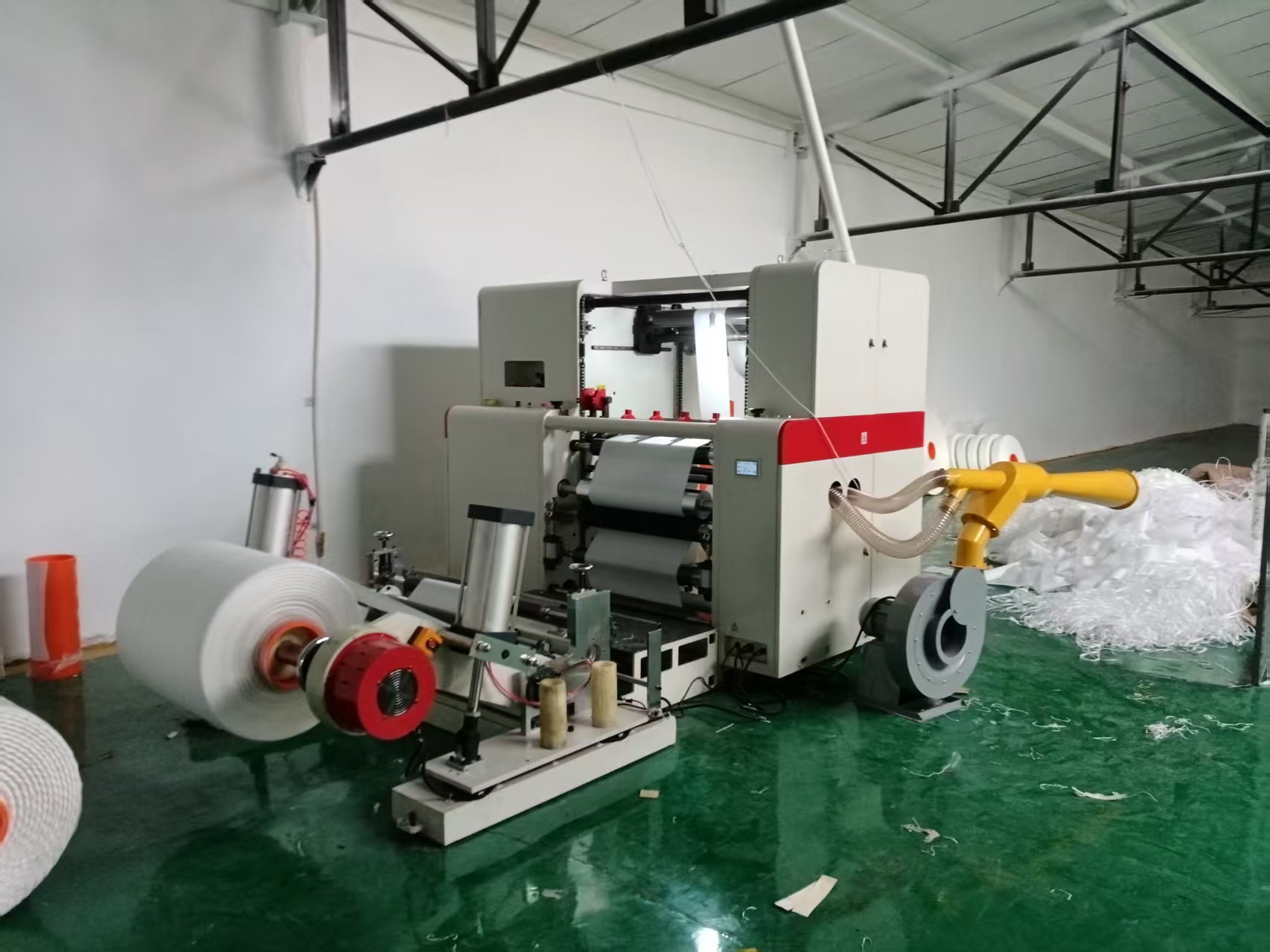
Start with the assembly area, not the showroom. Look at how parts are stored, whether shafts and rollers are protected from dust, and if the workers seem to follow a clear sequence. A messy floor often means messy tolerances later.
Ask them to explain how they would handle a thin extensible film versus a stiff paper laminate. If they immediately mention load cell placement, taper tension profiles, and closed-loop feedback rather than just saying 'we use automatic tension', that's a good sign. Better yet, bring a sample roll and watch them set up a test.
Request the service log for the last six months: how many call-outs, average response time, and what spare parts they actually shipped. A factory that hesitates to share this likely cannot back up its claims. Also ask if remote video diagnosis is standard or an extra charge.
Because specifications on paper rarely match real-world behaviour. Your material may have different slip, stretch, or static properties. Watching a slitting test on your own roll reveals whether the machine can hold edge quality, rewind tension, and roll hardness at production speed.
Check the calibration stickers on measuring tools—if they are expired or missing, quality control is probably informal. Notice whether the factory has a dedicated testing corner or just a dusty machine in the corner. Also be wary if they cannot name three recent customers in your industry.
Ask for a recent example where they changed a machine spec after the initial order. Listen for specifics: which modules were redesigned, how long it took, and whether the customer paid extra. If the answer is vague or they say 'we never need to change anything', that's a warning.
Don't just ask for brand names. Ask for the exact model series of PLC, drives, and sensors, and whether they are current generation. A factory using discontinued components may save cost now but leave you hunting for replacements in two years.
Request their in-process inspection checklist for rollers, shafts, and frame welding. Look for measurable criteria like runout tolerance, balance grade, and surface finish. A factory that only checks at the end cannot catch alignment drift early.
Conclusion
Walking onto a factory floor tells you more in ten minutes than a brochure ever will. Look for clean cable routing, consistent weld patterns, and machines that actually run during your visit—not just polished display units. A builder who keeps raw materials organized and calibration tools within reach is one who respects tolerances. Ask the engineers direct questions: how do they handle web tension at different speeds? What happens when a core shaft is slightly out of round? Their answers should sound less like sales pitches and more like troubleshooting stories. One useful trick is to request a live test on your own material sample. If the factory hesitates, or only runs their standard film, that’s a red flag. Real engineering depth shows up in the details they volunteer unprompted, like why they chose a specific bearing clearance or how they improve edge trim consistency across wide rolls.
Past projects reveal far more than any spec sheet. Ask to see machines built for similar substrates—not just photos, but correspondence, change orders, and test reports. A factory that keeps thorough records of custom knife holders or unusual unwind stands is one that will actually listen to your requirements. After-sales support is another area where casual buyers get burned. Don’t accept vague promises; ask for a named service engineer, typical response windows, and whether they stock critical spares locally or ship them from overseas. And don’t overlook component suppliers. A machine assembled from no-name bearings, generic drives, and unbranded load cells may look fine on day one, but it will drift. Top factories will happily tell you whose sensors they use and why. If they dodge the question, keep walking.
Contact Us
Contact Person: Kellen Chen
Email: [email protected]
Tel/WhatsApp: 8613806536768
Website: https://www.cnxiaopai.com