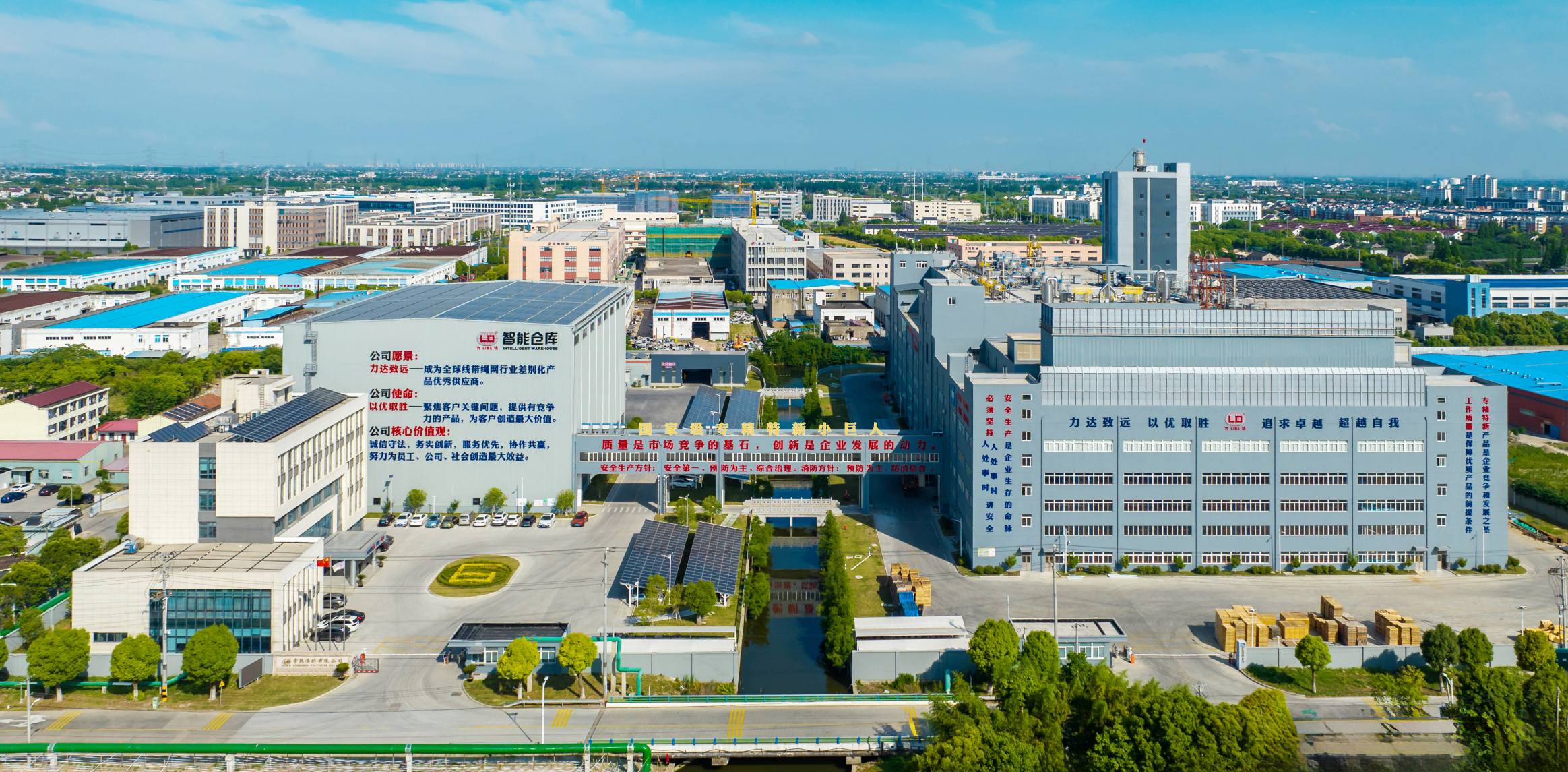

Semi Dull Polyester Filament Yarn Manufacturer Guide for Textile Industry
2026-08-21
If you have ever compared semi dull polyester filament yarn from two suppliers and still ended up with unpredictable dye absorption or uneven fabric surface, you already know that spec sheets rarely tell the whole story. This guide is built for textile manufacturers who need practical, shop-floor-level insight rather than generic sales language. Drawing on real production experience from Changshu Polyester, we walk through the material, process, and quality-control details that separate consistent semi dull POY and FDY from batches that quietly eat into your margin. From spin finish selection to winding tension and package build, the following sections give you a sharper lens for evaluating yarn performance before it reaches your looms or knitting machines.
Reading the Luster Code: Why Semi Dull Sits Between Bright and Full Dull
Most people assume yarn finishes come in two flavors: shiny or matte. But the reality is more like a sliding scale, and somewhere in the middle sits a finish that rarely gets the attention it deserves—semi dull. It isn't just a compromise between bright and full dull; it has its own character, shaped by how light behaves when the fiber's surface has been only partially treated with delustering agents like titanium dioxide. Bright fibers retain a crisp, almost glassy reflection, while full dull scatters light so aggressively that colors feel muted and powdery. Semi dull lands in a sweet spot where the sheen is present but softened, almost like the difference between polished silver and brushed steel.
This middle ground matters more than you'd think when you're working with color. Bright yarn can make even rich hues look slick and synthetic, bouncing light back in a way that flattens subtle tonal shifts. Full dull, on the other hand, tends to swallow light, leaving dark shades looking dusty and pale shades looking chalky. Semi dull preserves the depth of the dye without the plastic-like glare. It's a favorite for tailored garments and everyday knitwear because it mimics the natural luster of wool or cotton rather than the high-gloss finish of filament nylon or polyester. Designers often reach for it when they want a fabric that reads as premium but not flashy.
There's also a practical angle. The amount of delustering agent changes not just the look but the hand and durability. Full dull fibers can feel slightly rougher and may show wear more quickly because the additive creates micro-irregularities on the surface. Bright fibers, with their smooth, unbroken exterior, are more prone to showing snags and oil stains. Semi dull offers a middle path: enough surface texture to hide minor imperfections, yet smooth enough to keep a soft drape. It's the finish you choose when you want the fabric to whisper instead of shout—and that's often exactly what the project calls for.
Polymer Quality and Spinning Speed: How They Shape Yarn Consistency
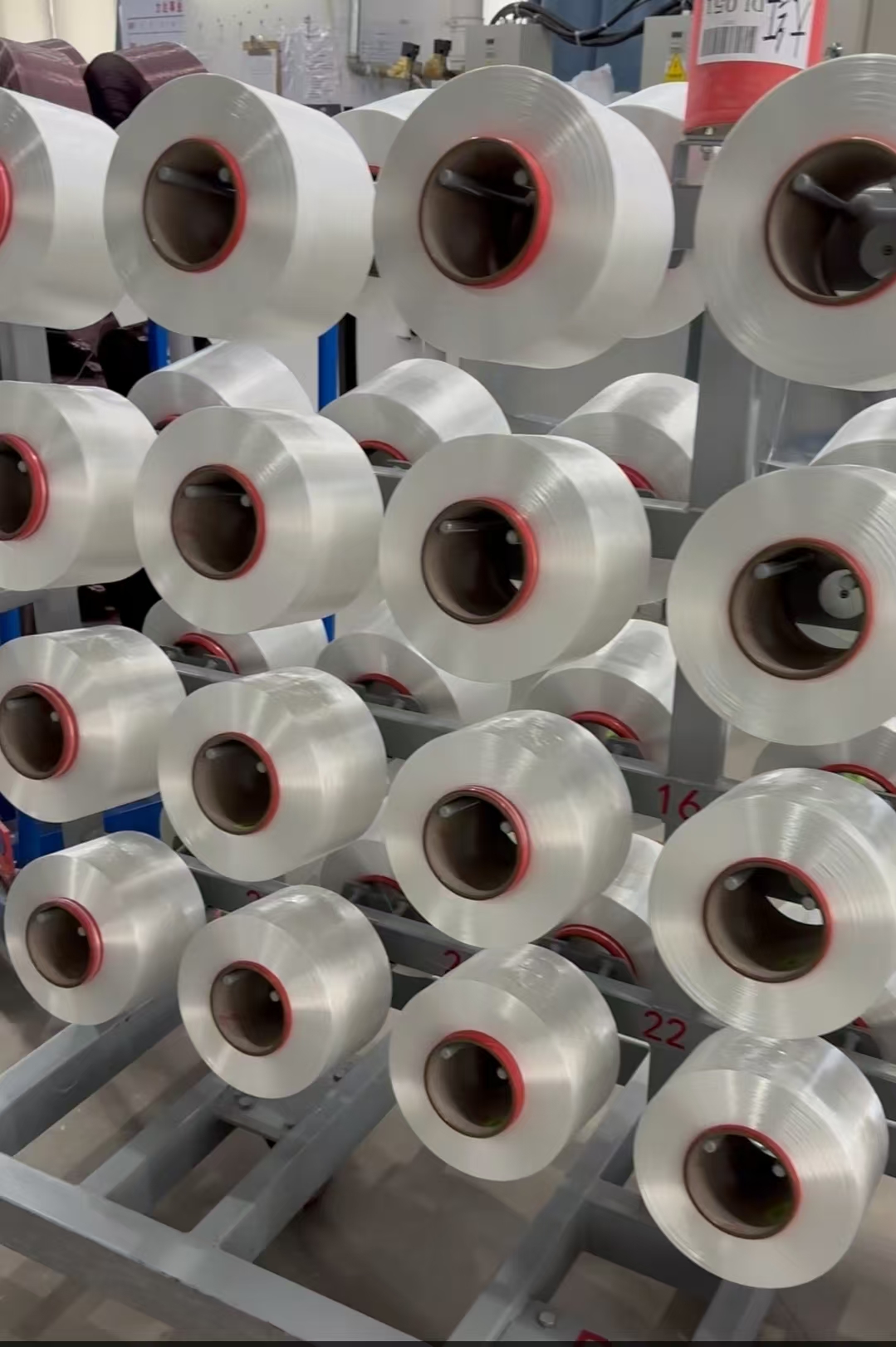
The molecular weight distribution and purity of the polymer feed directly influence how uniformly filaments emerge from the spinneret. A narrow molecular weight range means fewer viscosity fluctuations during extrusion, so the molten stream stays steady and each fiber carries nearly identical tension as it cools. When impurities or degraded chains are present, they act as stress concentrators that trigger premature breaks or uneven necking, leaving weak spots scattered along the yarn length. Spinners who monitor gel content and residual catalyst levels can predict these defects before they appear, adjusting dryer temperatures or filtration mesh to keep the melt clean enough for consistent drawing.
Spinning speed compounds every small polymer inconsistency. At low take-up velocities, the residence time in the quench zone gives molecules a chance to relax and even out minor variations. But once line speed climbs past a few thousand meters per minute, the same polymer inhomogeneity gets stretched into longer, thinner weak sections that survive into the final yarn. Higher speeds also amplify air drag and turbulence around the threadline, causing intermittent quenching that freezes in different crystalline orientations from one meter to the next. Operators often find that raising speed without upgrading polymer filtration simply shifts the defect pattern from random breaks to periodic thick-and-thin bands.
Balancing polymer quality against spinning speed requires a feedback loop between rheology data and on-line tension readings. A lot that tests well at moderate speed may fall apart when the draw ratio is pushed because the elongational viscosity no longer rises smoothly. Practical mills track the coefficient of variation in yarn denier over ten-second intervals and correlate it with melt pressure ripple. When the ripple exceeds a threshold, they either slow the winder or switch to a polymer batch with lower ash and more uniform comonomer content, restoring the steady stress profile that keeps every bobbin within a tight evenness grade.
Customizing Denier, Filament Count, and Twist for Specific Textile Jobs
Matching denier to the end use rarely starts with a catalog value. A tightly woven down-proof shell might call for 20-denier yarns with a high filament count to keep the hand soft while blocking fill, whereas a heavy-duty conveyor belt fabric is better served by 1000-denier multifilament with a lower twist to preserve tensile strength. The choice is not simply heavier versus lighter; it is about how the yarn collapses, packs, and resists abrasion under the specific stress pattern of the job.
Filament count changes the surface character more than most spec sheets admit. Splitting the same denier into twice as many filaments yields a noticeably silkier, more pliable yarn, but it also increases the risk of snagging and makes dye uptake less uniform unless the spinning and texturing are controlled carefully. Twist adds another lever: a few turns per inch stabilize low-denier yarns for high-speed knitting, while hard twist in sewing thread creates a rounder, more elastic line that resists unraveling in lockstitch machines.
In practice, customizing these three parameters means working backward from the failure mode. If a fabric is pilling at the crease, raising filament count and slightly reducing twist may spread the load. If a webbing is stretching too much under tension, dropping denier but increasing twist and ply can stiffen the structure without adding bulk. Small adjustments often matter more than wholesale yarn changes, especially when the job runs across multiple dye lots or finishing routes.
Where Semi Dull Polyester Filament Outperforms: From Lingerie to Luggage
Semi dull polyester filament has a quiet advantage in intimate apparel. The reduced luster gives fabrics a matte, skin-like finish that avoids the cheap sheen of fully bright yarns. This matters for lace trims, seamless bras, and everyday underwear where a subtle texture reads as more refined and less synthetic. The filament's smooth surface also glides against skin without irritation, and its low moisture regain means it dries fast after a workout or hand wash.
The same fiber finds a completely different role in luggage and travel gear. Here, the semi dull appearance hides scuffs and dirt better than glossy alternatives, keeping a suitcase looking newer after rough handling. But the real outperformance is mechanical: high-tenacity versions resist abrasion from conveyor belts, zipper stress, and overpacking. The filament's uniform strength along its length means fewer weak spots in woven shells or ballistic-style fabrics.
Between those extremes, semi dull polyester filament also proves itself in outdoor apparel, upholstery, and even technical backpacks. Its ability to take dye evenly without excessive shine allows designers to match colors across fabrics that range from featherlight lingerie mesh to heavy-duty luggage canvas. That versatility, backed by consistent performance, is why mills keep specifying it for products where both look and long-term durability can't be compromised.
A Sourcing Checklist for Textile Mills Evaluating Yarn Manufacturers
Start by pinning down exactly what your mill needs before you ever reach out to a supplier. Yarn count, twist direction, fiber blend, and even the cone type all shape how smoothly that yarn will run on your machines. If you skip this step, you end up comparing quotes that aren't really for the same product—and that's where costly mistakes creep in. Write down your tolerances for strength, evenness, and hairiness, then hold every candidate to those numbers without exceptions.
Next, dig into the manufacturer's consistency rather than just their sample reel. Ask for three months of production lot data, not a single certificate. A mill that can't show you how their yarn performs batch after batch will quietly pass variability down to your knitting or weaving floor. Check whether they track online quality parameters like CVm, IPI, and elongation, and whether they act on that data or simply file it. This tells you more about their real capability than any polished brochure.
Finally, run a hands-on trial on your own machinery. Set aside a few hundred kilos, run it at your normal speed, and watch for breaks, dust, and unwinding issues. Have a technician note every stop and its cause. Then compare that trial yarn's performance against whatever you currently use. The right manufacturer won't just pass a lab test—they'll make your people forget the yarn is even there.
Energy Use, Recycling, and Bio-Based Feedstocks: The Future of Filament Production
The sheer amount of electricity needed to extrude and spool thermoplastic filament rarely gets the attention it deserves. Most production lines still draw power from grids that lean on coal or natural gas, which quietly undercuts the environmental story that many filament brands like to tell. A shift is underway, though, as more manufacturers install solar arrays or sign direct renewable energy contracts, and as newer extruders use heat recovery to cut total energy per kilogram by double-digit percentages.
Recycling has moved well beyond simply grinding up failed prints. Today's more ambitious operations collect post-industrial scrap, sort it by polymer type, and blend it with virgin resin at carefully controlled ratios to keep diameter and melt flow consistent. Some workshops run take-back programs that turn old spools and purge waste into new filament, though color consistency and contamination remain stubborn hurdles. The real progress is in standardizing the feedstock stream—without clean, predictable input, recycled filament will always struggle to match the performance of its virgin counterpart.
Bio-based feedstocks offer a different kind of promise. Instead of relying on petroleum-derived monomers, these materials start with sugars, starches, or oils from corn, sugarcane, castor beans, or even algae. PLA already dominates this space, but newer options like PHA and bio-based polyamides are slowly improving in heat resistance and toughness. The challenge isn't just swapping one carbon source for another; it's ensuring that the land, water, and fertilizer used to grow these crops don't create a new set of problems. Still, the direction of travel is clear: filament production is gradually decoupling from fossil fuel chemistry, even if the pace feels uneven.
FAQ
It contains a moderate amount of titanium dioxide, typically between 0.3% and 0.5%, which scatters light to reduce shine without making the fiber completely matte. Bright yarn skips the additive almost entirely, while full dull pushes the TiO₂ level higher for a flatter, chalkier look.
You'll see it a lot in sportswear, linings, outdoor fabrics, and home textiles like curtains and upholstery. The subdued luster hides minor weave irregularities better than bright yarn and gives fabrics a softer, more natural hand without sacrificing strength.
Look beyond the spec sheet. Ask about raw material sourcing, whether they use continuous polymerization or chip spinning, how they control batch-to-batch TiO₂ distribution, and what kind of winding tension consistency they maintain. Visit the plant if possible and ask for trial cones before committing to container loads.
TiO₂ particles are slightly abrasive, so higher dullness can increase wear on guides, needles, and heddles. It can also lower tenacity a bit compared to bright yarn. A good manufacturer compensates with optimized spin finish and controlled particle size to keep friction manageable.
Most suppliers stock a range from 30D/12F up to 600D/192F, with 75D/36F, 150D/48F, and 300D/96F being workhorse specs for weaving and knitting. Custom filament counts like 150D/96F or 300D/576F are possible for specialty fabrics needing more drape or coverage.
Yes. Beyond denier and filament count, you can specify intermingling points per meter, twist direction and level, oil pick-up percentage, and even shrinkage behavior. For example, low-shrinkage variants work well for dimensionally stable technical textiles, while higher intermingle helps high-speed knitting.
At minimum, verify breaking strength, elongation at break, boiling water shrinkage, oil content, and intermingle nodes per meter. Also check the TiO₂ dispersion under a microscope for agglomerates that could cause filament breaks. A reliable manufacturer will provide a detailed test certificate with every lot.
Keep the cartons off the floor on pallets in a dry, ventilated warehouse away from direct sunlight and strong UV sources. Avoid temperature swings above 35°C and maintain relative humidity below 65%. If stored long-term, rotate stock and re-test oil content and moisture before use.
Conclusion
Semi dull polyester filament yarn occupies a deliberate middle ground that many textile engineers overlook. Rather than the high reflectance of bright variants or the matte, almost cotton-like haze of full dull, a controlled dose of titanium dioxide in the polymer melt gives semi dull a soft, natural sheen that hides minor surface flaws and still allows rich, even dye uptake. That balance hinges on polymer quality and spinning speed: high-IV chips and stable melt temperatures let manufacturers draw filaments with tight denier uniformity and fewer broken ends, while impurities or throughput swings quickly become visible as dye streaks. For mills, the real payoff is customization. A 50-denier, 24-filament yarn with low twist works for delicate lingerie trims, whereas a 150-denier, 48-filament yarn with higher twist provides the abrasion resistance needed in luggage shells or automotive textiles.
This versatility is why semi dull polyester filament outperforms in such different product categories. In intimate apparel, reduced glare keeps seams discreet under sheer fabrics; in luggage and upholstery, the slightly textured surface hides scuffs better than bright yarn, extending the product life. When sourcing, textile mills should not focus on price alone. Checking lot-to-lot consistency, requesting trial cones, and asking about denier and filament count ranges reveal whether a manufacturer can handle repeat orders without drifting. The production side is also changing: suppliers that use electric spinning lines, closed-loop water systems, and bio-based MEG or recycled PET feedstocks can cut carbon emissions while preserving the semi dull look customers expect. Mills that ask for energy use per ton and third-party recycled content certificates will be better positioned for tightening environmental regulations. The guide's central point is that semi dull polyester filament, when made with discipline, is not a middle-of-the-road fallback but a strategic choice for brands that need consistent quality and a cleaner supply chain.
Contact Us
Contact Person: CONNIE
Email: [email protected]
Tel/WhatsApp: 86-0512-53671634
Website: https://www.lida-yarn.com/