

Semi-Automatic Slitter Rewinder Machine Benefits for High-Mix Converting Operations
2026-11-26
High-mix converting rarely rewards complexity. Every extra minute spent repositioning blades or rethreading a web eats directly into the thin margins that keep short-run work viable. Yet many shops still assume more automation is the only path forward—and end up paying for capacity they don’t need. A semi-automatic slitter rewinder flips that logic: it keeps the operator in control where judgment matters, while handling repeatable cuts and rewinding with enough consistency to move from one job to the next without hesitation. For teams that switch materials, widths, and finish requirements daily, that balance is often worth more than a lights-out line. This post looks at why XIAOPAI semi-automatic slitter rewinders fit high-mix operations—and how the right machine can shorten changeovers, reduce waste, and protect flexibility without overcomplicating the floor.
Short Runs and Constant Changeovers Change the Automation Math
The usual justification for automation leans on volume, long production runs where a machine repeats the same motion thousands of times without interruption. That model falls apart when a shop switches from one part to another three times a day. Every changeover eats into uptime, and if a robot needs an hour of reprogramming or a different gripper each time, the investment stops making sense no matter how fast the cycle is.
Shorter runs shift the real cost away from the move itself and toward everything that happens between moves. Fixtures, part feeding, program verification, and the moment a worker has to tweak a sensor start to dominate. Automation can still pay, but only when changeover time is treated as a design target rather than an afterthought. Quick-release plates, vision systems that handle part variation without custom fixtures, and offline programming all matter more than raw speed.
Flexibility becomes the line item that decides whether the project gets approved. A slightly slower cell that switches parts in five minutes often beats a faster one that takes forty. The old rule was to automate only the highest-volume jobs, and the sharper approach is to automate the jobs where changeover pain is highest and let the equipment earn its keep across dozens of small batches.
Operator Adjustments That Lower Trim Waste on Mixed Substrates
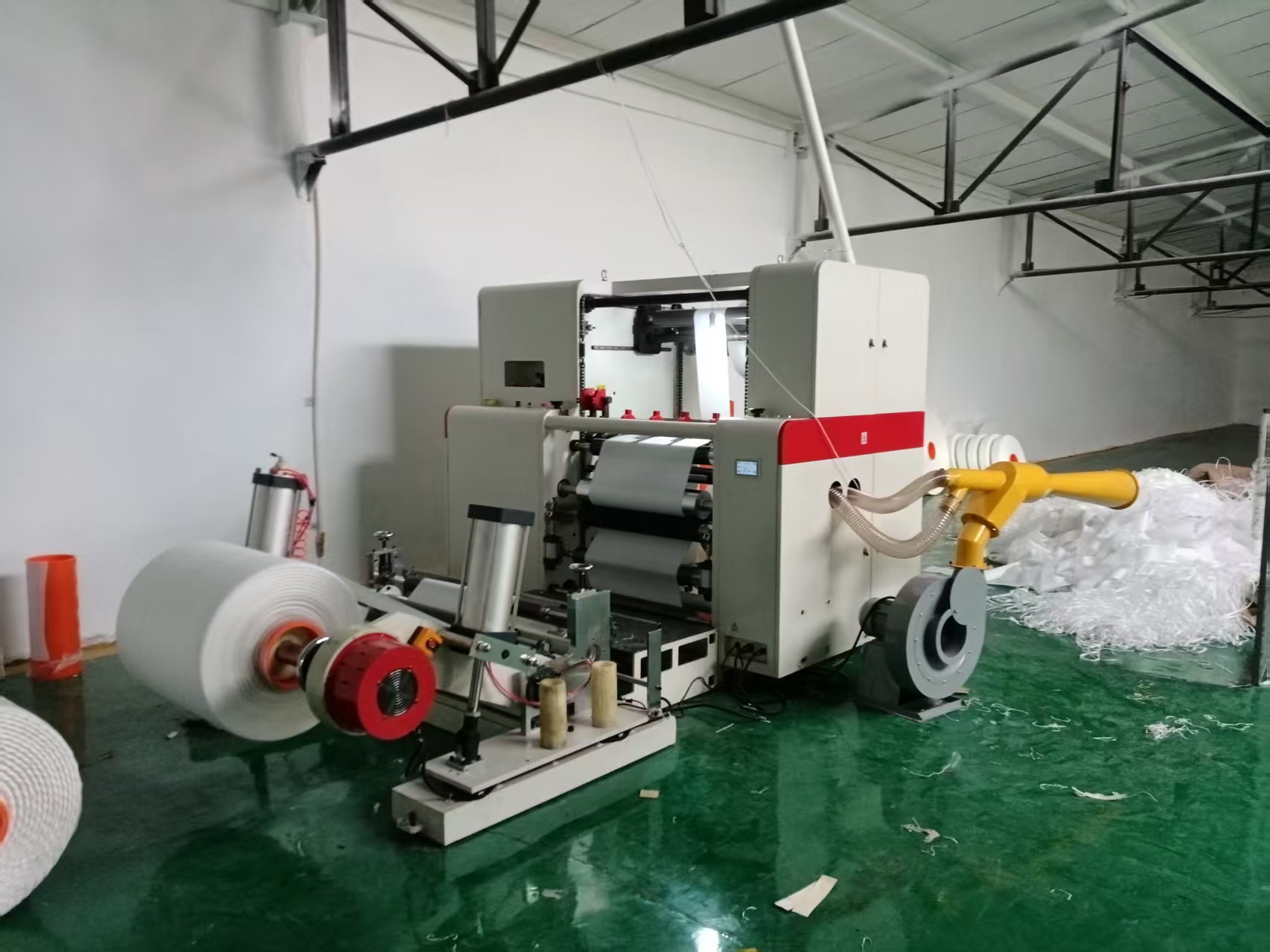
Mixed substrate lifts rarely behave the way the job ticket claims. Measuring the actual caliper at the lead edge and tail edge before setting the side guide gives a truer starting point than relying on the stock labels. If the pile includes board, text, and a synthetic sheet, static and curl are usually the first things to fight. A quick fan of the stack and a slower jogger stroke can settle the sheets enough that the knife sees a square lift instead of a drifted one.
Clamp pressure and blade depth should be reset for the thickest stock in the lift, not the last job on the machine. On mixed runs, too much clamp pressure crowns softer sheets and shortens the bottom cut, while too little pressure lets dense board slide after the knife enters. Cutting a short test lift and checking both top and bottom offcuts reveals whether the trim is square through the stack. If the bottom sheet is off by even a millimeter, splitting the lift or moving the heavier stock to the bottom usually corrects it before the main run.
Backstop and side jogger drift are where a lot of hidden trim waste starts. Rather than adding extra bleed to cover inconsistent edges, operators can check the offcut width at both ends every few lifts and make a small correction to the backstop or jogger as soon as the gap opens up. This is slower only in the moment; over a full shift it removes much of the wide allowance that would otherwise end up on the floor.
Tension Control for Rolls That Refuse to Behave Alike
Rolls that shift behavior between cuts, coatings, or even shifts in humidity rarely respond to a single tension profile. One roll may release tension in bursts during acceleration because of uneven winding, while the next holds steady until a certain diameter, then goes slack near the core. The only reliable starting point is to read what the roll is actually doing through load cells, dancer position, and drive torque as the error appears, rather than chasing one preset number.
A better setup lets the controller probe each roll early in the run. A short speed ramp or a small dancer offset reveals whether the roll behaves like a stiff spring, a slipping sleeve, or something closer to a soft bag. From that response, the system can adjust feed-forward gain, clamp pressure, or acceleration trim before reaching production speed. Corrections stay local to the roll in question, so operators spend less time chasing a setpoint that drifts across a shift.
Where Semi-Automatic Slitting Outperforms Full Automation
Short runs and frequent changeovers are where the semi-automatic approach pulls ahead. A fully automated line may take longer to reset blade positions, core sizes, and tension parameters between jobs than it takes to run a modest roll. With a semi-automatic slitter, a skilled operator can set up the next width in a few minutes, make small mechanical adjustments by hand, and keep the schedule moving. The real advantage shows up when a shop handles six or eight different jobs in a day rather than one long production run.
Some films, laminates, and coated substrates do not behave consistently from roll to roll. A slight gauge variation, a soft spot in the web, or an uneven coating edge calls for a judgment call that sensors and preset recipes often miss. Semi-automatic slitting leaves room for the operator to ease tension, nudge speed, or shift the slit position mid-run. That kind of tactile response can prevent a small defect from turning into a full reel of scrap, which full automation may only discover after the run is complete.
Floor space, capital budget, and maintenance also matter. A semi-automatic machine usually has fewer servo drives, fewer guarded interlocks, and a simpler control panel, so most upkeep can be handled by the in-house technician without waiting on a specialized service visit. For low-volume converters, job shops, or plants that move materials that change with humidity and temperature, that everyday practicality often beats the theoretical speed of a hands-off system.
Fast Job Turnover Without Losing Slit Precision
Quick changeovers in slitting rarely fail because a blade is dull; they fail because the next setup drifts a few thousandths from the last one. Cartridge-style knife assemblies and pinned stops have changed that. An operator can pull an entire gang, slide in the preset group for the next width, and lock it against hard references instead of eyeballing a dial.
The repeatability comes from keeping side clearances, cant angles, and blade penetration tied to the cassette rather than the operator. Linear rails carry the holders into the same plane every time, while the control stores offset values for each product recipe. When a job is recalled, the machine resets spacing and pressure in steps measured by encoders, not by feel.
That removes the usual trial cuts and shim adjustments after a turnover. Different films, papers, or laminates can run back-to-back with the first slit landing on spec and edge quality holding through the roll. Setup time drops, startup scrap shrinks, and precision becomes a stored setting rather than a skill that leaves at shift change.
Matching Machine Complexity to the Work Your Converting Line Actually Runs
A common mistake is buying a converting line for a hypothetical future instead of the rolls moving through today. If most jobs run similar substrates at similar widths, a highly configurable line with servo-driven everything often adds cost and failure points rather than flexibility. The first question isn’t what the machine can do, but what the weekly schedule actually asks of it.
That doesn’t mean strip out every advanced feature. Instead, match the control sophistication to the real variation in the work. A line that runs three film gauges and two web widths doesn’t need endless recipes; it needs repeatable setups and quick changeovers. A line that must switch among fragile films, paper, and laminates does need more tension zones, better edge guiding, and automation around splices. Complexity should be earned by the job mix.
Operators matter too. A highly complex interface may look impressive but slows down crews if they only need a few settings. The better approach is to watch a full shift, count the actual adjustments, and then choose the level of automation that removes the most frequent manual interventions without burying the team in menus.
FAQ
Because job parameters shift constantly, operators need direct control over knife positions, tension, and rewind pressure. A semi-automatic machine gives immediate mechanical adjustment without waiting for recipe changes, so quick transitions stay quick.
Short and medium runs with frequent width or material changes see the biggest gains. When you are switching from film to laminate to label stock several times a day, the simpler setup path prevents the machine from becoming the bottleneck.
Open access to the slitting section, quick-lock knife holders, and preset counter assemblies let operators set the next job while the current roll is still winding. At roll change, it often takes a matter of minutes to load the new core set and move knives into position.
Yes, as long as the knife shaft is precision-ground and the positioning system uses clear digital or mechanical references. Many shops achieve repeatable widths within a few thousandths of an inch on films and paper structures after verifying the first cut.
In some ways it is. There are fewer layered automation screens, and the operator can directly feel and see web tension behavior. Training focuses on mechanical setup and safety rather than software navigation, which usually shortens the learning curve.
Shaftless unwinds, differential rewind shafts, lay-on or surface assist options, and guarded easy-access knife areas. These features affect setup speed and roll quality more than horsepower alone.
Differential winding and adjustable taper tension prevent the inner wraps from being crushed and the outer wraps from becoming too loose. Operators can fine-tune the taper at the rewind stations as the roll builds, which is especially useful on high-coat-weight laminates.
It depends on mix and volume, but many operations recover the investment in 12 to 24 months through lower setup waste, fewer rejected rolls, and more productive shift time. The savings are usually more visible in facilities running many short jobs.
Conclusion
High-mix converting rarely follows the steady, predictable pattern that full automation assumes. When runs are short and changeovers arrive every few hours, the math shifts: an automated system that takes longer to reset or that demands strict recipe consistency can erase the throughput it was meant to create. Semi-automatic slitter rewinders leave the critical judgment with the operator, which matters most on mixed substrates. A quick manual nudge on blade placement or side trim can save rolls that a rigid automated sequence would waste, especially when films, papers, and laminates respond differently to the same settings. Tension control adds another layer. Rolls that refuse to behave alike—some soft, some tightly wound, some with baggy edges—need constant feel and adjustment rather than a single locked profile. That adaptability is what keeps waste low without slowing the line.
A semi-automatic machine also wins when precision and turnover have to coexist. Operators can hit exact slit widths on repeat jobs while still making fast, tactile corrections between orders, something full automation often sacrifices for speed or imposes through lengthy calibration. The result is a machine that matches the actual work: not a high-volume commodity line, but a room full of varied widths, substrates, and customer specs. Instead of paying for automation capacity that sits unused or fights the workflow, converters get a tool shaped around frequent job changes. That keeps throughput honest, scrap under control, and the equipment complexity no higher than the production mix actually requires.
Contact Us
Contact Person: Kellen Chen
Email: [email protected]
Tel/WhatsApp: 8613806536768
Website: https://www.cnxiaopai.com