

Recommend a Few Industrial Parts That Improve Machinery Reliability
2026-10-29
Downtime rarely starts with a catastrophic failure—it begins with small, overlooked parts that quietly wear out. The upside? A few smart replacements can dramatically boost machinery reliability. Here are a handful of industrial parts that consistently deliver, with sourcing options from Zhaoyuqi.
Sealed bearings that refuse to quit under pressure
Beneath the roar of heavy machinery and the grind of relentless torque, sealed bearings are often the quiet heroes that keep everything turning. But not all seals are created equal. The ones worth their salt don't just block out dust and moisture—they stand firm when the pressure spikes, when temperatures swing wildly, and when lubrication is all that stands between smooth rotation and catastrophic failure.
What sets these bearings apart is a refusal to leak, crack, or cave. Triple-lip contact seals, labyrinth designs, and high-performance nitrile or fluoroelastomer materials work together to create a fortress around the rolling elements. Even under side loads that would make lesser components groan, these units hold their grease in and keep contaminants out, mile after punishing mile.
In the field, that translates to less downtime and fewer surprise teardowns. Farmers, miners, and plant operators learn quickly which bearings earn their keep—and which ones fail when the pressure is on. A sealed bearing that refuses to quit isn't just a component; it's a promise that the job will get done, no matter how hard the world pushes back.
Vibration dampeners that quietly extend machine life
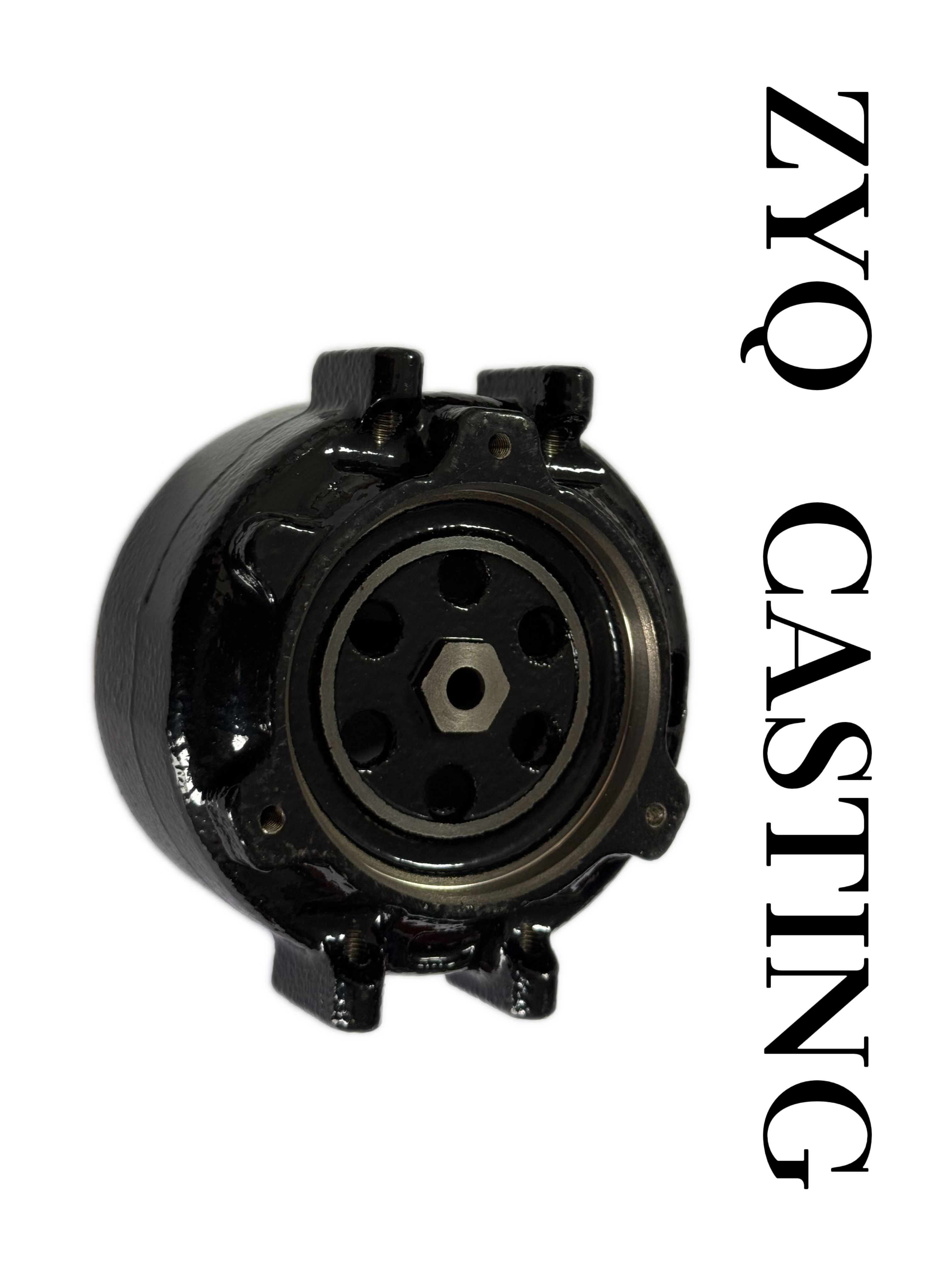
Most machine wear doesn't start with a sudden failure. It begins as a faint, repetitive tremor that works its way into bearing races, seal lips, and bolt threads. Vibration dampeners sit quietly in that gap between motion and damage, absorbing the small oscillations before they turn into fatigue cracks or loosened fasteners. The right dampener isn't just a softer mount; it shifts resonant frequencies away from normal operating speeds, so the machine never spends hours humming at its own natural frequency.
Modern dampeners go well beyond rubber pads. Viscoelastic composites, tuned-mass elements, and fluid-filled isolators each target different frequency ranges and load conditions. On a high-speed spindle, swapping generic mounts for a tuned polyurethane damper can cut vibration amplitude by 30-40%, which translates directly into fewer bearing spalling events and longer intervals between rebuilds. Pumps benefit too: reducing cavitation-induced chatter helps keep mechanical seals from developing micro-leaks that eventually lead to failure.
The payoff is quiet in both senses. Dampeners don't announce themselves, and the extension of service life accumulates week by week without drawing attention. Maintenance records are often the only place the effect shows up—a pump that used to need seals every eight months now runs for two years, a gearbox stays within alignment tolerances, a shaft no longer shows fretting at the coupling. That kind of silent reliability is exactly what makes a machine feel old or new, regardless of its actual age.
Precision shaft alignment tools nobody talks about
Most maintenance teams lean on the usual laser alignment kits, but a few precision shaft alignment tools slip under the radar. Take the offset bracket with a built-in inclinometer—cheap, analog, and brutally honest about angular misalignment before the lasers even come out. Pair it with a set of tapered feeler gauges cut for coupling hubs and you can catch soft foot conditions that digital systems often normalize away.
Another overlooked piece is the thermal growth compensation fixture, basically a dial indicator mounted on a sliding rail that maps how a machine moves from cold to hot. It doesn't just measure; it forces you to correct alignment targets in real time, which is where most factory specs fall apart. These tools don't have touchscreens or Bluetooth, but they find the problems that expensive alignment reports tend to bury.
Automatic lubrication systems that earn their keep
On a busy production line, hand-greasing hundreds of fittings is not just tedious—it creates a backlog of overlooked points that quietly shorten bearing life. Automatic lubrication systems remove that variability by delivering a measured amount of grease or oil to each point on a set interval, even while machinery is running. The result shows up in fewer unexpected stops and less time spent chasing failed components.
The financial case becomes clearer when you track maintenance hours rather than just uptime. A single multi-point lubricator can replace dozens of manual grease-gun applications per week, freeing technicians for inspections and other skilled work. Because the system dispenses only what each point needs, lubricant consumption typically drops by 30 to 50 percent compared with typical over-greasing habits. Over a year, that reduction alone covers a meaningful share of the installation cost.
What separates systems that truly earn their keep is the feedback. Models with clogged-line detection or low-level alerts prevent the false confidence of “the system is running, so everything is fine.” In dusty, wet, or hard-to-reach environments—think conveyor bearings, fan shafts, or crane wheels—the right automatic setup pays for itself through avoided contamination failures and fewer night-shift callouts.
Smart sensors that flag trouble before it starts
Vibration patterns on a motorized assembly line don't lie. A tiny shift in frequency or amplitude—barely visible on a standard dashboard—can signal a bearing that's starting to wear. Smart sensors attached directly to the equipment pick up those micro-changes and cross-reference them against historical baselines. When the deviation crosses a threshold, maintenance gets a heads-up days before the component actually fails. That means replacing a $40 bearing during a planned pause instead of losing a full shift to an unplanned teardown.
The same principle works outside the factory. Refrigeration units in supermarkets, pump stations in municipal water systems, and even HVAC compressors on office rooftops now use compact sensors that listen for anomalies. Instead of waiting for a leak, a pressure drop, or a burned-out motor, facilities teams see an early warning on their phone. Some setups even adjust operating parameters automatically—slowing a pump, rerouting a flow, or cycling a valve—to keep the problem from escalating. The goal isn't just fewer breakdowns; it's taking the guesswork out of when to intervene.
Heavy-duty couplings built for real-world misalignment
Heavy-duty couplings are usually tested in a clean, aligned lab setup, but the field rarely cooperates. Angular, parallel, and axial offsets stack up quickly from thermal growth, uneven baseplates, or settling foundations. This coupling line is engineered to absorb those combined stresses rather than pass them along to bearings, seals, or driven equipment.
The design pairs high-torque elastomeric elements with machined steel hubs that flex under load. That gives the coupling enough freedom to handle constant angular and parallel misalignment while still holding torsional stiffness during starts, stops, and reversals. You get smoother operation, reduced vibration, and a longer service life for the entire drivetrain.
Installation doesn't require laser-perfect shaft alignment to run reliably. A blind assembly and visible wear indicators help maintenance teams work faster, while the coupling keeps absorbing routine baseplate shifts and pipe strain without cracking or throwing inserts. For pumps, compressors, conveyors, and gearboxes that operate in less-than-ideal conditions, this tolerance for real-world misalignment is what keeps downtime off the schedule.
FAQ
Vibration-damping mounts and flexible couplings are a solid start. They absorb shock and isolate components from excessive movement, preventing stress fractures and loosening of nearby fasteners.
Sealed spherical roller bearings work well because the integrated seals keep out dust and moisture. That alone extends service intervals and reduces the chance of abrasive wear tearing up the rolling elements.
Swap in Nord-Lock wedge-locking washers or use prevailing torque lock nuts. They use mechanical locking rather than friction, so vibration won't back them off, and you avoid the routine retightening that leads to downtime.
Upgrading to polyurethane or PTFE lip seals on rotating shafts is cheap and effective. They resist chemical degradation and maintain a tight barrier longer than standard rubber, which means fewer leaks and less contamination getting into bearings.
Automatic single-point lubricators are underrated. They deliver a precise amount of grease at set intervals, preventing both under-lubrication and over-greasing—two common causes of bearing failure in industrial settings.
Disc couplings with stainless steel flexible discs are my go-to. They tolerate angular and parallel misalignment without transmitting excessive forces to the shafts, which protects bearings and seals from premature failure.
Insulated bearings or grounding rings like AEGIS rings can prevent electrical pitting from shaft currents. In variable frequency drive applications, that's a big deal because arcing across the bearing race quickly destroys an otherwise healthy motor.
Wireless vibration sensors are worth the investment. They give you real-time data on imbalance, looseness, or bearing wear, so you can plan maintenance before a failure stops the line—rather than reacting after the damage is done.
Conclusion
Machinery reliability rarely hinges on one dramatic upgrade. Instead, it comes from a handful of unglamorous components working together. Sealed bearings, for instance, keep contaminants out and grease in when washdowns, dust, or heavy loads would wreck open designs. Pair them with vibration dampeners and you stop the small oscillations that slowly loosen bolts, crack mounts, and fatigue metal. The effect is not instant, but over a year it shows up as fewer emergency callouts.
At the same time, alignment and lubrication are often treated as afterthoughts. Precision shaft alignment tools—laser or dial-based—let a maintenance team correct offset and angular error before a coupling eats itself. Automatic lubrication systems deliver the right amount of grease or oil on schedule, so bearings never run dry or get over-packed. Smart sensors add another layer, tracking temperature and vibration trends to spot a failing bearing weeks before it seizes. And heavy-duty couplings designed for real-world misalignment absorb the residual shaft displacement that even careful installation cannot eliminate. Together, these parts reduce unplanned downtime and make machinery predictable rather than temperamental.
Contact Us
Contact Person: Nico Yin
Email: [email protected]
Tel/WhatsApp: 8618561567088
Website: https://www.ductileironparts.com/