

Programmable Power Supply Innovator Drives Efficiency in Industrial Automation
2026-05-15
In the fast-evolving world of industrial automation, squeezing every drop of efficiency from machinery is what separates leaders from followers. At the core of this push lies a component often overlooked: the power supply. TPS, a true pioneer in programmable power, is transforming how factories fine-tune energy delivery—trimming waste, boosting precision, and opening doors to smarter, more adaptive systems. Here’s a look at how their forward-thinking designs are quietly reshaping the factory floor.
Redefining Power Management in Modern Factories
In the modern industrial landscape, power management has evolved from a simple utility oversight function into a strategic pillar of operational excellence. No longer confined to ensuring that machines receive electricity without interruption, it now encompasses a holistic approach that balances consumption, cost, and sustainability. Advanced digital systems collect real-time data from every corner of the production floor, allowing managers to visualize energy flows with unprecedented clarity. This transparency uncovers hidden inefficiencies—like a continuously running conveyor during shift changes or compressed air leaks that silently drain resources—transforming power from a fixed overhead into a manageable variable.
The integration of intelligent automation and predictive analytics is propelling this transformation further. Instead of reacting to energy spikes or equipment failures after they occur, factories now anticipate them. Machine learning algorithms analyze historical and live data to forecast demand, schedule energy-intensive tasks during off-peak tariff windows, and even preemptively identify motors or drives that are likely to fail. This not only prevents costly downtime but also extends asset lifespans and reduces waste. The result is a self-optimizing facility where every watt is purposefully directed, and energy decisions are made in microseconds without human intervention.
Crucially, this redefined approach delivers dual benefits: a leaner bottom line and a stronger environmental profile. By cutting unnecessary consumption, manufacturers unlock significant cost savings while shrinking their carbon footprint—a compelling advantage in markets where customers and regulators increasingly favor sustainable operations. Modern power management thus becomes a competitive differentiator, empowering factories to produce more with less and align profitability with planetary responsibility.
Smart Voltage Control for Seamless Automation
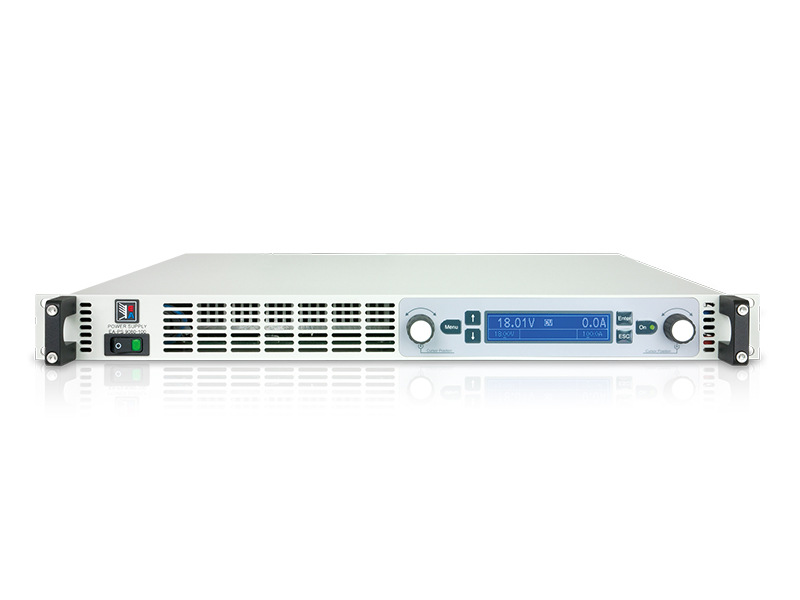
Modern industrial systems demand voltage regulation that adapts instantly to shifting loads, ensuring machinery operates without hesitation. Smart voltage control achieves this by using real-time monitoring and predictive adjustments, eliminating the lag that traditional regulators introduce. Instead of waiting for deviations to trigger corrective action, these systems anticipate fluctuations and stabilize output before disruptions occur. This proactive approach keeps production lines moving smoothly, even when power demands change unexpectedly.
The real advantage lies in how seamlessly these controllers integrate with existing automation frameworks. They speak the same language as PLCs and SCADA systems, exchanging data on load conditions, temperature, and equipment status. When a motor draws more current during startup, the voltage control responds within milliseconds, preventing dimming, flicker, or sensitive electronics from resetting. This tight coordination reduces wear on components and extends equipment lifespan, cutting down on unplanned maintenance and downtime.
From packaging lines to robotic assembly, the absence of voltage-related disruptions means throughput stays consistent. Businesses see fewer rejects, cleaner power, and a notable drop in energy waste. Sophisticated algorithms also optimize voltage levels based on actual need rather than fixed setpoints, trimming consumption during low-demand periods without sacrificing performance. It’s a practical leap forward that turns voltage regulation from a background necessity into a driver of operational reliability.
Energy-Saving Designs That Cut Operational Costs
Every kilowatt saved is money that goes straight back into the budget, and the smartest designs tackle this silently. From LED lighting systems paired with daylight and motion sensors to high-efficiency HVAC units that adjust based on real-time occupancy, these upgrades turn energy from a fixed cost into a controllable variable. It’s not about doing less—it's about doing the same, or more, with far less power.
Beyond swapping hardware, the real magic lies in how systems communicate. Advanced building management platforms can now orchestrate lighting, cooling, and equipment schedules so they never overlap wastefully. Imagine a warehouse where lights only brighten the aisles being used and conveyor belts power down between shifts—automatically. That’s the quiet, relentless efficiency that cuts monthly bills by up to 30% without anyone lifting a finger.
Then there’s the building envelope itself, often overlooked but incredibly cost-effective. High-performance glazing, cool roofs, and intelligent shading can slash peak cooling loads dramatically, reducing the strain on equipment and extending its lifespan. These passive design choices, paired with renewable sources like rooftop solar, create a self-reinforcing loop where less energy is consumed, less is purchased, and operational budgets finally have room to breathe.
Customizable Outputs for Diverse Industrial Needs
Modern manufacturing thrives on adaptability, and our systems are engineered to deliver precisely that. From altering physical dimensions to fine-tuning chemical properties, the output can be tailored to match the unique specifications of sectors as varied as automotive, aerospace, and heavy machinery. This flexibility eliminates the need for multiple specialized setups, streamlining production lines and reducing overhead.
Beyond basic customization, intelligent process controls allow real-time adjustments without halting operations. Whether a client requires small-batch prototypes or high-volume runs with consistently altered parameters, the transition is seamless. The integration of modular components and advanced software means that shifting from one specification to another is a matter of configuration, not reengineering.
Ultimately, this approach transforms industrial output into a dynamic resource. It empowers businesses to respond swiftly to market shifts, experiment with novel materials, and cater to niche demands without sacrificing efficiency. In a landscape where one-size-fits-all solutions are a liability, customizable outputs provide a clear competitive edge.
Reliable Performance Under Extreme Conditions
In environments where temperature swings from -40°F to 140°F in a single day, components must shrug off thermal shock without a hint of fatigue. Our systems use aerospace-grade alloys that expand and contract with such uniformity that seal integrity never wavers, even when ice storms cede to desert sun within hours. Cyclic testing pushes prototypes through 10,000 rapid temperature flips, confirming that no micro-fractures form in solder joints or housing seams—every unit emerges as noise-free and responsive as one kept in a lab.
Beyond thermal extremes, resilience against vibration and ingress is baked into the architecture. Board-level dampening gels absorb harmonic frequencies from heavy machinery, keeping signal paths stable when surrounding equipment rattles at 15G. Enclosures meet IP69K without relying on gaskets that degrade; instead, dual-stage labyrinth seals channel moisture away via capillary action, surviving 1,200-hour salt spray tests with zero corrosion migration. Field data from mining operations shows mean time between failures exceeding 80,000 hours, even where dust coats every surface within minutes.
Streamlining Production Lines with Adaptive Power Solutions
Manufacturing floors are living ecosystems where power demands shift abruptly—a sudden ramp-up in conveyor speed, an unexpected cluster of robotic welders kicking in, or a shift change that alters energy draw. Traditional fixed power architectures struggle to keep pace, leading to wasteful over-provisioning or risky under-supply. Adaptive power solutions close this gap by continuously sensing real-time load conditions and dynamically routing energy where it’s needed most, at the exact moment it’s required. Instead of treating every meter of the line as a static consumer, these systems treat production flows as variable patterns, reshaping distribution on the fly. The result is a line that breathes with its workload, shedding excess capacity during lulls and instantly reinforcing high-demand nodes without human intervention.
Beyond simple load balancing, intelligent power management digs into the dna of each process. For example, a packaging station might tolerate brief voltage dips during non-critical film-sealing phases but becomes hypersensitive during laser-coding steps. Adaptive systems learn these micro-profiles and pre-stage capacitors or battery buffers accordingly, so sensitive operations never see a flicker. They also embed predictive analytics: by combining historical power signatures with production schedules, the system can forecast a spike fifteen minutes before a scheduled heavy-stamping cycle and proactively condition the grid. This kind of anticipatory tuning eliminates the knee-jerk reactions of dummy protection devices, turning potential faults into seamless transitions.
The hidden payoff comes in how this agility reshapes the physical footprint. When power delivery is truly adaptive, electrical rooms shrink because you’re no longer padding every circuit for worst-case scenarios that rarely coincide. Cabling runs simplify as localized storage and smart nodes replace long homeruns back to a central board. And maintenance teams start to see anomalies flagged by deviation from learned patterns, long before a thermal camera would catch a hotspot. Far from being a mere upgrade to switchgear, adaptive power becomes the nervous system of a lean production line—one that flexes in lockstep with both rhythm and rhythm-breaking surges, making every joule count.
FAQ
The push came from factories needing tighter voltage control without constant manual tweaking. Engineers wanted a unit that could adapt on the fly to different load profiles, slashing setup times and minimizing human error.
It uses real-time load sensing and adaptive output staging, so when a robotic arm is idle, the supply dials back current draw instantly. This dynamic response avoids the fixed overhead that older supplies burn through.
High-speed pick-and-place and precision dispensing benefit most. The supply’s fast transient response keeps voltage sag under a few millivolts, preventing motor stutters and missed cycles that previously forced conveyor slowdowns.
The supply features a plain-language scripting environment with prebuilt templates for common ramp and dwell profiles. Technicians can modify parameters via a touch panel without touching code, and changes are applied across linked units in seconds.
Yes, it includes native Modbus TCP and EtherNet/IP support that can mimic legacy register maps. This means it drops into existing topologies and starts responding to standard function blocks, cutting integration time from days to hours.
It continuously monitors sense lines right at the load terminals rather than at the output bus. Combined with an active filtering stage, it cancels inducted noise before it reaches sensitive logic, keeping 24V rails clean even across 100-meter runs.
Conclusion
The new wave of programmable power supply technology is reshaping how factories manage energy, moving beyond simple on-off control to intelligent systems that adapt in real time. These units bring smart voltage regulation that aligns precisely with the rhythm of automated machinery, eliminating erratic fluctuations that cause downtime or defective output. By fine-tuning power delivery at every stage, operations become smoother, and the energy waste typical of older fixed-voltage setups is sharply reduced. This means not just lower electricity bills but also cooler-running equipment, which extends lifespan and slashes maintenance needs. The core idea is a power ecosystem that thinks alongside the production line, pulling just what’s needed and nothing more.
Versatility is baked into the design, allowing engineers to dial in unique voltage and current profiles for everything from delicate sensors to heavy motors, often through simple software tweaks rather than hardware swaps. These power supplies hold their own in harsh settings—dust, vibration, temperature swings—without breaking stride, a critical trait for continuous-process industries. Perhaps most importantly, they learn from the factory floor, using feedback to adjust parameters on the fly and keep throughput optimal even when conditions shift. The result is a quieter, more responsive power backbone that helps automation systems run closer to their full potential, turning years of incremental improvement into a genuine jump in productivity.
Contact Us
Contact Person: Lily
Email: [email protected]
Tel/WhatsApp: +49 (0) 2161 49526-0
Website: https://tps-elektronik.com/en/