

Professional Swim Caps Choosing the Right Fit for Your Training
2026-09-01
Think any swim cap will do? Think again. For professional training, the right fit isn’t a minor detail—it’s the difference between a smooth, focused session and a constant fight with drag and discomfort. At OCORT, we believe your gear should work as hard as you do. Here’s what to look for when choosing a swim cap that actually fits your training.
What Happens When Your Cap Fights Your Goggles
The first sign something is off usually arrives mid-lap: your goggles start feeling less like a seal and more like a slow leak. The culprit is rarely the goggles themselves. Swim caps, especially snug silicone ones, creep down your forehead as you push off the wall. That shifting edge rides over the top goggle strap and nudges the eyecups just enough to break their grip on your skin. Water sneaks in, your rhythm falters, and suddenly the cap and goggles are locked in a silent tug-of-war across your brow.
It gets worse when your hair is wet or short. The cap's inner surface loses traction, sliding against your head, while the goggle strap stays anchored by friction. Two different materials, two different rates of movement—one wants to stay put, the other wants to migrate. Every turn, every breath, every stroke adds another tiny shift. You end up adjusting the strap tighter to compensate, which only makes the cap wrinkle more and the eyecups dig deeper.
Fixing the fight usually means changing the order, not buying new gear. Put the cap on first, then position the goggle strap exactly over the cap's front edge rather than under it. If the cap still slides, a thin strip of cloth tape on the inside edge can add just enough grip. Better yet, look for a cap with a textured inner band or switch to a slightly higher-strap goggle style. A small tweak keeps both pieces where they belong—and leaves your focus on the next lap, not the leak.
Silicone or Latex Without the Guesswork
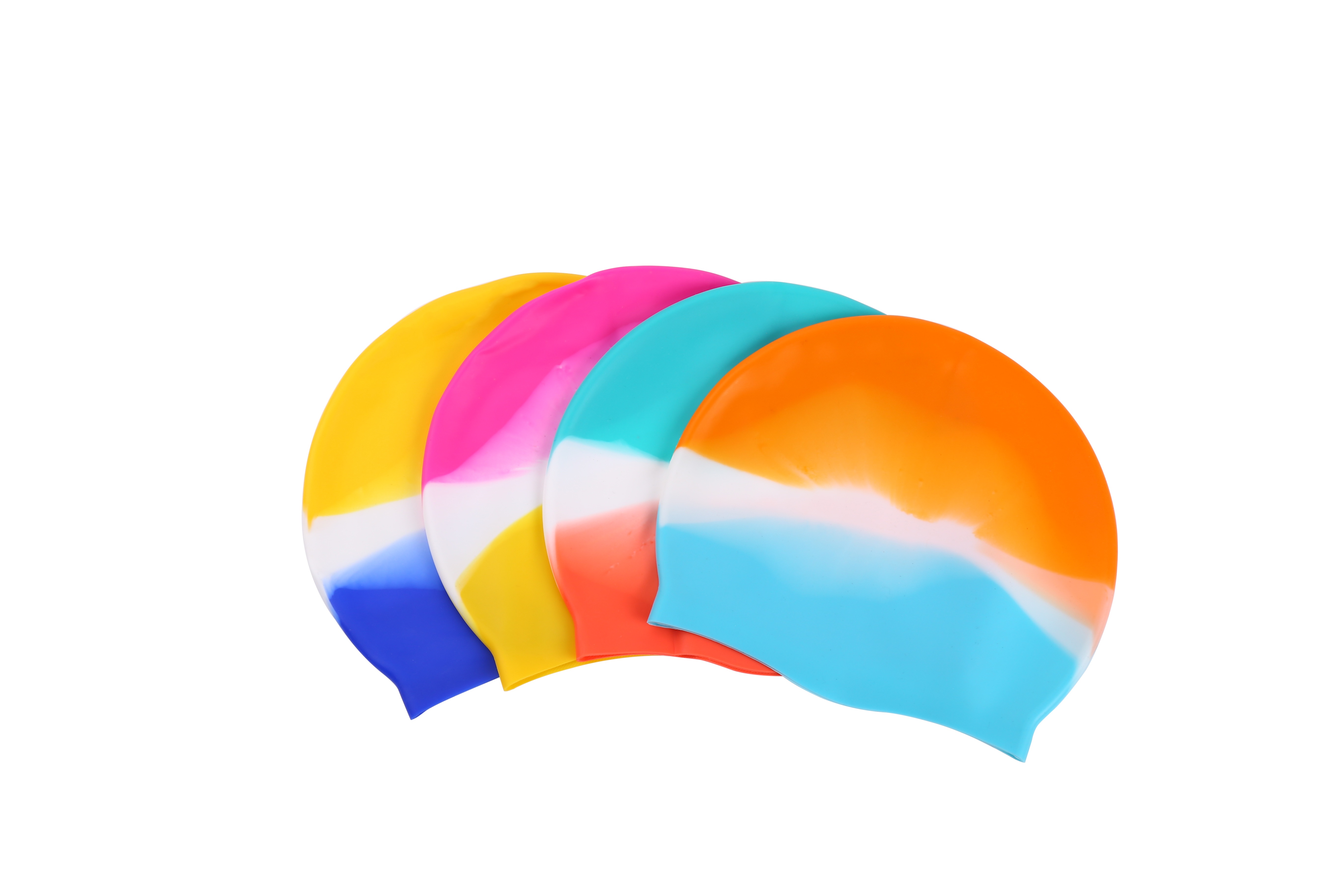
Most people assume silicone and latex are interchangeable until they hold both in their hands. Silicone feels denser and slightly heavier, with a smooth, almost velvety surface that doesn’t grip your skin the way latex does. Latex, by contrast, is stretchier and more elastic, but it has a distinct rubbery scent and can trigger allergies in some users. If you want a material that stays neutral to the touch and won’t degrade over time, silicone is the safer bet.
The real differentiator often comes down to maintenance and longevity. Silicone can be boiled, washed with soap and water, and even run through a dishwasher without breaking down. Latex demands more care; it reacts poorly to oils and heat, and it will eventually oxidize and become brittle. If you hate keeping track of special storage instructions, silicone takes that burden off your plate.
Still, latex has its own loyal following because it’s typically cheaper and offers a level of stretch that silicone can’t match. The key is to match the material to your actual habits, not your assumptions. Think about how you’ll clean it, where you’ll store it, and how sensitive your skin is. Once you line those up, the choice between silicone and latex stops being a guess and starts being obvious.
Measuring Made Simple for Every Head Shape
Getting an accurate head measurement doesn't require a tailor's tape or a second pair of hands. The trick is to think of the head as a series of gentle curves rather than a single circle. Start by wrapping a soft, flexible measuring tape around the widest part of your head—just above the ears and across the mid-forehead. Keep the tape snug but not tight, and make sure it crosses the occipital bone at the back, the spot that sticks out slightly when you tilt your head down. This single circumference number gives you a solid baseline for most hats, helmets, and headbands.
Different head shapes call for slight adjustments to that baseline. For example, if you have a more oval profile, you might find the tape wants to slide up at the back; use a finger to anchor it just above the nape while you read the number. For rounder heads, measuring twice—once at the forehead line and once lower, near the brow—can reveal which width will feel more comfortable. The goal is not mathematical perfection but consistency: measure in front of a mirror, keep the tape level from front to back, and write down the result before your arms get tired.
If you're between sizes, the material of the final product matters just as much as the measurement. Stretchy beanies forgive a quarter inch, while structured straw hats do not. When in doubt, take the larger number and use a hidden sizing strip or a discreet stitch to fine-tune the fit later. With a little practice, you'll be able to measure a friend's head in under thirty seconds without them even noticing—just try not to announce the number too loudly if it's larger than they expected.
Long Hair Tricks That Don’t Involve Yanking
Instead of ripping a paddle brush from roots to ends, finger-detangle when your hair is damp and coated in a slippery conditioner. Work in small sections and let the slip do the work—your strands won’t even know they were knotted.
Swap tight elastics for silk scrunchies or a loose claw clip at the nape of your neck. Twisting long hair into a low, saggy bun before bed keeps it from wrapping around your throat or getting trapped under your shoulders, so morning detangling takes minutes, not a wrestling match.
Braid damp hair into two loose side braids before sleep. In the morning, undo them and shake your roots upside down for volume that doesn’t come from backcombing. It’s a low-manipulation trick that protects your hairline and saves you from breakage.
Why Pool and Open Water Need Different Caps
A swim cap that feels perfect in a heated indoor pool often becomes a nuisance the moment you hit a lake or ocean. Pool caps are typically thin silicone or latex, shaped to hug the skull and reduce drag. They do a fine job keeping hair out of your face and protecting it from chlorine, but they offer almost no warmth and can slip off when a wave catches you off guard.
Open water caps are built for a different set of demands. Many are made from neoprene or have a thicker, grippier design to trap body heat in cold water. Bright colors or high-visibility patterns aren't just for style—they help safety crews and other swimmers spot you from a distance. Some models include a chin strap or a textured inner surface to keep the cap in place during choppy conditions.
The result is that a cap that works well in one environment can fail in the other. Pool swimmers rarely worry about cold shock or being seen from a boat, while open water swimmers need gear that won't shift when they sight buoys or fight currents. Choosing the right cap for the setting isn't about having a bigger collection—it's about matching the material and fit to the water you're actually swimming in.
Preventing Mid-Lap Adjustments
Mid-lap adjustments sound harmless—a quick tweak to brake bias or diff settings—but they often cost more than they save. A driver’s attention is a finite resource, and every glance at a rotary dial pulls focus from braking points, corner entry, and traffic. By locking out these changes until the car is back on a straight or in the pits, teams remove a layer of mental clutter and let the driver stay in the rhythm of the lap.
The real danger isn’t just distraction; it’s inconsistency. When a driver alters settings mid-corner or under load, the car’s balance shifts unpredictably. What felt planted on entry can become loose on exit, and that erodes confidence for the next ten laps. Preventing mid-lap adjustments forces setup changes to happen in controlled conditions—pre-planned, communicated, and executed when the driver isn’t already at the edge of grip.
Some series already mandate this through steering wheel lockouts or software restrictions. The result isn’t less driver control; it’s better control over the things that matter. When a driver knows the car won’t surprise them mid-corner, they brake later, carry more speed, and string together laps that actually improve.
FAQ
Silicone is the workhorse for frequent training. It resists tearing far better than latex and keeps its shape over months of chlorine exposure, though it can feel snugger on the head. If you train five or more days a week, two silicone caps rotated between sessions will save you money in the long run.
Most adult caps are sold as one size, but that’s more of a marketing shortcut than a promise. Swimmers with long, thick hair or larger head circumferences often need a cap with extra room or a stretchier silicone blend, otherwise the cap creeps up, slips off, or leaves a deep red line across the forehead.
Wet your hair first and put it into a low, flat bun or tight braid instead of a high ponytail. Open the cap with your fingertips—not nails—and stretch it side to side before lowering it over the crown, then work the edges down over your ears. This cuts down on the tugging and snap-back that causes most damage.
Slippage is usually about residue, not tension. Conditioner, hair oil, or even too much leave-in product leftover on your hair creates a slick layer inside the cap. Rinse your hair with plain water and wipe the cap’s interior before putting it on, and look for a cap with a slightly grippy inner band or a taller dome to stay put through turns.
It’s possible, but not ideal. Race caps tend to be thinner and lighter to cut drag, which also makes them rip more easily with daily use. Save a latex or ultra-thin silicone cap for meets and use a more durable silicone model for your regular training sessions.
No, a standard training cap won’t keep your hair completely dry. It reduces how much chlorinated water floods through your hair, but some water still seeps in around the edges. Soaking your hair with fresh water before putting the cap on helps it absorb less pool water, and a post-swim rinse with a mild shampoo keeps the damage down.
A properly fitted cap feels uniformly snug but doesn’t throb at the temples or leave deep grooves that last more than a few minutes. If the cap rides up above your hairline on its own, squeezes hard enough to cause a headache, or feels like it’s pinching behind your ears, it’s too small—not just secure.
Conclusion
A swim cap that fights your goggles is usually a sign the size is off, not that you bought a bad product. Measure around your head just above the ears and compare that to the cap’s stretch before you commit. Silicone grips better and lasts through daily chlorine, while latex is thinner and cheaper but tears sooner—both are fine if the fit is right. For long hair, twist it into a low bun or braid, then let the cap slide down slowly instead of yanking it over the crown. Getting the back edge to sit below your hairline keeps the cap from creeping into your goggle straps mid-set.
Pool and open water aren’t the same beast. Chlorinated water breaks down latex fast, so a silicone cap makes more sense for lap swimming; outdoors, a bright silicone or neoprene option adds warmth and visibility without ruining the fit. To avoid those annoying mid-lap adjustments, put the cap on with dry hands and tuck any loose strands away from your forehead. A tiny fold at the nape can create a better seal under your goggles. If your ears ache after a few hundred meters, the cap is too small—size up rather than stretching it paper-thin. The goal is to forget you’re wearing it, which is exactly what a good training cap should do.
Contact Us
Contact Person: Wendy
Email: [email protected]
Tel/WhatsApp: 86 18807398467
Website: https://www.zlfswim.com