

Professional IMS Core Network: Building Reliable Communication Infrastructure
2026-06-09
In the ever-evolving world of telecommunications, the foundation of seamless voice, video, and messaging services lies in the IP Multimedia Subsystem (IMS) core. As operators and enterprises strive to deliver uninterrupted, high-quality communication, the need for a robust, standards-compliant IMS core has never been greater. Enter IPLOOK—a pioneer in crafting professional IMS core networks that not only meet but exceed expectations for reliability and scalability. But what truly sets a carrier-grade IMS apart? This blog peels back the layers to reveal the architecture and innovations that power modern connectivity, from VoLTE to 5G, and why the right partnership can make all the difference.
The Quiet Foundation: How IMS Core Sustains Seamless Connectivity
At the heart of every modern voice call and multimedia session lies a system so integral yet so unobtrusive that most users never even know it exists. The IP Multimedia Subsystem, or IMS core, operates as the quiet backbone of mobile and fixed networks, seamlessly bridging traditional circuit-switched services with the packet-switched world of LTE and 5G. Without it, the simple act of placing a VoLTE call or switching between Wi-Fi and cellular mid-conversation would be impossible. It’s the invisible hand that orchestrates session control, authentication, and quality of service, ensuring that when you hit ‘call,’ the network knows exactly what to do—every single time.
What makes IMS truly remarkable is its agnostic nature. It doesn’t care whether you’re on a smartphone, a tablet, or a web-based softphone; as long as the device can speak SIP, the network responds. This flexibility is what allows carriers to offer services like voice, video calling, and rich messaging over 5G without reinventing the wheel. The core’s layered architecture separates control from media, meaning call setups happen quickly while voice and video traverse the most efficient path. It’s a design philosophy that prioritizes resilience, so even when a data center goes down, calls can reroute transparently—many users won’t even notice a hiccup.
Behind the scenes, the IMS core constantly negotiates security keys, manages QoS policies, and coordinates with the EPC or 5GC to allocate dedicated bearers for voice traffic. This careful handshake ensures a lag-free, high-definition call experience that feels as natural as a landline. As networks evolve toward virtualization and cloud-native functions, IMS is shedding its hardware dependencies, becoming more agile and cost-effective. Yet its mission remains unchanged: to provide the steady, silent foundation that keeps our always-connected world talking. No fanfare, no flashing lights—just seamless connectivity, mile after mile.
More Than Voice: Expanding Services with an IMS Heart
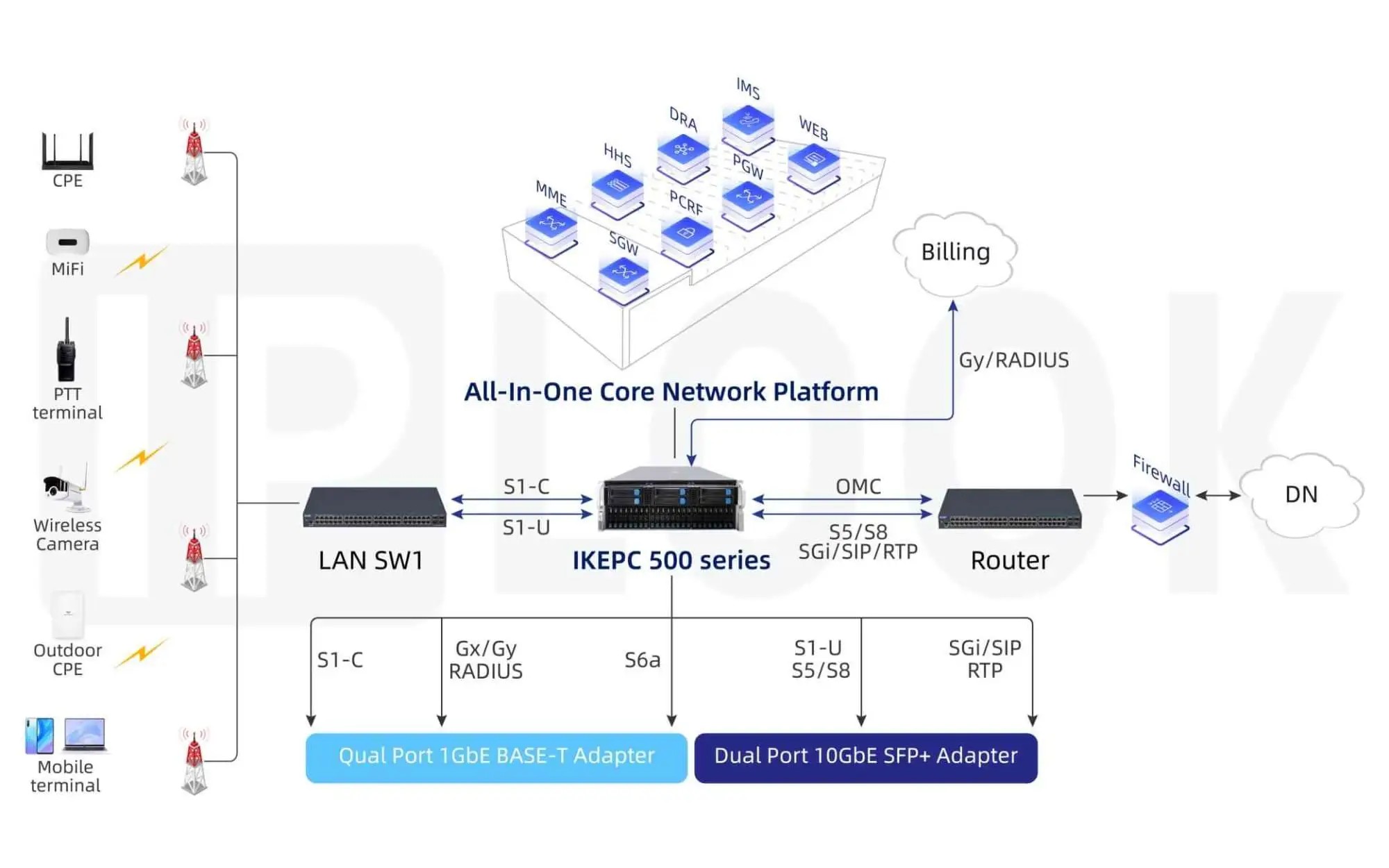
When communications infrastructure truly centers on an IP Multimedia Subsystem, voice becomes just the beginning. An IMS heart doesn't just carry calls—it weaves together presence, video, messaging, and real-time collaboration into a single cohesive fabric. This shift transforms how people connect, moving beyond simple dial tones to a world where every interaction feels immediate and seamlessly integrated, regardless of device or network.
With IMS at the core, services can be deployed and intertwined with surprising agility. Think of a customer starting a chat on a laptop, escalating to a video call on a tablet, and sharing a screen—all without breaking the session. The magic lies in the open, standardized architecture that allows operators to blend communication modes creatively, turning rigid service silos into a flexible ecosystem where new ideas can be tested and scaled faster than ever before.
Perhaps most compelling is how an IMS heart enriches everyday businesses and lives in ways pure telephony never could. From immersive virtual event platforms to remote healthcare consultations that include live health data streaming alongside a doctor’s reassuring face, the possibilities stretch far beyond what we once called “conversation.” It’s about creating experiences that feel less like separate apps and more like an ambient layer of connection, always ready to adapt to what users actually need.
Engineered for Uptime: Reliability Architecture in Modern Core Networks
Keeping a core network alive isn't just about bolting on backup links and hoping for the best. Over the last decade, design thinking has shifted from reactive patchwork to baked-in resilience. Engineers now treat failures as inevitable events to be routed around, not rare emergencies. This change in mindset means that every protocol choice, every hardware selection, and every software update gets scrutinized through the lens of how it degrades under stress. The result is a fabric that bends but rarely breaks.
Under the hood, modern reliability leans on a few unglamorous but critical mechanisms. Redundant physical paths only get you so far; intelligent load sharing and fast convergence matter more when fiber cuts happen. Techniques like segment routing and automated traffic steering let the network recalculate paths in milliseconds without human intervention. Control planes have quietly become distributed and self-correcting, running health checks between nodes continuously. If a route reflector stumbles, peers isolate it before customers notice a blip.
What sets apart the best deployments is the discipline of constant, low-impact testing. Chaos engineering has moved from experimental labs into production core environments, with synthetic faults injected during peak hours. Telemetry streams get mined for subtle degradation signals long before alarms fire. This feedback loop—design, inject, observe, harden—tightens the architecture over time. Uptime becomes less about heroic troubleshooting and more about an engineered rhythm of small, safe failures that never cascade.
The Migration Equation: Balancing Legacy and Innovation in IMS
Migrating an IP Multimedia Subsystem isn't a simple fork-lift upgrade. It's a complex equation where every variable—cost, downtime, skill gaps, and interoperability—needs careful weighting. Legacy components often carry years of customization that no one fully understands anymore, while the new stack promises agility but demands new operational disciplines. The real balancing act lies in deciding what to carry forward, what to re-architect, and what to finally retire.
One common misstep is trying to replicate the old system's behavior exactly in the new environment. That approach ignores why the migration was necessary in the first place. Instead, teams should focus on preserving business logic and subscriber experience while allowing underlying protocols and scaling patterns to evolve. For instance, a legacy HSS might be replaced with a cloud-native UDR, but the provisioning interface that downstream systems rely on could remain stable with an adaptation layer.
The timeline matters as much as the architecture. Rushing to decommission the legacy IMS often creates hidden technical debt that surfaces months later. A phased coexistence period—where both platforms run in parallel with selective traffic steering—lets teams validate performance, gradually migrate subscriber groups, and build confidence. The equation only balances when the legacy system can be turned off without anyone noticing, except the engineers who finally delete that last aging server.
Core Protections: Hardening the IMS Layer Against Modern Threats
The IP Multimedia Subsystem sits at the heart of modern voice and video services, but its reliance on SIP and open interfaces makes it a magnet for attackers. From registration floods that crush session controllers to sophisticated toll fraud schemes, the threat landscape constantly evolves. Hardening this layer starts with stripping away default configurations and unused services—every open port is a potential foothold. Enforcing strict SIP digest authentication, mutual TLS between network elements, and rigorous input validation on all headers can defang many common exploits before they ever reach the core.
Going beyond the basics, rate limiting must be adaptive rather than a blunt instrument. A legitimate spike in calls during an emergency shouldn’t be indistinguishable from a DDoS attempt, so baselining normal traffic patterns per node is critical. Protocol-aware firewalls that understand SIP state machines can catch malformed INVITE floods or BYE attacks that generic filters miss. And encryption alone isn’t a silver bullet—improperly configured IPsec or SRTP implementations can leak metadata or become a denial-of-service vector themselves if session key exchanges aren’t tightly controlled.
The truth is, static defenses are just a starting point. Continuous monitoring, backed by real-time anomaly detection, is what turns a hardened configuration into a living defense. Log aggregation and correlation from the P-CSCF, I-CSCF, and S-CSCF give operators the visibility needed to spot slow-burn attacks that evade threshold-based alerts. Regularly rotating credentials, auditing interconnection agreements for mismatched security policies, and simulating attack scenarios keep the IMS layer resilient as adversaries refine their techniques. In the end, it’s about building layers that assume compromise is inevitable and design accordingly.
IMS and the 5G Merge: Paving the Way for Autonomous Communication
The convergence of IMS and 5G is quietly reshaping how networks handle multimedia services, moving from rigid, human-triggered sessions toward environments where communication flows with minimal intervention. Historically, IMS brought standardized voice and video over IP, but its true potential surfaces when paired with 5G's ultra-responsive core and slicing capabilities. This blend allows service providers to weave together real-time media and contextual data in ways that were previously cumbersome, if not impossible. It's not merely about faster connections; it's about networks that can anticipate needs, adjust paths on the fly, and guarantee the kind of reliability that mission-critical applications demand. The shift feels less like an upgrade and more like an entirely new nervous system for digital interaction.
At a technical level, the merger relies on the service-based architecture of 5G, which lets IMS functions become modular, dynamically invoked microservices rather than fixed nodes in a chain. Think of how network exposure function interfaces allow third parties to request precise quality-of-service treatments, something that standalone IMS could never gracefully manage. Meanwhile, edge computing resources bring media processing closer to users, trimming latency to the bone for augmented reality or remote control scenarios. All of this is stitched together by policy control frameworks that operate in near real time, making sure that a voice call and a robotic command don’t step on each other’s toes. It’s a dance between the old-guard telecom reliability and cloud-native agility, and the result is a platform that can finally keep pace with devices that talk more than people do.
What sets this apart for autonomous communication is the ability to decouple intent from infrastructure. Instead of an operator manually configuring every session parameter, AI-driven orchestration layers on top of the IMS-5G stack can interpret high-level goals—say, ensuring a drone fleet maintains visual contact while negotiating airspace—and automatically assemble the needed media, compute, and connectivity resources. The network becomes a silent partner that provisions itself, scales down when idle, and alerts only when anomalies breach learned thresholds. That level of self-sufficiency doesn’t just reduce operational overhead; it encourages innovation in fields like telemedicine, industrial IoT, and collaborative robotics, where any human delay is both costly and unsafe. By knitting together these technologies, the industry is laying down a foundation where communication systems truly run themselves, freeing human attention for the decisions that still require a human touch.
FAQ
An IMS core network is the central framework that enables multimedia services like voice over LTE (VoLTE), video calling, and messaging over IP-based networks. It's important because it merges traditional telecom with internet services, allowing operators to offer consistent, high-quality experiences across different devices and access types.
It achieves carrier-grade reliability through redundant design—think duplicated network elements, geographically separated data centers, and automated failover mechanisms. These layers of backup ensure that if one component fails, another takes over instantly, often with sub-second switching so the user never notices.
Key pieces include the Call Session Control Functions (CSCFs) for routing and control, the Home Subscriber Server (HSS) for user data, and application servers for specific services. They interact via SIP signaling and Diameter protocols—CSCFs handle session setup, the HSS authenticates users, and app servers inject features like call forwarding, all orchestrated to deliver seamless sessions.
Yes, it's designed to be access-agnostic. Whether a user connects through fiber, DSL, 4G, or 5G, the IMS core treats each session uniformly after authentication. This convergence simplifies network management and lets you run one infrastructure for all subscribers, cutting operational complexity.
It uses multiple layers: IPsec and TLS encrypt signaling and media traffic, the HSS enforces strong authentication via AKA protocols, and session border controllers guard the network edge against denial-of-service attacks. Regular patching and hardened configurations further reduce vulnerabilities.
Frequent issues include underestimating inter-vendor interoperability and overlooking real-world traffic patterns. Professionals run extensive multi-vendor testing, use protocol analyzers to catch mismatches, and dimension resources based on busy-hour peaks rather than averages. Proper synthetic load testing before launch is non-negotiable.
In 5G standalone, the IMS retains its role for voice (VoNR) but integrates with the 5G core via new interfaces. It adopts HTTP/2-based service-based architecture principles, and works alongside the Service Communication Proxy to handle discovery and routing, making signaling more efficient and cloud-native friendly.
It dramatically reduces operational costs by consolidating services on IP, enables rapid deployment of new features without hardware changes, and opens up revenue streams through rich communication services. Additionally, it future-proofs the network as spectrum refarming and 5G evolution continue.
Conclusion
The professional IMS core network acts as a quiet yet indispensable foundation, sustaining seamless connectivity even as demands evolve. It goes far beyond basic voice, becoming the heart of modern service delivery—enabling rich multimedia, real-time collaboration, and contextual communication. Underpinning this is an architecture engineered for uptime, where every element from session control to media handling is designed with redundancy and self-healing in mind. But reliability isn't just about hardware; it's also about the careful migration equation. Operators must balance legacy infrastructure with innovative, cloud-native approaches, ensuring that new features don't disrupt the steady pulse of everyday calls and messages.
As networks grow more complex, hardening the IMS layer against modern threats becomes non-negotiable. Core protections now span signaling firewalls, topology hiding, and intelligent anomaly detection, safeguarding the trust users place in every connection. Meanwhile, the IMS and 5G merge is redefining what's possible, paving the way for autonomous communication where slices of the network self-optimize for ultra-reliable low-latency services or massive IoT. The result is a resilient, forward-looking core that doesn't just carry traffic—it consistently delivers experiences people depend on, without fanfare or failure.
Contact Us
Contact Person: Shimmy
Email: [email protected]
Tel/WhatsApp: 85253392231
Website: https://www.iplook.com