
Private Label Wool Socks Company Crafting Premium Socks for Your Brand
2026-10-23
Finding a manufacturing partner who truly understands the nuance of wool can feel like searching for a needle in a haystack—especially when your brand demands more than just a generic sock. Enter KINDWAY, a private label specialist that treats every pair as a canvas for your label. From sourcing the finest merino to perfecting the heel stitch, they blend old-world craftsmanship with modern customization. If you've ever wondered what your brand could achieve with socks that actually live up to your promise, this is where the story starts.
Why Private Label Wool Socks Earn Repeat Orders
Once customers try a pair of private label wool socks that actually fits their needs, they rarely settle for generic options again. The repeat purchase starts with the fabric itself: merino or lambswool holds warmth without overheating, wicks moisture during long shifts, and stays odor-free far longer than cotton blends. That daily performance builds trust quickly.
Brand consistency also plays a huge role. When a retailer controls the knit weight, cushioning zones, and toe seam finish, buyers know exactly what they're getting in every order. No surprise changes in sizing or thinning fabric after a few washes. That reliability turns a one-time tester into a subscriber who reorders without second-guessing.
There's also a quiet loyalty to private label done right. Customers associate the comfort with the store or brand they already trust, not a national label they could find anywhere. Gift givers and bulk buyers come back because the socks become part of their routine—work, hiking, cold mornings—and they'd rather restock from the source that got the details right the first time.
What Our Factory Actually Does Differently
Most factories promise quality, but few actually change the way they work to earn it. Here, we run small production cells instead of one long assembly line. A single team takes your order from raw material to final inspection, which means the person cutting your part is also the one measuring it. That simple change removes the usual blame game between departments and catches mistakes before they leave the floor.
We also keep a written record of every machine setting, tool change, and inspection result for each batch. If you reorder six months later, we don’t guess at the specs—we pull the exact parameters and run the same process again. It’s slower than the “reset everything from memory” approach, but it means your second order matches your first, down to the same subtle tool marks.
On top of that, we’re not tied to a minimum order quantity. You can send us a sketch for five pieces or a full production run of five thousand. The price changes, but the attention doesn’t. We’d rather build a working relationship with a small client who comes back than chase a one-time order that forces us to cut corners.
Designing Your Sock Line Without the Back-and-Forth
Most sock brands waste weeks trading emails over trim colors, heel stitching, and packaging inserts. Instead, you can anchor the entire design in a single, visual spec sheet that lists every material, dimension, and finish before sampling begins. This removes the usual “can we try one more tweak?” loop because the reference image and the written spec never drift apart.
A practical way to lock the design is to pick three fixed elements up front: yarn blend, cushioning zone, and sock height. Once those are set, the only remaining choices are surface-level details like contrast toe threads or a woven label. That narrows the decision space enough that a factory can produce a first sample that is close to final, not a rough guess.
For small runs, using a digital mockup with numbered callouts works better than descriptive emails. Each callout points to a single row in the tech pack, so the factory replies with a yes/no or a simple substitution. This cuts the usual back-and-forth to one confirmation round, leaving more time for wear testing and packaging.
Why Cheap Wool Blends Cost More Later
That bargain wool-blend sweater feels fine for the first few wears, but the trouble starts once you wash it a couple of times. Cheap blends typically rely on short, coarse fibers and a high percentage of synthetic material to hit that low price point. The wool gives you a bit of warmth, but the acrylic or polyester does the heavy lifting—and it shows. Pills form quickly, cuffs lose their snap, and the fabric starts to look tired long before the season ends.
A quality wool garment might cost twice as much upfront, but it shrugs off daily wear and keeps its shape through dozens of washes. Cheap blends, by contrast, begin to sag at the elbows, thin at the shoulders, and develop that rough, slightly scratchy hand after repeated laundering. Before long, you're replacing the sweater or jacket every year, which quietly adds up. The math gets ugly fast: three $30 blends over three winters versus one $120 wool layer that still looks good.
There's also the comfort gap. Synthetic-heavy blends trap less body heat per ounce and don't breathe the way real wool does, so you feel clammy one moment and chilly the next. Over time, the fabric's structure breaks down, and you end up with a garment that's neither warm nor presentable. In the end, the cheap option isn't cheaper—it just spreads the cost across replacements, extra care, and the frustration of a closet full of sweaters you no longer want to wear.
Samples You Can Touch Before You Commit
Pictures can only tell you so much. A real sample lets you run your fingers over the surface, check the weight in your hand, and see how the color shifts under different light. That kind of detail doesn't come through on a screen, no matter how carefully the photos are taken.
Before you settle on anything, grab a few options and live with them for a day or two. Hold them against your walls, your flooring, your cabinetry. What looked perfect in a product gallery might feel completely different next to the stuff you already own.
There's no rush and no pressure. Touching a sample before you commit means you're making a choice based on the real thing, not a guess. If it doesn't feel right, try another one. That's the whole point.
Small Batches That Still Get Premium Wool
Not every wool run has to be measured in shipping containers to matter. Some of the best fleece we’ve handled comes from flocks counted in dozens, not thousands. When a mill agrees to process a small batch, it’s usually because the fiber itself is worth the extra setup time: a longer staple, a cleaner skirt, a crimp that holds memory without fighting the spinner.
That kind of quality doesn’t survive an anonymous blend. It survives because someone walked the line, pulled a sample from the middle of the bale, and made a call that this lot deserved its own run. Small batch processing costs more per pound, slows down the schedule, and annoys the accountants. But the resulting yarn has a clarity you can feel in the first row.
We tend to keep those runs short on purpose. Once the best fleece is gone, there’s no point trying to stretch it with lower-grade filler. The next clip might be excellent, but it won’t be identical. So the batch number changes, the shade card gets a note, and the shelf holds something that won’t be repeated.
FAQ
We work only with wool, not synthetic blends, and source our merino from family-run farms in New Zealand. The socks are knitted on low-speed circular machines to keep the yarn soft and springy, then hand-closed at the toe. The result is a sock that looks simple but feels like a much more expensive product.
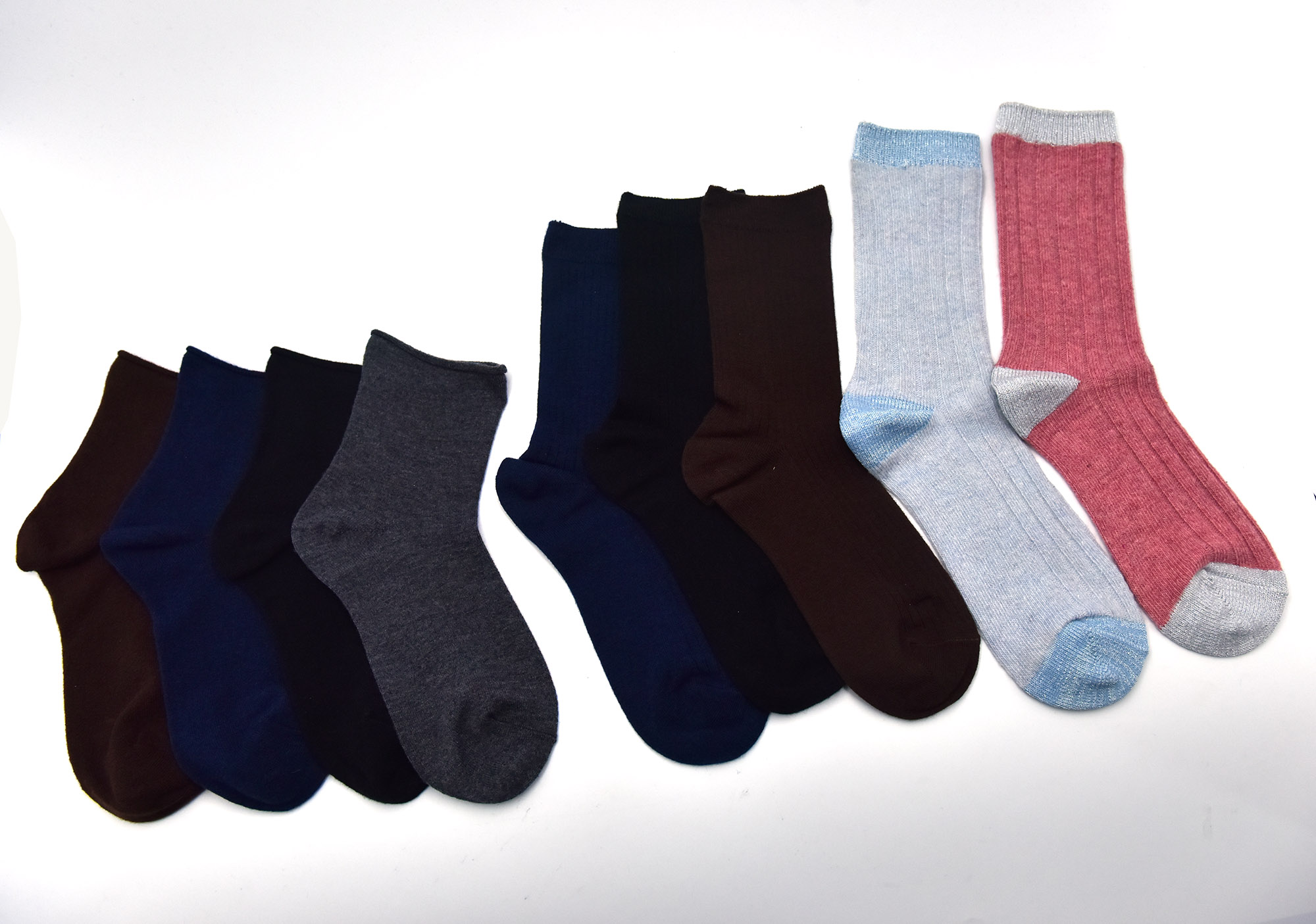
You can pick the wool type, yarn weight, cushioning zones, and sock height. We also do fully custom knit patterns, jacquard logos, and woven labels inside the cuff. Color matching is done against physical swatches you send us, not just digital files.
Our standard minimum is 300 pairs per style, but we can go as low as 150 pairs for new brand launches if you are flexible on color count. For larger runs, there is no upper limit and pricing gets more attractive above 2,000 pairs per style.
We buy merino wool from two shepherding cooperatives in the South Island of New Zealand. The fiber is scoured without harsh chemicals, then spun in small batches in Italy. We keep the spinning tension low so the finished yarn holds more air, which improves warmth without adding weight.
Yes, we do both. Send us a Pantone reference or a physical yarn cutting, and our dyer will match it within two lab dips. For knit patterns, we can replicate an existing sock design if you have the rights, or create a new artwork from a rough sketch you provide.
You start with a short call to describe the sock you want. We then send you 2-3 sample pairs in your chosen yarn and size within four weeks. You can request fit adjustments, color changes, or cushioning tweaks, and we will revise the sample until you sign off. Most brands approve the second round.
Once you approve the final sample, production takes six to eight weeks for up to 1,000 pairs per style. Larger orders add about two weeks for every additional 1,000 pairs. We ship worldwide from our workshop in Portugal, and we can split the delivery to multiple warehouses if needed.
Yes, we have a fully traceable line where every batch can be linked back to the specific farm and shearing date. The wool is certified mulesing-free and the socks are packaged in compostable paper bands. We can provide the documentation your brand needs to make honest claims on the product page.
Conclusion
A private label wool sock company built around premium materials does more than fill orders—it gives your brand a reason to be remembered. The reason customers reorder isn't luck; it's the feel of merino wool against skin, the way the socks hold their shape after dozens of washes, and the quiet confidence that comes from a product that doesn't itch or sag. Our factory earns that loyalty by doing what most suppliers skip: we test every wool batch for fiber length and micron count, reinforce heel and toe zones with dense stitching, and use a boarding process that locks in the final size so pairs stay matched. That means you spend less time chasing threads and more time designing a sock line that actually reflects your label. Instead of weeks of email chains and misread spec sheets, you get clear templates, dyed yarn approvals, and a single point of contact who knows your brand's fit and finish.
The real cost difference shows up after the first dozen wears. Cheap wool blends feel soft in the package but pill, lose elasticity, and leave customers doubting your whole catalog. We keep small-batch production honest: no minimums that force you to overstock, no hidden synthetic fillers that undercut the wool's natural breathability. Before you commit to a run, we send physical samples—actual socks in your chosen yarn, weight, and size—so you can stretch, wash, and wear them against your own standards. That tactile check matters because premium wool should prove itself before your name goes on the label. When small batches still get the same merino quality and hand-finished toe seams as large runs, you can launch with confidence and grow at a pace that makes sense for your brand.
Contact Us
Contact Person: Alfred Lee
Email: [email protected]
Tel/WhatsApp: +86 13806701496
Website: https://www.hainingsocks.com/