

Private Label Lightning Strike Current Sensor Selection Made Simple
2026-08-22
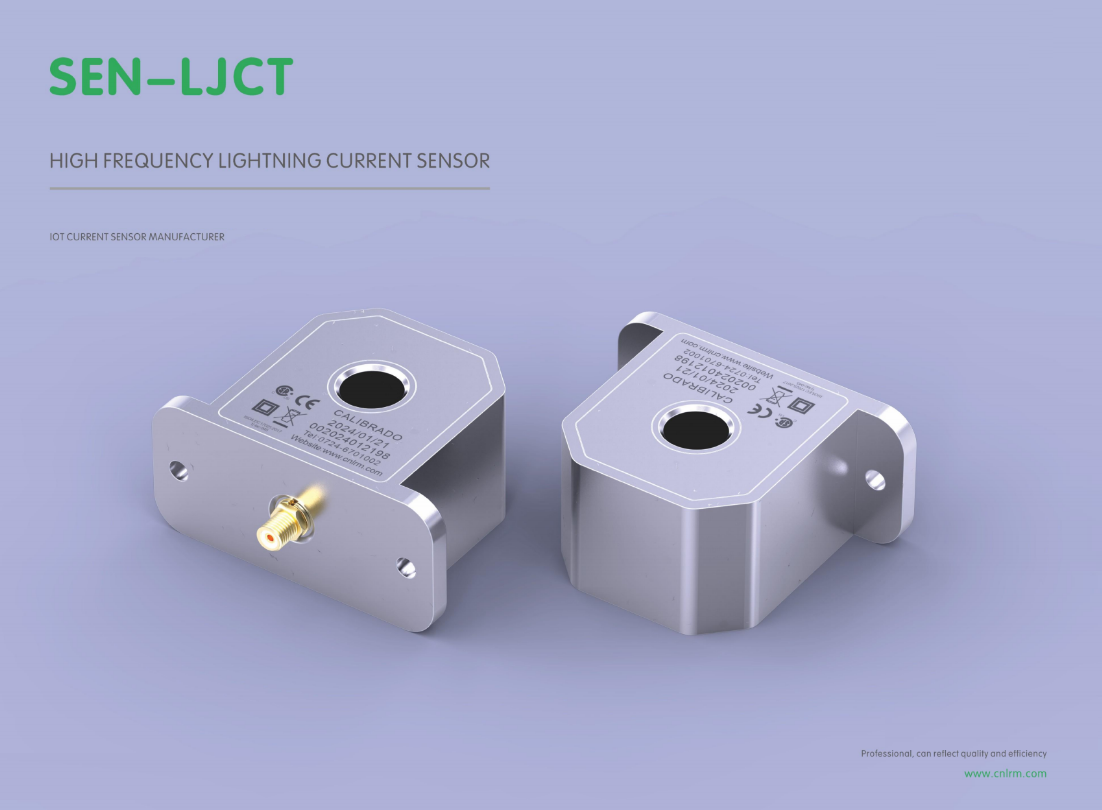
Selecting a lightning strike current sensor for your private label product often feels like navigating a maze of confusing specs and hidden trade-offs. You want reliable protection without drowning in technical jargon. That’s where Xiasen steps in—we’ve stripped away the complexity so you can focus on what matters: matching the right sensor to your application. In this guide, we’ll walk through the key factors that actually influence performance, from peak current ratings to response time, and show you how a simpler approach can lead to better decisions. No over-engineered charts, no guesswork—just practical advice to help you choose with confidence.
What Actually Happens When Lightning Meets Your Sensor
A lightning strike doesn't have to hit the sensor itself to destroy it. The massive current in a nearby strike collapses and expands magnetic fields fast enough to induce thousands of volts on any adjacent wire or PCB trace. That energy arrives at the sensor's pins as a fast transient, often far beyond the absolute maximum ratings. Input protection diodes conduct, then fail short or open. Bond wires inside the IC can melt, and oxide layers puncture, leaving the part dead or, worse, degraded in ways that only show up under temperature swings or humidity.
Even when the sensor survives the initial event, the induced common-mode surge can lift the local ground potential by hundreds of volts for a few microseconds. That ground bounce forces current through signal returns and creates differential spikes that saturate amplifiers and latch up CMOS inputs. Microcontrollers wired to the sensor may read nonsense, reset, or freeze until power is cycled. In some cases, the SPI or I2C lines get corrupted enough to flip configuration bits, so the sensor appears to work but reports wrong values.
If the strike is direct, there's no subtlety. Copper traces vaporize, solder joints spatter, and the board often carbonizes around the entry point. Components near the arc can explode from steam pressure inside epoxy packages. But even a strike a hundred meters away can inject enough energy through long cable runs to weld relay contacts or erase flash memory. Protection has to happen before the energy reaches the sensor: shunt TVS diodes at the connector, series resistance or ferrites on analog lines, galvanic isolation for digital buses, and a low-inductance ground path that doesn't share return current with the signal.
Reading Between the Lines of a Datasheet
Many engineers treat a datasheet as a list of guaranteed specifications, but the real story often hides in the fine print, footnotes, and test conditions. A parameter that looks impressive at room temperature may degrade sharply at the operating extremes, and the only way to spot this is to read every qualifying note attached to the table.
Graphs and typical performance curves are another place where subtle details matter. Manufacturers usually show data from a small sample of devices, so the curves represent typical behavior, not worst-case limits. If a design depends on a specific curve shape or a tight distribution, you need to ask for characterization data or test it yourself.
Finally, pay attention to what is not stated. Missing specifications, such as long-term drift, noise density at low frequencies, or behavior during power-up, can be just as important as the numbers that are published. A thorough engineer learns to question the gaps and verify assumptions before committing a design to production.
Private Label Doesn’t Mean One-Size-Fits-All
Private label often gets painted with a broad brush, as if every product rolling off the same factory line is interchangeable. But that assumption misses the point entirely. A well-run private label program starts with the customer, not the catalog. It means selecting materials, adjusting formulations, and even rethinking packaging to match what a specific audience actually values—not just what's cheapest to produce.
Take two retailers selling a basic cleaning spray. One serves budget-conscious families who care about refill sizes and simple scents. The other targets eco-minded urbanites willing to pay more for plant-based ingredients and a reusable trigger. Both can come from the same manufacturer, but if the product is designed with the same one-size-fits-all logic, one of those retailers loses. The difference lies in intentional choices made long before the label is printed.
That's why private label demands more than a generic spec sheet. It requires a real dialogue between the buyer and the supplier—testing variations, comparing performance, and sometimes walking away from a low-cost option because it doesn't fit the brand's promise. When done right, the product doesn't read as a knockoff or a placeholder. It reads as something the retailer would have made themselves, if only they had the factory.
Field Failures Nobody Talks About
Most field failure reports never make it past the maintenance binder. They’re the ones that start with a shrug and end with a workaround no one writes down. A sensor that drifts after three weeks, a connector that loosens on gravel roads, a battery that dies in cold snaps even though the spec sheet says otherwise. These aren’t catastrophic breakdowns—they’re the slow erosion of trust in a machine that was supposed to be bulletproof.
What gets missed is how small failures compound. A slightly sticky valve gets replaced twice before someone notices the real issue is a filter clogging faster than the manual predicts. A wiring harness that chafes only under full vibration doesn’t show up in the lab. By the time anyone puts the pieces together, the field team has already built their own fixes—zip ties, spare fuses, a ritual of tapping the panel just right. That knowledge lives in someone’s head, not in the official record.
The hard part isn’t fixing these once they’re found. It’s admitting they exist in the first place. Nobody wants to be the engineer who says the design underperforms in the real world, not when the next budget cycle rewards clean data and flawless prototypes. So the failures stay quiet, repeated across every site, until a new hire asks why everyone carries a pocket multimeter and a roll of electrical tape.
Matching Sensors to Real-World Strikes
Field data rarely behaves like lab calibration curves. A punch thrown in a controlled gym setup lands differently than one thrown on uneven pavement, with gloves, or under fatigue. The first step in matching sensors to real-world strikes is accepting that no single mounting position or sampling rate will capture every nuance. Wrist-mounted IMUs miss force transfer through the knuckles, while headgear accelerometers overestimate rotational energy. Successful deployments rely on pairing multiple sensor types—triaxial accelerometers for impact magnitude, gyroscopes for rotational snap, and force-sensitive resistors embedded in glove liners for contact pressure—then fusing those streams with a tolerance for misalignment.
Real-world strikes also carry environmental noise that lab tests filter out. Wind buffeting on an outdoor heavy bag, vibration from a moving vehicle, or the jostle of sparring footwork can all mimic impact signatures. One practical trick is to sample at least four times the highest expected frequency of a strike—typically 200–400 Hz for boxing or Muay Thai—and apply a bandpass filter that rejects low-frequency body sway and high-frequency sensor rattle. Edge computing helps here: instead of streaming raw data, small onboard algorithms can flag candidate impacts based on jerk thresholds and then send only the surrounding 100-millisecond window for detailed analysis. That cuts false positives without losing the subtle differences between a jab, a hook, and a sloppy shove.
Calibration against real human variability remains the hardest part. Amateur strikers generate force peaks that drift over a training session as muscles warm up or fatigue sets in, while professionals deliver more consistent but faster-rising impulses. Rather than chasing a universal model, integrate periodic spot-checks: have the user throw five known strikes at a marked pad while the system logs baseline features like time-to-peak and spectral centroid. Then use a lightweight anomaly detector that adapts to those baselines over the session. Sensors that learn from the person wearing them—not from a published dataset—are the ones that hold up when a strike veers off-script, which is exactly what real-world data does.
The Pre-Order Sanity Check
It starts innocently enough. A trailer drops, the hype cycle spins up, and suddenly that pre-order button is glowing like a beacon. Bonuses, early access, a skin you'll probably forget about after two weeks—they all whisper sweet nothings into your wallet. But before you hand over your money months ahead of release, take a breath. Pre-ordering is essentially a pledge of faith in a product that doesn't exist yet, and the gaming industry has a long, messy history of breaking that faith. Ask yourself: what am I actually buying right now? Not the game—the promise of a game.
The sanity check begins with three uncomfortable questions. First, will you genuinely play this on day one, or is it just the fear of missing out on a limited cosmetic? Second, does this purchase fit comfortably within your budget, or are you robbing next month's grocery run? Third, have you actually trusted this developer or publisher to deliver quality before, or are you riding a wave of nostalgia and marketing polish? Be honest—there's no wrong answer, but pretending the answer is "yes" when it's really "meh" is how backlogs fill up with unplayed purchases and bank accounts lose their padding.
None of this is to say pre-ordering is always a mistake. Sometimes a series earns your trust, or the discount genuinely makes sense for your schedule. But the point of a pre-order sanity check isn't to forbid the act—it's to make the decision deliberate instead of reactive. When the next big title flashes its pre-order bonuses at you, pause long enough to remember that the game will still be there after launch. The bonus? It'll probably show up later in a sale or as a free update anyway. Your future self, the one who didn't blow disposable income on vaporware, will thank you.
FAQ
Lightning currents rise in microseconds and can exceed 100 kA, so the sensor needs a non-saturating core, wide bandwidth, and strong galvanic isolation. Cheap current transformers built for 50/60 Hz will distort the waveform or fail outright.
Yes, private label programs usually include laser engraving or pad printing of your logo, model number, and even custom color sleeves. It is a straightforward way to keep your product line consistent without investing in injection mold tooling.
Most integrators prefer a 4-20 mA current loop or a low-impedance voltage output such as 0-5 V because they survive long cable runs and noisy substation environments. Some sensors also offer a digital pulse output that counts strike events directly.
Look for sensors rated with a maximum peak current well above the expected strike level, typically 200 kA or higher for direct attachment points. Split-core designs with air gaps are often better than solid-core types because they tolerate high di/dt without residual magnetization.
Reputable suppliers provide a calibration certificate with each unit, traceable to national standards. Field calibration is rarely needed if the sensor is sealed and uses stable components, but you can request a calibration test point or a plug-in reference module for periodic checks.
At minimum, the housing should meet IP67 for dust and water immersion, and the electronics should survive -40°C to +85°C. UV-stabilized polymer or stainless steel enclosures are worth the extra cost if the sensor will sit in direct sunlight for years.
For standard models with your branding, lead times run from 2 to 6 weeks depending on order size and any custom output calibration. New mechanical modifications, like a different mounting bracket, can add 4 to 8 weeks.
Yes, twisted shielded pair cable is strongly recommended. Lightning strikes generate massive electromagnetic interference, and an unshielded cable can pick up false readings or damage the input stage of your recorder.
Conclusion
Lightning doesn't just test a current sensor; it abuses it. A direct or nearby strike can push tens of kiloamps in microseconds, and the sensor's response isn't just about surviving - it's about reporting the event without saturating, ringing, or quietly degrading. Most datasheets highlight peak current and bandwidth, but the real story lives in the footnotes: recovery time after overload, linearity under fast di/dt, and behavior when the secondary side is suddenly open. Matching a sensor to real-world strikes means understanding your site's exposure: open fields, tall structures, and distribution lines all deliver different waveforms. A 10/350 µs impulse isn't the same as an 8/20 µs surge, yet many private label products are sold as if one curve fits all.
Private label doesn't mean one-size-fits-all, and that's where field failures creep in. A sensor that works perfectly on a bench can still fail after months of thermal cycling, moisture ingress, or repeated near-miss strikes that leave no visible damage but erode insulation. The pre-order sanity check is often skipped: confirming the manufacturer actually tested the sensor with the exact surge generator you'll use, and that the calibration certificate covers the full temperature range. It's also worth asking how the private label partner handles version changes - a "drop-in replacement" may have subtle differences in core material or winding tension that shift the transfer function at high frequencies. In the end, simple selection comes down to asking the uncomfortable questions before the first storm, not after a false trip or a missed strike event logs itself in your SCADA history.
Contact Us
Contact Person: Liu Mengyang
Email: [email protected]
Tel/WhatsApp: 8618727589233
Website: https://www.cnlrm.com/en/