
Polyethylene Glycol Recommended List: Expert Picks for Reliable Applications
2026-08-02
Selecting the right polyethylene glycol can be challenging, especially when consistency and performance are non-negotiable. That’s why we’ve compiled a trusted list of top-tier PEG options, backed by real-world testing and expert insights. Whether you’re optimizing formulations or exploring new applications, this guide simplifies your choice—and one name keeps standing out: HAISEN. Ready to see which picks made the cut?
PEG Beyond the Gut: Medical Miracles in Unexpected Places
If you’ve ever needed a colonoscopy or dealt with chronic constipation, you’ve probably encountered polyethylene glycol—PEG for short. This waxy, water-soluble polymer is best known as the gentle yet effective laxative that preps millions for gastrointestinal procedures. But PEG’s talents don’t end in the bathroom. Over the past decade, chemists and biologists have quietly repurposed it into a medical Swiss Army knife, slipping it into therapies that have nothing to do with digestion. From shielding fragile proteins in cancer treatments to building scaffolds for regenerating nerves, PEG is proving that a molecule can have a remarkably second act.
One of the most compelling breakthroughs lives in the world of targeted drug delivery. Researchers attach PEG chains to therapeutic molecules, a trick called PEGylation, which cloaks the drug from the immune system and extends its half-life in the bloodstream. This has already transformed treatments for everything from hepatitis C to hemophilia. But the real surprise came when scientists started using it beyond biologics—coating nanoparticles that ferry chemotherapy directly into tumors, sparing healthy tissue from damage. In some experimental stroke therapies, PEG even acts as a molecular patch, sealing damaged cell membranes and reducing the cascade of inflammation that follows a brain attack. None of this hinges on the gut; it’s pure polymer physics meeting biological chaos.
Then there’s tissue engineering, where PEG has become a quiet enabler of regrowth. Its hydrogel forms—sticky, water-swollen networks—can be molded into intricate matrices that guide the repair of cartilage, corneas, and spinal cord tissue. Unlike older scaffolding materials, PEG hydrogels are largely invisible to the immune system, drastically lowering the risk of rejection. Some ophthalmologists now use PEG-based sealants to close corneal incisions after cataract surgery, replacing sutures with a transparent, biocompatible glue. Elsewhere, it’s being tested as a vehicle to deliver stem cells into damaged hearts, creating a temporary nest that vanishes once the cells take root. These applications share no common thread with laxatives, yet they rely on the same flexible backbone that has made PEG a medical shapeshifter—quietly stitching together futures we never expected.
The Industrial Side of Polyethylene Glycol No One Talks About
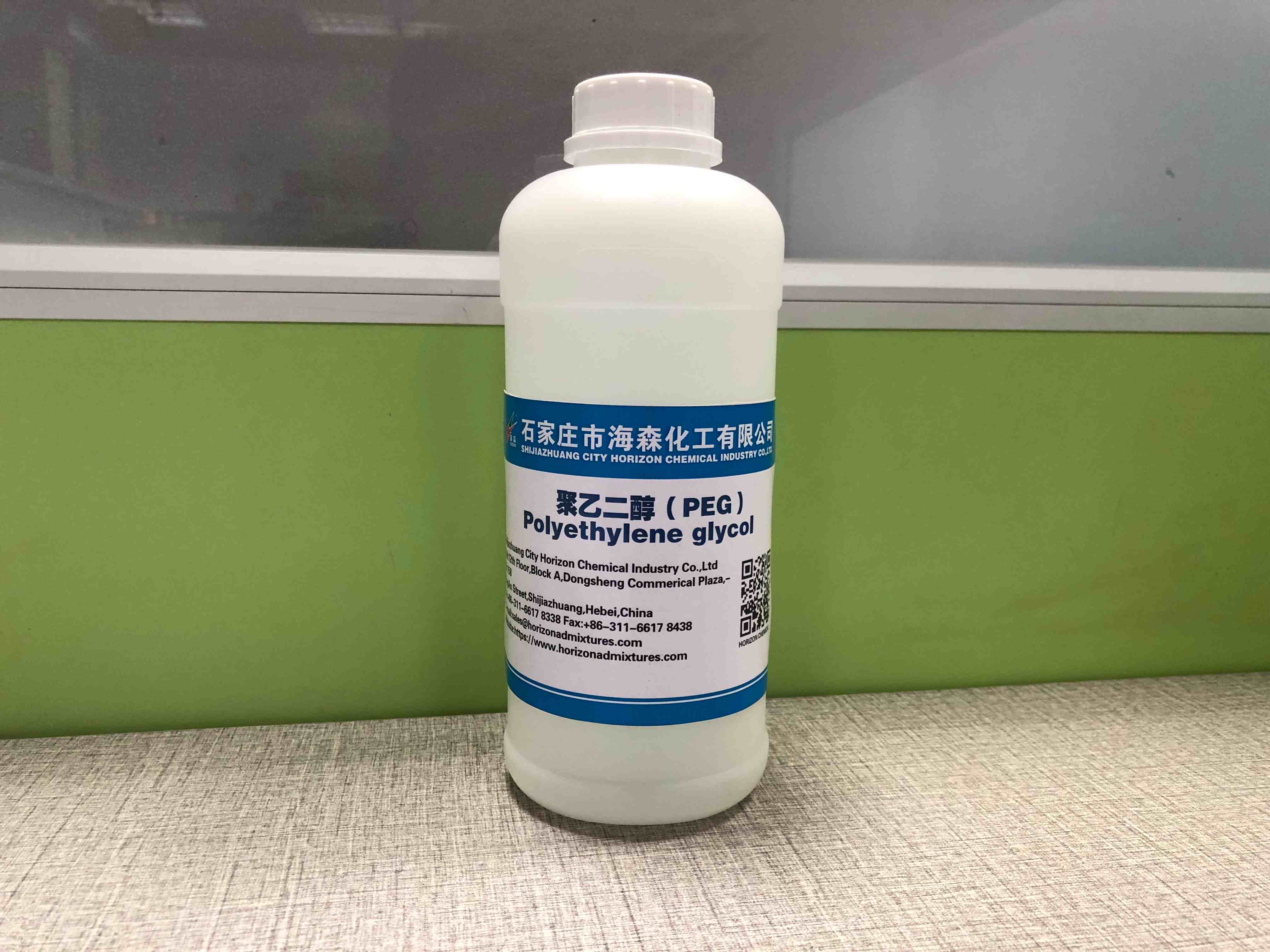
Beyond the lab bench and the pharmacy aisle, polyethylene glycol plays an unseen but massive role in heavy industry. It's not just about gentle laxatives or skincare humectants; think of PEG as the chemical equivalent of a Swiss army knife in factories, mines, and power plants. From lubricating colossal gears in wind turbines to keeping hydraulic fluids stable under blistering heat, its versatility is what keeps the industrial world moving without fanfare.
One of the most overlooked applications is its use as a phase-change material in thermal energy storage. Engineers embed PEG into building materials or industrial heat exchangers to soak up excess warmth during the day and release it at night, smoothing out temperature swings without any moving parts. It’s also a critical anti-foaming agent in paper mills and wastewater treatment plants, where a single uncontrolled froth can shut down an entire production line. These aren't glamorous uses, but they're essential—and they rarely make it into the public conversation.
Perhaps the strangest quiet success is in metalworking. PEG serves as a binder in ceramic and metal injection molding, letting manufacturers form intricate parts that are later fired in a kiln, burning away the polymer cleanly. In mining, it's used to separate minerals by flotation, exploiting small differences in surface chemistry that other chemicals can't target. These niches don't show up on consumer labels, but they highlight a truth: PEG’s industrial stamina and adaptability are the real reasons it’s produced by the megaton globally.
Why Your Favorite Lotion Owes Everything to PEG
That silky, disappear-into-your-skin feeling you love? It’s not magic—it’s polyethylene glycol, humbly holding your lotion together. PEGs are the ultimate behind-the-scenes players, weaving oil and water into a seamless emulsion so your moisturizer doesn’t separate into a greasy puddle. Without them, that pump bottle would be a gloppy, unpredictable mess.
But PEG does more than just blend—it ferries active ingredients past the skin’s stubborn surface. Small-molecular-weight versions escort nourishing compounds deeper, where they can actually do something, while the heavy hitters create a breathable film to lock moisture in. It’s like a well-choreographed dance of skin penetration and protection, all directed by a polymer most people can’t pronounce.
Think about the sensory experience next time you reach for your go-to cream. That weightless glide, the absence of stickiness, the way it vanishes while leaving your skin actually softer—none of it happens by accident. PEGs are the unsung architects of texture and performance, quietly tailoring how a product feels from the moment it touches you until long after it’s absorbed.
How Pharmaceuticals Lean on PEG for Better Bioavailability
Polyethylene glycol, or PEG, has quietly become a workhorse in modern drug formulation, especially when it comes to tackling bioavailability challenges. Many promising drug candidates never make it past early development because they’re poorly soluble in water or get cleared from the body too quickly. PEGylation—attaching PEG chains to a drug molecule or incorporating them into a delivery system—can dramatically change that. The hydrophilic nature of PEG creates a hydration shell around the drug, making it more soluble and shielding it from enzymes and immune cells that would otherwise break it down or flag it for elimination. This simple but effective modification gives drugs a longer circulation time, allowing them to reach their target in sufficient concentrations without needing frequent, high doses.
Beyond just extending half-life, PEG also helps overcome biological barriers that normally limit absorption. For oral drugs, PEG can enhance permeability across the intestinal lining by transiently opening tight junctions or by improving the drug’s partition into the mucosal layer. In injectable formulations, PEGylated liposomes or nanoparticles can evade rapid clearance by the liver and spleen, sneaking through the bloodstream to deliver their cargo more efficiently. It’s not a one-size-fits-all solution—too much PEG can reduce cellular uptake or trigger accelerated blood clearance with repeated dosing—but when tuned correctly, it transforms a borderline molecule into a viable therapeutic.
The versatility of PEG makes it appealing across a wide range of drug classes, from small molecules to biologics. For instance, PEGylated interferons revolutionized hepatitis C treatment by cutting injection frequency from three times a week to once weekly, while maintaining antiviral activity. In the realm of monoclonal antibodies, PEG is sometimes used to modify fragments like Fabs, retaining binding affinity while reducing kidney filtration. Even in topical and ophthalmic preparations, PEG works as a solubilizer and mucoadhesive, keeping the drug in place longer. As drug pipelines increasingly include water-insoluble compounds and large biomolecules, PEG’s role in making them bioavailable is only set to grow, though researchers keep a close eye on immunogenicity concerns to refine its use further.
PEG in the Lab: Pushing the Boundaries of Science
In the quiet hum of a research lab, polyethylene glycol becomes more than just a polymer—it morphs into a tool for discovery. Scientists use PEG to mimic the crowded interior of living cells, creating environments where proteins fold and interact as they would in nature. By tweaking its molecular weight, they can tune viscosity and osmotic pressure, coaxing out behaviors that buffer solutions alone never reveal. It’s not about perfectly replicating biology but constructing a stage where subtle molecular dramas play out under controlled light.
Beyond the biology bench, PEG’s versatility shines in materials chemistry. Researchers graft it onto nanoparticles to cloak them from the immune system, extending their circulation long enough to deliver drugs exactly where needed. The same stealth property transforms surfaces: a brush-like layer of PEG repels nonspecific protein adsorption, turning a chaotic petri dish into a tidy landscape where only intended reactions occur. At the extremes of temperature and pressure, PEG’s benign nature hides a quiet tenacity—it remains liquid over a wide range, dissolving salts and stabilizing enzymes that would otherwise denature.
Yet the real frontier lies in tinkering with PEG’s backbone, adding functional handles that make it more than a passive bystander. Chemists attach fluorophores at one end and a reactive group at the other, building molecular rulers that measure nanometer-scale distances or probes that report on local pH. In cryobiology, PEG vitrifies water rather than letting it crystallize, preserving cells in a glassy suspended state. Each of these experiments, often mundane in their setup, chips away at the barrier between what we can observe and what we can control—a reminder that the most profound leaps in science sometimes come wrapped in a deceptively simple polymer.
A Practical Guide to Picking the Perfect PEG Grade
Choosing the right polyethylene glycol grade starts with understanding your specific application. PEG comes in a range of molecular weights, from a few hundred to several thousand daltons, and each behaves differently. A low molecular weight PEG, like PEG 400, is a viscous liquid at room temperature, making it ideal for solubilizing poorly water-soluble compounds in pharmaceutical formulations. In contrast, a high molecular weight PEG, such as PEG 8000, is a waxy solid that excels as a binder in tablet manufacturing or as a precipitation agent in protein crystallization. Always check the physical state and viscosity you need before zeroing in on a grade, because these properties shift dramatically as the chain length grows.
Purity is another factor that can quietly make or break your results. Industrial-grade PEG often contains residual catalysts, water, or trace aldehydes that can interfere with sensitive reactions, especially in bioconjugation or cosmetic formulations. If your project involves attaching PEG to a drug molecule or a protein, pharmaceutical-grade PEG with tightly controlled impurity profiles is non-negotiable. Look for grades that specify low levels of peroxides and aldehydes, and consider asking suppliers for a certificate of analysis that goes beyond the standard specifications. Sometimes, a slightly higher cost for a purer grade saves you from hours of troubleshooting downstream.
Don’t overlook the importance of functionalization if your work involves covalent linking. Many PEG grades are available with reactive end groups—think amine, carboxyl, or maleimide—that let you attach them to other molecules with precision. Standard unmodified PEG is fine for simple excipient uses, but for PEGylation of biologics, you’ll need a heterobifunctional PEG with a protective group on one end to avoid crosslinking. The wrong end-group chemistry can lead to low coupling efficiency or unstable conjugates, so map out your reaction scheme and verify the reactivity and stability of the functional group under your working conditions.
FAQ
PEG 400 and PEG 3350 are common choices for pharmaceutical compounding. PEG 400 works well as a solvent in oral and parenteral formulations, while PEG 3350 is widely used as a base for ointments and as an osmotic agent in laxatives due to its favorable safety profile.
For light lotions and serums, lower molecular weight PEGs like PEG-200 provide a non-greasy feel and easy absorption. For richer creams, PEG-4000 or PEG-6000 can act as thickeners and stabilizers, giving emulsions a smooth, creamy texture.
PEG 600 and PEG 1000 strike a good balance between viscosity and lubricity in water-based formulations. They resist thermal degradation and maintain performance across a wide temperature range, making them reliable for industrial applications.
Food-grade PEG 400 is often the go-to humectant because it retains moisture effectively without altering taste or texture. Its low volatility helps maintain product freshness in baked goods and confections.
PEGylation enhances solubility and shields therapeutic molecules from the immune system, extending circulation time. This versatility allows PEG to be a foundational component in liposomes, nanoparticles, and protein conjugates.
PEGs are hygroscopic, so they must be sealed tightly and kept in cool, dry conditions. Liquid grades should be protected from freezing, while solid grades can clump if exposed to humidity; inert gas blanketing is sometimes used for sensitive applications.
Conclusion
Polyethylene glycol rarely makes headlines, yet its fingerprints are all over modern medicine, consumer goods, and high-tech industry. Far beyond a simple laxative, PEG now anchors organ preservation fluids that buy precious time during transplants, and it cloaks delicate drug molecules in protective hydration shells that outsmart the immune system—boosting bioavailability in ways that have quietly revolutionized chemotherapy and chronic-disease management. Cosmetic chemists lean on PEG variants as invisible workhorses; without them, your favorite lotion would separate into an oily mess and lose its silky, quick-absorbing feel. Even in elite biology labs, PEG acts as a molecular crowbar, forcing proteins to crystallize or coaxing cells to fuse, unlocking structures and techniques that fuel Nobel-worthy discoveries. The recommended list curates this sprawling expertise, matching specific PEG chains to applications where they’ve proven dependable time after time.
On the industrial side, PEG shows up in places most trade journals ignore: as a precision lubricant in textile spinning, a plasticizer that keeps biodegradable packaging from snapping, or a surfactant that stabilizes emulsion paints during a decade on the wall. Yet not all PEG is interchangeable—chain length, branching, and terminal groups turn a universal solvent into a tailored tool. A low-molecular-weight liquid PEG suits inkjet formulations, while a high-molecular-weight solid PEG serves as a tablet binder that dissolves with perfect timing. The expert picks cut through the noise, distilling hands-on trial and application-specific testing into a practical guide. For anyone selecting a PEG grade, this list transforms guesswork into a deliberate choice, ensuring that whether you are crafting a next-gen biologic or a premium skin cream, the chemistry aligns from the first prototype to the final product.
Contact Us
Contact Person: Sam Lee
Email: [email protected]
Tel/WhatsApp: 86-311-6617 8338
Website: https://www.horizonadmixtures.com/