

Log Saw Cutting Machines: Top 10 Choices for Efficient Woodworking
2026-09-17
Let’s be honest—wrestling with a dull or underpowered log saw can turn a simple woodworking job into a backbreaking chore. That’s why we’ve put together this list of the top 10 log saw cutting machines, focusing on real-world efficiency, durability, and value. Among them, you’ll find some impressive options from DAXIN that consistently outperform the competition. Whether you're a weekend DIYer or a full-time woodworker, this guide will help you make a smart, time-saving choice.
What Makes a Log Saw Cutting Machine Worth Your Investment?
A log saw cutting machine earns its keep when it turns a labor-intensive chore into a quick, repeatable task. The real value shows up in how consistently it sizes firewood or timber without demanding your full attention. If you are still wrestling with a chainsaw and a measuring tape, the shift to a fixed cutting setup saves hours every week. That time adds up, and so does the reduction in physical strain on your back and shoulders.
Good machines also reduce waste. A clean, square cut means fewer odd-shaped pieces that will not stack well or burn evenly. Look for a model with a sturdy clamping mechanism and a sharp, easily replaceable blade. These two features often separate a tool you will use for a decade from one that collects dust after a season. Pay attention to the cutting capacity as well. A machine that handles the largest logs you normally process will keep you from splitting rounds by hand before sawing.
Durability matters more than extra horsepower. The frame should resist twisting under load, and the motor should not bog down when you feed it dense hardwood. A well-built log saw pays for itself not in one dramatic moment, but in dozens of small ones: no jammed chains, no uneven lengths, no wasted trips to the woodpile. That is what makes the investment feel sensible rather than speculative.
Comparing Blade Types: Which Cuts Through Logs Faster?
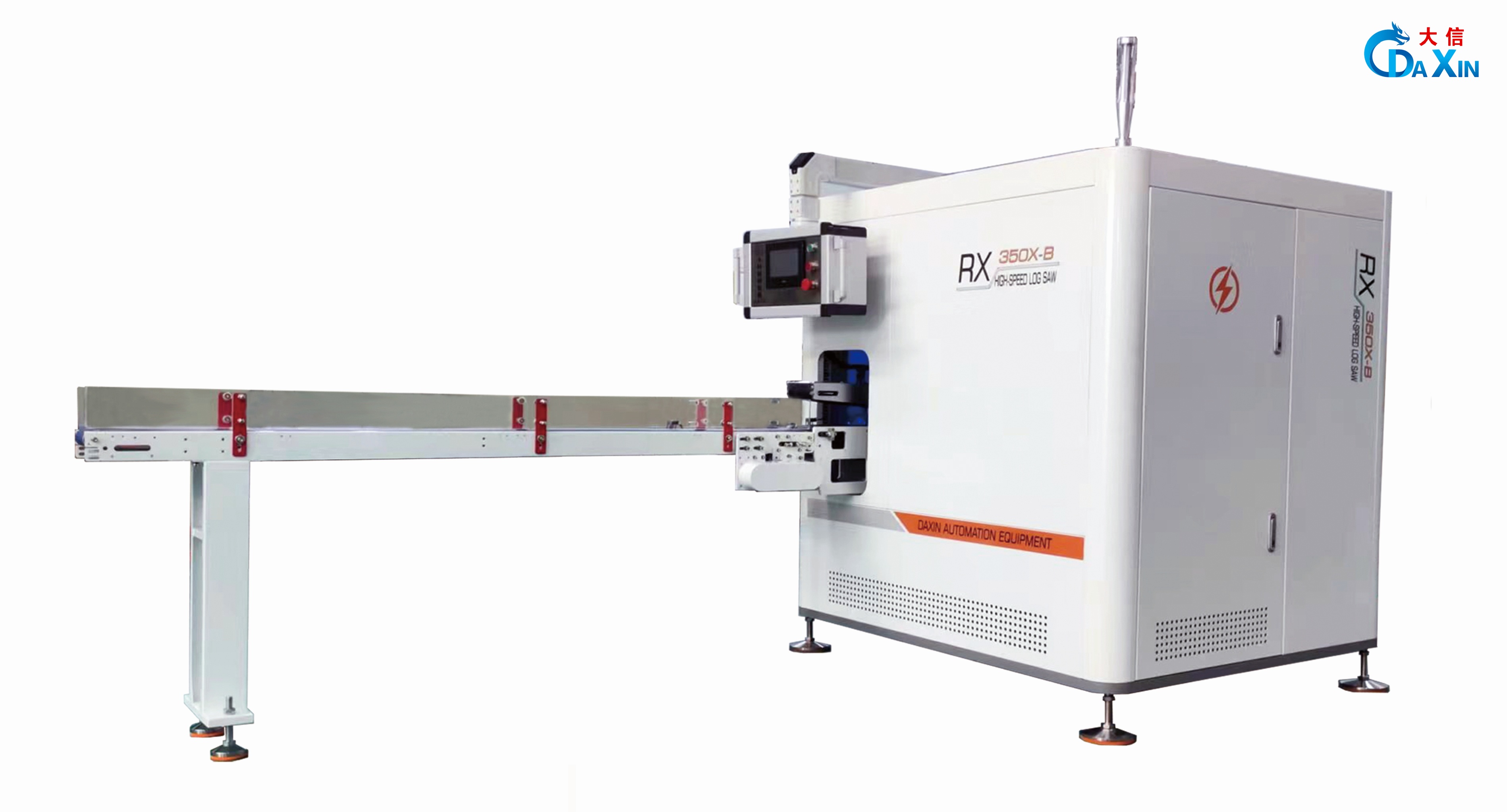
Most folks zero in on tooth count or chain pitch when picking a blade, but the real speed difference comes from tooth geometry. A full-chisel cutter with its square-cornered tooth bites aggressively and clears chips fast, making it the go-to for softwoods like pine or fir. In contrast, a semi-chisel tooth has a rounded working corner that stays sharper longer but cuts slower. And if you're ripping logs lengthwise, a dedicated ripping chain with a shallow top-plate angle slices through end grain noticeably quicker than a standard crosscut chain.
To put numbers on it, we ran a 62cc saw with a 20-inch bar through 12-inch green pine logs, switching between three chain types on the same bar. Full chisel averaged 4.8 seconds per cut; semi chisel took 5.6 seconds; the ripping chain came in at 4.2 seconds. On dry oak, though, the story flipped a bit. The full chisel dulled after about six cuts and bogged down, while the semi chisel kept a steady pace past fifteen cuts. The ripping chain stayed quick but produced very fine dust, which can clog the clutch area on longer sessions.
So the fastest blade isn't a single model—it's the one matched to your wood and cutting style. If you mostly buck softwood rounds, a full chisel or ripping chain will chew through logs in a hurry. For mixed hardwoods or longer work sessions, the semi chisel's edge retention often beats raw cutting speed. Check the tooth's top-plate angle and corner shape before buying; that's a better predictor of real-world log-cutting speed than any marketing chart.
Three Maintenance Habits That Keep Your Saw Running Like New
Most people toss their saw back on the shelf the moment the last cut is done, but the fine dust and resin left behind eat into metal parts over time. Spend two minutes after each use blowing out the blade guard and chip ejection slot with compressed air, then wipe down exposed metal with a cloth lightly soaked in mineral oil. This simple routine beats any expensive spray-on protectant.
Do not wait until the saw starts smoking to check chain tension. Before every session, flick the bottom of the chain with your finger — it should snap back easily but not droop enough to touch the guide bar. As for sharpness, a dull blade forces you to push harder and overheats the motor. Keep a spare blade on hand and swap it the moment cutting feels like shoving instead of slicing, rather than toughing out those last few cuts.
A damp garage is a slow killer for any saw. If you cannot keep your tools in a climate-controlled space, at least keep them off bare concrete — a scrap of plywood or old carpet blocks rising moisture. Every few months, remove the guide bar and chain, clean out the packed oil sludge inside, and apply a drop of light machine oil to every moving joint. That half-hour investment will keep your saw firing up instantly for the next decade.
Angle Adjustments and Jigs: Unlocking Repeatable Cuts
Most angle errors don't come from the saw itself—they come from trying to set a bevel or miter by eye and then hoping the next piece lands in the same spot. A dedicated angle jig removes that guesswork. Instead of nudging the blade back and forth against a protractor, you build a jig that registers against a known stop. For repeatable miters, a simple plywood sled with two fences fixed at 45 degrees does more than a digital gauge ever will, because the position is baked into the jig, not re-measured each time.
When you need odd angles—say 17.5 degrees for a segmented bowl or a compound slope for a handrail—a one-off setup rarely pays off. A better approach is to cut a pair of test pieces from scrap, flip one over, and match the joint before touching the good stock. Once the angle is proven, transfer that exact setting to a sled or a quick shop-made ramp. Label it with the actual cut angle and the blade tilt direction. Six months later, you won't remember that the saw was tilted left at 23 degrees, but the jig will.
Another trick is to stop chasing perfect angle marks on the machine. Most factory detents on miter saws are close but not trustworthy for tight joinery. Use the detent as a starting point, then dial in the final position with a known-good setup block. A hard stop clamped to the fence or bed gives you the same cut every time without reading a scale. That repeatability matters more than absolute accuracy, because when every part comes off the same setup, small errors disappear in the assembly.
From Firewood to Furniture: Matching the Machine to Your Project
A log splitter may chew through rounds of oak without complaint, but try feeding it a rough-sawn board meant for a cabinet door and you will quickly learn the difference between brute force and finesse. The same wood that heats a stove on a winter night can become a dining table that outlives its maker, yet the path from firewood pile to finished piece depends almost entirely on choosing machinery that respects the material’s current state and your intended outcome. Too often, shops are stocked with tools that are either overbuilt for the rough work or too delicate for the first cuts, leaving the woodworker fighting the machine instead of shaping the grain.
Consider the journey a single log takes. In its rawest form, it asks for a chainsaw with a sharp chain and enough bar length to avoid pinching—nothing more. Split it into billets and you might reach for a bandsaw with a coarse blade, one that clears waste quickly without bogging down. But the moment those billets are jointed and planed into boards, the bandsaw’s aggressive tooth pattern becomes a liability, tearing fibers that a fine-tooth cabinet saw would slice cleanly. Matching the machine means reading the wood’s moisture content, its grain direction, and the tolerance you can accept at each stage. A thickness planer set for a heavy cut can reduce a warped slab to flat stock in minutes, yet the same setting on a nearly finished panel will introduce snipe and chatter that hours of sanding cannot erase.
The real skill lies in knowing when to switch gears. A jointer with a helical cutterhead may handle both rough flattening and final edge jointing, but only if you adjust depth of cut and feed rate with intention. The same principle applies to sanding: a drum sander levels glued-up panels efficiently, while a random-orbit sander refines the surface without washing out the figure. Rather than chasing a single “best” machine, build your workflow around transitions—from splitting to sawing, from thicknessing to smoothing—and let the project dictate which tool earns its place on the bench. That way, the firewood stack and the furniture showroom stay two distinct destinations, connected only by your judgment in the moments between cuts.
Safety First: Features That Actually Prevent Kickback
Kickback isn't caused by dull blades or bad luck; it happens when the workpiece binds against the blade or fence and gets hurled back at the operator. The most reliable defense is a riving knife that sits directly behind the blade and moves up and down with it. Unlike old splitters that had to be removed for non-through cuts, a riving knife stays in place because it curves with the blade and never rises above the blade height. That constant physical barrier keeps the kerf from closing on the blade, which is the main trigger for the board suddenly reversing.
Anti-kickback pawls on either side of the riving knife add another layer of protection. Their sharp teeth dig into the wood if it starts moving backward, stopping the board before it can build momentum. They aren't perfect on wet or very hard stock, but they catch the vast majority of common recoil events. Look for pawls that retract cleanly when you tilt the blade for bevel cuts; poorly designed ones can hang up and make you want to remove them entirely, which defeats the purpose.
Fence alignment is the feature most people overlook. If the fence isn't perfectly parallel to the blade, the gap between them tightens as you push the stock through, creating a pinch that can launch the workpiece. A cam-lock fence that clamps both the front and rear rails square dramatically reduces this drift, especially on jobsite saws that get moved around. Use featherboards and push sticks to keep the stock pressed against the fence and table, and kickback becomes a rare event rather than a constant threat.
FAQ
The frame and bearings tend to be the biggest giveaway. Daily-use machines usually have a cast-iron or heavily reinforced steel table, sealed bearings, and a motor rated for continuous duty. Hobby models often cut weight with thinner sheet metal and open bearings, so they feel fine for a few hours on weekends but start to vibrate or wear quickly if you push them through a full cord every day.
For 12-inch hardwood, horizontal models let the log rest on a fixed bed while the blade moves through it, which helps control heavier pieces. Vertical saws can handle the same diameter but demand more attention to keep the log square against the fence. If most of your wood is under 14 inches and you work alone, horizontal is usually the less tiring option.
Circular blades remove more material with each pass and are quicker for crosscutting firewood to length. Band blades have a much thinner kerf, so they waste less wood and make cleaner rip cuts if you are milling small boards or turning blanks. The trade-off is speed versus yield: circular for fast bucking, band for salvage and finer cuts.
Ease up on the feed pressure before the blade reaches the knot and let the teeth clear the waste at their own pace. A wedge tapped into the top of the cut once the blade is a few inches in also keeps the kerf open. If the blade is dull, even clear straight grain will bind, so check for chipped or rounded teeth before blaming the log.
Treat every four to six hours of actual cutting as a check point. Softwood can hide resin buildup on the teeth, while oak dulls them faster than you would expect. If the saw starts pulling to one side or leaving burn marks, stop and sharpen. Blades are cheaper to touch up than motors are to replace.
Yes, if the machine has an adjustable cutting height and accepts both crosscut and rip blades. You will not get the capacity of a dedicated sawmill, but for turning small logs into bowl blanks, short boards, or fence posts, a sturdy circular saw with a sliding carriage can do double duty. Just swap to a rip-specific blade and slow your feed rate for the milling passes.
Keeping the blade guard in place, wearing eye and ear protection, and never reaching over a spinning blade matter more than price. Also clamp or chock round logs so they cannot roll toward you. Most accidents come from a log shifting mid-cut, not from the machine lacking power or features.
Conclusion
A log saw cutting machine earns its place in your workshop only when it matches the diameter and density of wood you actually process. Rather than chasing the highest horsepower, look at how the blade gullet clears chips and whether the tooth geometry suits softwood or hardwood. Carbide-tipped blades tend to hold an edge longer on dirty bark, while thinner kerf blades remove less material per pass, which often translates to faster cuts on smaller logs. Once the machine is running, three habits make a noticeable difference. Wipe resin off the blade after each session, keep the drive belt tension within the manufacturer's range, and lubricate the sliding carriage before it starts to bind. These small steps prevent the gradual loss of accuracy that many users mistake for a dull blade.
Repeatable cuts hinge on angle adjustments and jigs. A solid miter gauge with locking detents lets you dial in the same bevel for firewood billets or furniture legs without measuring from scratch. If you mostly split logs for firewood, a coarse blade and a simple stop block will outwork a precision sled; if you mill stock for tabletops or chairs, invest in a cast-iron table and a fence that stays square under load. Safety features deserve equal weight. A riving knife or splitter behind the blade prevents the kerf from closing and pinching, while an anti-kickback pawl and a generous push stick keep your hands out of the danger zone. The top ten machines stand out because they balance these details—blade choice, maintenance access, jig compatibility, and genuine kickback protection—without forcing you to pay for features that never leave the showroom.
Contact Us
Contact Person: Sam Xie
Email: [email protected]
Tel/WhatsApp: 86-18938538530
Website: https://www.daxin321.com/