

LED Motorcycle Light Bulb Wholesale: Brighten Your Inventory with Premium Illumination
2026-08-20
Riders who demand reliable visibility rarely settle for stock bulbs, and neither should your inventory. When you buy LED motorcycle light bulbs wholesale, every unit either strengthens your reputation or quietly undermines it. That’s why LUXFIGHTER focuses on premium illumination that survives real road conditions, not just showroom floors. The following guide breaks down what makes our wholesale lineup a smarter choice for shops that want fewer returns and more repeat customers.
Riders Are Swapping to LED—Here’s What to Stock
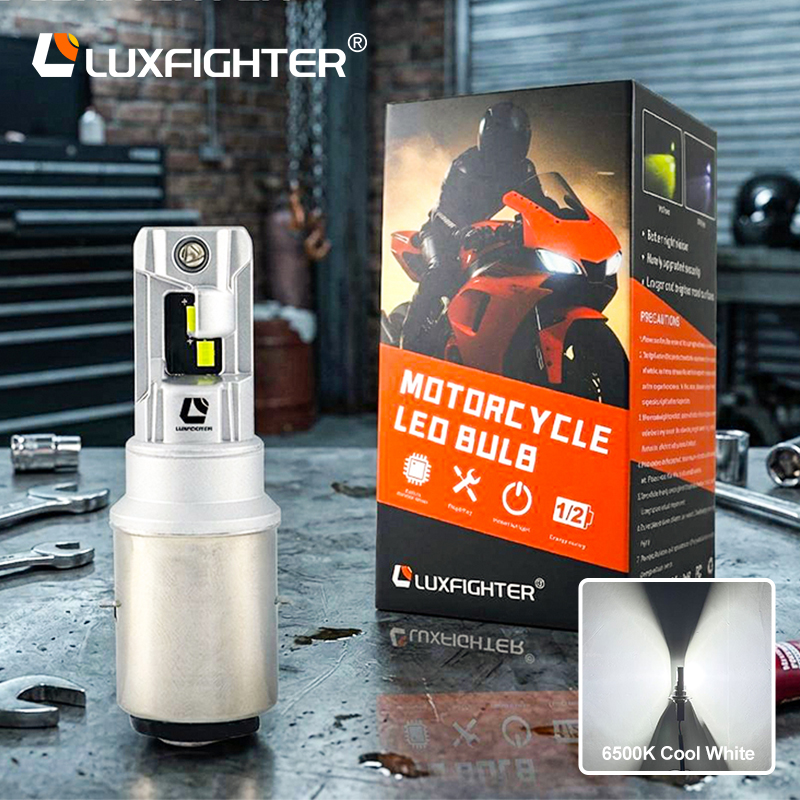
The halogen bulbs that came stock on most bikes have a nasty habit of quitting at the worst possible time—usually right before a long night ride. Riders are getting tired of carrying spare bulbs and fiddling with roadside swaps, so they're moving to LED headlight kits that bolt in with the same connector but throw a much cleaner, whiter beam. It's not just about looks; an LED draws less power, which matters on smaller stators and older wiring, and the lifespan means one less thing to worry about between services.
If you're stocking for this shift, don't just order a wall of universal kits and hope for the best. Pay attention to the bulb sizes that actually move—H4 and H7 cover a huge chunk of the market, but plenty of cruisers and dual-sports still run 9003 or H11. Look for kits that include anti-flicker modules or Canbus adapters where needed, because returns on 'plug and play' sets that trigger dash warnings or strobe at idle are a quick way to burn margin. Also consider a spread of color temperatures: 6000K sells on looks, but some older riders prefer 4300K for rain visibility, so having both on the shelf will save you from losing a sale to the guy who's picky about beam color.
Displays help more than you'd think. A simple side-by-side board with a stock halogen and an LED running off a 12V battery lets customers see the difference in throw and color without having to imagine it. Tuck a few install-friendly kits near the counter and mention that most swaps take under thirty minutes with basic hand tools. That kind of practical nudge moves product faster than any spec sheet.
Beyond Raw Lumens: What Premium Bulbs Get Right
Lumens tell you how much light leaves the bulb, not where it goes or how it renders what it touches. A cheap high-lumen bulb can make a room feel flat and sterile because it sprays light everywhere with a narrow, blue-heavy spectrum. Premium options fix the part you actually notice: the quality of shadows, the accuracy of colors, and the way a bedside lamp can feel warm without turning your white walls yellow.
You also pay for consistency—bulb to bulb, year to year. Buy a decent bulb today and another in eighteen months for the same hallway, and they should match both in color temperature and brightness. That sounds basic, but many budget lines drift between batches. Then there is dimming. A quality driver lets the light taper down to a candle-like glow without a faint hum or a strobe effect that only becomes obvious when you try to read in the dark.
Durability is part of the subtlety too. Better thermal design keeps the diodes from cooking themselves, which means the light does not slowly lose its punch or take on a greenish cast after six months. The housing feels less like disposable plastic and more like a small piece of hardware. It is the difference between a bulb that checks a wattage box and one that actually makes a room easier to be in.
Wholesale Lots That Leave Room for Healthy Markup
Sourcing wholesale lots isn't just about grabbing the cheapest pallet you can find—it's about spotting the margin hiding in plain sight. The best opportunities often come from mixed assortments, returns, or overstock where the per-unit cost dips low enough that even modest retail pricing leaves a comfortable cushion. Instead of chasing predictable, high-demand items that everyone else is already fighting over, look for slightly offbeat categories or seasonal leftovers that still hold buyer interest but carry less competition. That gap between what you pay and what the market will bear is where the real profit lives.
One underrated trick is to focus on lots with a few hidden gems rather than a uniform box of identical SKUs. A pallet of generic phone cases might be a race to the bottom, but a mixed lot from a boutique liquidation can contain a handful of items that retail for five to ten times their allocated cost. The key is to train your eye for resale velocity: check sold listings, not just asking prices, and factor in shipping weight and storage space before committing. When the math works out, you can price aggressively to move inventory fast while still keeping a healthy margin that absorbs fees, returns, and the occasional dud.
Don't overlook the value of building relationships with smaller liquidators or regional wholesalers who are more willing to negotiate. Big platforms offer convenience, but niche suppliers often have lower overhead and a stronger incentive to clear space, which can translate into better per-lot pricing. Ask about manifest accuracy, return policies, and whether they offer repeat-buyer discounts. A lot that leaves room for a 40% markup on paper can quickly erode if you're stuck with unsellable junk, so always sample a small order first. Done right, wholesale sourcing becomes a repeatable system where every purchase is a calculated bet with a built-in safety net.
Fitment Without Guesswork: Bulb Types by Bike Class
Forget flipping through generic catalogs or squinting at a dim bulb base—knowing your motorcycle's class eliminates the guesswork. Cruisers, sportbikes, and adventure tourers each lean on different bulb footprints, from the classic H4 dual-filament found on many naked standards to the compact H7 singles tucked behind aggressive fairings. Once you match the bike's intended use and housing design, the right bulb type practically names itself.
Off-road and dual-sport machines, for instance, often demand vibration-resistant bases like the BA20d or the tougher H13, while maxi-scooters and small-displacement commuters frequently run wedge-style W5W or H6W bulbs for their slim profile. Even within the same class, a late-model sportbike may switch to an H11 for the low beam but keep a 9005 for the high beam—so checking both positions before ordering is a habit worth building.
Rather than memorizing every bulb code, let the bike class narrow the field: touring rigs favor long-life H7 or H9 bulbs for all-night highway stints, while vintage restorations call for the round, sealed-beam shapes that predate replaceable capsules. With this class-first mindset, fitment stops being a roll of the dice and becomes a straightforward pick from one or two likely sockets.
Road Vibration, Weather, and Longevity: What Buyers Ask About
Buyers rarely walk into a dealership asking about suspension damping curves or galvanic corrosion rates. What they do ask, often after a test drive on a rough patch of highway, is whether that constant shimmy through the steering wheel means the car will fall apart in five years. The honest answer ties road vibration to long-term durability, but not in the way most people assume. A stiff ride doesn't automatically signal a fragile chassis; in fact, many modern unibody designs are engineered to flex slightly, absorbing energy that would otherwise fatigue weld points. The real concern is how well the dampers, bushings, and subframe mounts hold up under repeated low-amplitude shaking. If a buyer notices a new rattling sound after a few thousand miles on gravel roads, that's a legitimate red flag worth investigating before signing anything.
Weather gets lumped into the longevity conversation because rust is the silent killer no one sees until it's too late. Buyers in coastal areas or regions that salt roads heavily will often ask about underbody protection and whether the manufacturer uses galvanized panels or closed-box frame sections. What they should also ask about is the less obvious stuff: how well the door seals handle freeze-thaw cycles, whether the sunroof drain tubes clog easily in leaf-heavy climates, and if the CV boots are made of a rubber compound that cracks after three winters. These small failures rarely strand you on the side of the road, but they create entry points for moisture, which then accelerates corrosion in places you can't see. A car that survives ten Minnesota winters without rusting through the rear wheel arches is a testament to good design, not luck.
The intersection of vibration and weather is where longevity questions get tricky. A buyer might ask, "Will driving on washboard dirt roads in the rain shorten the car's life?" The short answer is yes, but the mechanism isn't just physical wear. Water mixed with fine dust creates a grinding paste that works its way into suspension pivots and steering joints. Add constant vibration, and you get micro-fretting on metal-to-rubber contact surfaces, eventually leading to play in the system. The fix isn't avoiding unpaved roads altogether; it's checking and replacing the cheap wear items before they damage the expensive ones. That's the kind of practical advice buyers are usually looking for, even if they don't know the technical terms for it.
Balancing Stock Levels Across Riding Seasons
Getting inventory right across different riding seasons is less about chasing perfect forecasts and more about reading the rhythm of the road. Spring riders want lightweight gear and commuter essentials, while fall shifts toward layers and wet-weather protection. Instead of treating these as separate problems, look at how one season's leftovers can fill early gaps in the next.
One practical move is to track not just what sells, but when it stalls. A jacket that sits through a mild October might still move in February if you adjust pricing or bundle it with cold-weather accessories. Keeping a small buffer of versatile items—like mid-weight gloves or all-season tires—lets you smooth out demand spikes without overcommitting to any single seasonal push.
The real trick is accepting that stock levels won't stay flat. Build reorder triggers around actual ride days, not just calendar dates. If a warm spell hits early, you can shift display space before the official season starts. The goal isn't zero overstock; it's having the right surplus at the right time, so a slow week in one category funds a fast turnaround in another.
FAQ
The main jump comes from light output and longevity. Premium LED units typically produce a crisper, whiter beam that improves nighttime visibility without drawing excessive power. They also run cooler and last far longer than halogens, which means fewer replacements for riders and fewer warranty headaches for shops.
Many are designed as direct replacements for common halogen sizes like H4, H7, or 9003, but fitment can vary by bike. It is always smart to check the bulb base, available space behind the housing, and whether a cooling fan or braided heat sink will clear your fairing or bucket before ordering in bulk.
Focus on consistent beam patterns, proper polarity handling, and built-in driver reliability. Ask the supplier about waterproof ratings and vibration testing, since motorcycles expose bulbs to more shock and weather than cars. A small sample order tested on a few different models can reveal problems before committing to a large shipment.
Most plug-and-play options work with the existing socket and draw less current than the original halogen, so no relay or wiring upgrade is needed. Some bikes with canbus systems may need a resistor or decoder to prevent flicker or error codes, but that is model-specific rather than a universal issue.
Cooling design is often what separates a dependable bulb from an early failure. Look for copper or aluminum heat sinks and, if a fan is used, a bearing type that can handle dust and moisture. Passive cooling tends to be quieter and more durable on motorcycles, but active cooling can allow higher output in tight housings.
Not always. Reflector housings need a bulb with a very precise light source placement or the beam can scatter and blind oncoming traffic. Projectors are more forgiving but still benefit from a bulb with a thin, well-aligned emitter. For wholesale, you may want to offer separate options or clearly label which housing type each bulb suits.
Look for IP65 or higher waterproof ratings and evidence of thermal, vibration, and reverse polarity testing. For markets with strict road rules, ask about ECE or DOT compliance, though many aftermarket LED bulbs are sold for off-road or auxiliary use only. Having that documentation ready makes your inventory easier to defend with customers and regulators.
Emphasize lower power draw, longer lifespan, consistent color temperature, and improved visibility in rain or twilight. Bundle them with installation notes, compatibility charts, or comparison photos so buyers understand what they are getting. A small display showing a side-by-side beam pattern in a dark corner of the shop can move inventory faster than any spec sheet.
Conclusion
Riders aren't just replacing burnt bulbs anymore—they're upgrading. Shops that stock LED motorcycle bulbs see repeat customers because the shift from halogen is driven by real improvements in beam pattern, color temperature, and durability. But not all LEDs are equal. Premium options earn their price with proper heat sinks, vibration-resistant drivers, and weatherproof housings that survive daily abuse. When you buy wholesale, skip the no-name lots that look bright on a spec sheet but fail on the road. Instead, focus on bulbs that match specific bike classes—sport bikes need compact H7 or H4 fitments, cruisers often run 5-3/4" or 7" sealed beams, and adventure bikes demand dust and water resistance beyond the basics.
Stocking smart means balancing seasonal demand. Commuters and tourers ride more in spring and summer, while off-road and winter riders keep sales alive in colder months. Offer a mix of single bulbs and multi-packs so dealers can hit price points from budget-conscious to premium. Buyers always ask about longevity—real answers come from warranty terms and real-world testing, not just lumen counts. Keep inventory lean but responsive: a core range of universal-fit bulbs, plus a few niche options for retrofits and classic bikes, leaves healthy margin without dead stock. That's how a wholesale LED lineup brightens your shelves and your bottom line.
Contact Us
Contact Person: Gavin Chen
Email: [email protected]
Tel/WhatsApp: (+86)756-6831079
Website: https://www.luxfighter.com/