

Industrial Timing Belt Price Breakdown and Cost Saving Tips
2026-11-28
Most industrial buyers can quote a timing belt price within seconds, but far fewer can explain why two belts with the same pitch and width land at very different numbers. That gap is where budgets leak. This guide breaks down the material, manufacturing, and supply-chain factors that shape industrial timing belt costs, then offers concrete savings tactics that do not trade away uptime. For reference points, we include how Sanxing approaches that value equation.
What Really Sets Industrial Timing Belt Prices
Ask a roomful of engineers what drives timing belt cost and you'll get a list of guesses—tooth shape, tensile rating, maybe the brand on the sleeve. Most of those guesses miss the quiet cost centers. The cord inside the belt usually matters more than the profile. Cheap fiberglass holds tension in a clean, low-load environment; aramid and steel cords survive shock loads, reversing drives, and high ambient heat. That material switch can double or triple the price before the mold ever closes, and it rarely changes how the belt looks.
Then there's the work you cannot see from the outside. Two belts with the same pitch and length can sit side by side, but one runs measurably smoother because the teeth were ground to a narrower tolerance. That precision costs grinding time, inspection time, and scrap. It also changes noise, wear, and how long a driven pulley set lasts. Buyers fixated on dimensional specs often end up paying less for a belt that costs more to live with.
Finally, the supply path sets the invoice. A stock blank sliced to width is one number; a custom length or a welded flange is an entirely different number because it carries setup charges and lower volume. A local distributor may look expensive next to an overseas catalog price, but local stock can prevent a two-day line shutdown. That difference is real money, just buried in downtime instead of on the purchase order.
Material and Construction Choices That Shift the Quote
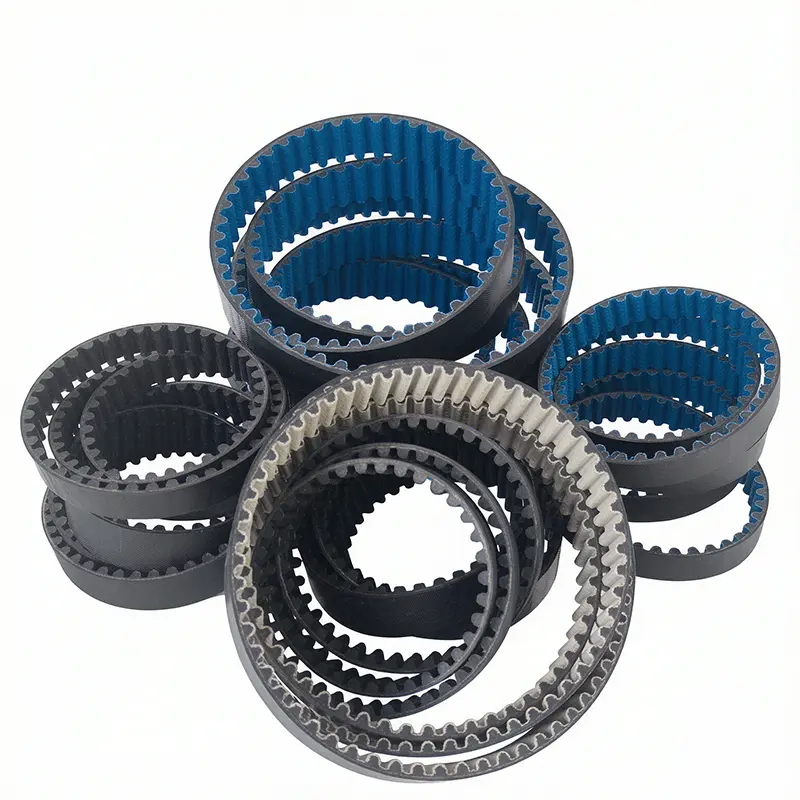
Material pricing rarely moves in a straight line. Two countertops with a similar color can land hundreds apart once you compare slab thickness, edge profiles, and whether the stone is quarried regionally or shipped from overseas. Even within the same wood species, a clear vertical-grain board carries a different cost than a knotty, rotary-cut panel, and that difference shows up in the final number before a single cut is made.
Construction choices often add more than the materials themselves. Ripping out an old substrate, leveling a floor that has settled, or re-routing plumbing inside a load-bearing wall turns a straightforward swap into a multi-trade job. Finishes with tighter tolerances, like large-format tile or flush baseboards, demand more prep and slower installation, so the quote climbs even when the square-meter price of the finish looks modest.
Contractors also price risk and rework into their numbers. A finish that is cheap to buy but unforgiving to install, such as a brittle porcelain panel or a high-gloss paint on imperfect drywall, can generate more labor cost than a pricier material that installs predictably. That is why quotes from different builders drift apart: one may see the material only, while another sees the hours, callbacks, and waste behind the same choice.
Overlooked Line Items That Swell the Final Invoice
A quote might list the main product at $4,850 and freight at $260, so the buyer approves it without much thought. The invoice that arrives later tacks on fuel adjustment, lift gate service, inside delivery, and a residential surcharge. None of those appeared in the original conversation. They sit in the bottom third of the page, small enough to ignore but large enough to push the total well past the approved amount.
Production-related fees are even easier to miss because they sound like ordinary parts of the job. A client sends artwork that needs resizing, then requests two proof rounds, then asks for split shipments to three locations. Each request feels minor at the time, but the final document reflects those decisions as separate line items. Storage after three days, crate disposal, and rush charges for a Friday afternoon approval all get added the same way.
The only dependable safeguard is to compare the original written quote against the final invoice line by line before paying. Whenever a charge appears under a vague label like service fee or logistics, asking for an itemized explanation usually shrinks or removes it. Most vendors will not volunteer that level of detail, but they rarely defend a loosely worded fee once a customer asks directly.
Buying Tactics That Lower Cost Without Cutting Quality
Smart procurement rarely starts with squeezing the vendor. More often, it begins with a hard look at the specs you actually need. The temptation is to over-engineer a purchase—adding features, tolerances, or service levels that sound impressive but drive up cost without changing the outcome. Pull the requirements back to what genuinely affects performance, and you often unlock a lower price tier without sacrificing the quality that matters. A supplier can usually meet a realistic target more cheaply than an inflated one, simply because they waste less material, time, and rework hitting unnecessary numbers.
Another angle is to renegotiate the package rather than the unit price. Ask for revisions to delivery schedules, minimum order quantities, payment terms, or bundling with other products you already buy. These levers lower the supplier's real cost to serve you, and a capable vendor will pass part of that saving along. Longer lead times, consolidated shipments, or accepting slightly plainer packaging can trim costs quietly while the product itself remains exactly what your operation needs.
Finally, build a track record of reliable forecasting and on-time payments, then use that trust to revisit pricing without demanding a discount up front. Suppliers protect their margins against unpredictable buyers. A buyer who shares accurate volume projections and never pushes back on fair invoices is worth a preferential rate. This kind of relationship-based concession feels less like a squeeze and more like a partnership, so quality controls stay intact while the total spend drifts down.
Maintenance Habits That Delay the Next Replacement
Most replacements happen long before they should because small maintenance tasks get skipped. Something as simple as rinsing a filter, tightening a loose connection, or wiping down seals after each use can add months or even years to a product’s life. The trick is to attach each quick task to an existing routine rather than treating it as a separate chore.
Pay attention to the sounds and smells that change over time. A belt that starts squeaking, a motor that hesitates, or a faint burning odor near vents usually signals a cheap fix that gets expensive if ignored. Catching those cues early keeps parts from wearing unevenly and spreading strain through the rest of the machine.
Rotating the load also helps. For anything with wheels, tires, or moving contact points, alternating positions and flipping cushions or mats prevents one side from breaking down first. Combined with occasional deep cleaning of areas that are hard to reach, these habits often keep an item running well past the average replacement window.
Finding the Break-Even Point Between Repair and Replacement
A repair bill rarely tells the whole story. The real question is whether the money spent now buys enough additional service life to beat the cost of a new unit spread over its full expected lifespan. Start by reducing both options to a cost-per-year figure: take the repair quote and divide it by the number of extra years the fix is realistically likely to last, then do the same for the replacement using its purchase price and expected service life. If the repaired item's annual cost creeps above the replacement's, the decision is already made—even if the upfront number looks smaller.
That simple calculation only works when you ignore what happens between the fix and the next failure. Older equipment tends to fail in clusters, so a single repair can quickly become a series of them. If each service call costs half the price of a new machine but keeps the equipment running for only a few months, the break-even point has already passed. Factor in lost output, emergency labor, higher energy draw, and the risk of a more serious breakdown, and replacement often becomes cheaper well before the repair bill matches the purchase price.
There is no universal percentage that works for every asset. A good rule of thumb is to compare the repair cost against the item's current market value and the remaining useful life it would have after the repair. If the repair costs more than the item is worth and extends its life by less than a year, the math points firmly toward replacement. For high-value equipment, a repair at 40–50% of replacement cost may still make sense if it reliably adds several years. Revisit the math whenever something breaks, because the break-even point shifts with age, condition, and the price of new alternatives.
FAQ
Usually it comes down to the tensile cord material, tooth profile, width, and whether the belt is made in small batches or a standard size. Fiberglass cords are cheaper, aramid or steel cords push the price up, and special backings or coatings add more manufacturing steps.
In most quotes, raw materials account for roughly 40 to 50 percent. Molding, curing, and cutting take another 20 to 30 percent, then quality checks, packaging, freight, and distributor margin fill the rest. Custom lengths and low-volume orders inflate the per-unit cost quickly.
Not always. A premium belt pays off when downtime is costly or the drive runs hot, dusty, or at high speed. For a lightly loaded standard drive, a mid-range belt with proper maintenance can be more cost-effective than an overspecified high-performance model.
Standardize on common widths and lengths, buy in larger quantities, and line up a supplier that keeps local stock. Also review the drive design: a slightly wider standard belt often costs less than a narrower custom profile with a premium cord.
Installation labor, alignment checks, tensioning, and unplanned downtime usually outweigh small price differences. A cheap belt that fails early can cost several times the purchase price in lost production and emergency repairs.
Yes. Checking tension and alignment, keeping pulleys clean, and replacing worn sprockets prevents uneven wear and sudden failures. Drives that run within recommended temperature and load limits get noticeably longer belt life.
Replacing just the belt looks cheaper, but worn pulleys or tensioners can shorten the new belt's life. On critical equipment, changing the full kit usually gives a better cost per operating hour because everything wears in together.
Conclusion
Industrial timing belt pricing rarely comes down to a single number on a quote. The base material, cord type, tooth profile, and tolerance class all interact in ways that can double or halve a price before volume discounts even appear. For example, a fiberglass-reinforced neoprene belt may look cheap at first, but if the drive runs hot or sees reversing loads, an aramid-reinforced polyurethane belt can last long enough to erase the upfront gap. Buyers also miss the smaller line items that inflate the final invoice: flanges, pulley machining, split shipping, minimum order charges, and packaging requirements often add more than the belt itself. Asking for a cost breakdown by material, labor, and logistics usually reveals which charges are negotiable and which are simply inherited from the design.
On the purchasing side, consolidating sizes and placing a blanket order for predictable usage tends to lower unit cost without asking for inferior materials. It also helps to avoid over-specifying a branded belt when a qualified equivalent meets the same dimensional and performance standards. Once the belts are installed, alignment and tension checks do more for total cost than most price negotiations, because a poorly tensioned belt wears pulleys and invites sudden downtime. The real savings decision is often repair versus replacement: a new belt on a worn pulley is a short-term fix, while replacing both together may cross the break-even point quickly when energy loss, labor, and unplanned stops are counted. In many plants, a scheduled replacement based on measured wear outpaces emergency buying by a wide margin.
Contact Us
Contact Person: Becky
Email: [email protected]
Tel/WhatsApp: 0086-15168665227
Website: https://www.sxbelts.com