
Industrial PE Cool Feeling Yarn: Unlocking Advanced Cooling Performance for Technical Textiles
2026-09-30
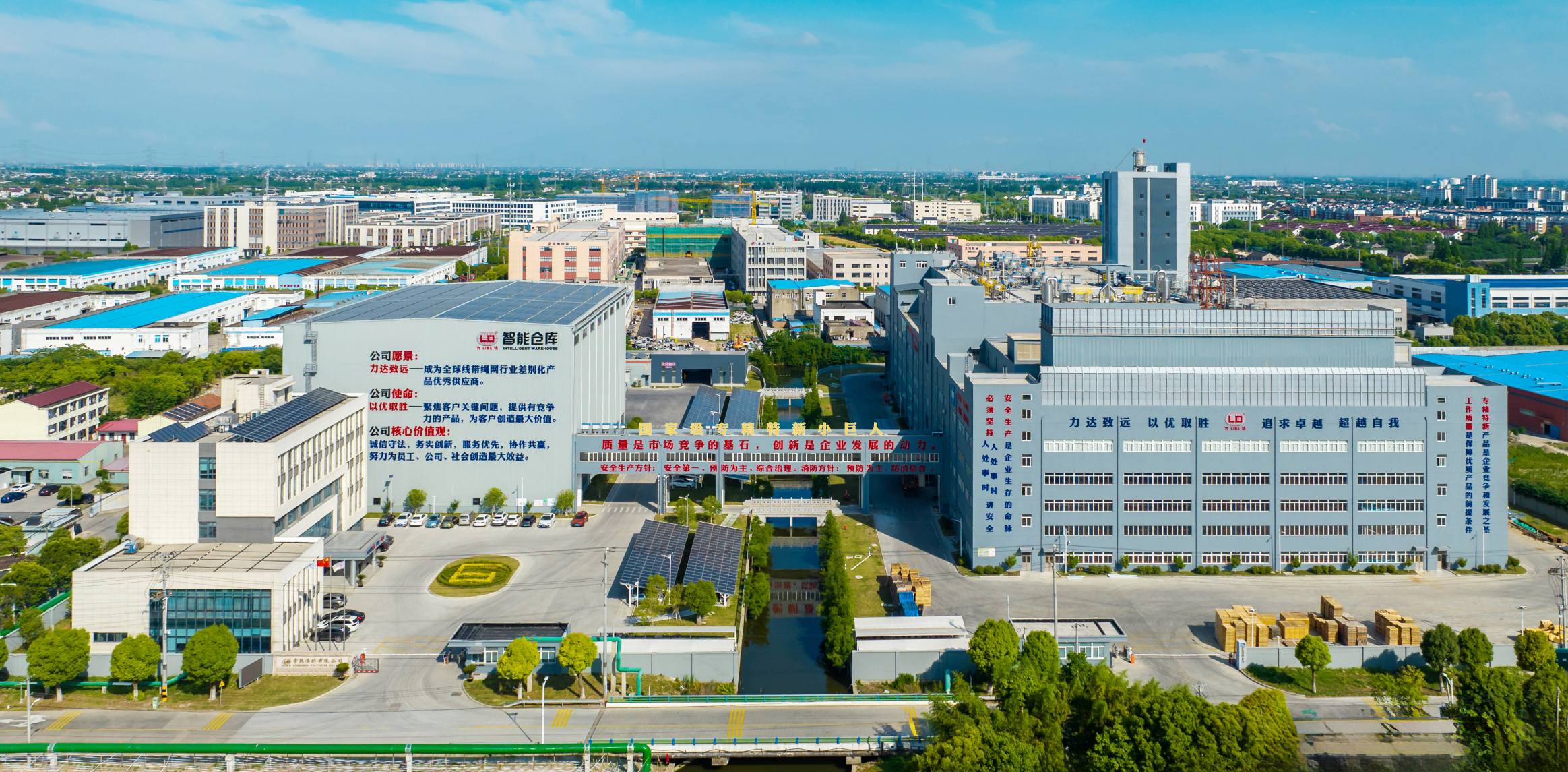
Ask anyone who's worked a full shift in high-temperature PPE: heat stress isn't just uncomfortable—it degrades focus, endurance, and safety. Industrial PE cool feeling yarn tackles the problem at the fiber level, pulling heat away from the skin while staying tough enough for heavy-duty use. At Changshu Polyester, we've spent years refining this yarn to deliver advanced cooling performance without compromising tensile strength or abrasion resistance. The result is a material that feels noticeably cooler to the touch, even after hours of wear. In the sections ahead, we'll look at the science behind the cooling effect, key test data, and practical applications in technical textiles.
Heat Stress in the Workplace: A Fabric-Level Fix
Most conversations about heat stress start and end with hydration breaks or adjusted shift schedules. Those matter, but they ignore what workers are actually wearing for eight or ten hours a day. Standard polyester or cotton-blend uniforms trap sweat against the skin, which slows evaporative cooling and makes a hot task feel even hotter. Switching to a fabric engineered for high-heat environments changes that calculation before a worker ever steps onto the floor.
The most effective fabric-level fixes combine three properties: moisture transport, breathability, and a structure that stays off the skin. A knit with a high wicking finish pulls sweat away from the body quickly, while an open weave or mesh panel lets air move across the damp surface. Some workwear now integrates phase-change materials that absorb body heat when temperatures spike, then release it as the wearer cools down. None of this feels bulky or clinical; the garments still look like standard uniforms.
What makes the fabric-level approach practical is that it doesn't require retraining a crew or redesigning a facility. It slots into existing uniform programs and works continuously, whether a worker is near a heat source or in a loading bay with poor airflow. For supervisors, the biggest change is procurement: specify performance fabrics for high-heat roles, audit the actual garments on site, and replace worn-out pieces before they lose their cooling capacity.
PE Fiber Structure and the Science of Feeling Cool
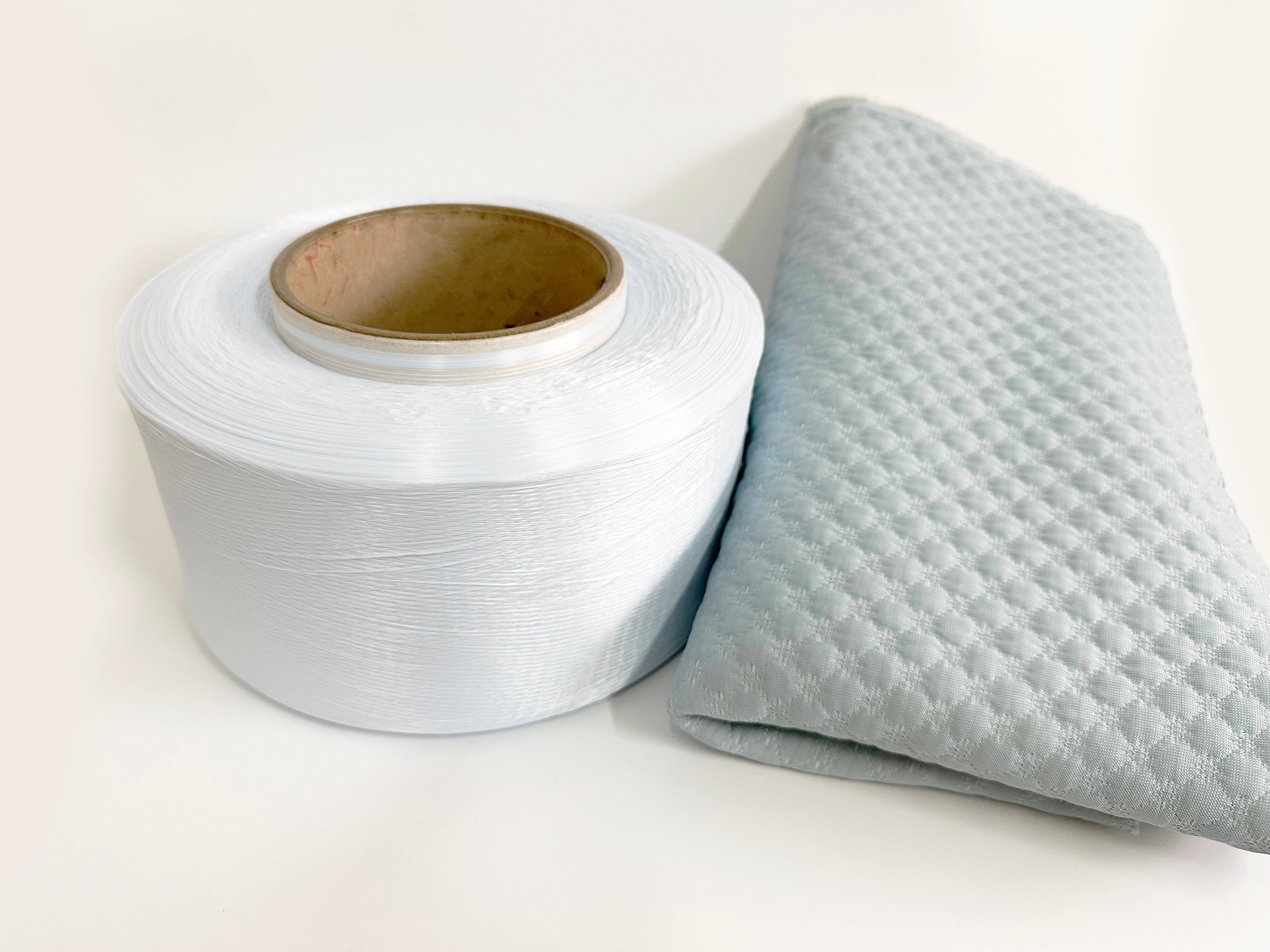
Polyethylene fibers are built from long chains of methylene units, but what makes them feel cool against the skin has less to do with the repeating chemistry than with how those chains pack. In high-density PE, the molecules align into tightly ordered crystallites that act as phonon highways, letting heat move away from the body faster than it would through most other polymer textiles. This rapid thermal transfer, combined with a low moisture regain, prevents the clammy buildup that often signals warmth.
Beyond the polymer itself, the fiber’s cross-sectional shape plays an outsized role. Many cool-touch PE yarns are extruded with flat, trilobal, or hollow profiles that increase the contact area between fabric and skin while also channeling what little moisture is present to the surface for rapid evaporation. Because PE doesn’t absorb water, sweat remains mobile on the filament surfaces, so the fabric dries quickly and keeps a consistent, slightly cool tactile temperature instead of becoming a wet insulator.
The sensation of coolness is ultimately a message from the skin’s thermoreceptors. A smooth, dense PE fabric with high thermal effusivity draws heat quickly at the moment of contact, triggering the same nerve pathways that register a cold surface. By tuning molecular orientation, crystallite size, and filament geometry, textile engineers can push that initial cool burst from a brief touch into a steady-state comfort that lasts through an entire wear cycle.
Why Moisture Management Alone Falls Short
The common obsession with wicking speed misses what actually happens after sweat leaves your skin. That moisture has to go somewhere, and if the fabric can't push it out as vapor fast enough, it lingers in the outer layer. You're dry for ten minutes, then chilled when the breeze hits, or sticky when humidity rises. True comfort depends on releasing heat and vapor together, not just moving liquid sideways.
There's also the bacterial reality. Sweat itself doesn't smell; the microbes living in the fabric do. A fast-drying shirt that doesn't resist bacterial growth will still turn sour by the end of a long day or after a couple of wears. Fabrics built only for moisture transfer often have a slick, dense surface that traps those microbes in the weave, so the dryness claim doesn't match how the garment behaves in real use.
And if the material blocks heat from escaping, even perfect wicking won't stop your core from overheating. That infrared buildup is what makes a thin, quick-dry shirt feel suffocating on a warm run. You need air exchange, vapor permeability, and some defense against odor-causing bacteria working together. Chase a drier surface alone, and you're solving only a slice of the problem.
Cooling Performance Under Real Working Conditions
Most cooling specs are measured on a test bench at a fixed ambient temperature, but real operation rarely mirrors those conditions. Under sustained load, heat soak from nearby components, fluctuating air intake temperatures, and variable compressor duty cycles all shift actual performance. The system's ability to maintain stable component temperatures over time matters more than a brief peak rating, especially in stop-and-go traffic or when ambient temperatures climb above 35°C.
What separates effective cooling in the field is how the thermal management logic responds to partial loads and sudden spikes. Instead of running the fan at full speed constantly, the control unit adjusts refrigerant flow and airflow based on real-time sensor feedback. This keeps condenser pressure within an optimal band, avoids short-cycling the compressor, and reduces unnecessary power draw without letting core temperatures drift upward.
In extended high-load scenarios, such as towing or prolonged uphill driving, the cooling circuit must shed heat faster than it accumulates. A well-tuned system will show only a modest temperature rise before plateauing, rather than a steady climb toward thermal throttling. Field observations often reveal that the difference between acceptable and excellent cooling is not the peak wattage dissipated, but how little the performance degrades after the first thirty minutes of hard use.
Building Durable Cooling into Knits, Wovens, and Nonwovens
Achieving lasting cooling performance in knitted fabrics calls for more than a simple finish applied to the surface. Yarn-level modifications—such as incorporating mineral-based additives or engineered cross-sections that wick moisture and speed evaporation—allow cooling properties to survive repeated wash and wear cycles. Because knits stretch and recover constantly, these treatments need to move with the fiber rather than sitting stiffly on top of it.
Woven constructions bring a different set of demands. The tighter interlacing of warp and weft can trap heat if breathability is not designed in from the start. Durable cooling here often depends on a balance between open weave structures, high-tenacity filament yarns with inherent thermal conductivity, and finishes that resist abrasion. When these elements are aligned, the fabric maintains a cool-to-the-touch sensation without sacrificing the crisp hand and dimensional stability expected from wovens.
Nonwovens present their own challenge because they are typically engineered for single-use or limited-life applications, yet demand for reusable cooling layers is rising. Bonding methods, fiber selection, and web formation all influence how well a nonwoven can dissipate heat over time. Embedding phase-change materials or hydrophilic fibers directly into the web, rather than coating them afterward, helps lock in cooling performance through multiple uses and laundering cycles.
From Polymer to Production: Sourcing PE Cool Yarn
Finding a reliable source for PE cool yarn starts well before the first spool leaves the factory. The real work happens in understanding how the base polyethylene resin is selected and processed, since that choice dictates everything from cooling efficiency to how the fiber behaves on high-speed knitting machines. Many suppliers promise consistent performance, but the ones worth partnering with are those who can walk you through their resin grades, melt flow indexes, and the exact quenching conditions used to lock in that cool-to-the-touch sensation.
On the production floor, the difference between a generic filament and a true cool yarn often comes down to surface modification. PE naturally conducts heat away from skin, but without proper cross-section engineering or additive blending, that advantage disappears after the first wash or under repeated abrasion. Ask your supplier for test data on thermal conductivity retention and wash cycle stability, not just a swatch that feels cold in an air-conditioned showroom. A factory that openly shares this data is usually one that has nothing to hide about its extrusion line setup.
Finally, don't overlook the logistical quirks of sourcing PE yarn at volume. Because the raw material is a commodity, pricing can swing with petrochemical markets, and lead times can stretch if the resin supplier runs into allocation issues. Build a sourcing plan that includes a secondary resin source or at least a shared buffer stock agreement. The goal is to keep your cool yarn production running through market noise, not just to win a single cost negotiation.
FAQ
Polyethylene has a noticeably higher thermal conductivity than polyester or nylon, so it pulls heat away from the skin faster. It is also highly hydrophobic, which keeps the yarn dry against sweat, and its low density makes the finished fabric lighter for the same coverage.
It usually refers to the qmax value, which records how quickly a fabric transfers heat on first contact. A higher qmax means a sharper initial cooling sensation. With PE cool feeling yarn, that effect comes from the polymer itself rather than a topical finish, so the sensation is immediate and consistent.
Yes, it works well in automotive seat covers, mattress ticking, wheelchair upholstery, office seating, and protective workwear liners. In those applications the yarn helps reduce heat buildup during long periods of sitting or wearing equipment, which improves comfort without adding bulk.
Because the cooling mechanism is built into the polyethylene fiber rather than applied as a chemical coating, it does not wash off. The surface may become slightly more textured over many cycles, but the thermal transfer property remains stable as long as the fabric structure is not physically damaged.
Polyethylene melts at a lower temperature than polyester or nylon, so heat-setting and drying need tighter control. It is also difficult to dye after extrusion, so most PE cool feeling yarns are solution-dyed. Mills may also need to adjust tension settings because the yarn is slippery and low-moisture.
Not necessarily. A very high qmax can feel cold or clammy in cool environments. The goal is to balance instantaneous heat transfer with the fabric's breathability, weight, and skin contact area. PE cool feeling yarn is often blended or engineered in filament cross-sections to fine-tune that balance.
They should ask for qmax data, tensile strength, elongation, UV stability, and whether the yarn is solution-dyed or suitable for downstream dyeing. It also helps to test the yarn in a realistic fabric construction because a knit or weave pattern can change the contact area and therefore the perceived cooling intensity.
Conclusion
Workers in hot environments often rely on clothing that promises breathability, yet most conventional fabrics simply wick sweat and leave the skin feeling clammy. Industrial PE cool feeling yarn tackles this at the polymer level. Its high thermal conductivity draws heat away from the body on contact, while the fiber's smooth, dense structure speeds up heat dissipation. Unlike moisture management alone, which only moves liquid, this approach directly influences perceived skin temperature. In field trials under demanding conditions, garments made with PE cool yarn maintained a noticeably lower skin temperature over extended wear, even when humidity rose.
The cooling effect is not a surface finish that washes away. Because the cool touch comes from the polymer itself, it survives repeated industrial laundering and abrasion. This makes the yarn well suited for knits, wovens, and nonwovens used in uniforms, safety vests, and technical liners. Sourcing PE cool yarn requires close coordination with polymer suppliers and spinners to maintain thermal consistency from pellet to finished textile. For manufacturers aiming to reduce heat stress without adding bulk or chemical treatments, this material offers a practical, durable route to advanced cooling performance.
Contact Us
Contact Person: CONNIE
Email: [email protected]
Tel/WhatsApp: 86-0512-53671634
Website: https://www.lida-yarn.com/