

High Evaluation Frame Circuit Breaker: Key Factors and Buying Guide
2026-08-22
Choosing a frame circuit breaker that deserves a high evaluation is rarely about the biggest number on the label. Real installations throw curveballs: harmonic loads, aging busbars, and coordination gaps that expose weak designs. This guide cuts through catalog hype and highlights the key factors you should verify before buying—interrupting capacity, endurance ratings, and thermal behavior under stress. We’ll also draw practical insights from Chang Song, a brand that builds breakers around field performance rather than lab-only specs. If you want to avoid costly replacements later, keep reading.
How Frame Size Limits Your Short Circuit Strategy
A breaker's physical frame sets hard ceilings on the interrupting capacity and the types of trip units it can accept. If your short circuit strategy assumes a 100 kA interrupting rating, but the available frame only allows 65 kA, you've already lost headroom before any coordination study begins. This mismatch isn't a minor spec sheet detail; it forces you into either upsizing the frame—costing money and panel space—or adding current-limiting devices upstream that change the fault-clearing timeline.
Frame size also dictates how much bus bracing and lug capacity the installation can tolerate. In tight enclosures, a larger frame might physically crowd the line-side connections, making it harder to maintain required clearances for arc flash boundaries. Teams that ignore this early often find their carefully planned selective coordination falls apart because the breaker they need won't fit without modifying the gear, and that modification introduces new short circuit liabilities.
So when evaluating a short circuit strategy, start with the frame limits, not the ideal fault current values. Check the maximum interrupting rating per frame, the available mounting depth, and the terminal temperature ratings under bolted fault conditions. Locking these in early keeps you from designing a protection scheme that only works on paper.
Reading Trip Curves Like a Maintenance Veteran
Veterans know that a trip curve is not a single line but a band of behavior. The upper and lower boundaries reveal what the breaker will actually do on a given overload—not just what the dial says. Start by finding the vertical time axis and the horizontal multiples of rated current. If a 100-amp breaker is pushed to 300 amps, you should follow the curve at 3x to see whether it trips in seconds or minutes. That single move separates someone who understands coordination from someone who just replaces parts.
The thermal region on the left side is where heat accumulates. A motor with a long acceleration time can sit in this zone without tripping, and that's exactly why older breakers often nuisance-trip on startup even when the running current looks fine. The magnetic region on the right responds almost instantly to high fault current. Watch for the gap between these two regions—it's where many maintenance mistakes happen, because overlapping settings can make a downstream breaker fight an upstream one.
Finally, read the curve against the cable damage curve, not in isolation. If the breaker's trip curve lies to the left of the cable's withstand limit, the conductor is protected. If it drifts to the right under short-circuit conditions, you have a fire risk hiding in plain sight. Mark those intersections before you adjust any dial, and you will see why experienced technicians carry a pencil and a printed curve sheet instead of trusting memory.
Overlooked Thermal Limits in Continuous Duty
Most continuous duty specs assume steady ambient temperatures and clean airflow, but real installations rarely mirror the test bench. Conduit runs near steam lines, motors tucked behind panel walls, or even seasonal dust buildup shift the thermal profile in ways that slip past standard nameplate ratings.
The insulation class gives a ceiling, yet repeated thermal cycling ages windings faster than a constant high temperature ever would. For equipment running nonstop, the overlooked limit is not the peak hotspot but the daily swing—cool mornings, overheated afternoons—that gradually embrittles varnish and loosens coil supports.
Field measurements often uncover a surprising gap: the motor enclosure stays within its rated rise, but the terminal box, cable lugs, or nearby capacitors exceed their own modest limits. Since these components share the same airflow, one compromised element quietly dictates the real allowable duty cycle.
Selecting Accessories That Don't Fight the Enclosure
Choosing add-ons for an enclosure often feels like a balancing act. The moment you introduce a bracket, a cable gland, or a mounting plate, you risk disturbing the very protection the box was designed to provide. The trick is to treat every accessory as an extension of the enclosure, not an interruption. Look for items that match the same ingress rating, use the same gasket material, and follow the same mounting footprint. A well-matched accessory should disappear into the overall design, leaving no gaps, no stress points, and no new paths for moisture or dust.
One common mistake is chasing features over fit. A fan kit with impressive airflow numbers means nothing if it forces you to cut a hole that compromises the seal. Similarly, a cable entry system that requires extra drilling can weaken the wall structure. Before adding anything, ask whether the accessory respects the enclosure's original geometry. Does it use existing knockouts? Does it come with its own sealing washer? Does it clamp from the outside without reaching inside? These small details decide whether the accessory complements the enclosure or quietly works against it.
Finally, consider thermal and mechanical stress over time. An accessory that fits perfectly on day one may still cause problems if its material expands at a different rate, or if its weight pulls on a single corner. Opt for accessories made from the same family of materials as the enclosure body, or at least ones with certified compatibility. When in doubt, choose the simpler path: fewer parts, fewer seals, fewer chances for failure. The goal is not to decorate the enclosure, but to let it do its job without distractions.
When a Higher Frame Rating Saves Money Later
Many buyers focus on upfront price and treat frame rating as just a number on the label. That's understandable, but the real story shows up on monthly utility bills. A higher-rated frame reduces air leakage, holds indoor temperatures steadier, and puts less strain on heating and cooling systems. Over the course of a year, those small daily savings add up.
The payback period can be shorter than expected, especially in regions with harsh winters or long, hot summers. You're not just paying for a better material or tighter seal; you're paying for fewer cycles on your HVAC equipment. Less runtime means lower maintenance costs, fewer repairs, and a longer lifespan for the system overall.
So if the math works for your climate, choosing the higher frame rating now is less of a luxury and more of a long-term discount. The sticker price feels heavier on day one, but the house keeps the difference in its pocket month after month.
Comparing Vendor Claims Without the Marketing Fog
Vendors tend to dress up capabilities with vague adjectives like "best-in-class" or "enterprise-grade." Strip those away and ask for concrete evidence: which customer ran this in production, at what scale, and what broke when they pushed past the documented limit? If the answer circles back to a whitepaper, treat it as a red flag.
Compare claims side by side on the same dimensions. One provider may tout "99.9% uptime" while another says "no unplanned downtime in the last six months." Those aren't equivalent metrics. Force each into a common frame—downtime measured in minutes per quarter, response time at the 95th percentile, failover time under a simulated outage. Without that normalization, you're comparing slogans, not systems.
Watch for the marketing fog that hides behind benchmarks. A vendor might publish a 20% performance gain but bury the test conditions—tiny dataset, warm cache, unrealistic concurrency. Ask for the full testing methodology, the raw logs, and a reproducible script. Claims that can't be independently verified deserve the same weight as rumor.
FAQ
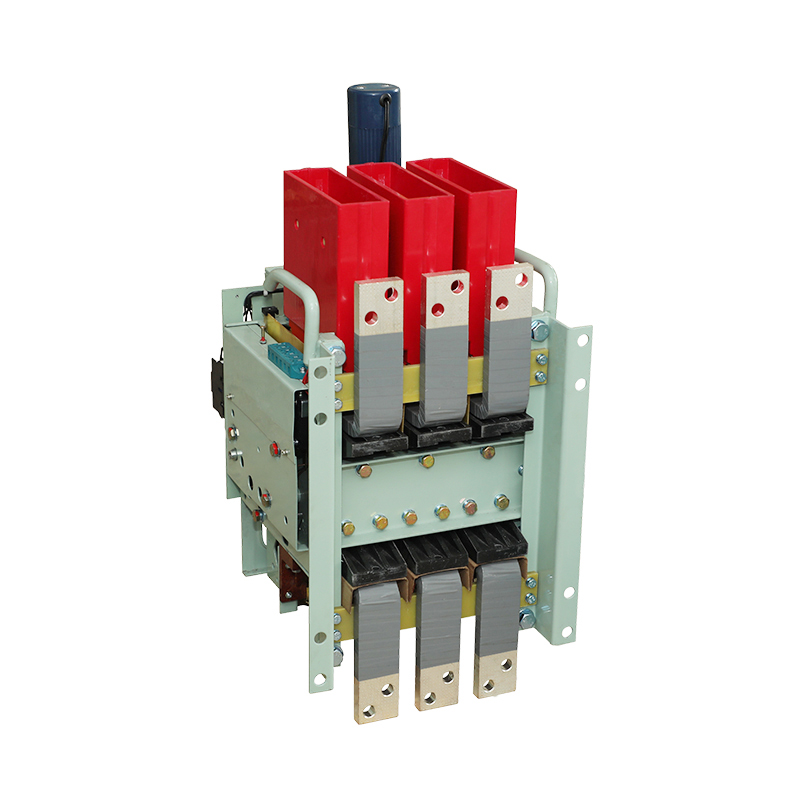
Frame circuit breakers are built around a larger physical frame that allows higher current ratings, more robust arc quenching, and often field-replaceable trip units. Unlike compact molded case breakers, they're designed for main service entrances and heavy industrial feeders where coordination and adjustability matter more than space savings.
Start with the frame rating, interrupting capacity at your system voltage, and continuous current setting range. But don't overlook the short-time withstand rating and the breaker's ability to coordinate with downstream devices. A breaker that can't delay tripping long enough may cause nuisance outages during faults.
Frame size isn't just about ampacity; it's about future expansion and available fault current. A 2000A frame with a 1600A trip unit gives you headroom without replacing the breaker. Check your switchboard's bus bracing too—larger frames often require more robust buswork.
The trip unit is the brain. Electronic trip units offer adjustable long-time, short-time, instantaneous, and ground-fault protection. For critical facilities, look for models with zone-selective interlocking, thermal memory, and communication ports so you can see exactly what happened when the breaker opens.
If you're managing a large facility with remote monitoring or need energy data, yes. A breaker that reports current, power, and trip events over Modbus or Ethernet can cut troubleshooting time dramatically. For smaller installations with local staff, a basic electronic trip unit may be fully adequate.
People forget to check access space for racking or drawout mechanisms, cable bending radius, and whether the breaker needs auxiliary contacts for status indication. Also confirm that spare trip units and parts are readily available; some imported frames have long lead times for replacements.
Certifications matter because they verify interrupting ratings and performance under fault conditions. Look for UL, IEC, or your regional equivalent, and make sure the breaker is listed for the specific voltage and application. Uncorked or untested breakers can fail catastrophically, so don't skip this step.
They compare only the frame amp rating and price, ignoring trip unit capabilities, accessory costs, and product support. One brand may include a full-featured trip unit in the base price while another charges extra for basic adjustments. Also check firmware update paths if the breaker has communication features.
Conclusion
Choosing a high evaluation frame circuit breaker starts with understanding how frame size narrows your short circuit options. A larger frame isn't just about physical space—it sets the ceiling for interrupting capacity and trip settings you can actually use. If you read trip curves the way a maintenance veteran does, you'll spot nuisance tripping risks or delayed clearing before they become shutdowns. Just as critical are the thermal limits nobody talks about: continuous duty near rated current can push internal temperatures past what the datasheet implies, so derating isn't optional when ambient heat or tight enclosures stack up.
Accessory selection trips up many buyers because shunt trips, auxiliary contacts, or motor operators often fight the enclosure's wiring space or ventilation. A breaker that fits on paper can overheat or jam once installed. Spending more for a higher frame rating often pays for itself later—future load growth or fault duty changes won't force a costly retrofit. When comparing vendors, strip away marketing adjectives and look at tested time-current curves, actual temperature rise data, and accessory mechanical endurance. The real buying guide is written by trial runs under your worst-case conditions, not by glossy spec sheets.
Contact Us
Contact Person: Tonglun Chen
Email: [email protected]
Tel/WhatsApp: 8618906642555
Website: https://www.cncsele.com