

Heat Resistant Conveyor Belt Company Qualities That Ensure Reliable Performance in High Temperature Applications
2026-11-22
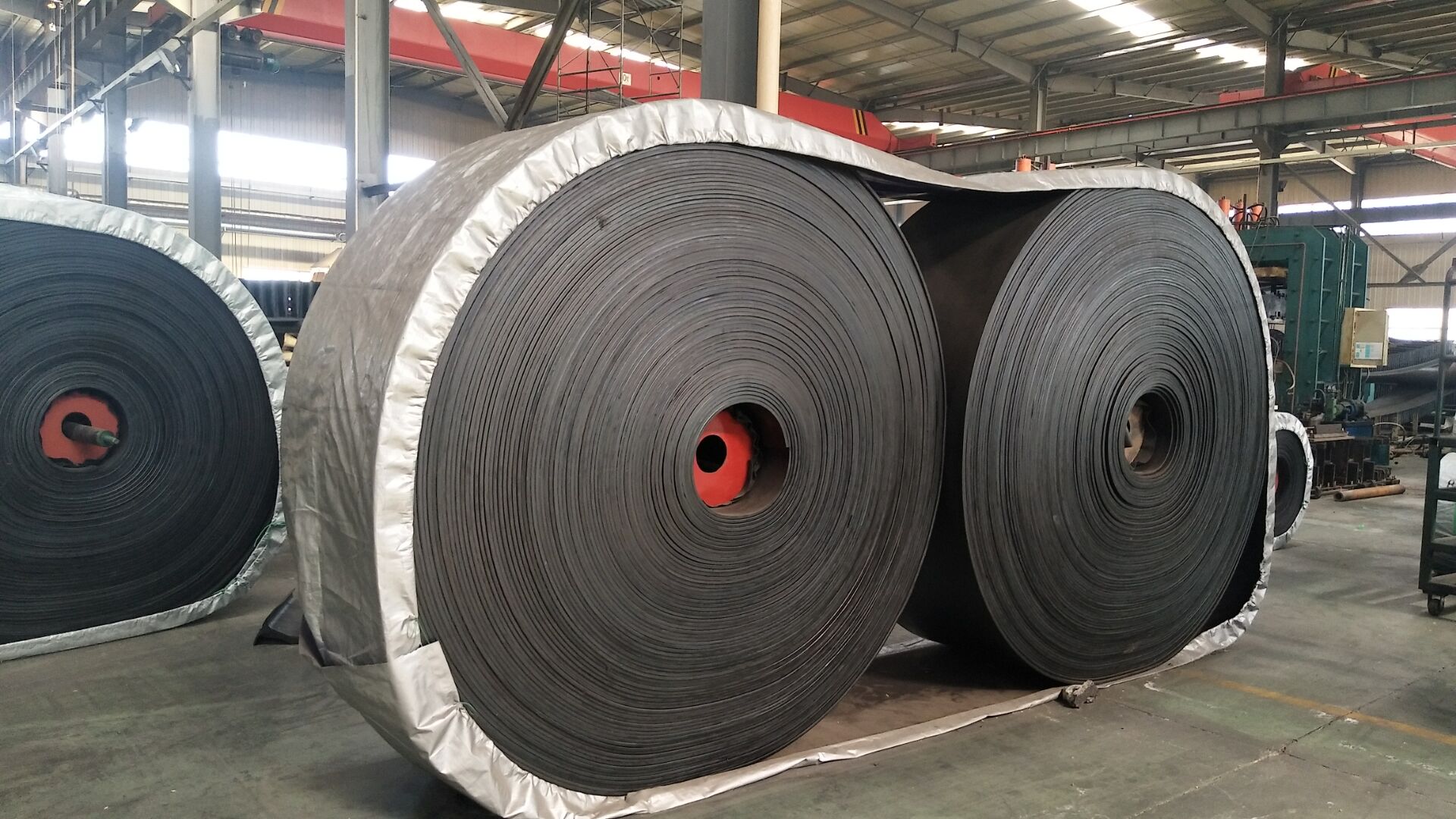
Not every conveyor belt that claims heat resistance can hold up when temperatures climb. In high-temperature environments, small weaknesses in rubber compounds, adhesion layers, and splice strength quickly become costly failures. This article breaks down the qualities that separate truly dependable heat resistant conveyor belts from the rest—and why YUFENG builds its reputation around them.
Material Selection That Determines Survival at Continuous High Heat
Continuous high heat does not simply test how much temperature a metal can endure before it softens. It punishes materials through cyclic expansion, oxidation at grain boundaries, and slow deformation under load. A refractory alloy that survives a short furnace spike may fail within days if its surface oxide cannot remain stable and adherent. Choosing the right option starts with understanding that the hot face is not the entire story; the substrate behind it, the joint design, and the thermal gradient all decide whether a part holds shape or quietly pulls itself apart.
For long-duration exposure, melting point becomes less important than creep resistance and microstructural stability. Nickel-based superalloys, certain stainless grades, and ceramics like silicon carbide are often considered, but each brings trade-offs. A material with excellent high-temperature strength may be brittle at room temperature or difficult to form. Others may resist oxidation only in a narrow atmosphere. The practical choice often falls to materials that develop a protective scale, such as alumina or chromia formers, because a thin, self-healing oxide layer can do more for survival than an extra few hundred degrees of melting range.
Thermal expansion is another quiet killer. In assemblies that cycle between idle and full load, mismatched expansion rates concentrate stress at welds and fasteners long before any metal actually melts. This is why material selection cannot be separated from the surrounding design. The part that survives continuous high heat is rarely the one with the highest temperature rating on paper; it is the one whose oxide behavior, creep rate, and expansion response all remain predictable over thousands of hours in the specific atmosphere it actually sees.
How Thermal Expansion Is Managed Before It Causes Downtime
Most sites treat thermal growth as a design problem and leave it there, but the plants that stay online treat it as an operating rhythm. Pipe shoes are marked with cold and hot position targets, and operators log movement against those references during start-up instead of waiting for a leak or a cracked anchor. On pumps and compressors, alignment is checked cold with a calculated offset, then rechecked once the casing reaches normal temperature; if the actual movement drifts from the predicted envelope, the root cause is chased before it becomes a coupling failure.
Expansion joints and loops absorb the obvious axial movement, but the damage usually shows up in places nobody expected: a riser pulling against a corroded guide, a steam tracing line stiffening a drain leg, or a heat exchanger nozzle taking load from a misaligned support. Walking the line with an infrared camera during warm-up reveals where restraint is uneven. Some crews also use simple dial indicators on critical flanges to catch small rotations that would otherwise be invisible.
The last safeguard is procedure, not hardware. Warm-up and cool-down rates are kept slow enough that the metal can expand as a unit, and drains are opened before steam reaches cold piping. These routines feel conservative until a sudden temperature swing shows which anchors were already on the edge. The goal isn't to eliminate movement—it's to know exactly where it goes and prove that nothing is fighting it.
Testing Methods That Replicate the Toughest Kiln and Furnace Conditions
The most useful high-temperature tests don’t just chase a single peak reading. They stage the same failure sequence a lining sees in service: load applied while temperature climbs, then a sharp quench that pulls the surface into tension, then repeated cycles until microcracks join into a visible network. One setup runs pre-notched bars through a 300°C-to-1480°C cycle under four-point bending, recording when the first crack opens and how far it travels before the sample loses stiffness.
Atmosphere gets equal attention because hot-face wear is rarely a pure heat problem. Test chambers are spiked with steam, carbon monoxide, sulfur vapor, or alkali salts to mimic what drifts off the charge in a rotary kiln or glass tank. Some rigs alternate oxidizing and reducing gas every few minutes while holding a thermal gradient across the sample, which reproduces the layered spalling seen on real burner blocks far more closely than a steady soak in air ever does.
After exposure, the real reading comes from how damage changes the material’s voice. A tapped sample that rings clear has kept its elastic bond; a dull thud usually means internal cracking. Ultrasonic pulse velocity, resonant frequency, and cross-section mapping are paired with the load-deflection curve to separate surface erosion from structural fatigue. The pass mark is tied to a reference panel taken from a working kiln, not simply to a room-temperature specification.
Custom Compound Blends for Cement, Steel, and Power Applications
Blending a compound for a cement kiln is rarely a matter of pulling a standard sack off the shelf. The raw meal chemistry shifts from quarry to quarry, the fuel mix changes with cost and availability, and the burner pipe wears differently after every outage. A practical custom blend has to account for those variables—adjusting particle size distribution to keep the meal flowing evenly into the preheater, tweaking alkali-sulfur ratios to reduce build-ups in the cyclone, or adding a small dose of a grinding aid that works with the local clinker hardness rather than against it.
Steelmaking calls for a different kind of precision. Ladle and tundish powders, synthetic slags, and injection compounds all have to match the specific scrap mix, refractory lining, and casting speed of a given shop. A blend that traps inclusions well on one caster may create too much crust on another. In power stations, the issues often center on fuel handling and ash behavior—conditioning agents that keep high-moisture coal or petcoke from plugging bunkers, or additives that shift ash fusion temperatures downward just enough to avoid slagging in a boiler that runs hotter than its original design.
What makes these blends work is the back-and-forth between plant people and the blending lab. A useful starting formula comes from a site sample, not a brochure. The first trial usually does half the job; the second and third trials dial in the dose rate, feed point, and particle size until the operators stop noticing the material and simply see steadier kiln operation, cleaner steel, or fewer boiler shutdowns. That kind of quiet consistency is the actual deliverable.
Failure Reviews That Turn Heat-Related Breakdowns Into Design Upgrades
A heat-related breakdown rarely starts where it finally shows up. The cracked solder joint or bulging capacitor is usually the last symptom in a longer thermal chain, and a useful review works backward from that point. Instead of stopping at the failed part, it asks which surface got hotter than the simulation predicted, which material fatigued first, and what was different between bench testing and a hot afternoon in the field. Once the full path from ambient temperature to failure site is mapped, the design changes stop being guesses.
The reviews that actually lead to hardware improvements push for small, measurable details rather than vague complaints like the enclosure runs hot. Record the soak time before shutdown, the temperature drop across a thermal interface, or the fan speed loss when intake vents begin to clog. Those specifics make it possible to compare one failure against another and spot repeating weaknesses. A board that dies after thirty minutes at forty-five degrees Celsius points to a different corrective action than one that survives for hours at sixty before a junction temperature limiter trips.
Over time, those documented failures turn into a forward-looking design checklist. Past heat problems set margin targets for new layouts, connector placement, and airflow paths. A team that keeps this record starts derating parts before a prototype ever reaches the thermal chamber, and it catches bottlenecks in schematic and layout reviews instead of in returned units. That shift from hunting breakdowns to preempting them is what makes a failure review read like a design upgrade rather than an incident report.
On-Site Support That Keeps Hot Material Lines Running Without Interruption
When a heated transfer line starts losing temperature in the middle of a production run, waiting for a call-back is not an option. Our field crews carry the diagnostic tools and replacement heating cable, controllers, and insulation jackets needed to identify a failing circuit and make the repair while the line is still charged. That means no draining, no solidifying product, and no scramble to find a contractor who may not understand the thermal requirements.
The work usually begins with a full thermal profile of the line rather than a quick reset of a tripped breaker. Technicians check amp draws against design values, scan joints and termination points for hot spots, and look for signs of moisture ingress or damaged cladding that often hide behind a temporary fix. Once the root cause is found, the repair is made with materials matched to the original heat-trace specification, then verified under load before the crew leaves.
Because hot material lines rarely fail at a convenient time, support is structured around short-notice dispatch and stocked service vans. The goal is not just to restore power to the heating system, but to leave the line thermally stable so operators can keep product moving without accepting reduced flow rates or risky temperature dips.
FAQ
A dependable supplier usually talks in specifics: the compounds they use, the test temperatures they simulate, and how their covers behave after sustained exposure. They will ask about your material temperature, load weight, and whether the heat is constant or intermittent rather than offering a one-size-fits-all belt.
Heat accelerates oxidation and hardening in the rubber cover, which leads to cracking and loss of flexibility. The fabric or steel carcass can also degrade if the cover fails, so the belt may look intact on the outside while the internal strength is disappearing.
Thickness adds mass but does not solve how the surface handles heat. A well-chosen compound can stay flexible and resist cracking at the same temperature where a thicker standard cover would turn brittle. The compound is what contacts the hot material and protects the carcass.
Look for shared test data under conditions that match your process: actual material temperature, load, and run time. A company worth trusting will explain the difference between short-term peak temperature and continuous operating temperature, and they will not hide behind vague ratings.
The most common weak points are the cover surface and the splice areas. Cracks often appear where the belt flexes around pulleys or where hot material sits for long stretches. Edge damage is also frequent if the belt width is not matched to the material spread.
Good support shows up as installation guidance, splice recommendations, and follow-up inspections. A reliable company will help you track wear patterns and adjust tension or skirting instead of just selling a replacement when the belt breaks down.
Handling hot clinker, sinter, or castings means the top cover must resist heat transfer into the carcass quickly. High ambient temperature in a plant is different: it requires the whole belt, including edges and lower cover, to endure a hot environment over long periods without hardening.
It makes sense once the surface temperature of the material exceeds what a standard grade can handle without cracking, or when you notice covers becoming hard, glossy, or cracked well before the expected service life. Shifting early is usually cheaper than repeated downtime.
Conclusion
A heat resistant conveyor belt company earns its reputation long before the belt reaches the line. The first differentiator is material selection: cover compounds built around EPDM, SBR, or chlorobutyl are chosen not for the data sheet alone, but for how they hold up under sustained exposure to clinker, sinter, and sharp-edged hot fines. Just as important is the company's handling of thermal expansion. Rather than waiting for stretch, edge curl, or tracking drift to interrupt production, strong suppliers engineer carcass tensions and breaker plies so the belt keeps its shape from first heat soak onward. Their lab work is equally telling; reliable partners use cycle testing that mirrors real kiln and furnace swings, including hot spikes, cooling rests, and abrasive load simulation instead of relying on a single oven rating.
The same companies tend to treat compounding as application-specific work. Cement, steel, and power each present different heat profiles, so the blend is adjusted for hot clinker impact, slab scale, or fly ash rather than sold as one generic high-temperature belt. When a failure does occur, the response separates strong suppliers from the rest: they conduct tear-down reviews that trace cracking, delamination, or cover hardening back to a design variable and then revise the compound or reinforcement. That loop feeds directly into field service. Their engineers carry temperature readings and tracking observations from the line, recommend skirt adjustments or chute refinements, and stay involved until the hot material line runs steadily again.
Contact Us
Contact Person: Jayce
Email: [email protected]
Tel/WhatsApp: 8615318787602
Website: https://www.yuphengbelt.com/