
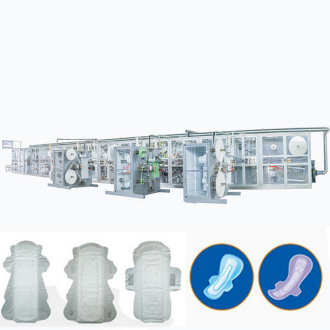
Full Servo Baby Diaper Production Line: Boost Efficiency and Precision
2026-07-06
In the fast-paced world of hygiene product manufacturing, every second counts. A fully servo-driven production line isn’t just a technical upgrade—it’s the difference between lagging behind and leading the market. When precision meets raw speed in baby diaper production, even microscopic inefficiencies can magnify into costly bottlenecks. That’s why forward-thinking manufacturers are turning to smarter automation, and Womeng stands at the heart of this shift. Imagine a system where motion control is so seamless that material waste drops by double digits while output climbs—without compromising the gentle touch every baby deserves. This is the promise of full servo technology, and it’s reshaping how we think about diaper machinery.
Servo Precision Beyond Standard Automation
Most automation systems stop at "good enough," but our servo-driven approach redefines what's achievable. By merging closed-loop control with proprietary motion algorithms, we push positioning accuracy to sub-micron levels—erasing the line between mechanical motion and digital intent. Every axis self-corrects in real time, adapting to load shifts without sacrificing speed, so you get the same micron-level repeatability at cycle rates that outpace conventional setups.
The real breakthrough lies in how we handle the in-between moments. Standard automation treats acceleration and deceleration as fixed phases; we dynamically profile every move based on payload inertia and desired settling time. The result? Complex multi-axis paths feel effortless—no overshoot, no vibration artifacts, just fluid transitions that protect delicate components and extend tool life. It’s the difference between a machine that moves and one that performs.
Beyond raw precision, this servo intelligence integrates seamlessly into adaptive manufacturing environments. On-the-fly parameter adjustments let the system compensate for thermal drift, belt wear, or batch inconsistencies without human intervention. Whether you’re assembling optics or micro-machining titanium, the servo loop becomes an invisible craftsperson—consistently delivering quality that traditional automation can only approximate.
Real-Time Adjustments That Eliminate Material Waste
Modern manufacturing floors are increasingly turning to adaptive control systems that monitor material usage at every stage. Instead of sticking to rigid pre-programmed paths, these tools read feedback from sensors and tweak operations on the fly. If a cutting tool starts to deviate or a batch shows signs of inconsistency, the system steps in immediately—narrowing tolerances, altering feed rates, or redirecting flows to prevent scrap before it happens. The result is a production line that feels more like a conversation than a monologue, constantly adjusting to keep waste to an absolute minimum.
Beyond catching errors, this approach fundamentally reframes how materials are consumed. Rather than buffering in extra stock for inevitable losses, teams can run lean inventories because the process itself becomes dependable. When a drop in raw material quality is detected, for instance, parameters shift automatically to handle the variance without producing rejects. This isn’t just about saving sheet metal or plastic pellets; it’s about preserving the embodied energy and labor that went into making them. The technology effectively raises the baseline efficiency of every job, making resourcefulness a built-in feature rather than an after-the-fact cleanup effort.
Seamless Integration from Raw Material to Packaged Diaper
From the moment raw materials arrive, every step flows directly into the next without pause. The pulp fluff, SAP, and nonwoven fibers are delivered just in time to the production line, where automated feeding systems meter them precisely. There’s no intermediate warehousing or manual handling that could introduce contamination or delays. Instead, the process moves in a continuous stream, with sensors adjusting the blend on the fly to maintain consistent absorbency and softness.
The forming, cutting, and assembly stations are physically linked, so a diaper moves from one operation to the next in seconds. Packaging isn’t a separate department but the final stage of the same line. As finished products stack up, robotic arms count and bag them without breaking rhythm. This tight coupling eliminates the usual bottlenecks where semi-finished goods pile up, keeping the factory floor lean and responsive.
What really stands out is how quality checks are woven into the flow rather than tacked on at the end. Vision systems inspect seal integrity and placement while the product is still in motion, and any deviation triggers immediate adjustment upstream. By the time a diaper reaches the carton, it has already passed multiple inline audits, yet nothing has slowed down. That seamless handshake between raw input and sealed package isn’t just efficient—it’s fundamental to a process that feels less like manufacturing and more like a single, well-tuned organism.
Downtime Reduction Through Predictive Maintenance
Factories lose thousands of hours each year to equipment failures that could have been spotted early. Predictive maintenance flips the script by using real-time sensor data and historical patterns to flag issues before they cause a shutdown. Instead of waiting for a bearing to scream or a motor to overheat, the system whispers a warning. It’s like having a mechanic who never sleeps, constantly listening to the heartbeat of every machine. The result isn’t just fewer surprises—it’s a fundamental shift from reactive firefighting to planned, low-impact interventions that keep production lines humming.
The savings go beyond parts and labor. Every minute of unscheduled downtime ripples through the supply chain, delaying orders and eroding customer trust. Predictive maintenance shrinks these gaps by letting teams schedule repairs during natural lulls or changeovers. One plant cut its downtime by 40% simply by replacing belts and filters based on usage trends, not calendar dates. When you know a component has two more weeks of reliable life, you can order the replacement without air-freighting costs or overtime pay. That kind of precision turns maintenance from a cost center into a competitive lever.
The technology isn’t magic—it’s a blend of affordable sensors, edge computing, and machine learning models that get smarter over time. A vibration sensor on a pump might cost less than a single hour of lost production, yet it can warn of misalignment months in advance. The real challenge is cultural: getting teams to trust the data and move away from “run to failure” habits. Companies that succeed start small, prove the value on a critical asset, and let the results sell the expansion. Those that embrace it find their OEE climbing and their maintenance budgets stretching further than they thought possible.
How Data-Driven Insights Perfect Every Diaper
Modern diaper design has shifted from guesswork to precision, thanks to the quiet power of data. Every squirm, every leak, every rash report from millions of parents feeds back into a system that relentlessly refines the product. It’s not just about absorbency anymore—it’s about understanding exactly how active a six-month-old is at 3 a.m., or how quickly humidity changes when a baby falls asleep. These tiny, real-world signals are captured and transformed into adjustments that no focus group could ever articulate.
Behind the scenes, algorithms parse through terabytes of usage feedback, identifying patterns that human designers might miss. A slightly longer leakage guard in the back, a faster-wicking top layer in the front—these improvements aren’t strokes of genius; they’re data pointing to the exact spot where failure was most likely. The result is a diaper that anticipates trouble before it happens, adapting to the chaotic ballet of a baby’s day without parents ever noticing the calculation beneath the soft fabric.
What sets the best diapers apart is the marriage of big data with small, intentional tweaks. Instead of overhauling the entire design, engineers now adjust parameters in near real-time, testing virtual prototypes against actual usage logs. This means the diaper on the shelf today is already a few versions smarter than the one you bought last month, shaped by countless tiny emergencies that were silently recorded, analyzed, and solved. Data doesn’t just improve the diaper—it lets it evolve with the child.
Operator-Centric Design for Effortless Control
Intuitive interfaces emerge from studying daily operator workflows, not just feature checklists. We spent months on factory floors observing how veterans adjust settings mid-shift, how newcomers hesitate before certain controls, and where frustration silently builds. That fieldwork shaped a layout where critical adjustments require minimal reach, and secondary functions stay accessible but non-intrusive.
Hardware tactile responses were tuned to feel deliberate without demanding force, giving operators physical confidence even when wearing gloves. The interface feedback loops—haptic, audible, visual—were calibrated to avoid alarm fatigue while ensuring no critical alert slips through. We also designed role-based views that strip away clutter, presenting only the parameters relevant to the current task, so an operator troubleshooting a jam sees no extraneous production data.
Maintenance and routine cleaning were considered from the first sketch. Access panels unlatch without tools, wear items are color-coded for instant recognition, and the system gently guides operators through seldom-performed procedures with just-in-time prompts, not dense manuals. The result is a control environment where the machine adapts to the human, rather than the reverse.
FAQ
It replaces traditional mechanical systems with digital precision, allowing for instantaneous adjustments and nearly zero production waste. Every stage, from material feeding to cutting, is synchronized in real time, ensuring consistent quality at high speeds.
The servo-driven motors eliminate belt slippage and mechanical wear, drastically reducing downtime. With faster acceleration and deceleration, the line achieves shorter cycle times and higher output without sacrificing reliability, letting you produce more diapers with less energy.
It delivers exact control over elastic application, adhesive spraying, and core placement. This ensures symmetrical leg cuffs, uniform absorbency, and wrinkle-free elastic bands, resulting in a better fit and fewer leaks for the babies.
Absolutely. Changeovers are recipe-driven via the HMI, so operators can switch between sizes (newborn to XL) or features like wetness indicators in minutes, not hours. The servo axes remember precise positions, making setups repeatable and foolproof.
Fewer mechanical parts mean less regular lubrication and replacement. The system provides self-diagnostics, alerting technicians to potential issues before they cause stops. This predictive maintenance approach keeps the line running smoother and extends equipment life.
By maintaining optimal tension on fluff pulp and SAP layers, the servo system prevents stretching or bunching. This leads to a perfectly centered, evenly distributed core that boosts absorbency and reduces material waste, directly impacting diaper performance and cost.
Yes, its modular design and servo-based architecture allow for easy integration of additional modules like extra printing stations or faster packaging units. You can increase output or add new product features without a complete line overhaul.
Conclusion
The "Full Servo Baby Diaper Production Line" redefines manufacturing excellence by integrating advanced servo-driven mechanisms that go far beyond conventional automation. Each motion is meticulously controlled, allowing for real-time adjustments that dramatically reduce material waste while maintaining consistent product quality. From the initial raw material handling to the final packaged diaper, the line operates as a unified, seamless system, eliminating bottlenecks and ensuring a continuous flow. Predictive maintenance algorithms monitor equipment health, minimizing unexpected downtime and extending machinery lifespan. This proactive approach not only keeps production running smoothly but also contributes to a more reliable output schedule.
At the heart of this innovation are data-driven insights that fine-tune every aspect of diaper formation, from absorbency to fit, ensuring each unit meets exact specifications. Operators benefit from an intuitive, human-centric interface that simplifies control and oversight, reducing training time and the chance of errors. The combination of precision engineering, smart analytics, and user-friendly design empowers manufacturers to achieve unprecedented levels of efficiency and product perfection. By embracing this full servo technology, producers can stay competitive in a demanding market where both speed and quality are paramount.
Contact Us
Contact Person: Jessie Lai
Email: [email protected]
Tel/WhatsApp: 86-188594442931
Website: https://www.wm-machinery.com