

Energy Storage System Recommendations for Reliable Backup Power
2026-09-03
Power outages are never convenient—but the right energy storage system can make them far less disruptive. Too many buyers end up with undersized batteries or overpriced units because they followed generic advice. That stops here. This guide offers straightforward recommendations for reliable backup power, drawing on real-world installation data and hands-on testing. Whether you need to protect a quiet home office or a demanding commercial load, Chang Song helps you cut through the clutter and choose storage that actually performs when the grid goes down.
What Your Backup Load Actually Needs, Not What the Spec Sheet Says
When you're sizing a backup generator, the spec sheet will eagerly tell you about running watts and surge watts, but that's only half the story. Real backup loads don't behave like neat columns on a datasheet. A well pump might draw three times its running current for a fraction of a second, while a refrigerator compressor kicks on with a jolt that can trip an undersized inverter. What your backup system actually needs is not just the peak number, but the ability to handle overlapping starts, poor power factors, and the grumpy reality of inductive motors that don't care about marketing numbers.
Think about what happens in the first five seconds after an outage. Your sump pump, furnace blower, and refrigerator all try to start at once. If your generator or battery inverter can only handle its rated surge for a blink, you'll get brownouts, tripped breakers, or that dreaded clicking sound from a compressor that won't turn over. The spec sheet might say 5,000 surge watts, but if the voltage sags below 108V while three motors are spinning up, your electronics will suffer. What you truly need is headroom that accounts for simultaneous inrush, not just a single motor's locked-rotor amps.
Finally, stop treating backup power like a math quiz where you add up nameplate watts. Measure real-world draw with a clamp meter during a normal day, then add 25-30% for nuisance trips and aging equipment. Favor systems with low total harmonic distortion for sensitive loads and consider soft-start devices on big motors if your budget is tight. The goal isn't to match the spec sheet—it's to survive the first minute of an outage without cursing at a blinking clock on the microwave.
Battery Chemistry Trade-offs That Matter When the Grid Goes Down
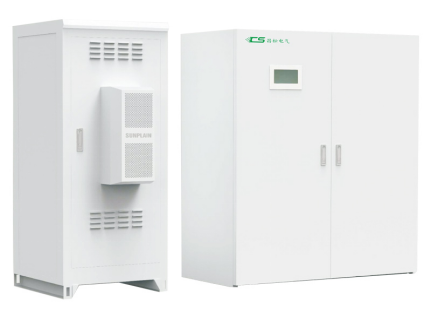
When the power fails, the battery chemistry you chose six months ago suddenly matters in ways the spec sheet rarely captures. Lead-acid remains the budget-friendly workhorse, but it sulks in cold weather and loses usable capacity if you regularly drain it below half. Lithium iron phosphate (LiFePO4), on the other hand, shrugs off deep discharges and runs for thousands of cycles, yet its upfront cost can make a home backup project look scary.
The real trade-off often hides in temperature and charge speed. A flooded lead-acid bank can deliver a surge of current to start a well pump, but it needs careful maintenance and loses efficiency as it ages. LiFePO4 is nearly maintenance-free and handles partial charging without long-term damage, but it may require a battery management system that adds complexity. If your outage window stretches into days, the chemistry that tolerates deeper cycling will keep lights on longer, even if it costs more per kilowatt-hour stored.
Round-trip efficiency also separates them. Lead-acid typically returns about 80% of the energy you put in, while LiFePO4 can exceed 95%. That gap means less generator runtime or fewer solar panels needed to refill the bank during a prolonged blackout. For a grid-down scenario where every watt counts, the quieter and more efficient option often earns its higher price tag within a few seasons of real use.
Sizing for Real Outages: Runtime, Surge Loads, and Recharge Windows
When a real outage hits, the gap between a generator's nameplate rating and what it actually delivers becomes painfully obvious. Most sizing mistakes come from looking only at steady-state wattage while ignoring the messy reality of startup currents and extended runtimes. A well-sized system has to handle not just the total connected load, but the moment when every motor, pump, and compressor tries to spin up at once. That surge can easily double or triple the nominal draw, and undersizing for it means breakers trip or voltage sags exactly when you need stability most.
Runtime is the other half of the equation that gets skipped until the fuel gauge drops. If the grid is down for three days and your tank only covers eighteen hours at full load, the math doesn't care about good intentions. Recharge windows add a final constraint: if you're pairing a generator with batteries or a hybrid inverter, the generator has to both carry the live loads and push enough current into the battery bank within a limited window. Miss that window and you're either idling at low efficiency or running the engine far longer than planned. Sizing for real outages means calculating the worst-case duty cycle, not the average, and building in margin for the day the surge load and the recharge demand hit simultaneously.
The practical approach starts with a load inventory that separates resistive, inductive, and non-linear loads—because a heater and a motor are not the same kind of problem. Then map the expected outage duration against fuel storage or refueling logistics, and set the generator's operating point so it runs in its most efficient band while still covering the peak. If the recharge window is short, you may need to accept a larger generator than the load alone suggests. That extra capacity isn't waste; it's the difference between a system that survives a real event and one that only works on paper.
The Role of Temperature and Cycling in Long-Term Battery Health
Battery longevity rarely hinges on a single factor, but temperature and cycling patterns are two of the most decisive. High ambient heat accelerates side reactions inside the cell, gradually eating away at available lithium and increasing internal resistance. Even when a battery is not in use, storing it in a hot environment can permanently reduce its capacity. Conversely, very low temperatures do not cause the same chemical damage, but they can temporarily lower usable capacity and, if charging is attempted, lead to lithium plating on the anode—an irreversible condition that shortens overall life.
Cycling behavior matters just as much as thermal conditions. Deep discharges from 100% down to near zero place greater mechanical stress on electrode materials than shallow cycles, such as staying between 40% and 80% state of charge. Frequent fast charging, especially at high temperatures, compounds this stress by driving more current through the cell and generating additional heat. The combination of hot climates and aggressive cycling can cut a battery's useful life by half compared to moderate temperatures and gentler usage patterns.
Practical strategies emerge from these observations. Keeping a device out of direct sunlight and avoiding charging it in a hot car can slow the loss of capacity. For daily use, partial charges are often less damaging than waiting until the battery is nearly empty. Some manufacturers now include adaptive charging features that delay topping up to 100% until just before the user wakes, reducing the time the battery spends at high voltage and temperature—two conditions that, together with repeated deep cycles, are among the fastest ways to wear down a cell.
Why Solar-Plus-Storage Can Fail You During an Extended Blackout
The biggest misconception is that a rooftop array plus a battery bank equals indefinite backup power. In reality, most home batteries hold only enough energy for a few hours of essential loads, and that assumes you started the outage fully charged. During a multi-day blackout, especially in winter or after storms that bring heavy cloud cover, the solar panels can't produce nearly enough to refill the battery each day. You end up rationing power, and once the battery hits its low-voltage cutoff, the system shuts down completely until the sun returns — which might be days away.
Another overlooked failure point is how the system was originally designed. Many solar-plus-storage installations are set up primarily to shave peak utility rates, not to serve as a resilient off-grid source. They may lack a critical loads panel or an automatic transfer switch that can isolate your home from the grid while still feeding power to your fridge, well pump, or heating system. Without that hardware, a blackout leaves you with only a handful of protected outlets, and the battery's stored energy may not reach the devices you actually need to keep running. Worse, some inverters cap the surge current so tightly that large motors like sump pumps or air conditioners simply won't start.
A third silent killer is grid-interactive safety logic. By code, most grid-tied solar inverters must shut down within milliseconds of a utility outage to prevent backfeeding electricity into lines that lineworkers are repairing. Unless you have a hybrid inverter or a dedicated off-grid mode with anti-islanding protection, your panels will sit idle even in bright sunshine, unable to charge the battery. And in a weeks-long outage, even a properly configured system can fail from neglected maintenance — corroded battery terminals, outdated firmware that mishandles charge cycles, or a single failed cell in the pack can render the whole storage bank useless. Extended blackouts expose every weak link that a two-hour outage never will.
Simple Maintenance Routines That Keep Backup Power Ready for Years
Backup power systems tend to get ignored until the moment they're needed, but a few simple routines can keep them reliable for years. Start by checking the battery terminals and cable connections every couple of months. Corrosion and loose clamps are the usual culprits behind silent failures. A wire brush, some baking soda and water, and a thin coat of dielectric grease on the posts will prevent most issues before they strand you in the dark.
Testing under real conditions matters far more than just confirming the unit turns on. Every quarter, run a simulated outage by switching off the main breaker and letting the generator carry your essential loads for fifteen to twenty minutes. Watch the voltage and frequency readings during that window—any wavering could point to a fuel delivery or governor problem. Keep a small notebook nearby and jot down dates, run times, and any odd noises or smells. Trends become obvious over time and catch small problems before they escalate.
Cleanliness and fuel quality often separate systems that last a decade from those that fail in three years. Keep the enclosure free of leaves, dust, and rodent nests, and make sure the air intake and exhaust paths are unobstructed. Check the coolant level and air filter condition at least twice a year. If you store diesel or gasoline for the unit, add a stabilizer and rotate the fuel annually, or switch to propane if possible. These small habits take only a few hours a year but keep the backup power ready when the grid goes down.
FAQ
Lithium iron phosphate (LFP) is the usual pick. It holds charge well when sitting idle, doesn't need monthly watering like lead-acid, and the upfront cost has dropped enough to make it a no-brainer for standby use.
Start with the essentials: fridge, router, some lights, maybe a medical device. List their daily energy draw and multiply by 1.5 to 2 for buffer. Avoid sizing for the whole house. If your critical loads use 5 kWh per day, 10 to 13 kWh of usable capacity is a comfortable range.
Motor loads like well pumps or AC compressors pull 3 to 5 times their running current for a split second. The inverter needs enough surge rating for that, or it will trip. Also consider a hybrid inverter if you might add solar later, and make sure it has an automatic transfer switch for truly hands-off backup.
Grid charging alone works fine for occasional outages. You simply keep the battery topped off and let it take over when the grid drops. Solar becomes valuable if you face long outages or have time-of-use rates, but it isn't required just to ride through a few hours without power.
LFP systems are mostly hands-off. Twice a year, check that connections are tight, firmware is current, and the battery doesn't sit in freezing or scorching temperatures. Lead-acid still asks for monthly electrolyte checks. The bigger risk is neglect: if you never test the system, small issues stay hidden until the next outage.
Pick a modular design where you can add battery modules or parallel another inverter later. Leave room in the electrical panel for extra breakers. Avoid sealed all-in-one units that can't grow, and ask the installer to confirm the maximum expansion path before you buy.
Skipping regular tests. Batteries can drift into a deep discharge protection state, and inverters can develop faults without anyone noticing. Once a quarter, simulate an outage by shutting off the main breaker and running critical loads for 20 to 30 minutes. This also verifies the automatic transfer switch.
For occasional backup, not really. The difference between 90% and 85% efficiency is negligible if you only cycle the battery a few times a year. Efficiency matters more if you charge and discharge daily to beat time-of-use rates. For standby reliability, prioritize long cycle life, low self-discharge, and a solid warranty.
Conclusion
Most spec sheets are optimistic about what a battery can actually handle during a real outage. The first step is to ignore the headline kilowatt-hour figure and map out exactly what your backup loads actually draw—continuous watts for a refrigerator, surge watts for a well pump, and the minimum runtime for a CPAP machine or sump pump. An undersized inverter can fail even when the battery has plenty of stored energy, so size for the worst-case starting surge, not the average load. Chemistry matters too. Lithium iron phosphate (LFP) tolerates daily cycling and partial state-of-charge far better than standard NMC, which loses usable capacity faster if you regularly drain it below 20% or expose it to heat. If your outages are short but frequent, LFP's 3,000–5,000 cycle life will outlast most other options. But temperature is the hidden killer: a pack rated at 10 kWh at 25°C may give you only 6–7 kWh at -5°C, and charging below freezing can cause permanent lithium plating unless the system has built-in heaters.
Solar-plus-storage systems look great on paper, but an extended winter blackout with heavy cloud cover can strand you with empty batteries and no way to recharge. A 5 kW array that makes 25 kWh on a sunny day might produce only 2–3 kWh under snow and overcast skies, so you need a realistic recharge window—if you only get three hours of weak sun, a 20 kWh battery bank won't refill before the next night. Include a generator inlet or a secondary charging source for those long outages. Long-term reliability depends less on brand and more on cycling and temperature management. Keep the battery in a space that stays between 5°C and 30°C if possible, avoid keeping it fully charged in hot garages, and run a full discharge test every six months to catch weak cells early. Check terminal torque and firmware updates twice a year. Most backup failures aren't battery chemistry issues—they're mismatched load assumptions and simple neglect that no spec sheet will ever reveal.
Contact Us
Contact Person: Tonglun Chen
Email: [email protected]
Tel/WhatsApp: 8618906642555
Website: https://www.cncsele.com