

Custom 20-Inch Cutter Suction Dredger Manufacturer for Tailored Dredging Solutions
2026-09-26
Choosing a 20-inch cutter suction dredger is rarely a one-size-fits-all decision—sediment, water depth, and discharge distance all change the engineering math. That’s why working with a custom manufacturer like YaKai Dredger matters more than most project planners expect. Instead of adapting your site to a stock dredger, YaKai adapts the dredger to your site: pump performance, cutter head design, hull configuration, and more. In this post, we’ll unpack the advantages of a tailored 20-inch CSD and what to look for before you invest.
Why "Standard" Rarely Works for a 20-Inch Cutter Suction Dredger
A 20-inch cutter suction dredger occupies a tricky middle ground. Most "standard" layouts borrow from smaller or larger designs without accounting for how the hull, ladder, and pump curve actually behave at this size. A spec sheet that works for loose silt can fall apart in compacted clay or coarse sand, forcing operators to derate the pump or replace wear parts far sooner than planned.
Pump and pipeline matching is another place where stock assumptions break down. With a 20-inch discharge, flow rates often run between 4,000 and 6,000 cubic meters per hour, but getting coarse material moving at critical velocity may demand more than a factory default can sustain. If the impeller clearance, blade count, or wear liner was chosen for average slurry density, real-world digging at higher densities can overload the engine or trigger cavitation.
Site conditions make the mismatch even clearer. A stock spud system, ladder hoist, and anchoring arrangement suited to a protected waterway will struggle in open coastal areas or narrow canals with strong currents. Owners who start from a standard drawing usually end up reinforcing the hull, adding spud keepers, or rebuilding swing winches within the first season—so the "standard" design becomes little more than a rough starting point.
From Site Survey to Dredger Specification: The Custom Path
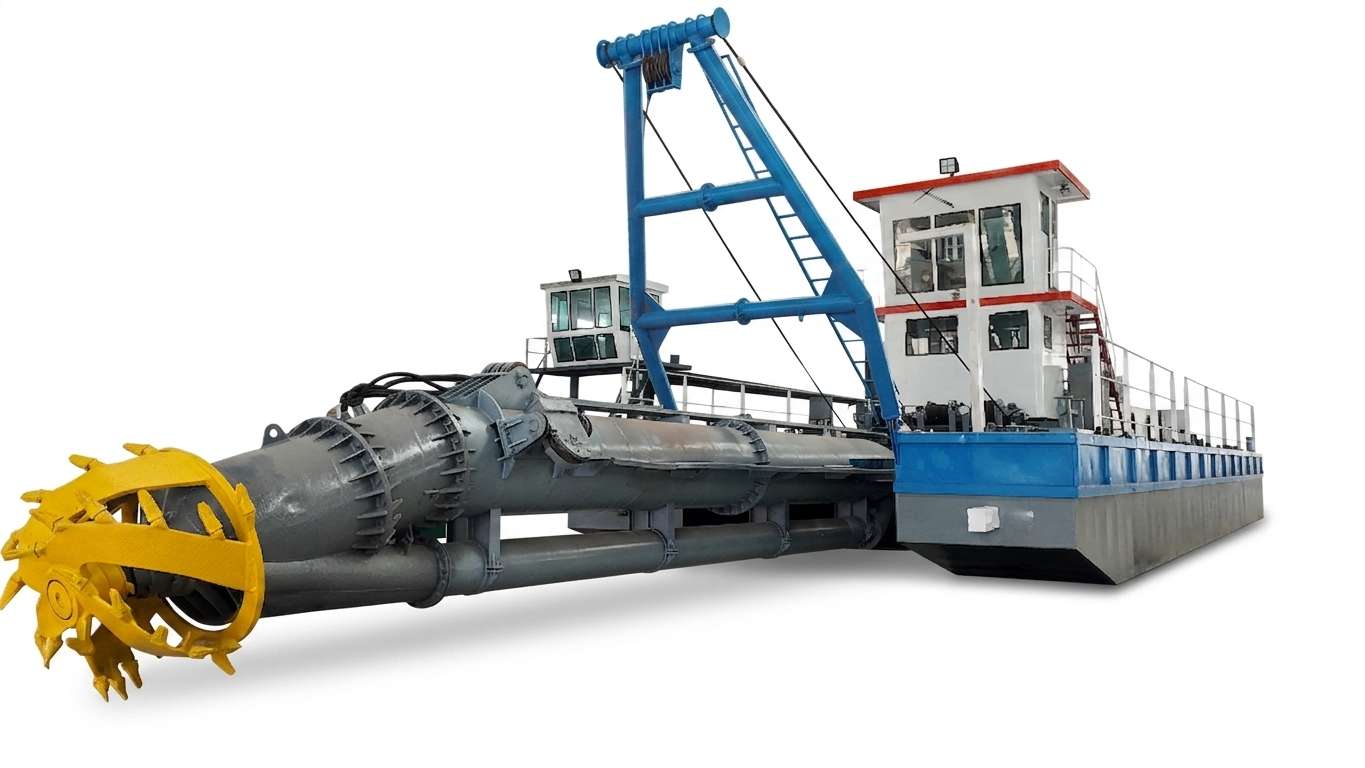
A dredger is not a one-size-fits-all machine. The path from a raw site survey to a final dredger specification is where most projects gain or lose their efficiency. It starts with understanding what the survey actually reveals: soil composition, water depth, tidal ranges, and the precise geometry of the area to be dredged. Too many teams jump straight to equipment catalogs, but that skips the critical translation step. Every reading on the survey—whether it shows silty clay, compacted sand, or rock—must be matched against the cutting force, pump capacity, and positioning precision of a specific dredger type. Only after this alignment can a meaningful specification begin to take shape.
The custom path demands close dialogue between the surveyor, the project engineer, and the dredger builder. For example, a shallow waterway with soft silt will suggest a compact cutter suction dredger with a modest installed power, while a deep harbor encountering dense sandstone may require a heavy-duty trailing suction hopper dredger with high jet pressure and robust tooth systems. Even within the same class, variables like ladder length, spud carriage stroke, and discharge distance must be tuned. The survey provides the constraints; the specification turns those constraints into working parameters. This is not a linear checklist but a loop of verification—what the survey implies, the spec must confirm, and any uncertainty should trigger a targeted re-survey of the critical zones.
Ultimately, the value of a custom path lies in avoiding overbuild and underperformance. A dredger specified without honest reference to the actual site conditions will either struggle in hard material it was never designed for, or waste fuel and capital on capacity the project never uses. By keeping the site survey at the center of every specification decision, owners get a vessel that fits the job precisely—not a generic dredger that happens to be available. This approach costs more time in planning, but it consistently pays back in lower operating costs, fewer unexpected stoppages, and a dredger that remains useful well beyond the first contract.
Cutter Heads, Pump Curves, and the Fine Print of Dredger Customization
Every dredger starts with a catalogue, but the moment you change the cutter head, you rewrite the pump curve. It's rarely a clean trade-off. A wider head boosts production in soft clay, yet it can load the pump unevenly, pushing the operating point away from the best efficiency line. That shift doesn't just affect fuel burn; it changes wear rates, suction inlet velocity, and the way solids settle in the discharge line. Buyers who focus on headline production numbers often miss that the real constraint is how the cutter and the pump breathe together.
Customization promises a perfect match, but the fine print hides most of the engineering. Modifying a ladder to carry a heavier head means recalculating the swing winch loads and the spud carrier forces. A pump curve drawn for clean water tells you little about pumping a slurry with 20 percent solids and a unpredictable grain size distribution. The vendor's standard curves assume a certain impeller clearance and a narrow range of specific gravity. Once you ask for a deeper digging depth or a different discharge diameter, those assumptions quietly fall apart.
Then there's the warranty language. One builder will guarantee the dredger's output for a specific soil type but exclude anything with debris or stiff clay layers. Another will cover the pump casing but not the wear plates that erode first. The finest print often hides in the definitions: what counts as "sustained production," how the slurry density is measured, and who pays when the customized cutter simply doesn't feed the pump the way the model predicted. In the end, a dredger is not a product so much as a series of compromises written into a spec sheet, and the smart buyer reads every line as if it were a dredging contract.
How Tailored Dredging Solutions Prevent Downtime and Rework
Generic dredging setups often ignore the specific behavior of sediment at a given site. A tailored approach starts with detailed bathymetric surveys and sediment core sampling to identify abrasive sands, sticky clays, or mixed debris. Matching the cutterhead, pump size, and pipeline diameter to those findings reduces clogging and premature wear that would otherwise force operations to stop mid-project.
Downtime also creeps in when operators keep adjusting settings to compensate for the wrong equipment. Customized solutions integrate adjustable dredge depth controls, automated slurry density monitoring, and discharge line layouts based on actual pumping distances. These adjustments allow a single pass to remove the target material cleanly, cutting out the repeated cleanup cycles that lead to rework and extra fuel consumption.
A tailored plan extends beyond the dredger itself. Wear-part replacement schedules and spare pump impellers are aligned with the measured abrasiveness of the slurry, not a generic service interval. Field crews receive a clear sequence for swapping liners or adjusting suction depth before failures occur. That proactive alignment keeps the project on schedule and avoids the costly back-and-forth of revisiting already dredged zones.
What to Look for in a Manufacturer Before Committing to a Build
A clean spec sheet means little if the factory can't hold a tolerance when the pressure is on. Ask for recent first-article inspection reports from a build similar to yours, not just a glossy capabilities deck. Pay attention to how they talk about scrap rates, tooling wear, and what happens when a batch drifts out of spec mid-run. A manufacturer that hesitates to share this or only offers "we always hit spec" without numbers is likely hiding a reactive quality process.
Look at how they handle material sourcing and substitution. If a specified resin or alloy becomes scarce, do they ask before swapping, or do you find out after the parts arrive with a slightly different surface finish? The best partners maintain a documented change-notification process and can tell you the country of origin for critical raw materials. Also check whether their lead times align with your actual build milestones—some shops quote optimistic dates to win the PO, then quietly push delivery by three weeks.
Spend time watching how the floor communicates. Are operators able to flag a fixture issue without fear of slowing the line, or is everything routed through a manager who only hears what they want? Walk the area where finished goods are staged. If labels are handwritten, bins are overflowing, and inspection tools look untouched, that's a signal about how your project will be treated after the kickoff meeting ends.
The Economics of Custom Dredging Equipment: Counting the Real Costs
Most buyers fixate on the sticker price when evaluating custom dredging equipment, but that number rarely tells the whole story. A purpose-built dredge might carry a higher upfront cost than an off-the-shelf model, yet the real economics emerge only when you trace how that machine performs in your specific sediment, depth, and disposal conditions. Custom engineering often eliminates the need for workarounds like extra booster pumps or repeated passes, which quietly inflate operating hours and fuel burn.
Then there is the less obvious ledger: spare parts inventory, crew training, and the downtime that follows every breakdown. Standardized equipment benefits from widely available components and familiar maintenance routines. A custom dredge, on the other hand, may require specialized parts with longer lead times, but it can also be designed around components your maintenance team already knows or around redundancy that keeps production moving during repairs. Counting these costs demands more than a spreadsheet—it requires mapping failure points against your project pipeline and seasonal windows.
Finally, consider the value of lost opportunity. Every hour a dredge sits idle waiting on a part or struggling in unanticipated material is an hour of contract revenue that will not return. In many cases, the premium paid for custom equipment is recovered not through lower operating costs alone but through faster completion times, fewer mobilizations, and the ability to bid on jobs that standard rigs cannot handle. When the accounting includes these variables, the cheapest option on paper is often the most expensive one in the field.
FAQ
A 20-inch dredger balances portability and output. It can handle around 1,500 to 2,500 cubic meters of slurry per hour depending on soil type and pumping distance, while still being transportable by road in many regions. That makes it a practical choice for harbor maintenance, river deepening, and land reclamation where larger units are either too costly or too difficult to mobilize.
Yes, customization is the core of what we do. We adjust the ladder length, cutter power, spud system, and even the control cabin layout based on the client's site conditions. For example, one client needed a low-air-draft design to pass under bridges, so we modified the gantry and spud frames accordingly. No two projects are identical, so we start with the dredging plan rather than a fixed product sheet.
It works well in silt, fine sand, medium sand, and soft clay. For compacted clay or cemented sand, we can upgrade the cutter head to a heavy-duty rock-cutting version and increase the cutter motor power. We always ask for a geotechnical report before recommending the tooth type and pump impeller material, because that prevents expensive mismatches later.
Before shipping, we run a full assembly test at our yard, including the hydraulic system, winches, and pump. Once the dredger arrives on site, our engineers can stay for commissioning and operator training. We also keep a stock of critical wear parts like cutter teeth, impellers, and pipeline sections, so downtime is shorter when something needs replacing.
For a standard hull with minor modifications, it usually takes 10 to 14 weeks. If the project requires a fully bespoke design—such as a different dredging depth, extra automation, or special corrosion protection—the timeline may extend to 16 to 20 weeks. We prefer to give a confirmed schedule after the technical drawings are approved, not before.
We provide remote diagnostics through video calls and can arrange spare parts by air freight if the situation is urgent. Many issues related to hydraulics or control settings can be resolved without sending a technician. For larger problems, we dispatch an engineer, and we usually include that option in the initial contract so clients know exactly what support they are getting.
One client in Southeast Asia needed to dredge a reservoir with varying depths and very limited access for heavy equipment. We supplied a 20-inch dredger with a dismountable pontoon design, so it could be assembled on the bank without a crane. We also added a longer discharge pipeline and a booster pump station to move the slurry 2.5 kilometers to the reclamation area. The project finished ahead of schedule because the dredger could be repositioned quickly.
Conclusion
Standard 20-inch cutter suction dredgers often fall short because every site has its own soil profile, slurry density, and discharge distance. A manufacturer that insists on a fixed design can leave you fighting constant wear, poor suction, or a pump curve mismatched to the job. Custom work starts with a site survey—reading current, water depth, and material hardness—then translates those findings into a dredger spec that fits the actual conditions rather than a catalog average. Cutter head choice, pump impeller clearance, and ladder swing geometry all shift with the project; skipping the fine print means paying later in downtime and rework.
Before committing to a build, look at how a manufacturer handles change orders, field support, and post-delivery tuning. The cheapest bid often hides costs in shorter wear life, longer mobilization, or a hull that cannot take the torque of a 20-inch pump. A tailored dredger, by contrast, is built around the operator’s daily reality—deck layout, spud system, winch ratings, and instrumentation that match the crew’s skill level. Count the real economics over five to ten years, not just the invoice price. The right manufacturer will ask about your site before quoting, because a 20-inch cutter suction dredger is only as good as its fit to the water it cuts.
Contact Us
Contact Person: Nancy
Email: [email protected]
Tel/WhatsApp: (+86) 13869631558
Website: https://www.yakaidredger.com/