

Commercial and Industrial Energy Storage Systems for Export: Key Considerations and Market Opportunities
2026-11-16
Think exporting is only about logistics and tariffs? Think again. For commercial and industrial businesses moving goods across borders, energy storage has become a quiet lever for cutting operating costs and meeting overseas sustainability mandates. But the road to export-ready C&I systems is paved with unique challenges—divergent voltage standards, strict safety certifications like CE or UL, and incentive programs that differ from one port to the next. A generic storage unit rarely survives that journey. At UNC, we specialize in building energy storage solutions that actually clear customs and connect to foreign grids. In this post, we'll walk through the key considerations and market opportunities that determine whether your investment powers profit—or piles up in a warehouse.
Where C&I Storage Exports Actually Pay Off
The real returns from commercial and industrial storage exports don't come from chasing every market with a tariff gap. They come from places where the grid is genuinely stressed, where peak demand charges bite hard, and where onsite solar already exists but can't be fully used. In those pockets, a containerized battery system isn't a speculative bet—it's a direct reduction in operating costs that pays for itself faster than most equipment upgrades.
Look at markets where diesel backup is still the default for manufacturing parks or cold-chain logistics. Exporting storage into those regions means displacing fuel spend, not just arbitraging electricity prices. The payback shifts from a spreadsheet exercise to a resilience play: the battery earns its keep during every brownout, every demand spike, every hour the local utility charges a premium. That's where the export margin holds up, because the alternative is far more expensive.
The trick is to stop selling kilowatt-hours and start selling avoided downtime. A factory in a country with frequent voltage sags doesn't need another clever tariff model—it needs to keep its line running. Storage exporters who understand that shift their focus from pure energy trading to power quality and peak shaving, and that's where the invoice stops being negotiable and starts being essential.
Clearing Certification Traps Before They Stall Shipments
Most shipment delays don't start at the border; they start with a single mismatched document. A certificate of origin that shows a slightly different weight than the bill of lading, or a test report that expired three days before the vessel sailed, can trigger a hold that eats up your entire delivery window. The fix is to treat certification as a pre-shipment checklist, not a post-packing afterthought. Match every HS code, every consignee name, and every date against the destination country's current requirements before the container door closes.
Another trap is assuming last year's rules still apply. Some markets update labeling or add new safety certifications with little public notice, and by the time you find out, your goods are already sitting in a foreign warehouse. Build a simple alert system with your local importer or a third-party inspection partner, and keep a photo archive of each shipment's labels and packaging. When customs asks a question, having that visual proof ready can cut days off the clearance process.
Finally, don't treat a certificate as a one-and-done item. For repeat shipments, audit your certificate database every quarter, flag documents that are within 90 days of expiration, and re-evaluate any product change—even a supplier switch or a minor formulation tweak—against the destination's certification scope. Spending an hour on that audit before production is far cheaper than paying demurrage while your freight sits unclaimed.
Moving Megawatt-Hour Systems Across Borders
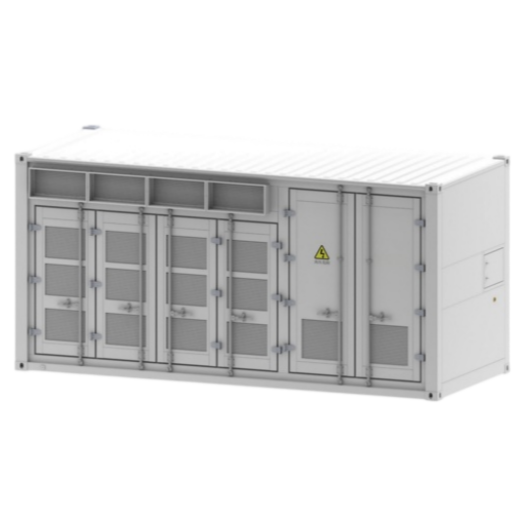
Transporting large-scale energy storage across national boundaries is less about physical movement and more about regulatory choreography. A megawatt-hour system isn't a shipping container you haul over a border checkpoint; it's a cluster of batteries, inverters, and control software that must meet divergent grid codes, safety certifications, and customs classifications in each jurisdiction. The real friction often hides in paperwork that treats a battery module as both a chemical hazard and a capital asset, forcing operators to navigate two separate compliance tracks before a single cell changes location.
Operationally, cross-border transfers of these systems demand tight synchronization between grid operators who rarely share real-time telemetry. A 10 MWh unit dispatched from a balancing authority in one country can arrive at its destination with a state of charge that violates the receiving grid's reserve margins. Smart logistics teams now pre-stage partial discharges or use climate-controlled transit to avoid thermal stress, but the deeper challenge is contractual: who bears the degradation cost when a battery spends four days on a low-loader instead of cycling in a revenue stack?
Some regions have started treating portable storage as a tradable service rather than fixed infrastructure. Instead of permanently installing a system, developers shuttle megawatt-hour assets to seasonal demand peaks, disaster recovery zones, or off-grid industrial sites. This shifts the design philosophy toward ruggedized enclosures, quick-connect switchgear, and modular certification packs that speed up customs clearance. The result is a new asset class that behaves more like a rental fleet than a power plant, rewriting the economics of energy arbitrage one border crossing at a time.
Designing for Grids That Behave Differently Than Yours
One of the first mistakes is assuming every user will experience your carefully tuned layout on a similar screen. A grid that snaps into place on your 1440px monitor might stack awkwardly on a tablet held in portrait or stretch into unusable line lengths on an ultrawide. Instead of chasing pixel-perfect parity, it is often more rewarding to define which parts of the grid are load-bearing—the gaps, the alignment, the rhythm—and let the actual track sizes breathe across devices. Think less about forcing columns to match your mockup and more about preserving the spatial logic that makes the design feel intentional.
When other people's grids collide with your assumptions, explicit fallbacks become your best asset. If a nested grid relies on subgrid or container queries that are not yet supported everywhere, write the basic version first and enhance from there. For example, a card layout might fall back to simple auto-fit minmax() tracks, then upgrade to a denser, interdependent arrangement only when the browser can honor it. The key is to test in environments that break your layout early, not to polish the ideal case and hope for the best.
There is also a cultural dimension to grids that behave differently. Some design systems treat gutters and baseline alignment as non-negotiable, while others allow modules to flex and reorder based on content priority. If you are docking into a pattern library or a team's existing CSS, pay attention to the assumptions baked into their grid: do they use fixed breakpoints, fluid type scales, or component-level queries? Adapting your own grid to their language often means rethinking what "responsive" means, not just resizing columns but negotiating which constraints are allowed to move.
Structuring Commercial Terms That Get Projects Financed
Lenders don’t buy into revenue projections alone; they underwrite the durability of every commercial commitment. The terms that actually move a project from sponsor enthusiasm to financial close are those that allocate risk to the party best able to absorb it. That usually means pushing volume risk onto suppliers or offtakers through firm capacity charges, minimum purchase obligations, and clear pass-through mechanisms for fuel, operations, and maintenance costs. The moment a contract leaves too much discretion in pricing or delivery, bankers start discounting cash flows and the project starts losing its debt capacity.
A financeable structure also separates project economics from the sponsor’s balance sheet without pretending the sponsor doesn’t exist. Lenders want to see that the project can survive a realistic downside case, not just a base case. So terms need contingent equity support, well-defined cure periods, and reserve accounts sized to cover at least one full debt service cycle. If the commercial agreement can be terminated for convenience, or if penalties are capped so low they become optional, the financing will demand shorter tenors or higher margins—if it moves ahead at all.
The most successful term sheets read less like a list of obligations and more like a coordinated system. Each clause—step-in rights, direct agreements, force majeure carve-outs, change-in-law allocations—must work together to keep cash flowing to debt service under stress. Projects that get financed often have one thing in common: the commercial terms were negotiated with the lender’s credit committee in the room, even if only implicitly.
Building Local Service Capacity Before Your First Order
Launching into a new market without a reliable local support network is like opening a restaurant without a kitchen. You need technicians, customer service reps, and logistics partners who understand the area's expectations and quirks. Start by identifying independent contractors or small firms with proven track records in your industry. Run a few low-stakes pilot repairs or installations for internal use to gauge their response times, communication style, and problem-solving instincts. This hands-on screening reveals far more than any resume or certification.
Once you have a shortlist of dependable providers, formalize a tiered escalation protocol. Define what counts as a standard request versus an urgent one, and set clear timelines for each. Share this with your local partners and rehearse a few simulated scenarios. The goal is not to create rigid scripts, but to build muscle memory for collaboration. When your first real order arrives, you'll already know who to call for a quick swap, who handles complex diagnostics, and who can cover weekends without prompting.
Capacity also means having spare parts and tools staged locally, not just a phone number to call. Rent a small storage unit or partner with a courier service that offers secure drop points. Keep the bare essentials: common replacement components, loaner equipment, and calibrated testing devices. This reduces your dependence on express shipping and turns a potential one-week delay into a same-day turnaround. Customers may never see this behind-the-scenes preparation, but they'll feel the difference when their issue gets resolved before they've had a chance to worry.
FAQ
For Europe, CE marking is mandatory, but you'll also need to meet the Low Voltage Directive and EMC Directive. Depending on the battery chemistry, UN38.3 transportation testing is a must. Many buyers also expect compliance with IEC 62619 for safety and IEC 63056 for secondary batteries. Don't overlook country-specific requirements like Germany's VDE-AR-E 2510-50 for stationary storage systems.
In the US, every utility has its own interconnection process, often following IEEE 1547 or UL 1741 standards. Some states like California have streamlined procedures under Rule 21, while others can take months. It's critical to work with local engineers early to understand utility tariffs and avoid costly delays. UL 9540 certification for the entire system is also increasingly required by AHJs.
Southeast Asia, particularly Vietnam and Thailand, has strong industrial growth but unstable grids, making storage attractive. South Africa's load-shedding crisis has created urgent demand for backup plus solar integration. Latin America, especially Chile and Brazil, is seeing rising commercial tariffs and renewable penetration. Each requires different voltage/frequency standards and local partnerships.
Sea freight for heavy battery cabinets is expensive, but the bigger surprises are usually at destination: customs duties, port demurrage if documentation is incomplete, and inland trucking with crane or forklift requirements. You also need to budget for local compliance testing, translation of labels/manuals, and possible warehousing if the site isn't ready. Many exporters underestimate the cost of providing installation and commissioning support abroad.
Focus on modular designs that reduce installation time, or offer integrated energy management software that works with existing BMS and solar inverters. Real-time remote monitoring with local service partners is a strong selling point. Avoid generic claims like 'high quality' and instead publish actual cycle life data from third-party labs, or provide bankable performance guarantees. Customizing for specific applications like cold storage or EV charging can also open niches.
They're often the difference between a sale and a stranded container. A local partner handles permitting, utility coordination, installation, and after-sales service. They understand language, culture, and warranty expectations. Without them, you risk long response times for faults and negative word-of-mouth. Choose partners who have experience with electrical infrastructure, not just general distributors.
Export warranties often need to be more conservative because remote troubleshooting and parts shipping are harder. Many suppliers limit performance guarantees based on throughput or calendar years, and require remote monitoring access for warranty validity. Some markets expect local stock of spare parts or a bonded warehouse arrangement. Clearly define who pays for shipping of replacement modules and labor costs to avoid disputes.
Export credit agencies and development banks like the US DFC or Japan's JBIC provide guarantees that reduce risk for buyers. Vendor financing or leasing models are increasingly popular where upfront capital is scarce. Some developers offer energy-as-a-service contracts, eliminating the need for the end customer to own the asset. Tying storage to a solar PPA can also unlock commercial financing.
Conclusion
Many manufacturers assume export markets for commercial and industrial storage are universally lucrative, but the real payoff clusters in regions with high demand charges and weak grid reliability—Australia, parts of Southeast Asia, and certain U.S. states. However, getting units past customs often hinges on certifications like UL 9540 or CE marking, and overlooking local grid codes or battery transport regulations can freeze shipments at the port. Moving megawatt-hour systems across borders isn't just about container dimensions; it demands pre-negotiated freight routes, hazardous material documentation, and sometimes disassembly for compliance.
Once on site, the hardware must handle grids that sag, spike, or run at non-standard frequencies, so export designs need configurable inverters and robust thermal management. Structuring deals that attract project finance usually requires bankable performance guarantees, flexible O&M contracts, and clear warranty terms tied to local operating conditions. Finally, building local service capacity—training technicians, stocking spares, and setting up remote monitoring—before the first order lands is the difference between a one-off sale and a repeatable export business.
Contact Us
Contact Person: Manager Leng
Email: [email protected]
Tel/WhatsApp: 8613764878967
Website: https://www.unc-energy.com