

Cold Storage Panel Production Line Supplier Delivering High-Performance Manufacturing Systems
2026-09-27
When a cold storage panel line runs smoothly, every hour saved is profit earned. Yet many suppliers still offer generic equipment that quietly drains efficiency. That’s where YI ZHOU TECHNOLOGY steps in — delivering high-performance manufacturing systems built for the real demands of insulated panel production. In this post, we’ll explore what truly separates a dependable cold storage panel production line from the rest, and why forward-thinking fabricators are making the switch.
What Actually Sets a High-Performance Cold Storage Panel Line Apart
The first real giveaway is how the line handles foam injection and curing. Cheaper setups tend to rely on open-pour methods or batch foaming, which leaves uneven density and weak spots. A genuinely high-performance line meters the polyurethane with closed-loop feedback, adjusting mix ratios in real time as temperature and humidity shift. That kind of control keeps thermal performance consistent from panel to panel, which is what operators actually notice after a few months of production.
Another separating factor shows up in the lamination and pressing stages. High-end lines don’t just stack metal skins and hope pressure does the work; they use segmented platens or continuous double-belt presses that distribute force along the entire panel, preventing edge voids and surface ripples. The result is a panel that stays flat under thermal cycling and doesn’t delaminate in freezer applications, where contraction stresses are brutal.
Then there’s the material handling. On a strong line, roll forming, notching, and stacking happen with tight synchronization, so steel faces move through without scratches or micro-dents that later lead to corrosion. Integrated vision checks catch dimensional drift before panels reach the foaming station. This level of coordination is less about adding more sensors and more about designing the line so each station only receives parts at the exact moment they’re needed.
Where Panel Flatness and Line Speed Start Working Together
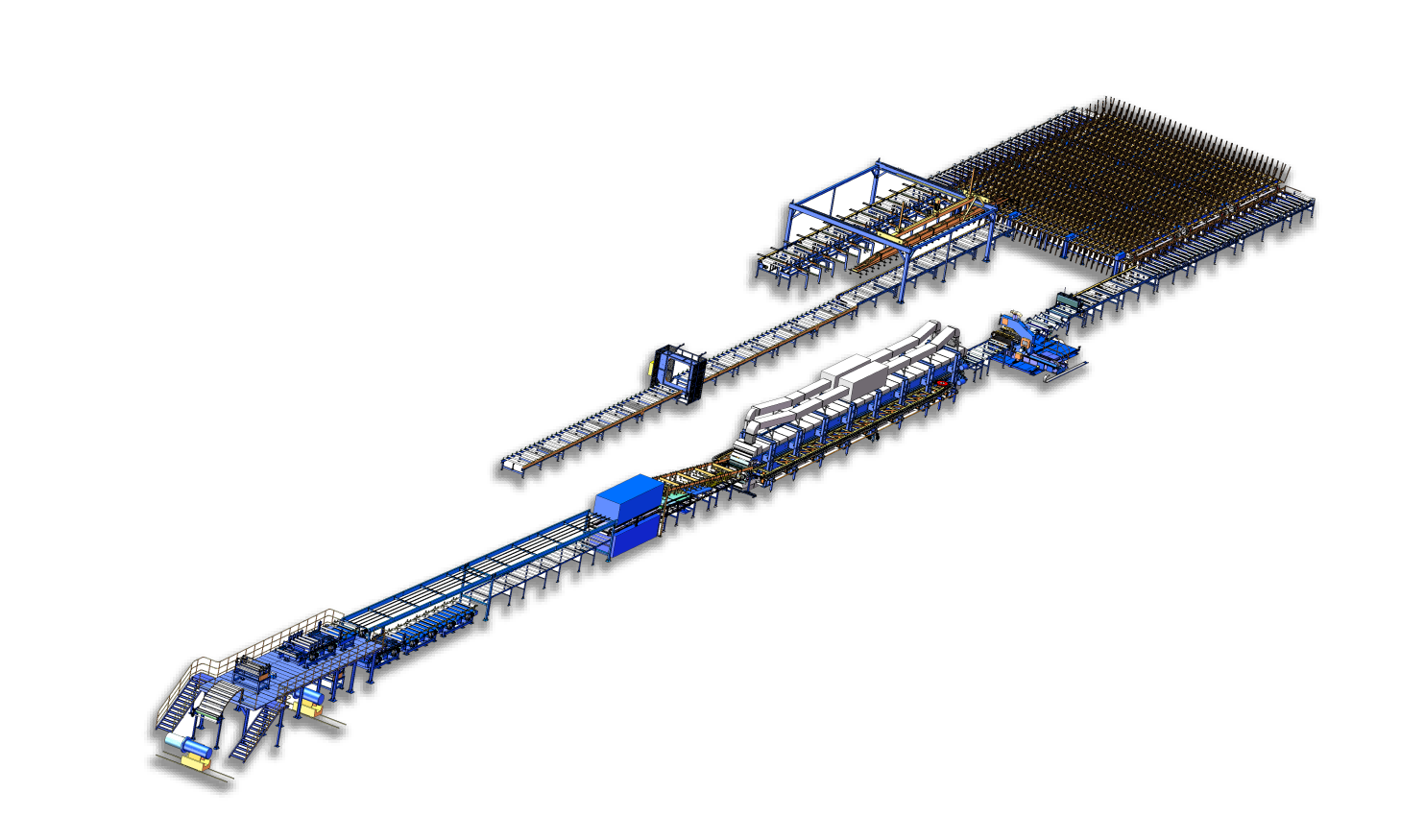
Flatness specs on a panel line often read like a threat: hit the number or slow the whole coil down. But pushing line speed up doesn't automatically ruin flatness. Once tension, roll geometry, and strip temperature are dialed in, the faster pass can actually pull the panel flatter than a cautious crawl through the mill.
What changes is the way the material behaves under load. At higher speeds, work rolls keep a more stable thermal profile, so the gap stays more consistent across the width. The strip also spends less time wandering over carry-over tables, which means fewer chances for edge wave or center buckle to set in before the next stand corrects it.
Operators who treat speed as a flatness tool rather than a flatness enemy tend to watch different signals. They track strip tension per unit width, coolant balance, and roll bending force in real time. When those line up, a jump from 80 to 120 meters per minute stops being a gamble and starts being the more stable part of the run.
Reading a Supplier's Engineering Track Record Before You Commit
A polished datasheet and a few reference calls won't tell you how a supplier behaves when the pressure is on. Ask for a walk-through of their last three product iterations—not the final versions, but the ones that exposed tolerance stack-ups, firmware conflicts, or rushed ECOs. The suppliers worth committing to are usually the ones who volunteer where their first design broke, because they can explain what they learned and changed.
Look beyond the capability slide and into the revision history. A string of last-minute spec changes often points to weak upfront requirements gathering, while a supplier that shows one or two deliberate, well-documented pivots reveals engineering maturity. Pay attention to how they talk about failed tests or field returns: do they blame the customer, or do they own the gap and walk you through the corrective action?
Before you sign anything, ask for a sample of redlines, DFMEA records, or a post-mortem from a project that slipped. You are not looking for perfection; you are checking whether their engineering culture treats problems as data. If a supplier can show you the ugly parts of their track record and still make you feel confident about the next build, that is a stronger signal than any perfect first article.
Why Cold Storage Panel Systems Rarely Fail at the Obvious Points
Most people assume a cold storage panel system will fail where two panels meet, at the floor-to-wall junction, or around door frames. Those spots get the most attention during installation, so they usually get extra sealant, tighter fasteners, and more careful alignment. In many cases, the visible joints hold up remarkably well because every installer knows they are being watched. The real trouble tends to start in places no one thinks to inspect twice.
One common hidden failure point is the metal skin covering the insulation core. Repeated temperature swings cause the outer skin to expand and contract at a different rate than the foam inside. Over years, that stress can cause tiny cracks or delamination, usually starting away from panel edges. These micro-failures let moisture creep into the core, slowly degrading thermal performance long before any obvious leak appears.
Another overlooked area is the connection between panels and the building's structural frame. Vibration from nearby equipment, forklift traffic, or even wind loads works on those anchor points continuously. Because the panel itself stays intact and the joint looks fine from the outside, the loosening goes unnoticed until a small gap opens up and frost begins to form. By then, the problem has moved well past the obvious points.
The Real Cost of a Production Line That Only Works on Paper
管理层批准新产线时,图纸上的节拍时间、模拟良率和物料流都无可挑剔。可设备进场第一天,传感器标定全部跑偏,工位间距让操作员连转身都困难,所谓的“3D模型验证”在现实里碎成一地。停线时间比计划多出三倍,每小时都在吞噬季度利润。你开始支付三班倒的紧急加班费,空运替换零件,还要硬着头皮向客户解释为什么订单又延期了。没人会在立项报告里写这些——纸面成本永远漂亮,真正的出血点全在启动之后。
产线只在纸面上跑通时,工程团队会陷入无休止的补丁循环。改一个参数,下游三个工位必须重新标定;供应商被叫来五次,最后发现不是部件缺陷,而是集成时被忽略的容差叠加。这些时间不会出现在初始预算表上,却会慢慢吃掉团队的信任。老操作员开始绕开标准流程“自己修”,质量数据越来越假;新员工捧着混乱的作业指导书频繁出错,带教师傅的耐心被耗尽。你付出的不是一次性调试费,而是整个工厂的学习曲线被人为拉长,竞争对手早就用一半时间爬到了满产。
真正的代价从来不是账本上的超支数字,而是被纸面数据催生出的虚假确定性。管理层以为产能已经就绪,签下大客户长单;销售信誓旦旦承诺交期,结果实际良率只有设计值的一半。为了赶货,你不得不降低质检门槛放行次品,几个月后售后投诉和召回通知像雪片一样飞来。更糟的是,一线员工开始怀疑上面的决策能力,有本事的人悄悄更新简历。等董事会质问资本支出为何超支三成时,答案全藏在那些从未被计入ROI的深夜会议、临时钢架焊接和客户道歉电话里。你失去的不止是钱,是同一笔资金建成一条真正能跑产线的机会,以及市场对你交付能力的最后一点耐心。
Designing for the Cold Storage Projects That Demand More Than Standard Panels
Cold storage isn't a one-size-fits-all game, and the moment you start treating it that way, the project starts pushing back. Standard panels do fine for a steady -10°F holding room, but bring in thermal cycling from blast freezers, daily washdowns with aggressive chemicals, or uneven floor loads from racking systems, and those off-the-shelf specs begin to crack—literally and figuratively. The real design challenge starts when the temperature delta isn't consistent, the humidity swings wildly between shifts, or the building itself moves with frost heave. You need more than a thicker core; you need a panel system that accounts for vapor drive, thermal bridging at joints, and the long-term creep of insulation under its own weight.
That means looking beyond the data sheet. Many projects fail not because the panel R-value was too low, but because the joint design allowed moist air to condense inside the panel over a few seasons. Or the interior liner wasn't rated for the specific cleaning agents the facility used, leading to pitting and eventual delamination. A smarter approach is to treat the panel not as a static wall component but as a dynamic part of the building's envelope—one that has to flex with thermal movement, shed water at every penetration, and maintain an unbroken vapor seal even when a forklift dings the corner. That's where custom profiling, reinforced edges, and factory-sealed panel-to-panel connections earn their keep.
For the engineer or owner who keeps running into the same panel failures, the answer is often in the details that standard catalogs leave blank. Specify the actual temperature profile over a full year, not just the design minimum. Ask for thermal transmittance values at the panel joints, not just in the field. And demand a panel that's been tested as a complete assembly—with its fasteners, sealants, and trim—not just the foam core. When the cold storage project has odd dimensions, floor-to-ceiling door penetrations, or a mezzanine hanging off the wall panels, you're no longer designing with panels; you're designing a building that happens to use insulated panels. That shift in thinking is what separates a five-year patch job from a twenty-year asset.
FAQ
We don't rely on a one-size-fits-all design. Each line is built around your panel dimensions, foam chemistry, and throughput target. The quick-change mold system allows size switches in under fifteen minutes, and our servo-driven metering keeps the foam density stable even when ambient temperatures shift.
Yes, the mixing head and day tanks are compatible with both PU and PIR formulations. Recipes are stored in the control panel, so operators can switch from a standard B2 core to a fire-rated PIR core without recalibrating the entire line.
We use continuous pressure control across the laminating section and automated thickness scanning after curing. If the panel drifts beyond your specified tolerance, the line flags it and adjusts the press gap, which prevents a full shift from running out of spec.
You get commissioning support, operator training, and a remote diagnostics link for the PLC and servo drives. Our field engineers can typically resolve software issues within hours, and critical wear parts are stocked in regional service centers to avoid long downtime.
The modular frame and adjustable side guides allow you to change panel width and length by repositioning stops rather than swapping heavy molds. Thickness changes are handled by programmable press settings, so a small batch of custom panels doesn't require a separate production run.
Output depends on panel dimensions and foam cure time, but a single-shift operation usually lands between 40 and 100 panels per eight hours. Adding a second press or using a fast-cure foam system can push that closer to 130 panels without expanding the footprint.
Most installations serve cold chain warehouses, food processing plants, and pharmaceutical storage facilities. We also see demand from companies producing insulated cleanroom panels, blast freezer enclosures, and temperature-controlled logistics shelters.
Conclusion
A production line supplier earns the right to call itself high-performance only when engineering decisions are visible long before the first panel leaves the line. The difference shows up in how frame stiffness, roll-forming precision, and foam laydown are balanced so that panel flatness and line speed stop competing and start reinforcing each other. Instead of chasing a single impressive specification, the best manufacturers tune every station to hold tolerance at full throughput, not just during a demo run. This is where a supplier's engineering track record matters. Talking through previous cold storage projects, asking about line layouts that had to fit unusual building heights or demanding thermal envelopes, and checking how those lines perform after three years of daily operation reveals far more than a glossy brochure.
What often separates reliable cold storage panel systems from fragile ones is not the headline component but the overlooked interface: the way foam reacts to slight changes in temperature, how a minor misalignment in the conveyor accumulates over hundreds of panels, or whether a sensor is positioned to catch a drift before it becomes scrap. A line that only works on paper carries a hidden cost in downtime, rejected material, and operator frustration that no warranty fully covers. For projects that demand more than standard panels—thicker cores, higher insulation values, or non-standard lengths—the supplier must show how the line handles these variations without sacrificing speed or flatness. The real deliverable is not a machine that runs in ideal conditions, but a manufacturing system that holds its performance when the project gets difficult.
Contact Us
Contact Person: Sophia Jiang
Email: [email protected]
Tel/WhatsApp: +86 17367381818
Website: https://yzwelding.com/