

Cleanroom Facility Service: Ensuring Compliance and Performance Excellence
2026-08-18
Imagine a space where a single overlooked particle could derail an entire production batch. In pharmaceutical and biotech operations, cleanroom facility service isn't just about cleanliness—it's the backbone of regulatory compliance and product integrity. At GENO Pharmatech, we understand that performance excellence comes from more than routine maintenance; it demands a proactive partnership that anticipates risk before it becomes a finding. This blog explores how the right cleanroom service strategy can turn a mandatory requirement into your competitive advantage.
Understanding ISO Class Requirements Before You Commit
ISO class requirements are not simply a box to tick before you sign a lease or purchase equipment. They define the physical and operational boundaries of your cleanroom, and misreading them can lead to expensive retrofits or even production failures. The class rating—typically ISO 5, 7, or 8—dictates the maximum allowable particle counts per cubic meter, but the real challenge lies in understanding how your specific process interacts with airflow, personnel, and material transfer. Before you commit to a facility, ask yourself whether the class was calculated for a static or operational state, because the difference can be substantial.
Too often, teams fixate on the nominal classification and overlook the variables that keep it stable. Cleanroom garments, cleaning protocols, and even the type of flooring can shift the particle load enough to push you out of specification during routine work. Instead of assuming a room will hold its class because it was certified on day one, look at historical monitoring data or request a particle trend report. A class is a performance claim, not a permanent feature, and it can degrade silently if the HVAC system or pressure cascades are not tuned for your actual workflow.
The hidden cost of choosing the wrong class isn't always a failed audit. It may show up as slower recovery times after door openings, more frequent filter changes, or operators spending extra hours in restrictive gowning. If your product quality can tolerate occasional excursions, a lower class might be perfectly acceptable, but if your yield depends on tight control of even sub-micron particles, the conservative path is often cheaper in the long run. Compare the expected particle load from your equipment, materials, and human activity against the class limit, and leave a margin for seasonal humidity shifts or staggered maintenance. Making this assessment early prevents the painful realization that your cleanroom budget did not account for the ongoing cost of staying within class.
Routine Particle Counting Without the Data Overload
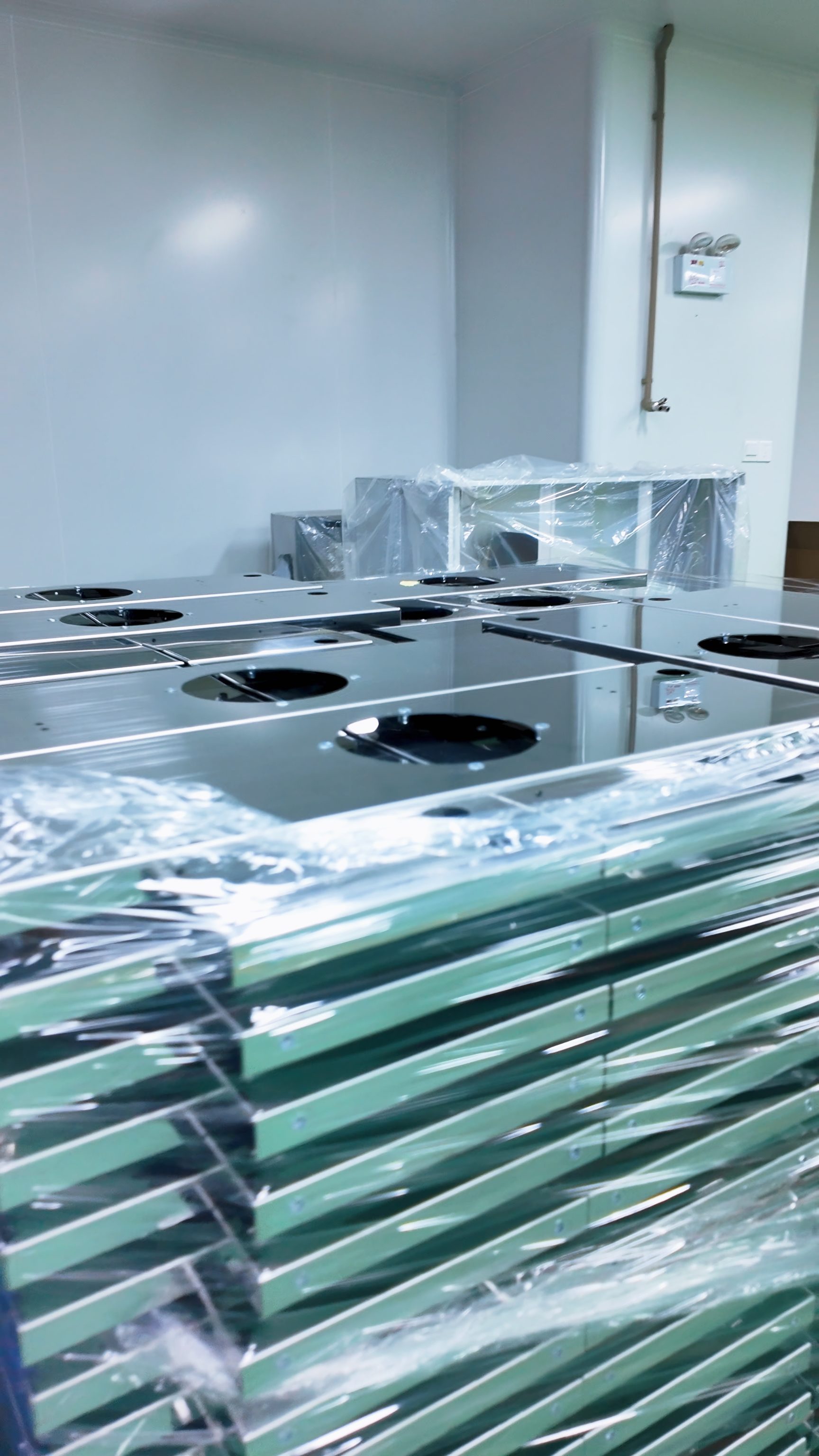
Continuous particle counters can produce an overwhelming stream of numbers, but routine monitoring doesn’t have to drown you in raw data. A smarter approach is to set meaningful alert levels and let the system flag only excursions that matter, rather than logging every minor fluctuation. This keeps daily records lean while still catching deviations that could point to filter leaks, occupancy issues, or cleanroom protocol breaks.
Instead of reviewing endless tables, focus on trend summaries over fixed intervals—say, shift-by-shift or weekly snapshots. Those condensed views highlight gradual drifts in baseline counts far better than minute-by-minute readouts, and they give operators a chance to investigate before a small shift becomes an out-of-spec event. Pair that with automated exception reports, and the data you actually read becomes a short list of anomalies, not a data dump.
The goal isn’t to collect more particles per cubic foot; it’s to understand when and why counts change. By storing only the context around alerts and routine summary statistics, you maintain compliance evidence without clogging storage or wasting review time. In practice, this means fewer screens to monitor, faster daily checks, and a clearer signal when something genuinely needs attention.
Preventive Care for HVAC and HEPA Systems Without Guesswork
Instead of swapping out filters on a fixed calendar schedule, facilities teams are starting to trust pressure differentials and particle counts. A manometer reading that climbs 20% above the baseline tells you more about actual loading than a sticker with a date on it. This shift from guesswork to measurement catches issues before they become air quality complaints.
Pay attention to the parts that never show up in a basic checklist: gasket seating, blower wheel buildup, drain pan slope, and the tightness of fan belt tension. A HEPA housing that passes a visual check can still leak around the gel seal if the frame was bumped during routine cleaning. Run a DOP test or use a handheld particle counter to verify integrity before signing off.
Build a trend log for each air handler. Monthly pressure drops, fan amp draws, and temperature splits tell a story that single readings miss. When the amp draw creeps up while airflow stays flat, it often points to a dirty blower wheel or a collapsing flex duct—not a filter issue. That kind of trend line lets you schedule work during off hours rather than reacting to a midnight alarm.
Cleaning Agents and Methods Suited to Sensitive Surfaces
Sensitive surfaces demand a lighter touch, not weaker results. Harsh solvents, abrasive powders, and high-alkaline degreasers can etch, haze, or permanently stain materials like unsealed stone, tinted glass, brushed metals, and certain coated plastics. Instead, opt for neutral-pH detergents diluted well below standard concentrations, paired with microfiber cloths that trap grit rather than drag it across the finish. For routine maintenance, a simple solution of warm water and a few drops of castile soap often outperforms specialty sprays, leaving no residue that attracts dust or causes streaking.
Method matters as much as chemistry. Never scrub in circles; linear passes with minimal pressure reduce micro-scratches on polished surfaces. Use a two-cloth system – one dampened for cleaning, one dry for immediate buffing – to prevent water spots and mineral deposits from tap water. For oily residues on fragile screens or lenses, a 50/50 mix of distilled water and isopropyl alcohol (70% or less) applied to the cloth, never directly to the surface, lifts fingerprints without damaging oleophobic coatings. Always test in an inconspicuous corner first, waiting 24 hours to check for dulling or color shift before proceeding fully.
Steam cleaning offers a chemical-free alternative for heat-tolerant sensitive surfaces like ceramic tile grout or sealed hardwood, but avoid on acrylics, adhesives, or cold glass, where thermal shock can cause cracking. Ultrasonic baths work exceptionally well for intricate metal jewelry or eyeglass frames, using plain water and gentle cavitation to dislodge debris from crevices no cloth can reach. When in doubt, air-dry or blot rather than wipe; friction is often the hidden culprit behind premature wear. A disciplined, low-impact routine preserves the original luster and extends the life of delicate finishes far beyond what aggressive products ever could.
Staff Training That Reduces Human Error in Cleanrooms
Human error in cleanrooms rarely comes from ignorance of written procedures. More often, it is the result of automatic behaviors, time pressure, or a weak mental link between an action and its contamination risk. Training that actually moves the needle tends to abandon static SOP recitation in favor of simulated tasks under realistic conditions. For example, having operators review particle count data collected after a poorly executed gowning sequence makes the consequence of a rushed movement tangible. When people understand why a specific hand placement matters, they are far less likely to skip it when no one is watching.
A one-time certification is not enough. High-reliability cleanroom programs use layered training: initial sterile technique and gowning qualification followed by periodic requalification that includes real deviation case reviews. Some sites deliberately introduce simulated faults—such as a glove pinhole or a shifted air return—so operators practice recognizing and correcting problems before they become batch losses. Equally important is a reporting culture that treats near misses as learning data rather than grounds for blame. When an operator shares a close call, the lesson is folded back into the next training cycle, and the whole team gets sharper.
The real measure of training is not a perfect score on a written test. It is whether an operator can maintain aseptic behavior during an unexpected interruption. That kind of reliability comes from repeated exposure to realistic variability, not from watching a video once. Cleanrooms that connect training outcomes to ongoing environmental monitoring data can spot weak points early—say, a rise in particulates near a certain transfer hatch—and adjust practice drills accordingly. Over time, the goal is to build a risk-aware instinct, so that correct actions become the default even under fatigue or deadline pressure.
Audit Preparation Without the Last-Minute Scramble
Most teams treat audit prep like a fire drill: a frantic week of chasing missing receipts, re-formatting spreadsheets, and praying the sample size doesn't land on the messy quarter. That approach isn't just stressful—it actively degrades the quality of evidence you hand over. When you're rushing, you stop asking whether a document actually answers the auditor's next question and start throwing everything into a shared folder labeled 'FINAL_v2_revised.' The result is a review process that takes longer, costs more, and leaves your finance team dreading the calendar.
The shift starts with changing what you track throughout the year, not just during the audit window. Keep a living checklist that maps each control or assertion to its current source document, owner, and date of last update. Instead of waiting for a request list, schedule a ten-minute monthly review where someone outside the core team picks one area—say, fixed assets or revenue recognition—and asks, 'If an auditor asked for this tomorrow, what would we actually open?' That small ritual surfaces gaps while they're still cheap to fix: a missing signature, a reconciliation that stopped auto-pulling, a contract amendment that never made it into the system.
Then, when the official request does arrive, your prep is mostly repackaging, not recreating. You'll be able to respond with a clean shared drive organized by audit area, a one-page summary of any unusual transactions or judgment calls from the year, and pre-drafted walkthrough notes for each significant process. The tone of the entire engagement shifts from adversarial to collaborative. Auditors spend less time asking for basic documentation and more time focused on the risk areas that actually matter, which means fewer follow-up rounds and a final report that doesn't come with a list of 'opportunities for improvement' longer than your original evidence list.
FAQ
It goes well beyond wiping surfaces. A proper service includes environmental monitoring, particle counting, airflow and pressure differential checks, filter integrity testing, microbial sampling, calibration of sensors, and maintaining the documentation trail needed for audits.
They take a systematic approach to every classified area, verifying that particle counts, air changes, temperature, humidity, and pressure cascades remain within specified limits. Regular validation and sensor calibration generate audit-ready records, so compliance is continuously demonstrable rather than a last-minute scramble.
Filter leaks often go undetected between certifications, pressure differentials drift out of range, gowning procedures become inconsistent, cleaning agents leave residues, and logbooks end up incomplete. Personnel training gaps are equally common and can undermine even the best-designed cleanroom.
An independent team brings fresh eyes and dedicated instruments without being influenced by day-to-day production priorities. They are more likely to catch subtle drift in performance, and their documentation carries weight during regulatory inspections because it comes from an unbiased source.
It is not just hitting a particle count on a single test. True excellence shows up as stable conditions over months, fewer excursions, lower energy use per square foot, fewer repeat investigations, and a team that can run operations without constantly worrying about contamination events.
Look for hands-on experience in your specific industry, documented response times, the quality of their reports, and whether they are willing to train your staff. A good partner shares raw data and explains deviations instead of handing over a pass/fail certificate and disappearing.
Yes, but not through shortcuts. Preventive maintenance avoids expensive unplanned downtime, smarter filter replacement cycles cut waste, and better monitoring can reveal energy inefficiencies in HVAC systems. Fewer deviations also mean fewer hours spent on investigations and corrective actions.
Conclusion
Cleanroom facility service is not merely a maintenance contract; it is a strategic commitment to operational integrity. Before signing any agreement, facility managers must verify that the service provider truly understands ISO class requirements—whether ISO 5, 7, or 8—and can tailor monitoring schedules accordingly. Routine particle counting should deliver actionable insights without drowning your team in raw data. A competent partner summarizes trends, flags anomalies, and recommends corrective actions in plain language. Meanwhile, preventive care for HVAC and HEPA systems must be based on actual runtime, filter loading, and pressure differentials, not guesswork. Replacing filters too early wastes budget; too late risks contamination. The service provider should use calibrated instruments and document every intervention for traceability.
Equally important is the human factor. Cleaning agents and methods must be compatible with sensitive surfaces like stainless steel, epoxy, or vinyl, and the service team should follow strict protocols for wiping direction, dwell time, and residue removal. Staff training is not a one-time event but an ongoing process focused on gowning, aseptic technique, and behavioral risks that lead to particle shedding. Finally, audit preparation should be seamless: your service partner should maintain organized logs, calibration records, and deviation reports ready for inspectors. By integrating these elements, cleanroom facility service transforms from a reactive cost into a proactive guarantee of compliance and performance excellence.
Contact Us
Contact Person: Amy Yang
Email: [email protected]
Tel/WhatsApp: 008619330882686
Website: https://www.genopharmatech.com/