
China Smart Street Furniture Is Redefining Urban Public Spaces
2026-09-05
What if the humble park bench could charge your phone, monitor air quality, and alert maintenance crews when it needs cleaning? Across China, that's no longer a hypothetical—smart street furniture is redefining urban public spaces. From solar-powered bus stops to interactive kiosks and adaptive lighting, these innovations are turning everyday public spaces into responsive, connected environments. One company pushing this shift forward is zemso, whose designs prioritize both utility and aesthetic integration, avoiding the clunky 'tech-for-tech's-sake' pitfalls that plague many smart city projects. In the sections ahead, we'll explore the key innovations driving this trend, the urban challenges they solve, and what other countries can learn from China's rapid deployment of intelligent streetscapes.
When a Bench Starts Charging Phones, the Sidewalk Changes Too
A bench that can top off a phone battery does more than offer rest. It quietly rewrites the rules of a sidewalk. People no longer pass by with eyes down; they pause, plug in, and settle into a slower rhythm. The once-neutral strip of concrete becomes a place where short waits turn into longer conversations, and strangers end up comparing charger cables instead of avoiding each other.
The change is visible in how the space gets used. Lunch crowds drift toward the bench not because it sits in shade, but because it doubles as a pit stop. Delivery riders cluster around it between orders. Older residents, who may not own smartphones, sometimes sit nearby just to watch the flow. The bench turns into an unplanned anchor, pulling foot traffic into its orbit and giving the block a new center of gravity.
Not every adjustment is comfortable. Shopkeepers might notice more people lingering outside without buying. City staff have to clean the ports and deal with the occasional broken cable. Still, the shift is real: add a small utility to a public seat, and the sidewalk stops being a corridor. It starts behaving like a room.
Solar-Powered Street Furniture Is Turning Plazas Into Micro-Grids
A bench along a busy pedestrian plaza now does more than offer a place to sit. Its armrest hides a thin-film photovoltaic strip that, combined with a small battery pack under the seat, keeps the adjacent lamp post lit well after sunset. Multiply this by a dozen pieces of street furniture—wayfinding kiosks, shaded tables, even bike racks with integrated panels—and you get a distributed energy network where each object quietly offsets the plaza's evening power draw.
The appeal goes beyond novelty. In older districts where upgrading underground cabling is expensive and disruptive, these micro-grids let local authorities phase in renewable capacity without tearing up paving stones. They also create a visible link between public space and energy production, making abstract grid upgrades tangible to the people who use the square daily. There are real constraints: panel orientation matters, vandalism and dirt reduce output, and battery storage adds maintenance. Yet even modest gains add up when dozens of plazas across a city adopt the same approach, turning scattered furniture into a quietly resilient layer of the urban power supply.
Sensors, Screens, and the Art of Not Looking Like a Gadget
Walk into a modern living room and you might strain to spot the technology. A slim panel on the wall could pass for a framed print until it wakes to show the weather. A black disc on the side table hums quietly, its single LED glowing only when you ask it a question. The trick isn't hiding the hardware in drawers or behind cabinet doors; it's designing sensors and screens that retreat into the background of daily life, behaving less like machines and more like quiet furniture.
Part of this disappearing act comes down to restraint. Instead of a glossy strip of glass demanding attention, screens can adopt matte finishes, softened corners, and a warm off-white glow that mimics paper under lamplight. Sensors get tucked beneath fabric speaker mesh or behind a thin veneer of wood, listening or watching without a visible lens staring back. When the interface only appears when summoned — a ring of light, a subtle haptic nudge — the device stops reading as a gadget and starts feeling like an attentive companion.
The hardest part is resisting the urge to show off. A speaker that announces every firmware update with a rainbow of blinking dots will always look like a toy. But a speaker that stays still, answers in a low voice, and dims its only light to a faint candle flicker? That's a piece of the room. The art of not looking like a gadget lies in knowing when to be invisible — and trusting that good design doesn't need to prove it's smart.
How Smart Bus Stops Are Quietly Learning Commuter Patterns
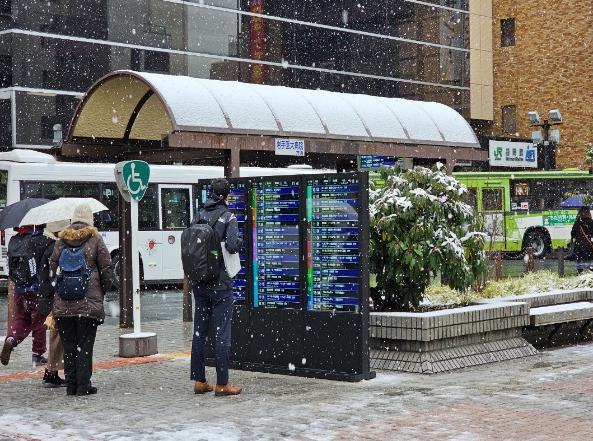
At first glance, the new shelters on Meridian Avenue look like ordinary glass-and-steel boxes. But tucked behind the arrival-time display is a small sensor that counts how many people step inside during a drizzle, how long they linger when buses run late, and whether the crowd swells on weekday mornings or thins out after the school run. None of this is linked to a name or a phone. The stop simply notices the rhythm of the street and adjusts its lighting, heating strips, and even the frequency of its screen refreshes.
Over weeks, those quiet observations build into something surprisingly practical. A stop near the hospital learns that demand spikes at shift changes, so it holds bicycles longer and dims the overhead lights to reduce glare for tired eyes. Another outside a cinema picks up on the 10:40 p.m. surge and begins pre-warming the bench a few minutes before credits roll. No one programmed these habits directly; the stops sifted through footfall, dwell time, and weather data on their own, then tweaked small comforts that most commuters feel without quite noticing.
The result is less about surveillance and more about silent courtesy. Instead of broadcasting a generic upgrade, these shelters behave like attentive hosts: they remember that Thursday rain brings more waiting bodies, that the first cold snap sends people toward the heated handrail, and that a delayed bus can make a two-minute wait feel twice as long. The learning is continuous, local, and deliberately forgetful—old patterns fade if they stop repeating, keeping the stops responsive rather than rigid.
From Hangzhou to Chengdu: Local Takes on Connected Public Seating
Ask a lifelong Hangzhou resident about the long benches along West Lake and you'll hear less about smart features than about the way strangers share space without a word. There's an unspoken rhythm: older walkers claim the shade in early morning, couples take the curved seats near the willow banks after dinner, and delivery riders perch on the armrests just long enough to check a map. The seating feels less like a product and more like an extension of the lake's slow, ambient social contract. When new connected benches appeared with charging ports and weather sensors, locals didn't treat them as upgrades. They simply folded the benches into the same routines, charging a phone while watching the water, or checking a bus schedule without breaking conversation. The technology disappears into the habit.
In Chengdu, the story shifts. Public seating around People's Park and the newer Tianfu Greenway runs on a different clock. Here, a connected bench is rarely used alone: it's a mahjong scoreboard, a tea cup holder, an improvised stage for a nap, and a meeting point for three generations at once. Locals expect seating to be tough enough for winter sunbathing and generous enough for a row of spectators watching a street saxophone performance. When sensors or charging pads show up, the reaction is often playful skepticism—someone will tap the screen a few times, shrug, and then spread a newspaper over it to sit more comfortably. The city's idea of smart seating isn't about efficiency; it's about how many kinds of idleness a single bench can hold before anyone complains.
Traveling between the two cities, the difference is not tech adoption but posture. Hangzhou treats connected seating as a quiet backdrop for individual reflection by the water. Chengdu treats it as a social surface that must earn its place in a crowded, noisy, deeply communal scene. Neither city wants a bench that lectures about connectivity. They want a place to pause, and if the seat happens to charge a phone or count foot traffic, that's fine as long as it doesn't interrupt a nap or scatter a card game.
Built to Last: The Overlooked Durability Factor in Smart Street Design
Many smart street projects get seduced by the shiny bits: the sensors, the adaptive lighting, the real-time traffic feeds. But what happens when a hailstorm cracks a sensor housing, or road salt creeps into a junction box? Durability rarely makes the keynote slides, yet it decides whether a deployment survives its first winter. The most elegant algorithm means nothing if the hardware it relies on corrodes, fogs over, or gets knocked out by a stray delivery truck.
Designing for longevity means choosing materials and enclosures that anticipate abuse, not just ideal conditions. That could be marine-grade aluminum for coastal cities, UV-stabilized polycarbonate lenses that don't yellow, or gasketed compartments that keep humidity out of electronics. It also means thinking about modular repairs: a failed node should be swappable in minutes with a standard tool, not require a custom fabrication order and a lane closure. Smart streets need to be serviceable by ordinary maintenance crews, not just the vendor's specialists.
There's a quiet economic argument too. A smart street that lasts fifteen years instead of five doesn't just save replacement costs—it avoids the repeated disruption of digging up sidewalks, re-pulling conduit, and re-syncing an entire sensor network. When procurement criteria reward upfront price over lifecycle cost, taxpayers end up paying for the same "innovation" two or three times. The cities that get smart streets right are the ones that ask a boring question at the start: will this still be working, and safe to touch, when the warranty is a distant memory?
FAQ
It covers everyday public fixtures upgraded with digital capabilities: solar-powered benches that can charge phones, bus shelters showing real-time arrival times, street lamps with environmental sensors, and interactive information pillars offering Wi-Fi and emergency call buttons. Cities like Shenzhen and Hangzhou have been rolling these out in parks, transit hubs, and commercial districts.
Instead of being passive objects, benches and lamp posts become service points. A bench can wirelessly charge a phone while someone rests, a lamp post can dim or brighten based on foot traffic, and a bus stop screen can show exactly when the next bus arrives. This turns waiting areas into more comfortable, informative, and connected places.
Shenzhen has been aggressive with smart light poles that combine 5G small cells, video monitoring, and air quality sensors. Hangzhou put solar charging benches and digital guide screens in scenic areas. Shanghai upgraded many bus stops with touch screens and USB ports, while Beijing and Chengdu are testing similar setups in newer districts.
Solar panels are often built into the surfaces of benches and the tops of lamp posts, allowing them to run off-grid. During the day they store energy, and at night they power lighting, charging ports, or sensors. This makes them suitable for parks, plazas, and other open spaces where laying new power lines would be costly.
The useful core includes free Wi-Fi, emergency charging, one-touch police alert buttons, real-time transit information, and air quality readings. For elderly people, tourists, and commuters these can solve real problems. However, some installations suffer from broken screens, dead batteries, or poor maintenance, so usefulness depends heavily on how well a city keeps them running.
Built-in sensors collect data on foot traffic, noise, temperature, humidity, and air pollution. This helps traffic departments adjust signal timing, environmental agencies track pollution hotspots, and public safety teams respond faster to incidents. Smart light poles also consolidate 5G antennas and cameras, reducing the need for separate poles and boxes.
High upfront costs, lack of unified technical standards, and long-term maintenance are the main hurdles. Different manufacturers often use incompatible systems, making it hard to manage devices across a city. Some units end up abandoned or non-functional because budgets covered installation but not repairs or software updates.
Expect more modular designs that can swap in new sensors or displays. Voice interaction, augmented reality navigation, and built-in shade cooling could become standard. These pieces will likely connect with delivery robots, shared mobility hubs, and city-wide digital platforms, turning individual benches and poles into nodes of a distributed urban service network.
Conclusion
Across Chinese cities, the humble bench has quietly become a place to top up your phone, and that small change signals a larger shift in how public space works. Solar panels embedded in seating and shade structures turn plazas into tiny power plants, while the furniture itself avoids looking like a tech demo. A smart bus stop in Hangzhou might track when crowds build without anyone noticing a camera, adjusting lighting and queue space accordingly. Even a solar-powered seat in a Chengdu plaza can feed surplus energy back to nearby lights. The goal is not to fill streets with screens and sensors but to fold connectivity into objects people already use, so the technology disappears into the wood grain and concrete.
The approach differs from one city to the next. Chengdu's versions lean into local bamboo aesthetics and playful forms, while Hangzhou focuses on subtle data collection for transit flow. What gets less attention is durability: these pieces face rain, heat, and heavy use, so the best designs pair weatherproof materials with replaceable components. When done right, smart street furniture makes a sidewalk feel more attentive without demanding your gaze, turning ordinary waiting time into a small, useful pause. The result is a new kind of public infrastructure that is less about flashy innovation and more about quietly making urban life easier.
Contact Us
Contact Person: Leo
Email: [email protected]
Tel/WhatsApp: +86 18901905138
Website: https://www.zemsogroup.com/