

China Flexo Printing Machine: Innovation Driving Global Packaging Solutions
2026-11-16
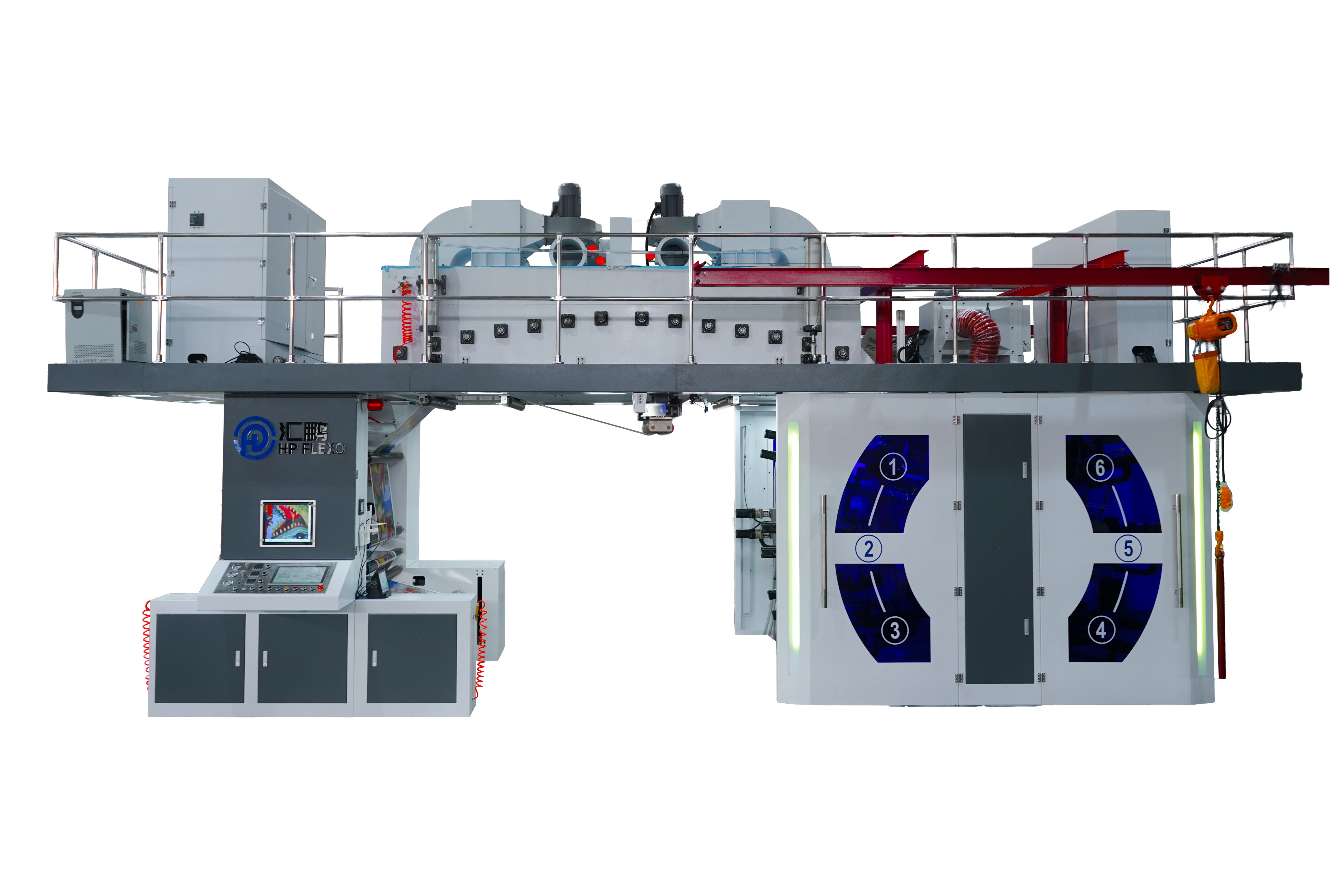
In an era where packaging must do more—deliver shelf impact, ensure sustainability, and streamline production—flexographic printing has become the silent engine behind global brands. Yet true innovation in this space is rare. Enter HuiPeng, a Chinese pioneer rewriting the rules of flexo technology. From precision engineering to intelligent automation, HuiPeng’s machines are not just keeping pace with market demands; they’re defining the next generation of packaging solutions worldwide. This blog explores how one company is turning regional expertise into a global competitive edge.
Redefining Print Precision with Smart Registration Systems
In an industry where every micron matters, smart registration systems are rewriting the rules of alignment accuracy. Gone are the days of manual tweaks and static references; today’s solutions combine real-time sensor feedback with adaptive algorithms that continuously monitor substrate position, speed, and stretch. This dynamic approach compensates for material drift on the fly, ensuring that each color layer lands exactly where it should—even at breakneck production speeds or with thermally sensitive films. The result is not just tighter tolerances, but a fundamental shift from reactive adjustment to proactive precision.
What truly sets intelligent registration apart is its ability to learn from the press itself. By analyzing historical run data and detecting subtle pattern shifts, the system can predict registration errors before they become visible defects. Micro-adjustments happen imperceptibly, preserving image integrity across the entire roll without operator intervention. This self-optimizing behavior is especially critical for packaging converters dealing with variable substrates, where a one-size-fits-all setup inevitably fails. Instead, the press adapts to the material’s own personality, holding register on flimsy films, heavy boards, or metallized layers with equal confidence.
Beyond raw accuracy, these systems redefine efficiency by slashing setup waste and downtime. Traditional registration methods can consume hundreds of meters of substrate during job changes or after splices; smart systems cut that to a fraction by instantly locking into alignment using stored profiles and real-time imaging. The operator is freed from constant babysitting, able to oversee multiple units while the press self-corrects. Combined with cloud-based analytics, this turns registration from a nagging headache into a strategic asset—one where every print run starts faster, runs cleaner, and delivers proof-perfect results that elevate brand quality without compromise.
Sustainable Inks and Substrates: A Greener Packaging Frontier
Moving away from petroleum-based materials is no longer a niche experiment—it is reshaping how packages are designed from the ground up. Soy-based, water-based, and algae-derived inks now deliver vibrant results while cutting volatile organic compounds that traditional solvent inks pump into the air. These alternatives dry faster on press, require less energy, and break down more easily during recycling or composting, giving converters a cleaner footprint without compromising color accuracy or scratch resistance.
The story doesn't stop at ink. Substrates made from post-consumer recycled fiber, agricultural waste, mushroom mycelium, and even stone paper are replacing virgin plastics and bleached board in everyday applications. Because these materials often possess a naturally tactile, earthy finish, brands can ditch plastic laminates and let the packaging feel as good as it looks. When paired with the right ink chemistry, a corrugated box printed with mineral-free pigments can go straight into a home compost pile, closing a loop that single-use packaging rarely achieves.
What makes this frontier genuinely exciting is the way it forces designers to rethink structure from a functional standpoint. Instead of coating a box in slick barriers, they are engineering pulp molds and cellulose windows that let the product breathe. Inks are chosen not just for hue but for their ability to wash away cleanly in a repulping tank. That interdependence—between earth-friendly coatings and next-gen substrates—creates packages that degrade gracefully, leaving behind nothing more harmful than the product they once protected.
Modular Engineering for Rapid Format Changes
The real agility in production comes from designing equipment that treats format parts like building blocks. Instead of hardwired tooling, we use quick-change modules that slide or snap into a base frame. A carton former, for example, can switch from a tall box to a low tray in under ten minutes by swapping three dedicated modules and running a stored recipe. There’s no need to loosen dozens of bolts, realign chains, or retime motions because module-to-machine interfaces are pinned and self-locating.
Behind the simplicity is a discipline: every module carries its own mechatronic identity. When docked, the control system reads an RFID tag or code plug and loads the corresponding servo profiles, vacuum patterns, and product guides. This means operators don't touch parameters—they only confirm the recipe on a screen. The same principle extends to filling heads, labelers, and capping chucks, all sharing a common docking plate and push-to-connect utilities. Maintenance teams can stage pre-set modules offline, so a changeover becomes a cartridge swap instead of a configuration session.
Crucially, we design the base machine to be format-agnostic. It handles the core motion and transport, while the modules define the product envelope. That separation lets you introduce a new package size by creating just a set of modules, without modifying the line’s backbone. In recent projects, this approach cut complete format change downtime by over 70% and eliminated the risk of manual misadjustment. It’s not about making machines faster—it’s about making every second of a changeover predictable and mistake-proof.
How AI-Driven Workflows Minimize Waste and Boost Output
Most manufacturing floors still bleed time and materials through tiny, almost invisible leaks—redundant inspections, over-ordering, idle machinery, or rework cycles nobody questions anymore. AI-driven workflows plug those leaks by learning the rhythm of the operation and flagging deviations before they cascade. Instead of a fixed schedule, a neural model reads sensor streams and adjusts machine parameters in real time, keeping energy use within a narrow band and catching dimensional drift while parts are still within spec. The result is less scrap, fewer emergency stops, and a line that breathes with demand rather than fighting it.
The second shift happens beyond the factory floor. AI reweaves the digital thread between supply chain, design, and fulfillment so decisions don’t get made in silos. When a logistics delay crops up, the workflow auto-routes around it—reallocating inventory, reprioritizing batches, and notifying only the people who truly need to act. This kills the quiet waste of overprocessing: all those status meetings, manual reconciliations, and expediting fees that used to be considered inevitable. A workflow that self-orchestrates makes output climb without adding headcount, simply by removing the friction that standardized processes couldn’t.
Perhaps the biggest gain is in how teams redirect their attention. Once the brutish, repetitive sorting and triaging are handled by an adaptive model, engineers and planners stop babysitting dashboards and start shaping strategy. Anomalies still surface, but they arrive with context—probable root cause, suggested remedy, and a confidence score. This turns maintenance from reactive firefighting into nuanced tuning, effectively shrinking the waste of human judgment applied too late. Output doesn’t just tick upward; it becomes more consistent, and the organization learns with every cycle, building a compound advantage no static playbook can match.
Bridging Continents: Customized Solutions for Diverse Markets
Success across borders rarely comes from a one-size-fits-all playbook. What resonates in a bustling Asian metropolis can fall flat in a relaxed European town, and the nuances of local taste, regulation, and cultural rhythm demand more than just translation. We build bridges not by exporting a fixed formula, but by immersing ourselves in the textures of each place—its unspoken preferences, its seasonal behaviors, even its humor. This ground-level sensitivity allows us to reshape product narratives, tweak service touchpoints, and rebalance pricing models so they feel native, not imported.
The real craft lies in holding opposites together: global consistency and local spontaneity. Our teams operate like skilled cooks who know when to follow the recipe and when to let the local ingredients lead. For a market that values long-term relationships over quick wins, we slow down the pitch and invest in face-to-face trust rituals. Where speed and digital fluency dominate, we strip away friction and let the offer speak through seamless mobile moments. This adaptive rhythm turns market differences from barriers into levers.
Underneath every tailored approach runs a common thread of respect—respect for the customer’s context, the partner’s legacy, and the end user’s daily reality. By blending regional insights with operational agility, we turn the challenge of distance into an advantage. The continents no longer feel separate; they feel like interconnected rooms in a house we’ve learned to navigate with ease.
The Rise of Compact, High-Speed Presses in Urban Micro-Factories
Micro-factories tucked into city basements and repurposed storefronts are turning to a new breed of press that swaps bulk for speed. These machines occupy a fraction of the floor space once required, yet their cycle times rival or surpass those of traditional industrial giants. The shift isn't merely about shrinking dimensions—it's about rethinking how force is delivered, with direct-drive servos and lightweight, rigid frames that eliminate the sluggish hydraulics of old. For a workshop making small-batch medical devices or custom electronics, the ability to stamp, form, or assemble within seconds, without waiting for oil to warm up or accumulators to charge, changes the rhythm of production entirely.
What makes these compact presses compelling is the way they integrate feedback directly into the stroke. Sensors track position and tonnage in real time, allowing operators to dial in precise parameters through a touchscreen rather than guess with manual dials. This closes the gap between prototyping and full runs—when a designer tweaks a battery tab geometry in the morning, the same press can run a hundred flawless samples before lunch. The data capture also feeds into traceability requirements that larger factories struggle to retrofit, giving small urban shops an unexpected edge in regulated sectors.
Neighborhood-based manufacturing gains more than just technical agility from these systems. With quieter operation and no messy fluid leaks, they fit naturally into mixed-use buildings where a coffee shop might sit above the workshop. Local supply chains shorten when a brand can press its own metal components a few blocks from the design studio, cutting both transit time and the carbon cost tied to overseas tooling loops. As cities experiment with zoning that welcomes light industry back into residential areas, the humble high-speed press becomes an enabler of a distributed, responsive production model that feels less like a factory and more like a civic workshop.
FAQ
The shift is driven by a strong focus on R&D, cost-efficient manufacturing, and the ability to customize high-speed lines for diverse substrates. Chinese manufacturers now integrate precision servo drives, quick-change systems, and intelligent color management that rival traditional European suppliers, making them the go-to for mid-to-high volume converters worldwide.
Modern units use direct-drive technology on each print station, which eliminates gear marks and allows for infinitely repeatable registration. Combined with advanced anilox engraving and closed-loop viscosity control, they now hold fine details and smooth vignettes on films and paperboard that were once only possible with gravure.
Yes, many come with fully enclosed doctor blade chambers, solvent-free LED UV options, and web-cleaning systems that meet FDA and EU compliance. A growing number also support water-based ink setups with high-efficiency drying, minimizing migration risk for snacks and liquid pouches.
Beyond standard spare parts, top-tier factories now offer remote diagnostics via IIoT gateways, allowing their engineers to tweak recipes or troubleshoot servos in real time. They also dispatch field teams for installation and color management training, often within a two-week window after machine arrival.
Printers are adopting the 'Printing-Engine Module' concept where each station can be pre-set offline on rails and swapped in under five minutes. This, along with lightweight carbon composite sleeves and memory-based recipe storage, allows a single crew to switch from a four-color label to an eight-color shrink sleeve job in under thirty minutes.
Yes, they typically feature a common control protocol that syncs with inline laminators, slitters, and pouch-makers. Some even act as a master drive for the whole converting line, ensuring zero-tension fluctuation from unwinding to the final bag stack.
Automated impression and register controls minimize the number of 'make-ready' meters to just the length of one repeat. Additionally, ink recirculation pumps with auto-solvent addition maintain pH and viscosity, cutting leftover ink by up to 25% compared to manual pouring.
Conclusion
China's flexo printing sector is undergoing a quiet transformation, reshaping how global packaging is produced and perceived. At the heart of this shift lies a focus on micro-level precision and macro-level sustainability. Smart registration systems now correct misalignments in real time, slashing setup waste and delivering previously unthinkable print clarity on everything from flexible films to corrugated board. Running parallel to this is a decisive move toward water-based inks, compostable substrates, and solvent-free laminates—a direct response to tightening regulations and brand owners’ demands for verifiable eco-credentials. The result is a new generation of machines that do not merely follow the green trend but embed it into their core engineering.
Beneath the surface, modular architectures and AI-driven controls are dismantling old barriers of complexity. Quick-change cassette systems and servo-driven decks allow a single press to switch from a snack wrapper to a pharmaceutical carton in under fifteen minutes, making high-mix, low-volume orders economically viable. Embedded sensors continuously analyze viscosity, temperature, and dot gain, automatically adjusting parameters to keep output consistent across shifts. This data-centric mindset extends to market reach: manufacturers now co-engineer lines for the humid conditions of Southeast Asia, the board stiffness preferred in European retail, or the high-speed demands of North African converters. Even space constraints are being turned into opportunities, with compact, high-speed presses enabling urban micro-factories to serve hyper-local supply chains. Taken together, these innovations position China\'s flexo technology not as a low-cost alternative, but as a versatile, intelligent backbone for the next phase of global packaging.
Contact Us
Contact Person: Isaias
Email: [email protected]
Tel/WhatsApp: 86-13868693129
Website: https://www.hpflexo.com/