

China EMC Filter Essentials: Choosing the Right Solution for Your Power System
2026-10-16
Getting your power system to behave in China’s complex electrical landscape isn’t just about picking any filter off the shelf. The right EMC filter can mean the difference between smooth operation and costly downtime. At DOREXS, we see too many engineers guessing when they should be choosing. This guide breaks down the essentials so you can match the right solution to your exact power system needs.
China's Grid Noise: Why Off-the-Shelf Filters Often Fall Short
China's power grid rarely behaves like the clean 50 Hz sine wave that most filter datasheets assume. In industrial belts and even urban distribution networks, voltage sags, harmonic bursts from arc furnaces and VFDs, and transient spikes from switching operations stack on top of each other. The noise is not a single, stable interference pattern; it shifts with the time of day, the load mix, and even the weather. A filter tuned for a textbook 230 V/50 Hz environment often ends up fighting a moving target.
Off-the-shelf filters are usually designed and tested against standardized laboratory signals—say, a fixed common-mode or differential-mode noise profile. But China's grid noise rarely respects those boundaries. You get wideband harmonics from solar inverters, interharmonics from heavy rectifier loads, and occasional ringing that lingers after capacitor bank switching. A generic filter's attenuation curve can turn into a resonance peak at exactly the wrong frequency, making the interference worse instead of better.
That's why equipment manufacturers and integrators in China increasingly skip the universal filter route and instead commission custom or semi-custom designs based on field measurements. It's not just about adding more stages; it's about understanding the local grid's signature, including its impedance variations and harmonic profile. Only then can you build a filter that actually holds up under real operating conditions.
Decoding Chinese EMC Standards Without the Jargon
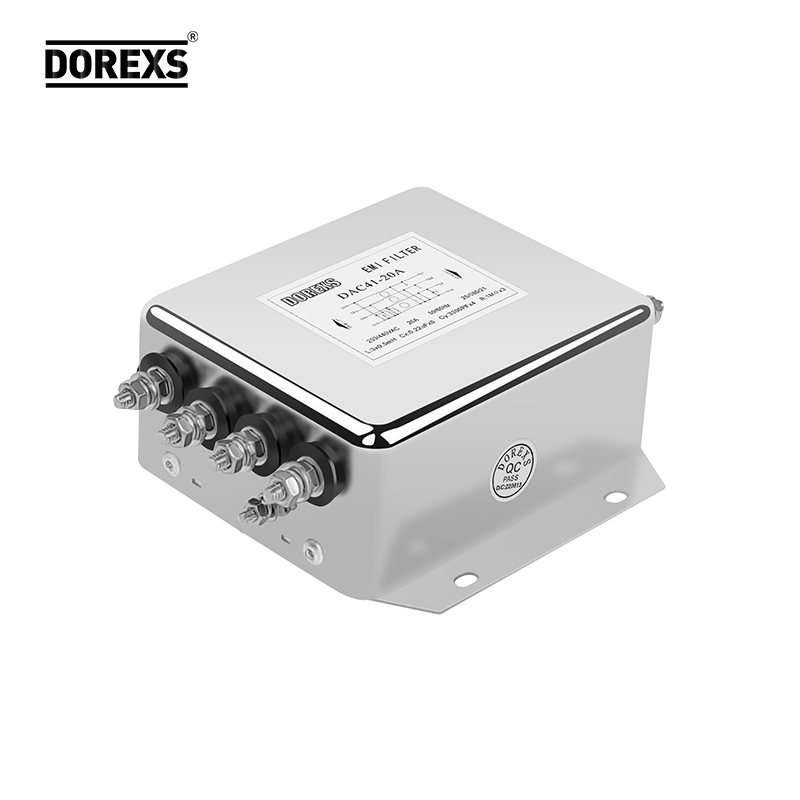
Chinese EMC standards often feel like a wall of numbers, but the core logic is straightforward once you strip away the formal wording. Instead of getting lost in document titles, focus on the test setups and limits that matter for your product type. For example, many requirements boil down to how much noise your device can emit and how much interference it can tolerate before misbehaving.
A practical trick is to map the Chinese standard to its international counterpart. Most are harmonized with IEC or CISPR documents, so the technical meat is nearly identical. The differences usually hide in national deviations, like specific frequency ranges or extra surge tests. If you read the scope and the annexes first, you can skip the repetitive definitions and jump straight to what changes for your design.
Another underused shortcut is to look at how local labs interpret pass or fail. Chinese EMC testing tends to be stricter about conducted emissions on certain industrial bands, but manufacturers often over-engineer for radiated immunity because older product generations set a high bar. By asking for pre-scan data from your testing partner, you can avoid guessing and focus only on the margins that actually trip up real submissions.
Filter Topologies That Handle China's Industrial Power Fluctuations
In China's industrial distribution networks, voltage sags rarely arrive alone—arc furnaces, rolling mills, and dense clusters of variable-frequency drives superimpose harmonic distortion on top of transient dips. Passive LC stages tuned to fixed frequencies can drift off resonance when grid impedance shifts, sometimes amplifying the very harmonics they were meant to absorb. A topology that only targets steady-state harmonics will struggle the moment a nearby furnace strikes an arc.
One practical route combines an LCL network with a small damping resistor and active damping control, which keeps the resonant peak in check without burning excessive power. Where deeper sags appear on 6–10 kV buses, series hybrid active filters prove more robust: the passive branch handles fundamental reactive current while a low-voltage active stage injects only the missing compensation voltage. For mill drives, a modular multilevel converter front end with redundant submodules tolerates phase imbalance better than a conventional two-level rectifier.
Steel plants and aluminum smelters often pair an active harmonic filter with a thyristor-controlled reactor to form a hybrid topology. The active unit catches high-order harmonics, while the TCR smooths rapid reactive swings and prevents the passive elements from drifting into a new resonance. Adding adaptive damping that adjusts virtual resistance in real time is what makes the difference in weak grid sections—otherwise the filter becomes another oscillation source at the end of a long feeder.
The Hidden Costs of Choosing the Wrong EMC Filter
A wrong EMC filter rarely announces itself on the bench. It slips through initial testing, then shows up later as intermittent field failures, unexplained resets, or a product that can't pass conducted emissions on the second revision. The initial saving from a cheaper or undersized filter disappears quickly once you factor in extra lab time, board spins, and the engineering hours spent chasing noise that should have been suppressed from the start.
There's also a mechanical and thermal side that gets overlooked. A filter that's over-specified may force a larger enclosure or add unnecessary weight, while one that's under-specified can saturate under normal load, allowing interference to leak through when the system draws more current. These aren't abstract risks; they translate into delayed production schedules and last-minute component swaps that erode margin and test the patience of the supply chain.
Over time, the hidden costs compound. Field returns due to intermittent EMI problems often cost far more than the filter itself, especially when they trigger recalls or damage customer trust. Choosing a filter based only on a datasheet number, without verifying it across the actual operating range, leaves the door open to failures that are hard to reproduce and even harder to explain to a customer. The filter decision is not just a compliance checkbox, it's a reliability decision.
Installation Habits That Sabotage Even the Best Filters
One habit that quietly wrecks filter performance is ignoring the gap between the filter frame and its housing slot. Even a quarter-inch opening lets unfiltered air slip past, so a top-tier MERV 16 filter ends up doing only half its job. Before sliding in a new element, run your fingers along the channel and check for warped rails or missing foam gaskets. A little weatherstripping or a manufacturer-approved seal kit can close those bypass routes in minutes.
Another routine mistake is forcing a filter in the wrong direction. Many pleated and synthetic media filters depend on the support grid to keep the material from ballooning under airflow. If the arrow points the wrong way, the pleats can flatten, tear, or fold over, which not only cuts efficiency but also puts extra strain on the blower. Technicians who rush through replacements often miss this because the housing looks symmetrical at a glance.
Finally, using a filter that's close to the right size—but not exact—creates its own set of problems. Bending a 20x25 to fit a 19x24 slot or taping cardboard edges may seem harmless, but it distorts the frame and lets dust accumulate in the corners. Before installing any filter, vacuum out the filter cabinet. Debris left behind from the previous element will find its way into the clean side within hours.
Signs It's Time to Rethink Your Power System's Filtering Strategy
When drives or PLCs begin tripping without an obvious fault, the harmonic profile has probably drifted. Passive filters tuned for a specific load mix lose their edge as production equipment changes, and random resets or communication glitches usually mean voltage distortion is now beyond the original filter bank's reach.
Capacitor failures tell a similar story. If you're replacing bulged or leaking capacitors more often than your maintenance schedule predicts, or the enclosure starts humming louder than it used to, the system's resonance point has likely moved. The filter may be reinforcing certain harmonics instead of canceling them, which calls for a fresh impedance scan.
Unexplained climbs in utility bills can also trace back to filtering gaps. Harmonic currents circulating through transformers and cabling create extra heat and real power losses, even when production stays flat. When THD readings at the point of common coupling sit above the recommended range for days at a time, it's usually cheaper to update the filtering approach than to keep paying for wasted energy.
FAQ
China's industrial grid carries a heavy mix of harmonics from variable frequency drives, welding equipment, and dense motor loads. Without proper filtering, conducted emissions can easily exceed GB/T standards, causing equipment lockups or even fines during site acceptance. A well-chosen EMC filter keeps the line side clean enough for sensitive controls while also protecting your own converters from incoming noise.
The fixed 50 Hz base frequency means passive filters must be tuned carefully to avoid resonance near harmonic multiples. Many facilities use 380 V three-phase without a neutral, so you often need delta-configured capacitors or three-line filters. Single-phase 220 V circuits on the same site add another layer, so specifying the right voltage rating and topology from the start saves rework.
CCC mark is mandatory for many filter categories, but don't stop there. Check for compliance with GB/T 17626 and GB 9254 for household or industrial limits. If the equipment will connect to public low-voltage networks, the filter must meet CISPR 11/32 emission boundaries. Some suppliers also offer CQC voluntary certification, which can simplify inspection with local authorities.
Because datasheets usually show insertion loss into a 50 ohm system, but the actual mains impedance is far from that. If the source impedance is very low, a simple LC filter may ring or even amplify certain frequencies. Using a network analyzer or at least measuring the line impedance at the installation point helps you pick a filter with the right damping, otherwise the claimed 50 ohm performance never materializes.
Rarely. A filter that works in a small electronics lab in Shenzhen may fail in an old steel mill in Hebei where the background noise is already worst-case. You need to assess the actual load profile: motor drives, rectifiers, or LED lighting all demand different attenuation curves. A modular filter with configurable stages can adapt, but a single fixed design usually leaves gaps at either high or low frequencies.
Start with the measured noise spectrum from your equipment under full load, then compare it to the applicable GB or CISPR limit. The difference, plus a 6 to 10 dB margin, is the minimum insertion loss you need across the frequency range of concern. Don't just rely on the filter's data sheet curve at one frequency; request the full attenuation plot from 150 kHz to 30 MHz for conducted emissions.
Long, unscreened cables between the filter and the drive let noise bypass the filter entirely. Mounting the filter too far from the equipment or grounding it through a painted chassis also ruins high-frequency performance. In many Chinese plants, cable trays run parallel to power lines for long distances, so proper separation and short, shielded leads are the first fix before blaming the filter itself.
Solar inverters, wind converters, and battery storage systems all pack high-speed switching semiconductors that generate new noise profiles up to several megahertz. Filters now must handle intermittent operation and bidirectional power flow, which places extra stress on capacitors and chokes. Look for designs with low ESR components and thermal headroom because rooftop installations in southern China can get brutally hot.
Conclusion
China's power networks carry a distinct mix of harmonics, voltage swings, and transient spikes that rarely shows up in generic test labs. A filter that passes CE or FCC checks can still let disruptive noise through once it's connected to a provincial grid or a heavy industrial feeder. Reading Chinese EMC standards like GB/T 17626 or GB 9254 isn't just paperwork—it means recognizing which test levels and frequency ranges actually apply to your equipment, not chasing the wrong limits. Meanwhile, the right filter topology has to cope with real-world sags and surges, not merely textbook loads. A single-stage design tuned for a stable 230 V supply often struggles when the line dips or a nearby motor starts.
Choosing the wrong filter has costs that go beyond the purchase price: repeated compliance failures, field returns, and damaged rectifiers or drives. Even a well-chosen filter can be undone by poor installation—long unfiltered leads, missing ground straps, or input/output cables bundled together create bypass paths for noise. If you notice intermittent resets, unexplained communication dropouts, or burn marks on filter capacitors, it's probably time to rethink the whole filtering strategy, not just swap in a bigger part. A robust approach pairs the right topology with clean wiring habits and periodic checks against actual operating conditions.
Contact Us
Contact Person: Eric
Email: [email protected]
Tel/WhatsApp: 8618117837140
Website: https://www.emcdorexs.com