

Best Double Eccentric Butterfly Valve: How to Choose the Right Model for Your System
2026-10-25
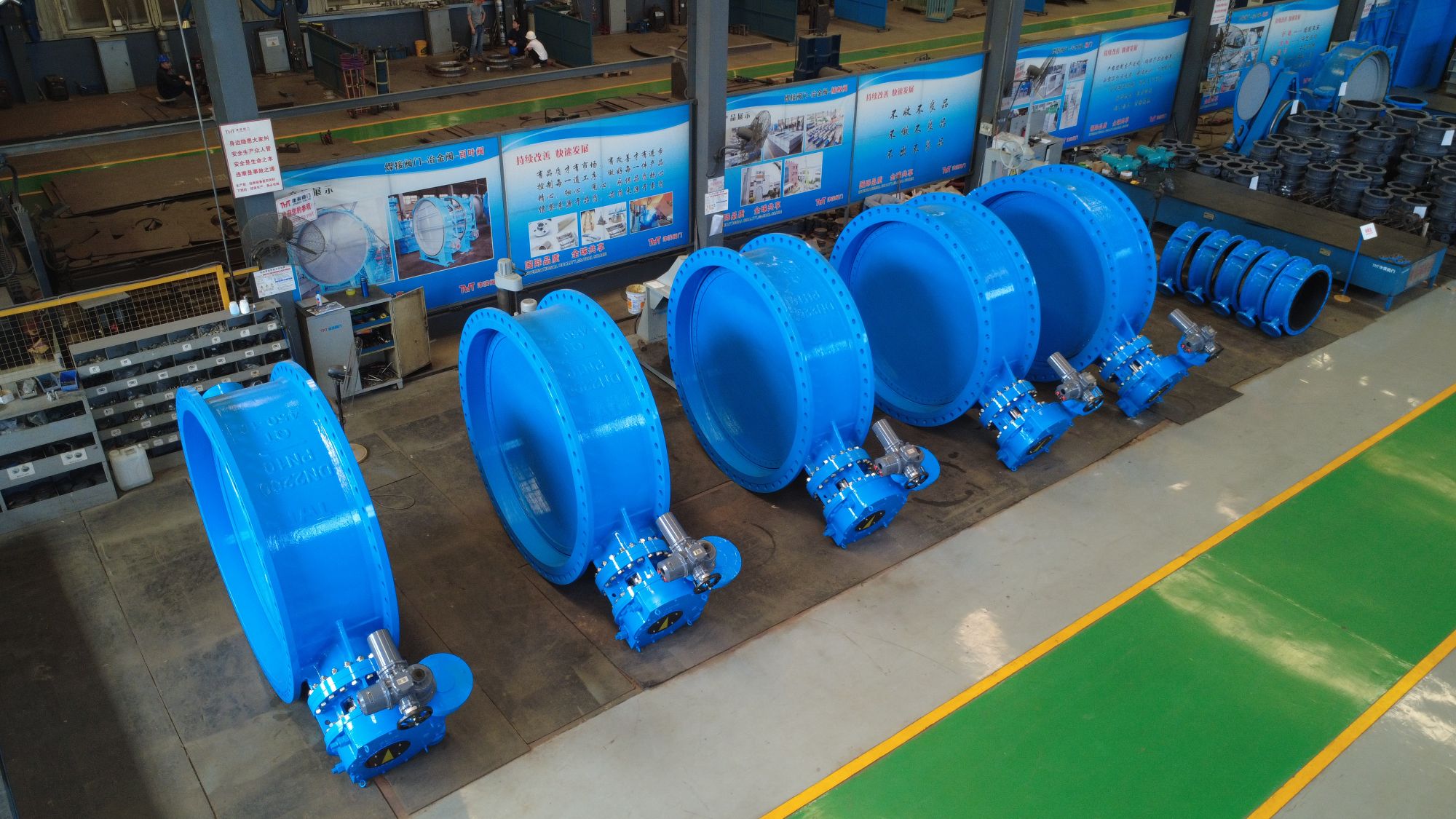
Ever wonder why two identical-looking double eccentric butterfly valves behave completely differently once they're installed? The answer rarely shows up in a datasheet. It's in the seat profile, the disc offset, the shaft bearing design—and how those match your media, pressure spikes, and duty cycle. At THT, we see too many systems stuck with the wrong model because someone stopped at 'same size, same flange.' This guide walks through what actually matters when choosing a double eccentric butterfly valve, so your next install works right the first time.
Why Valve Sizing Errors Are More Common Than You Think
Many engineers treat control valve sizing as a quick calculation: plug in flow rate, pressure drop, and fluid properties, then pick the next larger body size. The trouble starts when the real operating range doesn't match the single design point on the datasheet. Turndown requirements often push valves into low opening percentages where installed characteristics become nonlinear, and pressure drops at actual flow can be nowhere near the assumed values. Add in a safety factor on Cv and you can end up with a valve that runs almost shut, hunts around the setpoint, and wears out the trim prematurely.
Fluid behavior is another overlooked source of error. Sizing formulas tend to assume a clean, single-phase liquid or gas with predictable density and viscosity. In practice, a liquid near its vapor pressure may cavitate or flash inside the valve, reducing capacity far below the calculated value. Gas flows can choke earlier than expected when the real inlet pressure dips. If the process also has traces of solids, slurry, or two-phase flow, the standard equations become approximations at best. Many datasheets don't capture these conditions, so the error gets baked in before the valve is even selected.
There's also a mismatch between how vendors size and how plants operate. Vendor software often uses ideal piping geometry, clean fluids, and steady-state conditions. But field piping may have reducers close to the valve, elbows altering the velocity profile, or source pressure that sags when multiple users draw at once. Rather than revisiting the calculation with actual operating data, maintenance teams sometimes swap in a larger trim or a different actuator, which masks the original mistake instead of correcting it. That's why so many valves end up either oversized or undersized despite a "correct" initial calculation.
The Material Pairing That Prevents Premature Corrosion
Most corrosion failures on steel structures trace back to a simple oversight—two metals with very different electrochemical potentials sitting side by side in the presence of moisture. You can coat the surface, paint it, even wrap it, but if the wrong pairing is buried under a fastener or clamped to a bracket, rust will eat through long before the design life ends. The trick is not to fight the electrochemistry but to use it, by introducing a second metal that willingly takes the hit.
That second metal is usually zinc. When zinc and steel are electrically connected in a conductive environment, zinc becomes the anode and sacrifices itself, keeping the steel cathodic and essentially immune to rust. This pairing works because zinc sits lower on the galvanic series than iron, so the corrosion current flows from the zinc, not the steel. The steel underneath can stay intact for decades, even if the zinc coating or anode block gradually erodes away.
In practice, this material pairing shows up in galvanized bolts on structural steel, zinc anodes bolted to ship hulls, and zinc-rich primers on offshore platforms. The key is to ensure the zinc has enough surface area and direct electrical contact—paint over it or isolate it with a non-conductive washer, and the protection stops. For environments where salt or moisture is constant, a thicker zinc layer or periodic replacement of the anode keeps the steel from becoming the unintended sacrificial element.
How Pressure and Temperature Ratings Dictate Real-World Performance
Pressure and temperature ratings aren't just numbers stamped on a nameplate—they act as the hard limits within which a valve, pump, or fitting can do its job without falling apart. A stainless steel ball valve rated for 2000 psi at 100°F won't hold that same pressure once the fluid climbs to 400°F, because the metal expands and seals soften. Engineers who treat these ratings as fixed rather than interdependent often discover this the hard way, with a leaking joint or a cracked housing in the middle of a production run.
In practice, these ratings shape every selection decision before a system ever goes live. A hydraulic manifold running cold oil at 3000 psi might seem safe for the pressure side, but if a heat exchanger failure lets temperatures spike to 180°F, the derating curve kicks in and the effective allowable pressure drops by a third. This isn't a suggestion—it's a physical consequence of material creep and seal degradation. Teams that oversize components based on worst-case temperature swings, rather than best-case specs, avoid the midnight shutdowns that come from guessing wrong.
The gap between rated performance and real-world performance shows up most clearly in cyclic service. A steam trap rated for 150 psi saturated steam will hold fine under steady load, but rapid condensate cooling can create thermal shock that stresses the body well beyond what the pressure rating implies. Refineries and food processing plants deal with this by treating ratings as a starting point, then applying their own correction factors for cycling frequency, vibration, and aggressive media. In the end, a component's rating is only as useful as the engineer's willingness to respect the conditions that never make it into the brochure.
Installation Blunders That Void Your Warranty
Most voided warranties aren't the result of a defective product—they come from rushed or improvised installation. A classic example is overtightening mounting bolts. The torque specs in the manual aren't suggestions; exceeding them can crack housings, strip threads, or warp sealing surfaces. Once those stress marks show up, the manufacturer has every reason to deny a claim, even if the failure occurs months later.
Another common misstep is mixing hardware from different kits or “temporarily” using a longer screw because the right one went missing. That extra few millimeters can puncture internal wiring, short a board, or press against a moving part. Skipping the dry-fit step is just as bad—components need to line up without force. If you have to muscle a bracket into place, something's off, and forcing it usually leaves tool marks that warranty inspectors flag immediately.
Electrical connections also trip people up. Reversing polarity or plugging a high-current accessory into an unswitched circuit can fry components silently. The damage might not show up until a week later, but the scorched connector tells the whole story. When the manual calls for a specific connector, fuse rating, or grounding point, treating that as optional is a fast way to lose coverage.
The Torque Mismatch That Leaves Your Actuator Struggling
Your actuator isn't lazy — it's being asked to do a job it was never sized for. The torque mismatch shows up as stuttering under load, excessive heat, or a sluggish response that gets worse as the duty cycle climbs. On paper, the numbers aligned; in the real world, the load's friction, inertia, and peak demands don't match what the static torque rating promised.
A common root cause is conflating holding torque with the dynamic torque actually needed to accelerate and move the load. Holding torque might look generous, but once the system has to overcome breakaway friction or accelerate a heavy carriage, the required torque spikes. Add in gearbox losses, misalignment, and voltage sag, and that comfortable margin disappears fast.
The damage accumulates quietly — lost steps, premature wear, or a drive that faults out during a normal cycle. Instead of just upsizing the motor, map the real torque-speed curve at the load, factor in a safety margin that accounts for peaks, and make sure the driver and power supply can deliver the peak current when demand hits. That's how you stop the struggle before it becomes a failure.
A Field Service Story: When the Wrong Valve Choice Cost a Week of Downtime
The call came in on a Tuesday morning. A food processing plant had a main steam line down, and every hour of idle time was burning revenue. When I got there, the maintenance crew had already pulled the failed valve—a standard brass ball valve that someone had ordered as a "close enough" replacement months earlier. The steam, mixed with trace amounts of cleaning chemicals, had eaten through the seat and caused the valve to seize shut.
What should have been a four-hour swap turned into a week-long repair. The correct valve, a stainless steel sanitary design with high-temp seals, wasn't available locally. Procurement tried three suppliers before finding one that could ship within five days. Meanwhile, the line stayed cold, production schedules were rearranged, and the plant manager paced the floor.
In the end, the direct cost of the valve itself was trivial—it was the lost production and emergency freight that hurt. That week taught the plant a hard lesson: "close enough" in valve selection is never close enough when the process conditions are outside the norm. A quick check of the temperature and chemical compatibility data would have prevented the whole mess.
FAQ
The disc is offset from the valve centerline in two ways: the shaft sits slightly behind the disc face and is also shifted to one side. This reduces rubbing between the disc and seat during opening and closing, which lowers wear and torque, and improves sealing over time compared to a concentric design.
If you are dealing with higher pressures, frequent cycling, or temperatures above what a soft-seated concentric valve can handle, a double eccentric model is often a better fit. It handles tighter shutoff and lasts longer in service where a standard valve would wear out quickly.
Match the valve's pressure rating (e.g., PN10, PN16, ANSI 150) to your pipeline's maximum operating pressure and temperature. Double eccentric valves typically handle from vacuum up to around 50 bar and temperatures from -40°C to 450°C depending on materials, but verify the specific model's curves.
Base the body and disc on your fluid's corrosiveness and temperature. Common body materials are ductile iron, carbon steel, or stainless steel. The seat often dictates seal performance: choose EPDM for water, PTFE or metal for chemicals and high heat, and always confirm compatibility with your media.
They can be used for throttling, but they are at their best in control ranges between about 20° and 70° open. At very small openings, cavitation and noise can be issues, so if fine modulation is critical, a dedicated control valve may be better.
Most double eccentric valves use a seal ring on the disc that presses into a seat in the body. A replaceable seat is valuable because it lets you swap the wearing component without replacing the whole valve, reducing downtime and maintenance cost.
Double eccentric butterfly valves can generally be installed in any orientation, but for larger sizes, it is best to keep the shaft horizontal to avoid uneven wear. Also leave enough clearance for the disc to rotate and ensure the flow direction matches the arrow if the valve has a preferred sealing direction.
Look for pressure testing per API 598 or EN 12266, flange dimensions per ASME or EN standards, and material certifications like 3.1 per EN 10204 if you need traceability. For fire-safe applications, check for API 607 certification.
Conclusion
Choosing the right double eccentric butterfly valve rarely hinges on a single specification. Sizing errors are surprisingly common because teams rely on line size rather than required flow coefficient, leading to valves that either choke flow or never seat properly. The material pairing is just as critical: pairing a stainless steel disc with a compatible PTFE or RPTFE seat prevents premature corrosion and galling, especially in aggressive media. Pressure and temperature ratings demand a closer look as well—derating at elevated temperatures can shrink a valve's pressure capacity enough to cause leakage or deformation long before the nominal rating suggests trouble. Without verifying these limits against actual cycling conditions, even a “correct” valve can fail early.
Installation blunders are another frequent warranty killer. Uneven flange torque, missing gaskets, or misalignment can distort the body and wipe out the seat's sealing edge, and most manufacturers will not cover damage from improper fit-up. Torque mismatch is equally damaging: undersizing an actuator means the valve may not fully open or close under load, while oversizing can slam the disc and crack the seat. A recent field service case illustrated the real cost of getting these details wrong—a chemical plant chose a valve with the right end connections but wrong seat material and actuator torque, resulting in a week of downtime for replacement and repiping. The lesson is clear: the best double eccentric butterfly valve is the one matched to actual process data, not just catalog ratings.
Contact Us
Contact Person: Su Zhang
Email: [email protected]
Tel/WhatsApp: +86-25219206
Website: https://www.tht-valve.com/