

Aromatic Carbonyl Intermediate CRO: Key Players and Process Optimizations
2026-11-16
Scaling up aromatic carbonyl intermediates often turns into a tug-of-war between purity and throughput. When early-stage routes fail under CRO timelines, the culprit is usually overlooked process variables—not the chemistry itself. At DSL Chemicals, we have seen how rethinking key parameters transforms these bottlenecks into reliable, kilo-scale deliveries. This post dissects the strategic levers and rising players that are quietly reshaping aromatic carbonyl intermediate outsourcing.
The Shifting Landscape of Aromatic Carbonyl Intermediate Supply
For years, the supply of aromatic carbonyl intermediates like benzaldehyde and acetophenone revolved around a handful of large-scale producers in cost-advantaged regions. These hubs concentrated on well-established oxidation and Friedel-Crafts routes, banking on steady feedstock access and mature logistics. But that model is being quietly reshaped as volatility becomes the new normal. Unpredictable energy costs, shifting trade policies, and pressure to reduce reliance on single-source precursors have nudged buyers to question a landscape they once took for granted. The result is a slow but unmistakable fragmentation of what was once a tightly clustered supply base.
One visible shift is the emergence of regional capacity in places that previously acted purely as importers. Driven by a blend of industrial policy and commercial pragmatism, companies are investing in smaller, modular production assets closer to end-use markets. These setups are often designed to switch between closely related carbonyl intermediates, creating a flexible buffer against demand fluctuations. They are not necessarily chasing the lowest unit cost; they are prioritizing reliability and shorter turnaround times. This reorientation is particularly pronounced in markets where just-in-time manufacturing has amplified the cost of a supply interruption far beyond the price of the molecule itself.
Meanwhile, the roadmaps of several key producers are being redrawn by a quiet push toward bio-based and electro-synthetic routes. While still a small fraction of total output, lignin-derived vanillin and microbial fermentation pathways for certain ketones are beginning to attract more than curiosity from laboratories. Early movers are framing these alternatives not as mere sustainability gestures, but as hedges against benzene and toluene price spikes. The broader effect is a subtle rewriting of the cost curves that have long governed the sector. Together, these ripples are turning a once-static supply picture into something far more fluid—and much harder to predict with old assumptions.
Who’s Who in the CRO Space for Specialized Intermediates
When sourcing complex intermediates, a handful of contract research organizations have quietly built reputations for tackling the molecules most others decline. These are not the large-scale generic API houses, but rather nimble teams capable of navigating multi-step syntheses, hazardous chemistry, and tight timelines with a calm that suggests they have seen far worse. WuXi AppTec’s STA Pharmaceutical unit, for example, has carved out a niche by investing heavily in high-containment facilities and flow chemistry right when industry demand for cytotoxic and highly potent intermediates began outpacing capacity. Their ability to move from grams to kilograms under one roof often spares sponsors from re-validating processes mid-development.
In Europe, CordenPharma and Cambrex keep appearing in conversations about chiral intermediates and organometallic chemistry, not through broad advertising but through the slow drip of successful project deliveries that compound over time. CordenPharma’s legacy expertise in lipid-based intermediates has become particularly relevant with the surge in nucleic acid therapeutics, while Cambrex has made a deliberate pivot toward early-phase custom synthesis, often furnishing intermediates that later form the backbone of NDA filings. The regional advantage these groups lean on is less about cost and more about the technical fluency that comes from decades of serving research-intensive biotechs.
Further east, Piramal Pharma Solutions and Syngene International deserve mention for very different reasons. Piramal has positioned itself as a bridge between Western innovators and Indian manufacturing capabilities, frequently taking on intermediates that require obscure raw materials sourced through long-established local supply chains. Syngene, meanwhile, leverages its academic-tied roots to tackle design-of-experiment-heavy routes, where reaction optimization is just as critical as scaling up. What sets all these players apart is an unspoken rule: they do not chase every RFP. Their business development teams are trained to recognize which structure-activity-relationship chemistries align with their in-house strengths, which saves clients from the drawn-out quotation phase that usually signals a mismatch.
Rethinking Process Chemistries for Better Yields
Traditional process chemistry often leans on well-worn routes that prioritize familiarity over efficiency. When we start questioning each synthetic step—scrutinizing solvent choices, catalyst loadings, and the order of operations—the potential for yield improvement sharpens into focus. A radical rethinking doesn't always mean abandoning legacy methods; sometimes it's as simple as swapping a high-boiling solvent for one that curbs side-product formation or adjusting temperature ramps to discourage dimerization. The gains hide in the details, and chasing them demands both curiosity and a willingness to deviate from the ingrained “standard practice.”
Much of the low-hanging fruit in yield optimization lies not in the main transformation itself but in workup and isolation. Rethinking how we quench, extract, and crystallize can recover product that would otherwise slip through into aqueous waste or remain trapped in mother liquors. For instance, replacing a single large extraction with a countercurrent setup or altering the pH profile during phase separation can lift isolated yields by ten percent or more without touching the core reaction. This shift in mindset turns process chemistry into a puzzle of physical manipulation, where solvent miscibility, viscosity, and nucleation kinetics become the levers we pull.
A more profound overhaul emerges when we challenge the linearity of a synthesis. Convergent strategies that stitch fragments together late-stage often outperform linear sequences by shrinking step-count and limiting cumulative losses. Pairing telescoped processes with real-time analytics—like in-situ FTIR or Raman—lets us catch intermediates at their peak concentration and funnel them directly into the next transformation. This kind of dynamic process design doesn't just lift yields on paper; it shrinks cycle times and cuts waste, proving that rethinking chemistry from a systems perspective pays dividends beyond the flask.
How to Vet a Partner Without the Usual Checkboxes
Most people treat dating like a job interview, rattling off a list of must-haves that looks more like a résumé filter than a human connection. They hunt for signs of ambition, matching taste in music, or a perfectly aligned five-year plan. But someone can tick every box and still leave you feeling lonelier than when you were single. Real vetting happens in the spaces between the rehearsed answers, in how they treat the waiter who messes up the order or how they react when plans fall apart.
Pay attention to what surfaces when things get slightly uncomfortable. Watch their relationship with time — not just if they’re punctual, but whether they make you feel like you’re stealing moments from something more important. Notice where their curiosity lands. Do they ask you questions that surprise you, or do they cycle through the same small talk everyone else does? These unscripted signals tell you far more about compatibility than any self-reported attribute ever could.
Instead of measuring them against a mental spreadsheet, see if the dynamic itself has a pulse. Does silence feel easy or forced? Can you disagree without it turning into a power struggle? A partner who’s “good on paper” often fades into background noise; a partner who challenges your thinking, keeps you laughing during chaos, and lets you be the uncool version of yourself — that’s the one worth keeping. Skip the checkboxes and trust the quality of your own internal weather around them.
Overcoming Scale-Up Hurdles with Smarter Tactics
Growth tends to reveal cracks that stayed hidden during the early days. The processes that once felt nimble suddenly turn rigid, and the team that thrived on informal chats now struggles with misalignment. Smarter tactics begin with acknowledging that scale doesn't simply amplify success—it magnifies friction. Instead of bolting on more layers of approval, successful teams map out decision-making as a flow, assigning clear ownership at each stage so speed isn't sacrificed for control. Small, deliberate tweaks to how information moves often matter more than sweeping reorganizations.
Many scale-up hurdles are actually data problems in disguise. When customer signals are scattered across platforms and gut instinct starts driving major moves, missteps multiply. The smart pivot is to build lightweight feedback loops that surface patterns without drowning teams in dashboards. Choose a handful of metrics that tie directly to user value, then make it embarrassingly easy for anyone to see how their work connects to those numbers. The goal isn't more data—it's faster, more honest conversations about what's truly moving the needle.
The human side of scaling is where tactics get real. Hiring to ease the pressure often backfires if cultural threads start thinning. Instead of chasing headcount, the savviest teams invest in rituals that preserve context: bite-sized onboarding that teaches not just tools but how decisions get made, and regular cross-team sessions that swap tribal knowledge before it calcifies. When people feel the guardrails are there to empower them rather than box them in, the organization can stretch without snapping.
Where Innovation is Heading Next in Aromatic Carbonyl Synthesis
The landscape of aromatic carbonyl chemistry is quietly shifting under the surface, driven not by bigger, flashier reactions but by a deeper craving for precision without sacrific. Where brute-force oxidations and metal-heavy catalysts once ruled, we now see a pivot toward elegantly orchestrated cascade processes that mimic cellular logic—stitching together bond formations, redox steps, and rearrangements in a single vessel. This isn't incremental improvement; it’s a philosophical realignment around atom economy and step efficiency, with the aromatic ring treated less as a passive scaffold and more as an active participant in directing electron flow.
A parallel current is the reimagining of raw material streams. Traditional benzylic oxidation and Friedel-Crafts acylation often lean on petrochemical-derived arenes and high-energy reagents, but the emerging story involves intercepted lignin fragments, bio-derived furanics, and even CO₂ as a carbonyl source. Electrochemical and photochemical methods have graduated from academic curiosities to scalable tools, enabling mild generation of acyl radical species under conditions that leave sensitive heterocycles untouched. The real innovation, though, lies in dual-catalytic systems where a photocatalyst and an organocatalyst share the workload, orchestrating non-obvious bond disconnections that circumvent the need for protecting groups altogether.
Perhaps the least discussed but most disruptive trend is the move toward spatially resolved synthesis. Microfluidic reactors, paired with real-time spectroscopic feedback, allow chemists to steer carbonyl forming reactions away from thermodynamic sinks and toward kinetic products that were previously inaccessible. This shifts the bottleneck from “can we make it?” to “can we make it precisely where and when we want it?”—a concept borrowed from solid-phase peptide synthesis but now applied to small aromatic molecules. As machine learning models mature in predicting optimal pulse sequences and solvent gradients, the synthesis of complex aromatic ketones and aldehydes starts to feel less like art and more like programmable assembly, opening doors to libraries of compounds with tailored electronic and steric profiles for pharmaceutical and materials discovery.
FAQ
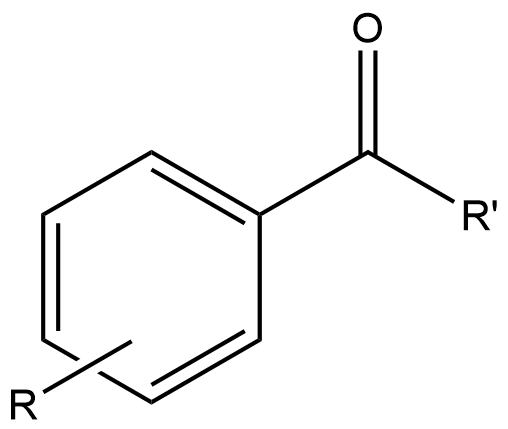
Aromatic carbonyl intermediates refer to molecules containing a benzene or heteroaromatic ring directly attached to a carbonyl group—such as benzaldehydes, acetophenones, or fluorenones. They’re practically unavoidable in medicinal chemistry because the carbonyl serves as a versatile handle for building heterocycles, forming carbon–carbon bonds, or introducing chiral centers. Many blockbuster drugs rely on these intermediates to install key pharmacophores, so their availability in high purity and at scale often dictates the pace of early-stage development.
A capable CRO doesn’t just execute a synthetic route—they proactively identify where the aromatic ring’s electronic effects will slow down acylation or where over-oxidation might ruin a batch. They bring custom catalyst screening, impurity fate mapping, and solvent selection know-how that’s hard to replicate in a sponsor’s internal lab. This becomes especially valuable when the intermediate is prone to air sensitivity or needs tight control of regioisomerism, where a few degrees of temperature difference can make or break selectivity.
Firms like WuXi STA, Asymchem, and Piramal Pharma Solutions are frequently named in RFPs for complex carbonyl chemistry, largely due to their investments in high-pressure carbonylation infrastructure and continuous processing. Mid-sized Western players such as Hovione and CordenPharma also compete effectively by offering nitration-capable suites and dedicated Friedel-Crafts acylation trains that many Asian CDMOs have phased out. The choice often hinges on who can handle the exact balance of electrophilic substitution and carbonyl group protection needed for a given scaffold.
Solvent swap cascades that integrate reactive distillation have cut cycle times nearly in half for certain ketone formations. Design of experiments applied to Vilsmeier-Haack reactions is another area where subtle interactions between reagent stoichiometry and quenching protocol dramatically improved yield. There’s also a growing shift toward non-classical electrophiles—using Weinreb amides or in-situ generated mixed anhydrides—to avoid the genotoxic mesylate and tosylate byproducts that used to haunt process chemists.
Moving from traditional Lewis acids like AlCl₃ to heterogeneous zeolites or immobilised triflate catalysts often turns a dirty quenching nightmare into a filter-and-recycle operation. For carbonylations, the difference between a standard palladium-phosphine system and a tailor-made Pd-pincer complex can mean operating at 5 bar instead of 50, which directly impacts equipment cost and safety profile. Smart CROs will run parallel screening with three catalyst types early on, then optimize the ligand shell to suppress dehalogenation side reactions that plague aryl halide routes.
The biggest headaches usually come from positional isomers that co-crystallize with the desired product or from residual metal catalysts that form coloured complexes with the carbonyl oxygen. Experienced teams lean on preparative SFC for chiral carbonyls and use chelating resins more aggressively than standard ICH Q3D protocols would demand. They also keep a close eye on controlled dimerization—some aldehydes form peroxy dimers during storage that pass routine HPLC but can violently decompose during the next step.
Running Friedel-Crafts acylations or Grignard additions in continuous flow gives a degree of thermal control that batch reactors simply can’t match, especially when the carbonyl product starts reacting further with itself. The real game-changer is being able to generate unstable intermediates like aromatic acid chlorides or ketenes and immediately consume them in the next module, sidestepping isolation of high-energy materials. It’s not just about safety; the tighter residence time distribution also slashes impurity formation that comes from prolonged exposure to acidic or basic conditions.
Biocatalysis is creeping into this space—engineered ketoreductases and BVMO enzymes are starting to deliver enantiopure alpha-hydroxy ketones that were previously made via messy chiral auxiliaries. Another quiet shift is the push for deuterated carbonyl intermediates for metabolic shunting studies, which requires CROs to master exchange chemistry without eroding the aromatic ring. On the commercial side, the realignment of supply chains away from single-region dependence means sponsors now value CROs that can mirror a process across both US and EU sites with identical impurity fingerprints.
Conclusion
The map of aromatic carbonyl intermediate supply has been quietly redrawn. Where once a few entrenched producers held sway, smaller CROs and dedicated synthesis shops now field teams capable of building molecules rich in keto, formyl, and ester functions under tightening timelines. Names worth knowing aren’t always the biggest—they’re the ones that can pull off a low-temperature lithiation without a dozen protection steps or a selective mono-acylation on a crowded scaffold. Yet finding that partner demands more than a checklist audit. You have to probe how they handle specific side reactions you’ve already battled, because the real competency hides in their war stories, not their ISO certificates.
Process chemistries are evolving: higher yields no longer come from heroic columns but from mutating solvent cocktails and catalytic cycles tuned to suppress dimerization. Researchers swap out thermal conditions for continuous flow even in early crystallization-prone steps, simply to sidestep impurity profiles that scale-up unveils. That scale-up journey itself is riddled with surprises—micromixing failures, exotherms hidden at gram scale, and fouling that only appears after a shift runs a third batch. The tactical fix isn’t larger vessels; it’s using process analytical technology to catch deviations before they become discard batches. Looking ahead, synthesis paths are being rewritten by photoredox couplings that introduce carbonyl groups without heavy metals, and by engineered ketoreductases that set chiral centers with an elegance batch chemistry rarely matches. The next wave won’t just improve yields—it’ll replace steps that were once considered untouchable.
Contact Us
Contact Person: Wei Zhang
Email: [email protected]
Tel/WhatsApp: 862163529955
Website: https://www.dslchem.com